
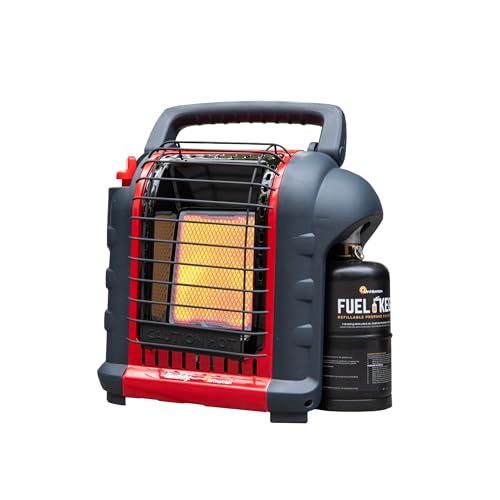


Small propane heaters are essential for anyone needing quick and portable warmth, whether for camping trips or chilly workshops.
Selecting the right model involves considering safety, heat output, and portability to ensure you get the best performance for your needs.
Comparison of Small Propane Heaters
| Product | Best for | Heat Output (BTU) | Heating Area (sq ft) | Runtime (hrs) | Safety Features | Price |
|---|---|---|---|---|---|---|
| Mr. Heater Portable Buddy Radiant Heater | Best Overall | 4,000 or 9,000 | 225 | 5.4 low, 2.4 high | Emergency low oxygen safety system | Check price |
| Mr. Heater Little Buddy Portable Radiant Heater | Best for Very Small Spaces | 3,800 | 95 | — | Tip-over safety shut-off | Check price |
| ProCom 10,000 BTU Blue Flame Heater | Best for Indoor Spaces | 10,000 | 500 | — | Oxygen depletion sensor, ANSI certified | Check price |
| HEATHIVE Portable Cordless Outdoor Heater | Best for Outdoor Portability | — | — | — | Protective front grill, foldable tank base | Check price |
| Mr. Heater Original Tank Top Radiant Heater | Best for High Output | 45,000-36,000-30,000 | — | 9.5 high | Tip-over safety shut-off | Check price |
Top Picks for Small Propane Heaters
Mr. Heater Portable Buddy Radiant Heater
- Heat Output4,000 or 9,000 BTU/hr
- Heating Area225 sq ft
- Runtime5.4 hours low, 2.4 hours high
- Safety FeaturesEmergency low oxygen safety system
- Temperature SettingsLow and high
- Two heat settings for flexible warmth
- Emergency low oxygen safety system
- Indoor and outdoor use approved
- Short runtime on high setting
- Limited to small spaces
Mr. Heater Little Buddy Portable Radiant Heater
- Heat Output3,800 BTU/hr
- Heating Area95 sq ft
- Safety FeaturesTip-over safety shut-off
- Compact size saves space
- One-button ignition
- Tip-over safety shut-off
- Lower heat output limits area coverage
- No adjustable heat settings
ProCom 10,000 BTU Blue Flame Heater
- Heat Output10,000 BTU
- Heating Area500 sq ft
- Safety FeaturesOxygen depletion sensor, ANSI certified
- Thermostat ControlHigh/Medium/Low
- Thermostat control with multiple heat levels
- Heats large indoor spaces
- Oxygen depletion sensor for safety
- Requires liquid propane
- Not portable, wall mount or floor placement only
HEATHIVE Portable Cordless Outdoor Heater
- Safety FeaturesProtective front grill, foldable tank base
- IgnitionOne-push ignition
- Fuel1 lb refillable propane cylinder (not included)
- Compact and lightweight for travel
- Adjustable flame control
- Protective grill and foldable tank base
- Outdoor use only
- No indoor safety features
Mr. Heater Original Tank Top Radiant Heater
- Heat Output45,000-36,000-30,000 BTU
- RuntimeApprox. 9.5 hours on high
- Safety FeaturesTip-over safety shut-off
- High BTU output for large areas
- Long runtime on a 20 lb tank
- Multi-directional heat control
- Outdoor use only
- Bulky compared to smaller models
How to Choose the Right Small Propane Heater
Small propane heaters typically range from about 3,000 to 10,000 BTU. This size suits camping, small rooms, or workshops. A 9,000 BTU heater like the Mr. Heater Portable Buddy provides steady warmth for areas up to 225 square feet.
Look for runtime on a standard 1-pound propane cylinder. Most small heaters run 4 to 10 hours per cylinder. Longer runtime means fewer cylinder changes and better fuel efficiency.
Safety features are critical, especially for indoor use. Choose models with tip-over shutoff, overheat protection, and a CSA, UL, or ETL certification. Ventless heaters must be paired with a working carbon monoxide alarm and proper ventilation.
Portability matters for camping and outdoor use. Check the heater’s weight, handle design, and whether it uses disposable or refillable propane tanks. Smaller units with easy setup are best for travel.
- Check BTU RatingsMatch the BTU output to your space size or activity. 3,800 BTU suits a tent or small room, while 9,000 BTU covers larger small areas.
- Evaluate RuntimeConsider how many hours the heater runs per propane cylinder to avoid frequent refills.
- Confirm Safety CertificationsEnsure the heater has tip-over and overheat shutoff and meets safety standards for indoor use.
- Assess PortabilityLook for lightweight models with convenient handles and compatible fuel sources for camping.
Sizing and Heat Output Considerations
Calculate BTUs by multiplying the room size in square feet by 20 to 30 BTU for typical heating needs. For example, a 200 sq ft room needs roughly 4,000 to 6,000 BTU.
In larger or oddly shaped spaces, heat distribution matters. Radiant heaters warm objects and people directly, while blue flame or convection models spread heat more evenly across the area.
Outdoor conditions reduce heater effectiveness. Wind, open space, and low temperatures increase heat loss. Choose a higher BTU heater or use windbreaks to maintain warmth.
Small propane heaters generally max out at about 10,000 BTU. They are not designed to heat an entire house. Whole-house heating requires larger, dedicated propane systems or multiple units.
| Appliance | Watts | Per hour | Per day (8 h) | Per month (30 days) |
|---|---|---|---|---|
| Small propane heater (9,000 BTU) | 2,640 W | 45¢ | $3.59 | $107.71 |
| Electric heater (1,500 W) | 1,500 W | 26¢ | $2.04 | $61.20 |
Safety and Certification for Propane Heaters
Ventless propane heaters are designed to warm indoor spaces safely when used properly. They have built-in safety features like tip-over shut-off switches that cut power if the heater falls. Many also include low-oxygen sensors that automatically shut the heater off if oxygen levels drop too low.
Propane heaters not rated for indoor use lack the safety features and ventilation needed to prevent carbon monoxide buildup. Only run propane heaters indoors if the manual specifies indoor use and you provide proper ventilation and a working CO alarm. Using outdoor-only models inside creates a deadly risk of carbon monoxide poisoning.
Proper ventilation is essential when running any propane heater indoors. Keep a window or door slightly open to allow fresh air circulation. A working carbon monoxide (CO) alarm in the same room is critical. It detects dangerous CO levels and alerts you before symptoms appear.
Certified heaters carry UL, ETL, or CSA marks showing they meet strict safety standards. Look for these certifications before buying. Avoid models without these marks, as they may lack critical safety features.
Understanding Running Costs of Propane Heaters
To estimate the running cost of a propane heater, start with its BTU rating. Divide the BTUs by 91,500 to find gallons of propane used per hour (91,500 BTU per gallon of propane). Multiply by your local propane price per gallon and the number of hours you use the heater.
For example, a 9,000 BTU heater running 8 hours daily uses about 0.79 gallons of propane monthly if propane costs $3 per gallon. That equals roughly $2.37 per day or about $71 per month.
Propane heating usually costs less than electric heating for the same heat output. Electric heaters consume about 3,412 BTU per kWh, so burning propane at 9,000 BTU per hour uses less fuel energy for equivalent warmth.
To lower costs, use your propane heater only in occupied rooms. Seal drafts and insulate to keep heat inside. Turn the heater off when you leave the room or sleep, unless the model is designed for unattended use. Regular maintenance keeps heaters running efficiently.
| Appliance | Watts | Per hour | Per day (8 h) | Per month (30 days) |
|---|---|---|---|---|
| 9,000 BTU propane heater | 2,640 W | 45¢ | $3.59 | $107.71 |
| 1,500 W electric heater | 1,500 W | 26¢ | $2.04 | $61.20 |