When heading into the great outdoors, staying warm is essential for comfort and safety. Diesel heaters provide an efficient solution for heating vehicles and tents in cold conditions, making them a popular choice for overlanders and van lifers.
Choosing the right diesel heater can be overwhelming with so many options available. Our guide highlights the best models, focusing on their features, efficiency, and ease of use to help you make an informed decision.
Diesel Heater Comparison for Overlanding and Vans
| Product | Best for | Heat Output (BTU) | Fuel Tank Capacity | Power Options | Weight | Price |
|---|---|---|---|---|---|---|
| LF Bros 5KW Diesel Parking Air Heater | Best Overall | 4700~17000 | — | 12V/24V/110V | — | Check price |
| VEVOR 8KW Diesel Heater DC12-24V Fast Heating | Best for Larger Spaces | 54800 | 5L | 12V/24V | — | Check price |
| VEVOR 8KW Diesel Heater 12V with Remote and LCD | Best Budget | 54800 | 5L | 12V | — | Check price |
| VEVOR 8KW Diesel Heater 12V/24V with LCD and Remote | Quietest Operation | 27300 | 1.2 gal | 12V/24V/110V | — | Check price |
| VEVOR 8KW Diesel Heater with Bluetooth and Altitude Adjustment | Best for High Altitude | 27300 | 10L | 12V | — | Check price |




Top Diesel Heaters for Overlanding and Vans
LF Bros 5KW Diesel Parking Air Heater
- Heat Output (BTU)4700~17000
- Fuel Tank Capacity—
- Power Options12V/24V/110V
- Weight—
- Supports 12V, 24V, and 110V power sources
- Oil leaking proof fuel tank cover
- Clear LCD display and remote control
- Detailed instructions and installation tutorial
- Heavier and bulkier than some other models
- No automatic altitude adjustment
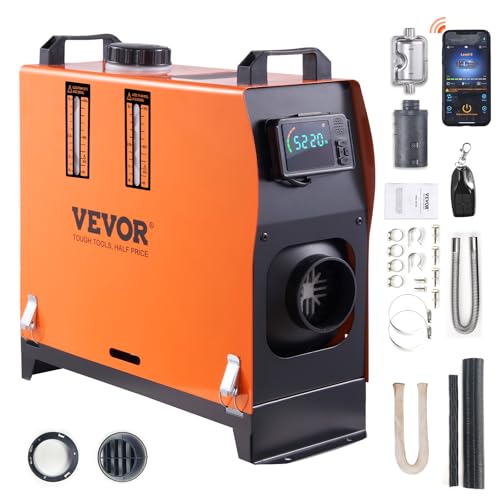
VEVOR 8KW Diesel Heater DC12-24V Fast Heating
- Heat Output (BTU)54800
- Fuel Tank Capacity5L
- Power Options12V/24V
- Weight—
- Fast heating with ceramic igniter
- Large 5L fuel tank with fuel gauge
- Remote and LCD temperature control
- Heat-insulated exhaust pipe shield
- Runs only on 12V/24V power, no 110V option
- Heavier and larger than some compact models
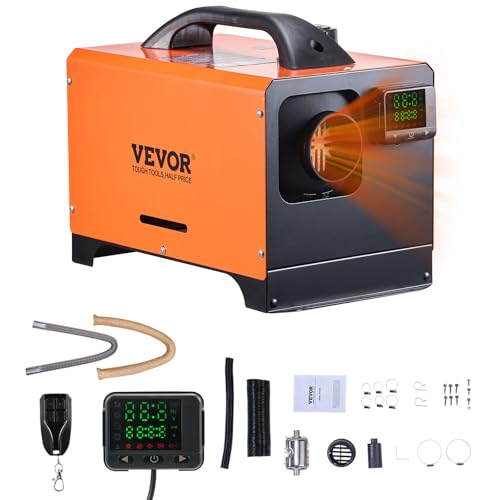
VEVOR 8KW Diesel Heater 12V with Remote and LCD
- Heat Output (BTU)54800
- Fuel Tank Capacity5L
- Power Options12V
- Weight—
- Affordable 8KW heating
- Remote and LCD temperature control
- Safety features like leak-proof cap
- Large 5L fuel tank
- Only supports 12V power
- No multi-voltage or 110V support
VEVOR 8KW Diesel Heater 12V/24V with LCD and Remote
- Heat Output (BTU)27300
- Fuel Tank Capacity1.2 gal
- Power Options12V/24V/110V
- Weight—
- Multi power option: 12V/24V DC and 110V AC
- Quiet, energy-saving fuel pump
- Safety features: CO alarm and overheat shutoff
- Fast heating in small to medium spaces
- Smaller fuel tank at 1.2 gal
- Lower max temperature than some others
VEVOR 8KW Diesel Heater with Bluetooth and Altitude Adjustment
- Heat Output (BTU)27300
- Fuel Tank Capacity10L
- Power Options12V
- Weight—
- Automatic altitude compensation up to 18,045 ft
- Large 10L fuel tank for long runtime
- Bluetooth app and remote control
- Comprehensive safety system
- Requires 12V power only
- Heavier and bulkier than simpler models
How to Choose a Diesel Heater for Overlanding
Choose a diesel heater with the right power output for your campervan or van. The heater’s BTU rating should match the size of your space. For most campervans, a heater between 5,000 and 8,000 BTU provides enough warmth. The LF Bros 5KW Diesel Heater is a solid choice for overlanders because it balances power and fuel efficiency well.
Fuel efficiency matters for longer trips without refueling. Look for models that consume between 0.1 and 0.3 gallons of diesel per hour at typical settings. This range ensures you get hours of heat without carrying excessive fuel.
Check the temperature range the heater supports. It should operate reliably in temperatures down to -22°F (-30°C) if you expect cold climates. The best 12-volt diesel heaters maintain heat output even in these extreme conditions.
Installation ease is key for overlanders who want a quick setup. Choose heaters with complete installation kits and clear guides. Some models include mounting brackets, fuel lines, and wiring harnesses to simplify the process.
- Assess Your Space SizeMeasure the interior volume of your van or campervan to estimate heating needs.
- Match BTU OutputPick a heater with a BTU rating that covers your space size, usually 5,000 to 8,000 BTU for campervans.
- Check Fuel ConsumptionCompare fuel efficiency specs to ensure longer run times on your fuel tank.
- Confirm Temperature RangeEnsure the heater works in your coldest expected conditions, ideally down to -22°F.
- Review Installation KitLook for included components and clear instructions to ease installation.
For the best 8kW diesel heater for campervans, models like the VEVOR 8KW Diesel Heater offer higher heat output for larger vans or colder climates. Their all-in-one design can simplify installation for those with some mechanical experience.
Sizing, Heat Output, and Running Costs
Calculate the BTU output needed by multiplying your van’s interior volume in cubic feet by 5 to 7 BTU. For example, a 100 cubic foot space requires 500 to 700 BTU per hour. This calculation helps pick a heater that maintains comfortable temperatures efficiently.
Running costs depend on fuel consumption and diesel prices. A typical diesel heater uses about 0.1 to 0.3 gallons per hour. At $4 per gallon, running the heater for 8 hours costs between $3.20 and $9.60.
| Appliance | Watts | Per hour | Per day (8 h) | Per month (30 days) |
|---|---|---|---|---|
| Diesel Heater (5,000 W / 17,000 BTU) | 5,000 W | 65¢ | $5.20 | $156.00 |
| Diesel Heater (8,000 W / 27,000 BTU) | 8,000 W | $1.04 | $8.32 | $249.60 |
Fuel tank size affects how long your heater runs without refilling. Tanks range from 1 to 5 gallons. A 2-gallon tank running at 0.2 gallons per hour lasts about 10 hours. Larger tanks extend run time but add weight and take up space.
For garage heating, a diesel heater with at least 8,000 BTU output is best to handle larger, open spaces. These heaters often come with features like forced air intake to improve combustion efficiency and reduce odors.
The diesel heater intake system draws fresh air for combustion, usually from outside the vehicle. This prevents using oxygen from inside your van, improving safety and heater performance. Check that your heater has a sealed intake setup.
For more about the best garage diesel heater options, see best diesel garage heaters for cold workspaces. To understand intake systems better, see best diesel air intake heaters for cold starts.
Safety Considerations and Certifications
Diesel heaters work better with a cold air inlet because they draw in fresh, cool air to burn more efficiently and reduce exhaust buildup. This setup improves combustion and extends the heater’s lifespan.
A self-powering diesel heater, such as a 20,000 BTU portable model, is ideal for off-grid camping since it operates without external power sources, using the vehicle’s battery or built-in power supply. This makes it reliable for remote locations.
Carbon monoxide (CO) alarms and proper ventilation are critical when using diesel heaters indoors. Even indoor-rated models produce CO, so a working alarm and fresh air supply prevent dangerous buildup and ensure safe operation.
Check for safety certifications like CE or UL on diesel heaters. These certifications indicate the product meets recognized standards for electrical safety, emissions, and construction quality, reducing the risk of malfunction or fire.
Look for built-in safety features such as overheat protection, which shuts the unit down if temperatures exceed safe limits, and leak-proof designs that prevent fuel or exhaust leaks. These features protect users and vehicles from hazards.
Unique Features That Enhance Diesel Heater Performance
Home-built air heaters for diesel engine cold starts help warm the engine and fluids, reducing wear and improving start reliability in freezing conditions. Diesel air intake heaters designed for cold starts prevent fuel gelling and ensure smoother ignition.
Bluetooth control and remote operation let users adjust temperature and settings without accessing the heater directly. This convenience is valuable in vans or overland rigs where the heater may be installed out of easy reach.
Adjustable altitude compensation is essential for high-altitude use. Diesel heaters with this feature automatically adjust fuel and air intake to maintain efficient combustion despite thinner air, preventing power loss and excessive smoke.
Fuel tank size and efficiency affect how often you must refill during trips. Larger tanks reduce refuel stops, while efficient heaters use less fuel for the same heat output, extending runtime and convenience on long journeys.
Frequently Asked Questions
What is the best diesel heater for a campervan?
How do I calculate the running cost of a diesel heater?
What safety features should I look for in a diesel heater?
Can I use a diesel heater in my garage?
How long can a diesel heater run on a full tank?
What are the benefits of a self-powering diesel heater?
We cover non-electric heater safety tips in its own guide.
We go through best indoor non-electric heaters when the power goes out step by step in a separate article.