
When winter hits, keeping your cabin warm is essential. Choosing the right propane heater can be challenging, with options varying in power, efficiency, and safety features.
This guide simplifies your decision by presenting the top cabin propane heaters based on reliability, coverage, and user-friendly features.
Cabin Propane Heater Comparison
| Product | Best for | BTU Output | Coverage Area | Safety Features | Price |
|---|---|---|---|---|---|
| Mr. Heater Vent Free Radiant Propane Heater 30,000 BTU | Best Overall | 30,000 BTU | 1,000 sq. ft. | — | Check price |
| ThermoMate Propane Heater Indoor Outdoor 18,000 BTU | Best for Medium Rooms | 6,000–18,000 BTU | 450 sq. ft. | ODS and tip-over protection | Check price |
| Ashley Hearth Direct Vent Propane Wall Heater 17,000 BTU | Best Wall Mount | 17,000 BTU | 570 sq. ft. | Safety pilot and pressure regulator | Check price |
| Mr. Heater Portable Buddy Radiant Propane Heater 9,000 BTU | Best Portable | 4,000 or 9,000 BTU | 225 sq. ft. | Emergency low oxygen safety system | Check price |
| Mr. Heater Portable Buddy Radiant Heater (Canada) 9,000 BTU | Best for Outdoor Use | 4,000 or 9,000 BTU | 225 sq. ft. | Emergency low oxygen safety system | Check price |


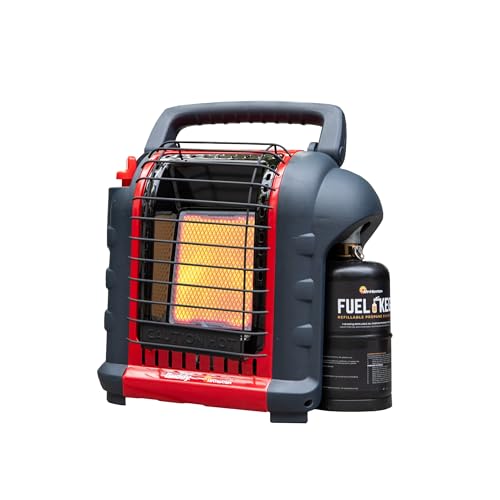

Top Cabin Propane Heater Picks
Mr. Heater Vent Free Radiant Propane Heater 30,000 BTU
- BTU Output30,000 BTU/HR
- Coverage Area1,000 sq. ft.
- IgnitionBattery operated electronic ignition
- ThermostatBuilt-in adjustable thermostat
- Vent RequirementNo outdoor venting required
- No electricity required, works during power outages
- Heats up to 1,000 sq. ft., suitable for large cabins
- Adjustable thermostat for precise temperature control
- Requires battery replacement for ignition
- Not portable, designed for fixed installation
ThermoMate Propane Heater Indoor Outdoor 18,000 BTU
- BTU Output6,000, 12,000, or 18,000 BTU/hr
- Coverage Area450 sq. ft.
- Safety FeaturesODS and tip-over protection
- Portability5 locking casters
- Quiet operation below 32 dB
- Multiple heat settings for flexible use
- Portable with locking casters
- Requires 20 lb propane tank for long runtime
- Larger footprint than compact models
Ashley Hearth Direct Vent Propane Wall Heater 17,000 BTU
- BTU Output17,000 BTU/hr
- Coverage Area570 sq. ft.
- Safety FeaturesSafety pilot and pressure regulator
- VentilationDirect vent with included kit
- Complete vent kit included for installation
- Sealed burn system for clean indoor air
- Quiet stainless steel burner
- Requires professional installation
- Not portable
Mr. Heater Portable Buddy Radiant Propane Heater 9,000 BTU
- BTU Output4,000 or 9,000 BTU/hr
- Coverage Area225 sq. ft.
- Safety FeaturesEmergency low oxygen safety system
- Runtime5.4 hours on low with 1 lb cylinder
- Portable and lightweight
- Emergency low oxygen safety system
- Two heat settings for control
- Limited coverage area
- Short runtime on high setting
Mr. Heater Portable Buddy Radiant Heater (Canada) 9,000 BTU
- BTU Output4,000 or 9,000 BTU/hr
- Coverage Area225 sq. ft.
- Safety FeaturesEmergency low oxygen safety system
- Runtime5.4 hours on low with 1 lb cylinder
- Approved for outdoor use
- Emergency low oxygen safety system
- Portable with two heat settings
- Not approved for indoor use
- Limited heating area
How to Choose a Cabin Propane Heater
Small propane heaters usually deliver between 4,000 and 10,000 BTU, enough for a single room or a small cabin under 300 square feet. Larger models range up to 30,000 BTU, suitable for bigger spaces or whole-cabin heating.
You can choose between vented and ventless propane heaters. Vented models exhaust combustion gases outside through a pipe or chimney. Ventless heaters release heat and combustion byproducts directly into the room, relying on oxygen depletion sensors and automatic shutoff for safety.
Ventless heaters are more efficient because they use all the heat produced indoors. However, they require good ventilation and are not suitable for poorly ventilated or very small spaces. Vented heaters are safer for long-term use in enclosed cabins but waste some heat through the vent.
Safety features are crucial. Look for an oxygen depletion sensor (ODS) that shuts off the heater if oxygen levels drop too low. Automatic shutoff triggers if the heater tips over or overheats. These features reduce the risk of carbon monoxide buildup and fire.
Portability matters if you plan to move the heater between rooms or take it outdoors. Portable propane heaters often have handles and compact designs. Fixed wall heaters require professional installation but free up floor space.
| Feature | What to Check | Why It Matters |
|---|---|---|
| BTU Output | Match to room or cabin size | Ensures enough heat without wasting fuel |
| Vented vs Ventless | Vented for better air quality, ventless for efficiency | Balances safety and heating needs |
| Safety Features | ODS, tip-over and overheat shutoff | Prevents accidents and carbon monoxide risks |
| Portability | Handles, size, weight | Allows easy movement or fixed installation |
Sizing and Heat Output for Your Cabin
Calculate the BTU needed by multiplying the cabin’s square feet by 20 to 30 BTU per square foot. For example, a 1,000-square-foot cabin requires between 20,000 and 30,000 BTU. The exact number depends on insulation quality and local outdoor temperatures.
Well-insulated cabins at moderate temperatures need fewer BTU. Poor insulation, drafty windows, or very cold climates increase the heating demand. Add about 10% more BTU for every 10 degrees Fahrenheit below 40°F outside.
Direct vent propane heaters draw air from outside and vent combustion gases outdoors. This setup keeps indoor air clean and is ideal for whole-house heating. Vent-free heaters emit heat and combustion products indoors, better for small rooms but less suited for whole-house use.
The most efficient vented propane heaters have sealed combustion chambers and variable BTU settings. These models minimize heat loss and maintain safe indoor air quality. They often require professional installation but last longer and run cleaner than ventless options.
| Appliance | Watts | Per hour | Per day (8 h) | Per month (30 days) |
|---|---|---|---|---|
| Mr. Heater 30,000 BTU Vent Free Radiant Propane He | 8,800 W | $1.50 | $11.97 | $359.04 |
Safety Features of Propane Heaters
Ventless propane heaters can be used indoors, but only if the space is well-ventilated and the heater has built-in safety features. These heaters produce water vapor and small amounts of carbon monoxide, so ventilation prevents buildup of moisture and harmful gases. Vented propane heaters are safe for indoor use because they exhaust combustion gases outside through a vent or chimney.
Oxygen depletion sensors (ODS) are essential on ventless propane heaters. They detect low oxygen levels and automatically shut off the heater to prevent dangerous conditions. This feature is a legal requirement for indoor ventless models.
Automatic shutoff systems add another layer of protection. They turn the heater off if it tips over or overheats. These features reduce fire risk and prevent accidents in cabins with limited supervision.
- Check for Oxygen Depletion SensorConfirm the propane heater has an ODS if it is ventless and intended for indoor use.
- Ensure Proper VentilationProvide fresh air ventilation in the cabin when using a ventless heater. Open a window or door slightly if needed.
- Verify Automatic Shutoff FeaturesLook for tip-over and overheat shutoff switches in the heater’s specifications.
Understanding Running Costs of Propane Heaters
Calculate monthly propane costs by converting BTU output to gallons of propane used. One gallon of propane produces about 91,500 BTU. Divide the heater’s total BTU usage by 91,500, then multiply by your local propane price per gallon.
For example, a 30,000 BTU heater running 8 hours per day uses 240,000 BTU daily. Dividing by 91,500 gives about 2.62 gallons per day. At $3 per gallon, the daily cost is about $7.85.
| Appliance | Watts | Per hour | Per day (24 h) | Per month (30 days) |
|---|---|---|---|---|
| 30,000 BTU propane heater, 8 hrs/day | 8,800 W | $8.80 | $211.20 | $6,336.00 |
| 9,000 BTU propane heater, 8 hrs/day | 2,640 W | $2.64 | $63.36 | $1,900.80 |
Vent-free propane heaters are generally more efficient because they deliver nearly all heat inside the room. Vented models lose some heat through exhaust gases. However, vented heaters maintain better air quality and moisture control.
Propane prices fluctuate seasonally and regionally. Higher prices increase running costs significantly. Consider propane availability and local rates when choosing your heater.
For an off-grid cabin, a ventless propane heater with ODS and automatic shutoff offers a balance of efficiency and safety. For larger or better-ventilated cabins, a vented heater reduces indoor moisture and carbon monoxide risks.
See our guide to vented propane heaters for clean indoor heat for options that combine safety with indoor air quality.
Frequently Asked Questions
What is a ventless propane heater?
Are propane heaters safe for indoor use?
How much propane does a heater use per hour?
What is the difference between vented and ventless propane heaters?
Can a propane heater be used in a small space?
What safety features should I look for in a propane heater?
It helps to understand vented propane heater safety before spending anything.
We cover choosing the right indoor heater in its own guide.
