
Finding the right propane wall heater can be challenging. With various options available, it’s essential to choose a model that efficiently warms your space while ensuring safety and comfort.
Propane Wall Heater Features Comparison
| Product | Best for | BTU Output | Heating Area | Safety Features | Price |
|---|---|---|---|---|---|
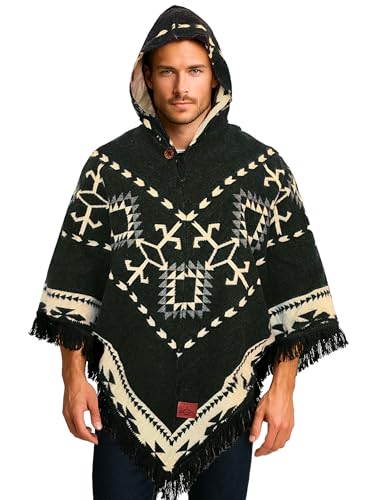
| My Cozy Choice Men’s Alpaca Poncho with Hood | Best for Warmth & Comfort | — | — | — | Check price |
| My Cozy Choice Wool Poncho with Hood for Men | Best Lightweight Poncho | — | — | — | Check price |
| Doctor’s Choice Men’s Sleeping Socks 8-15 mmHg | Best for Cozy Compression | — | — | — | Check price |


Top Picks for Propane Wall Heaters
My Cozy Choice Men’s Alpaca Poncho with Hood
- Material70% alpaca wool, 30% recycled Orlon
- Size50″ x 82.5″
- CareMachine washable, cold delicate cycle
- OriginHandmade in Ecuador
- StyleClint Eastwood inspired with hood
- Soft and breathable alpaca wool
- Machine washable without shrinking
- Generous size for full coverage
- Natural thermal regulation
- Not a heating device, only wearable warmth
- One size may not suit all body shapes
My Cozy Choice Wool Poncho with Hood for Men
- Material50% alpaca wool, 50% recycled Orlon
- Weight1.2 lb
- CareMachine washable, tumble dry low
- OriginHandwoven in Ecuador
- SizeOne size fits most (S–XXL)
- Lightweight and packable
- Machine washable and durable
- Eco-friendly recycled fibers and buttons
- One size fits most (S–XXL)
- Less coverage than larger ponchos
- Not a heat-emitting device
Doctor’s Choice Men’s Sleeping Socks 8-15 mmHg
- Compression8-15 mmHg
- Material95% nylon, 5% spandex
- SizeMen’s shoe size 8-12
- UseSleeping and lounging
- Soft, warm fabric for comfort
- Light compression aids circulation
- Helps reduce swelling and leg cramps
- Fits men’s shoe size 8-12
- Not a heating device
- Compression level may be too light for some conditions
How to Choose a Propane Wall Heater
Pick a propane wall heater with the right BTU output for your room size. Too low, and the space stays cold; too high wastes fuel and money. Most homes need between 10,000 and 40,000 BTUs depending on square footage and insulation.
Look for safety features like a low oxygen shut-off (ODS) sensor. This shuts the heater off if oxygen levels drop too low, preventing carbon monoxide buildup. Tip-over switches and automatic shut-offs add extra protection.
Check venting requirements before buying. Some propane wall furnaces are vent-free, designed to burn cleanly indoors with no chimney, but local codes may restrict their use. Others need direct venting to the outside, which adds installation cost but improves safety and air quality.
The propane wall furnace with the highest AFUE rating typically hits 95%, meaning it converts 95% of fuel into heat. High AFUE units cost more upfront but save on fuel long term. The best propane furnace balances efficiency, size, and features to fit your space and budget.
For most homes, the best propane wall heater combines power, safety, and ease of installation. The Mr. Heater 30,000 BTU Vent Free Blue Flame Heater is a top choice. It delivers strong heat output, has ODS safety, and requires no venting.
- Measure Your RoomCalculate the square footage by multiplying length by width.
- Determine BTU NeedsMultiply square footage by 20 to 30 BTUs for average insulation. Adjust for poor insulation or drafts.
- Check Safety FeaturesLook for ODS sensor, tip-over switch, and automatic shut-off.
- Confirm Venting RequirementsDecide between vent-free or direct vent models based on local codes and installation options.
Sizing and Heat Output
Calculate BTU requirements by multiplying your room’s square footage by 20 to 30 BTUs per square foot. For example, a 500 sq ft room needs 10,000 to 15,000 BTUs. Adjust the number higher if your space has poor insulation or drafts.
Insulation quality affects heating needs. Well-insulated rooms hold heat longer, reducing BTU demand. Drafty rooms or those with single-pane windows need more heat to maintain comfort.
For radiant baseboard heating replacement, a propane boiler with consistent output and good modulation is best. Look for models designed for radiant systems to ensure even heat distribution and efficiency.
If choosing a propane combi wall-hung boiler, pick a unit with reliable hot water production and heating capacity matched to your home’s size. Models with built-in controls and safety features simplify installation and operation.
| Appliance | Watts | Per hour | Per day (8 h) | Per month (30 days) |
|---|---|---|---|---|
| 1,500 W electric heater | 1,500 W | 26¢ | $2.04 | $61.20 |
| Typical propane wall heater | 5,000 W | 85¢ | $6.80 | $204.00 |
Safety and Certification for Propane Heaters
Propane wall heaters come in two main types: direct vented and unvented (ventless). Direct vented models draw air from outside and exhaust combustion gases outdoors through a sealed system. This design prevents indoor air contamination. Unvented heaters burn propane directly in the room, releasing combustion byproducts into the air.
Unvented propane heaters can be safe if used properly, but they require good ventilation and an oxygen depletion sensor (ODS). The ODS shuts the heater off if oxygen levels drop too low, preventing carbon monoxide buildup. Without this sensor, ventless models pose a risk of indoor air quality problems.
Look for UL (Underwriters Laboratories) or CSA (Canadian Standards Association) certification on any propane heater. These certifications mean the heater meets strict safety and performance standards. Certified heaters include built-in safety features like tip-over switches, overheat protection, and ODS.
Check the manual to confirm the heater’s safety features and installation requirements. Improper installation or ignoring ventilation guidelines can cause dangerous situations. Follow all manufacturer instructions exactly to keep your home safe.
Understanding Running Costs of Propane Heaters
Propane boilers and wall heaters are common for home heating. Boilers use propane to heat water or steam, which then warms your home through radiators or underfloor pipes. Wall heaters burn propane directly to produce warm air, ideal for spot heating or smaller spaces.
To estimate running costs, convert the heater’s BTU output to energy units and multiply by propane price. One gallon of propane contains about 91,500 BTUs. For example, a 30,000 BTU heater running for one hour uses roughly one-third of a gallon. Multiply gallons used by the local propane price for cost.
Efficiency ratings affect how much heat you get from each gallon. A heater rated at 90% efficiency converts 90% of propane energy to heat. Higher efficiency means lower fuel consumption and cost. Vent-free models often reach 99% efficiency but require ventilation safety precautions.
| Heater Type | Typical Efficiency | Best Use |
|---|---|---|
| Direct vented wall heater | 80% to 90% | Whole house or rooms with ventilation |
| Unvented (ventless) wall heater | Up to 99% | Supplemental heating in well-ventilated rooms |
| Propane boiler | 85% to 95% | Whole-house heating with radiators or baseboards |
Choose vented propane wall heaters for whole-home heating where venting is possible. They provide safe combustion exhaust and good efficiency. Unvented heaters suit smaller areas where quick heat is needed and ventilation is available.
| Appliance | Watts | Per hour | Per day (8 h) | Per month (30 days) |
|---|---|---|---|---|
| 30,000 BTU propane heater | 8,800 W | $8.80 | $70.40 | $2,112.00 |
Running costs vary with local propane prices and how often you run the heater. Compare efficiency and heat output to find the most cost-effective solution for your space. For more on heater choices, see My Cozy Choice: Best Heater for Sunroom Review.
Frequently Asked Questions
What is the best propane wall heater for large spaces?
How do I install a propane wall heater?
Are propane wall heaters safe for indoor use?
What maintenance do propane heaters require?
Can I use a propane wall heater in a mobile home?
How do I calculate the BTU needs for my room?
We go through reliable boilers for residential use step by step in a separate article.
Readers in this position usually ask about best heaters with vents as well.
