
Your feet are cold, the floor is a frozen slab, and you need warmth now. The question isn’t which heater is most popular or best-rated. It’s which type delivers heat to a cold floor fastest, and why.
The answer splits into two paths: radiant heaters that warm the floor surface directly, and forced-air heaters that heat the room fast enough to make the floor comfortable. Floor material, room size, and how you use the space determine which path works.
Which Heater Warms Cold Floors Fastest
Infrared heaters warm cold floor surfaces instantly—you feel heat on tile, stone, or concrete within seconds because radiant energy travels in a straight line and warms objects directly. Ceramic fan heaters raise room temperature fastest, making laminate and wood floors comfortable in 5 to 10 minutes by moving hot air across the surface. Oil-filled radiators take 15 to 20 minutes to reach full output but provide steady, silent warmth once they do.
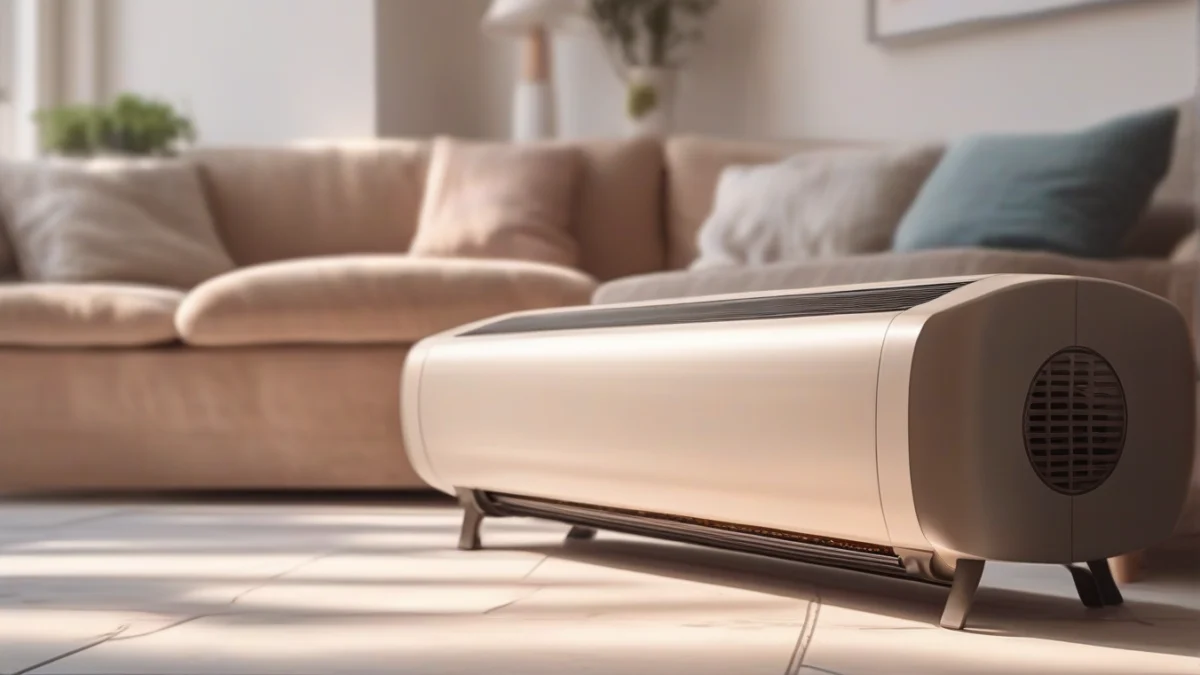
The speed difference comes down to how each heater transfers energy. Radiant infrared panels emit waves that heat your floor, your feet, and furniture the moment you switch them on, with no warm-up delay. Forced-air ceramic heaters use a fan to push heated air downward and across the room, cycling cold air off the floor and replacing it with warmth in minutes. Convection heaters like oil-filled radiators warm the air around their metal fins, which then rises and circulates slowly—effective for sustained heating but slower to make a cold floor feel warm underfoot.
| Heater Type | Floor Material | Time to Feel Warmth | Noise Level |
|---|---|---|---|
| Infrared radiant | Tile, stone, concrete | 5–15 seconds | Silent |
| Ceramic fan (oscillating) | Laminate, wood, vinyl | 5–10 minutes | 32–40 dB |
| Ceramic fan (fixed) | Laminate, wood, vinyl | 8–12 minutes | 32–40 dB |
| Oil-filled radiator | All floor types | 15–20 minutes | Silent |
| Infrared radiant | Laminate, wood, vinyl | 30–60 seconds | Silent |
Oscillation makes a measurable difference. A ceramic tower heater that sweeps 70 to 90 degrees horizontally warms a cold floor two to three minutes faster than a fixed model pointed at one spot, because the moving air reaches corners and edges that would otherwise stay cold. Place the heater at floor level or aim the airflow downward; warm air rises naturally, so a fan angled at the ceiling wastes time heating the upper half of the room first.

If you need instant warmth on a cold tile or concrete floor and you will be standing or sitting in one spot, an infrared heater is the fastest option. For whole-room floor heating on laminate or wood, a ceramic fan heater with oscillation warms the space in under ten minutes. Oil-filled radiators suit bedrooms where silent operation matters more than speed, but expect to wait a quarter hour for full comfort.
How Radiant and Forced-Air Heating Warm Floors Differently
Radiant heat travels as infrared energy, warming objects and surfaces directly without heating air first. A halogen or infrared heater emits electromagnetic waves that strike the floor, converting to heat on contact. You feel warmth within seconds on tile or concrete because the energy moves in a straight line, but the air temperature stays low until the warmed floor radiates heat back into the room.
Forced-air heaters warm the air first, which then transfers heat to the floor indirectly. A PTC ceramic element heats air passing over it, and a fan pushes that warm air into the room. Convection heating raises the whole room temperature faster than radiant heat, so laminate and wood floors feel comfortable within 5 to 10 minutes. Panel heaters work the same way: they warm the air around them, which rises and circulates, eventually heating the floor as the room warms.
PTC ceramic elements are self-regulating. As the ceramic heats, its electrical resistance increases, limiting current flow and preventing runaway temperatures without a separate control. That built-in safety makes ceramic heaters efficient for forced-air designs, though the fan adds noise—typically 32 to 40 dB.
Radiant heat feels instant because infrared energy warms your skin and the floor surface immediately, but it only reaches what it can see. A coil heater, which uses exposed wire coils that glow orange, is a radiant design suited to spot warming. Forced-air heaters need time to raise air temperature, but they heat a larger area faster because the fan moves warm air into every corner.
- Instant warmth on the floor surface within seconds
- Silent operation with no fan noise
- Heats dense materials like tile and concrete efficiently
- Raises whole-room temperature in 5 to 10 minutes
- Even heat distribution with oscillation
- Works well on light floors like laminate and wood


Floor Material Determines Which Heater Works Best
Tile, stone, and concrete floors have high thermal mass—they pull heat from your feet the moment you step on them, and they stay cold longer. But once heated, they retain warmth for hours. Radiant heaters work best here because infrared energy penetrates the surface and warms the material itself. You feel the difference within seconds. Ceramic fan heaters raise air temperature faster, but cold tile will still feel cold underfoot until the room has been warm for 20 minutes or more.
Laminate and engineered wood floors warm quickly because they have low thermal mass and sit above an air gap or underlayment. A ceramic fan heater that raises room temperature by 10°F in five minutes will make these floors comfortable almost as fast. Forced-air heating circulates warm air under furniture and into corners, bringing the whole surface up to temperature. Radiant heaters still work, but the speed advantage disappears.
Carpet and rugs insulate the floor, blocking radiant heat from reaching the surface below. A radiant heater aimed at carpet warms the fibers but not your feet. Convective heaters that raise ambient temperature work better because the carpet itself becomes a barrier rather than a heat sink. Concrete slab floors over uninsulated crawl spaces lose heat continuously to the ground below. No heater will fix that—address insulation first, or you will spend all winter heating the earth.
| Floor Type | Thermal Behavior | Best Heater |
|---|---|---|
| Tile, stone, concrete | High thermal mass; stays cold, retains heat once warmed | Infrared radiant |
| Laminate, engineered wood | Low thermal mass; warms quickly with ambient heat | Ceramic fan heater |
| Carpet, rugs | Insulates surface; blocks radiant energy | Convective forced-air |
| Concrete slab (uninsulated) | Continuous heat loss to ground | Insulate first |
Oscillation, Placement, and Thermostat Precision
Heaters with 70 to 90 degrees of oscillation distribute heat across a wider floor area, warming corners and eliminating cold spots faster than fixed-direction models. A ceramic tower heater oscillating through 70 degrees in a 12-by-15-foot bedroom reaches even temperature in about eight minutes. A fixed heater pointed at one wall creates a hot zone directly in front and leaves the far corner cold for twice as long.
Fixed-direction heaters work well when aimed at the coldest section of floor—usually near windows or exterior walls. Place forced-air heaters in central locations where air can circulate freely. Radiant heaters need line-of-sight to the floor; a heater behind a sofa warms the sofa, not your feet. For a hallway, a compact oscillating ceramic heater in the center spreads warmth in both directions without creating a trip hazard.
Digital thermostats with 1°F increments maintain steadier floor warmth than dial thermostats with 5°F steps. A heater set to 68°F with 1°F precision clicks on at 67°F and off at 68°F, cycling gently. A 5°F dial thermostat swings between 65°F and 70°F, leaving floors alternately cold and overwarm. The tighter the control, the lower your energy cost and the more consistent the comfort.
Measured noise levels matter when a heater sits near floor level in a bedroom or office. Ceramic tower heaters run at 32 to 40 dB—about the sound of a quiet library. Oil-filled radiators are silent because they have no fan, but they take 15 to 20 minutes to reach full output. If you need both speed and quiet, look for a brushless DC motor and a thermostat precise enough to minimize on-off cycling.
Running Cost and Energy Efficiency for All-Day Floor Heating
A 1,500 W ceramic heater and a 1,500 W oil-filled radiator cost exactly the same to run per hour—wattage determines electricity consumption, not heater type. The difference lies in how each maintains temperature once your floor reaches the comfort zone.
Calculate running cost with this formula: watts ÷ 1,000 × hours × rate per kWh. At $0.17 per kWh, a 1,500 W heater running eight hours costs $2.04 per day, or about $61 per month. An infrared panel drawing 1,000 W costs $1.36 per day under the same conditions.
| Appliance | Watts | Per hour | Per day (8 h) | Per month (30 days) |
|---|---|---|---|---|
| 1,500 W ceramic heater | 1,500 W | 26¢ | $2.04 | $61.20 |
| 1,500 W oil-filled radiator | 1,500 W | 26¢ | $2.04 | $61.20 |
| 1,000 W infrared panel | 1,000 W | 17¢ | $1.36 | $40.80 |
Oil-filled radiators cycle on and off less frequently once they reach set temperature because the oil retains heat and continues radiating warmth after the heating element shuts off. Ceramic heaters cycle more often to maintain temperature, but the total wattage consumed remains identical if both run for the same duration at the same thermostat setting. The oil-filled model reduces wear on the heating element and delivers steadier warmth without temperature swings.
ECO modes adjust output based on ambient temperature, cycling the heater to a lower wattage or shutting off the element when the room approaches the set point. Heaters with ECO modes save 20 to 30 percent energy compared to running at full power continuously, especially in well-insulated rooms where heat loss is slow. A heater drawing 1,500 W at full power might average 1,050 W over eight hours in ECO mode, reducing electricity use accordingly.
Zone heating—warming one room with a space heater for a cold bedroom instead of raising the thermostat for the entire house—cuts costs significantly. Heating 150 square feet with a 1,500 W heater costs far less than heating 1,500 square feet through central forced air, especially when you spend most of your time in one or two rooms. Close doors to contain warmth and lower the central thermostat by a few degrees to maximize savings.
Safety Certifications and Clearance Requirements
UL, ETL, or CSA certification ensures third-party testing for tip-over shutoff, overheat protection, and flame-retardant materials—the baseline for safe operation. Tip-over protection alone is not enough; certified heaters undergo system-wide evaluation that includes electrical components, housing integrity, and thermal cutoff reliability. A heater without one of these marks has not been independently verified.
Maintain 3 feet of clearance around all portable heaters, away from curtains, furniture, bedding, and foot traffic. Forced-air heaters pull air through rear or side vents; blocking intake starves airflow and triggers overheat shutoff. Radiant heating panels and oil-filled radiators need the same clearance even though they lack fans, because their surfaces reach temperatures that can ignite nearby fabric or paper over time.
Oil-filled radiators and infrared panels have no exposed heating elements, making them safer around children and pets who might touch the unit. Ceramic forced-air heaters enclose the element behind a grille, but the grille itself gets hot. Cool-touch housing—a double-wall design that keeps the exterior warm but not scalding—adds another layer of protection, particularly in high-traffic areas where accidental contact is likely.
Look for overheat protection that cuts power when internal temperature exceeds safe limits, not just when the unit tips over. This shutoff engages if vents are blocked, the fan fails, or the thermostat malfunctions. Certified heaters reset automatically once they cool, but repeated triggering signals a ventilation problem or a failing component—stop using the heater and check for obstructions or damage.
Choosing the Right Heater for Your Cold Floor
Fixing cold floors starts with identifying the root cause. Drafty baseboards, gaps under doors, and poor insulation let warm air escape before it reaches the floor. Seal those leaks with weatherstripping and caulk. Add thick rugs over tile or stone, wear insulated slippers, and use draft stoppers—these cut heat loss without using electricity.
When passive measures aren’t enough, match the heater to how you use the room. Infrared heaters deliver instant warmth to cold tile or concrete when you step out of the shower or walk into the kitchen for five minutes. Ceramic forced-air heaters raise the whole room temperature in under ten minutes, warming laminate and wood floors evenly. Oil-filled radiators suit bedrooms where you heat all night and noise matters more than speed.
- Measure your spaceCalculate square footage and use 10 watts per square foot as your baseline. A 1,500 W heater covers up to 150 square feet in an insulated room with 8-foot ceilings. Drafty spaces or vaulted ceilings need more power or a second unit.
- Choose the heater typePick ceramic forced-air for speed and whole-room coverage, infrared for instant spot warmth on high-mass floors, or oil-filled for silent all-night heat. Models with 70 to 90 degrees of oscillation eliminate cold spots faster than fixed-direction heaters.
- Place it strategicallyPosition the heater where it blows across the coldest floor area, at least 3 feet from walls, furniture, and curtains. Plug directly into a wall outlet. Avoid placing it under rugs or blankets, which block airflow and trigger overheat shutoff.
- Set the thermostat preciselyDigital thermostats with 1°F increments hold temperature more consistently than 5°F steps, cycling less often and using less electricity. Start at 68°F and adjust based on how the floor feels underfoot.
For rooms where portable heaters run all day or you’re renovating, radiant floor heating systems eliminate cold floors permanently. Hydronic or electric mats installed under tile or laminate deliver even warmth without noise, clearance requirements, or outlet limits. The upfront cost is higher, but operating cost is lower than running a space heater eight hours daily for a heating season.
Frequently Asked Questions
Is forced-air or radiant heating better for cold floors?
Can I safely use a heater directly under carpets?
How does oscillation angle affect floor warming speed?
Are oil-filled heaters worth slower warm-up for silent operation?
Do heaters with ECO modes significantly save energy?
Which heaters combine fast heat and quiet operation best?
It helps to understand which heater provides steady heat before spending anything.
Readers in this position usually ask about heating a cold room upstairs as well.
