
Loft conversions lose heat faster than ground-floor rooms. More exterior walls, larger windows, and sloped ceilings create cold pockets and drafts. Your existing central heating was sized for the original house, leaving the new room struggling to stay warm.
The solution is a dedicated electric heater that plugs into a wall outlet and requires no plumbing work. The choice comes down to three factors: how quickly you need the room warm, whether you sleep there, and how much of the day the heater runs.
Heat Output, Noise, and Control at a Glance
| Product | Best for | Heat output | Noise level | Thermostat range | Weight | Price |
|---|---|---|---|---|---|---|
| DREO Ceramic Space Heater | Best overall | 1500W | 34 dB | 41–95°F | — | Check price |
| De’Longhi Oil-Filled Radiator | Best for overnight | 1500W | Silent (no fan) | Adjustable, ComfortTemp | — | Check price |
| R.W.FLAME Mini Ceramic Heater | Best compact | — | — | Adjustable | — | Check price |
| EZ-HEAT Oil-Filled Radiator | Best budget radiant | 600W / 900W / 1500W | Whisper-quiet (no fan) | Adjustable | — | Check price |
| R.W.FLAME Small Ceramic Heater | Best portable | 1500W | — | Adjustable | — | Check price |



Five Heaters That Work in Lofts Without Radiators
DREO Ceramic Space Heater
- Heat output1500W
- Noise level34 dB
- Thermostat range41–95°F
- Heat modes5 (Power, ECO, Fan Only)
- Timer12 hours
- Heats 200 sq ft in seconds with advanced PTC system
- Thermostat range from 41–95°F in 1°F steps
- 34 dB operation with brushless DC motor
- Tilt-detection sensor and V0 flame-retardant materials
- Fan circulates dust in poorly sealed lofts
- Stops heating when it reaches set temperature, so cold spots return faster than with radiant heat
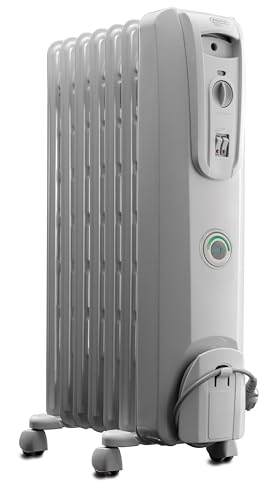
De’Longhi Oil-Filled Radiator
- Heat output1500W
- Noise levelSilent (no fan)
- Heat settingsAdjustable thermostat, ComfortTemp mode
- MobilityIntegrated handle, smart snap wheels
- Silent operation with no fan
- Continues radiating heat after cycling off
- ComfortTemp saves up to 20% energy versus max thermostat setting
- Thermal slot design keeps surface temperature lower
- Takes longer to heat the room from cold
- Heavier than ceramic heaters, harder to move between floors
R.W.FLAME Mini Ceramic Heater
- TypeCeramic
- Timer24 hours
- ModesECO, thermostat control
- ControlRemote included
- Compact size fits desks and tight corners
- 24-hour timer and ECO mode
- Remote control included
- Thermostat and quiet ceramic element
- Heating capacity too low for rooms larger than 100 sq ft
- Product data does not specify wattage or noise level
EZ-HEAT Oil-Filled Radiator
- Heat output600W / 900W / 1500W
- Noise levelWhisper-quiet (no fan)
- Dimensions24.5″ H × 8.5″ W × 13″ D
- ThermostatAdjustable
- Three heat settings for flexible output
- Whisper-quiet, no fan noise
- Compact: 24.5″ H × 8.5″ W × 13″ D
- Tip-over and overheat protection
- No ComfortTemp or auto-adjust mode
- Slower to heat than ceramic models
R.W.FLAME Small Ceramic Heater
- Heat output1500W
- TypeCeramic
- ThermostatAdjustable
- CertificationETL
- 1500W output in a small, portable form
- ETL certified with tip-over and overheat protection
- Thermostat control
- Quiet ceramic element
- No timer or remote control
- Product data does not specify noise level or exact dimensions
How to Choose Between Oil-Filled and Ceramic Heaters for a Loft
Oil-filled radiators and ceramic fan heaters both plug into a standard outlet and both max out at 1,500 W, but they deliver heat in ways that suit different loft habits. A ceramic heater pushes hot air into the room with a fan, raising the temperature in minutes. An oil-filled radiator warms slowly—sometimes taking thirty minutes to feel warm—but holds that heat in its thermal mass and keeps radiating after the thermostat clicks off. The fan makes ceramic heaters audible, usually around 40 to 50 dB. Oil-filled models are silent.
If you work in the loft for a few hours during the day, a ceramic heater gets the space comfortable fast and then cycles the fan on and off to hold temperature. If you sleep in the loft every night, an oil-filled radiator runs without noise and delivers steadier warmth because the oil stays hot between thermostat cycles. Lofts lose heat faster than ground-floor rooms, so the ability to coast on stored heat matters. The radiator’s thermal mass smooths out the temperature swings that make poorly insulated spaces feel drafty.
- Silent operation suits bedrooms
- Continues radiating between thermostat cycles, countering heat loss
- Steady warmth in poorly insulated lofts
- Takes 20 to 30 minutes to feel warm
- Heavier and harder to move between rooms
- Fan runs every cycle, creating 40+ dB noise
- Temperature swings more noticeable in drafty lofts
Both types draw the same power at full output, so the claim that oil-filled heaters cost less to run is only true if the room’s insulation lets the radiator cycle off more often. A ceramic heater in the same room, with the same thermostat setting, uses the same electricity. The difference shows up in comfort: the oil-filled model keeps the air warmer during the off cycle, so the thermostat waits longer before calling for more heat. In a well-insulated loft, the gap is small. In a loft with single-pane skylights and no roof insulation, the radiator’s stored heat buys you a few extra minutes of warmth per hour.
Choose ceramic if you heat the loft for short stretches and want fast results. Choose oil-filled if you occupy the space overnight or all day and value silent, steady warmth. For most loft conversions used as bedrooms without radiators, the oil-filled radiator is the better fit.
Sizing Heat Output for Loft Rooms With Extra Heat Loss
Standard heating advice calls for 10 watts per square foot, but lofts sit directly under the roof and often have two or more exterior walls, so they lose heat faster. Plan for 12 to 15 watts per square foot. A 150-square-foot loft bedroom needs 1,800 to 2,250 watts. A single 1,500 W heater is the minimum; it will keep the room warm on mild days but struggle when the outdoor temperature drops below freezing. A 200-square-foot loft needs 2,400 to 3,000 watts, which means two heaters or one heater plus meaningful insulation work.
Measure the floor area by multiplying length and width. Sloped ceilings and dormers do not add to the calculation, but they do trap cold air at the peaks, making the space feel cooler than the thermostat suggests. Large Velux windows and skylights accelerate heat loss, especially if they are single-pane or poorly sealed. If the room has more than one skylight, add 10 percent to your wattage target.
- Measure the loft floor area in square feet (length × width).
- Multiply by 12 for moderate insulation, or 15 if the roof has no insulation or the loft has multiple skylights.
- Divide by 1,500 to find how many heaters you need. A result over 1.5 means two heaters or insulation upgrades.
- Place heaters near the coldest wall or under skylights to counter the draft.
If a 1,500 W heater runs constantly and the room still will not reach 68°F on a cold day, the problem is insulation, not heater size. Adding a second 1,500 W heater doubles your electricity bill but delivers diminishing comfort gains because the heat escapes as fast as the heaters produce it. At that point, draft-proofing around windows, adding roof insulation, or sealing gaps at the eaves does more than another heater. For lofts that struggle to hold heat, see how to warm a cold, poorly insulated loft conversion.
Most plug-in heaters top out at 1,500 W because that is the safe limit for a standard 15-amp US outlet. Hardwired electric baseboard heaters can deliver more power, but they require an electrician and a dedicated circuit. For loft conversions where running ductwork or radiator pipes is not practical, one or two well-placed 1,500 W heaters and attention to insulation will handle the job.
Running Cost: What 8 Hours a Night Actually Costs
All 1,500 W electric heaters cost the same per hour when running at full power: about 26 cents at $0.17 per kWh, the US average. The difference shows up in how often the thermostat cycles the heater off once the room reaches target temperature.
Oil-filled radiators continue radiating heat after the heating element shuts off, so the room stays warm longer and the thermostat calls for heat less frequently. Ceramic heaters stop heating the moment the element shuts off. In a drafty loft with heat escaping through the roof, the thermostat cycles more often to replace lost warmth, and the heater runs longer over the course of a night.
| Appliance | Watts | Per hour | Per day (8 h) | Per month (30 days) |
|---|---|---|---|---|
| 1,500 W heater, 60% duty cycle | 900 W | 15¢ | $1.22 | $36.72 |
| 1,500 W heater, 80% duty cycle | 1,200 W | 20¢ | $1.63 | $48.96 |
A programmable thermostat or timer cuts cost more than heater type. Heating an empty room is where money disappears. Set the heater to start an hour before you use the loft and shut off when you leave. Eight hours of actual heating costs $37 per month at full power; eight hours of standby with the thermostat managing temperature in a moderately insulated loft costs closer to $22.
Safety in Lofts: Clearance, Tip-Over Protection, and Plug Load
Keep 3 feet of clearance in front of the heater and 1 foot from sides and back. Sloped walls make furniture placement tight, and it’s tempting to tuck a heater under the eaves or against a low wall. Don’t. Hot air needs room to circulate, and anything combustible—bedding, clothes, cardboard boxes—within that zone is a fire risk.
Tip-over switches are required because lofts often have uneven floors, loose rugs, or items stored temporarily that can knock a heater over. Every heater for a converted loft on this list includes a tip-over switch that cuts power the moment the unit tilts past a safe angle. Test it once: tilt the heater gently while it’s running, and it should shut off immediately.
Overheat protection is a separate sensor from the thermostat. The thermostat manages room temperature; the overheat sensor watches the heater’s internal temperature and cuts power if airflow is blocked or the unit overheats. Both must be present. The heater should carry UL, ETL, or CSA certification, which means it passed independent safety testing for electrical and fire hazards.
- UL, ETL, or CSA mark on the heater or its box
- Tip-over switch that cuts power when tilted
- Overheat protection independent of the thermostat
- Cord in good condition, no fraying or kinks
- 3-foot clearance in front, 1 foot on sides and back
Do not leave a heater running unattended or while sleeping unless the manufacturer explicitly states the model is designed for unattended operation. Oil-filled radiators with mechanical thermostats and no fan are more commonly rated for overnight use, but check the manual. If the loft is a bedroom you occupy every night, heating a loft conversion safely means choosing a model built for that scenario and placing it where you can’t knock it over getting out of bed.
Dealing With Damp and Cold Spots in Poorly Insulated Lofts
A heater warms the air, but it cannot fix condensation caused by inadequate ventilation. Warm air holds more moisture than cold air, and when that moisture-laden air touches a cold window, an exterior wall, or an uninsulated eaves section, it condenses into water droplets. If you wake to fogged windows or damp patches near the roofline, the problem is not the heater—it is the lack of airflow or insulation letting cold surfaces form inside the room.
Lofts with poor eaves insulation develop cold spots where exterior walls meet the roof. The heater raises the room temperature to 68°F, but the wall itself stays at 50°F because there is little or no insulation behind it. Air near that wall cools rapidly, creating a circulation pattern that pulls warmth away from the center of the room and leaves a perpetually cold zone along the perimeter. No amount of heater output solves this; the wall needs insulation, or you accept the uneven heating.
Oil-filled radiators reduce condensation risk slightly compared to ceramic fan heaters because they warm the room through radiant heat rather than blowing air. A fan heater circulates moisture-heavy air faster, increasing the chance that humid air will hit a cold surface before it has time to mix and equalize. An oil-filled model like the De’Longhi or the EZ-HEAT heats more gently and does not stir the air as aggressively, giving moisture less opportunity to condense in one spot.
Some oil-filled radiators, including models from De’Longhi and EZ-HEAT, offer a frost-protection mode that holds the room at 41°F when unoccupied. This setting prevents damp from taking hold during the week if you use the loft only on weekends, and it costs roughly $12 per month at $0.17 per kWh compared to $60 for full-time heating at 68°F. The low background heat keeps surfaces above the dew point without the expense of maintaining comfort temperature around the clock.
Frequently Asked Questions
What heater works without electricity for a loft conversion?
Are oil-filled radiators cheaper to run than ceramic heaters in a loft?
Can I use a heater on the landing or stairwell to warm a loft?
Do infrared heaters work better in drafty loft conversions?
How do I heat a loft conversion if the insulation in the eaves is poor?
What size heater do I need for a 200-square-foot loft bedroom?
Before you buy anything, it is worth looking at understanding oil radiator effects.
We cover keeping coastal homes warm in its own guide.