
A noisy heater disrupts sleep. Fan roar, thermostat clicks, and electrical hum turn a cold bedroom into a frustrating choice between warmth and rest.
The quietest heater eliminates moving parts or runs them at the lowest speed that still delivers heat. Understanding where noise originates—and which technologies avoid it—lets you choose a heater that keeps you warm without keeping you awake.
The Quietest Heater Types for Nighttime Bedroom Use
Oil-filled radiators are the quietest heaters for nighttime use, operating at around 20 dB with no fan and no mechanical noise beyond occasional thermal expansion clicks. Ceramic heaters with a dedicated silent mode run at 25-30 dB and heat a room faster, while infrared panels produce zero mechanical noise but warm only the objects and people they face directly.
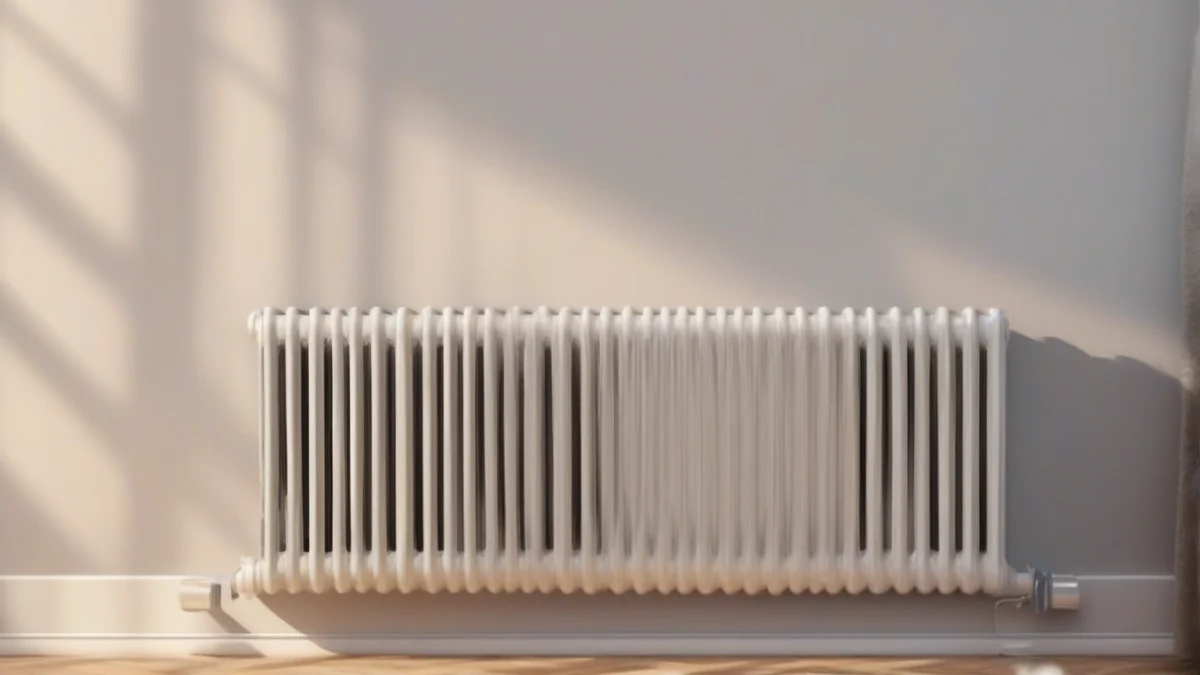
Oil-filled radiators heat by convection: the element warms oil sealed inside metal fins, which radiate heat into the room without moving air. They take thirty to sixty minutes to reach full temperature, but they hold heat long after the element cycles off. The only sound is an occasional metallic tick as the casing expands when warming or contracts when cooling—brief and irregular, not continuous white noise. Most models measure around 20 dB during operation, quieter than a whisper and well below the threshold that disrupts sleep.
Ceramic heaters with silent mode use a low-speed brushless fan to distribute warmth. The heating element itself makes no noise; the fan does. In silent mode the fan spins at reduced RPM, dropping noise output to 25-30 dB—about as loud as rustling leaves. They heat a bedroom in ten to fifteen minutes, much faster than oil-filled models, but the fan hum is continuous while running. Whether a ceramic heater is quiet depends entirely on whether it offers a dedicated low-noise mode and a brushless DC motor. Standard ceramic heaters without those features run at 45-55 dB, too loud for most people to sleep through.

Infrared panels produce zero mechanical noise because they have no fan, no thermostat click, and no moving parts. They emit infrared radiation that warms skin, bedding, and furniture directly, the way sunlight does. You feel the warmth within seconds if you’re in the panel’s line of sight, but the air temperature stays cooler and anything behind you or outside the beam remains cold. Convector heaters—both the fan-forced and fanless types—heat by warming air, which rises and circulates. Fanless convectors are quieter than fan-forced models but still produce some noise from the thermostat and occasional metallic pings as the casing heats. They’re not as quiet as oil-filled radiators.
Traditional fan heaters push warm air with a high-speed AC motor. They heat quickly but run at 45-55 dB, roughly as loud as a refrigerator compressor or normal conversation. That level of constant white noise prevents deep sleep for most people. Fan heaters suit a cold bathroom you heat for twenty minutes, not a bedroom you heat all night.
| Heater Type | Noise Source | dB Level | Heating Speed | Best For |
|---|---|---|---|---|
| Oil-filled radiator | Thermal expansion clicks | ~20 dB | 30–60 min to full heat | All-night warmth, deep sleepers |
| Ceramic with silent mode | Low-speed brushless fan | 25–30 dB | 10–15 min | Fast heat, light sleepers who tolerate low hum |
| Infrared panel | None (no moving parts) | 0 dB mechanical | Instant radiant warmth | Directional heat, sitting or sleeping in line of sight |
| Standard fan heater | High-speed AC fan motor | 45–55 dB | 5–10 min | Quick daytime heating, not suitable for sleep |
Where Heater Noise Comes From and How to Avoid It
Every heater noise comes from one of four sources: the fan motor, the thermostat, thermal expansion of the metal casing, or electrical hum from the transformer or heating element. Knowing which parts make noise lets you evaluate any model’s suitability for nighttime use.
The fan motor is the loudest component in any forced-air heater. Fan speed determines noise level. A ceramic heater running at full power spins its fan at several thousand RPM, producing 45-55 dB of constant white noise. Brushless DC motors run quieter than traditional AC motors because they have no brushes making friction contact with the rotor, eliminating mechanical scraping and vibration. The best quiet space heaters use brushless motors and variable-speed controllers to drop RPM when high heat isn’t needed.
Thermostat clicks happen when the temperature sensor triggers a mechanical relay to cycle the heating element on or off. Mechanical thermostats produce an audible click—brief but sharp enough to wake a light sleeper. Digital thermostats use a silent solid-state switch with no moving parts and no click. Oil-filled radiators with digital controls and ceramic heaters with electronic temperature control eliminate this noise entirely.
Thermal expansion causes the metallic ticking sound in oil-filled radiators and convector heaters. Metal expands when heated and contracts when cooled. As the casing warms, it flexes slightly and releases a brief tick or ping, the same way a car engine ticks as it cools after a drive. The sound is irregular—a tick every few minutes, not continuous—and much quieter than a fan. It’s the price of fanless heating.
Electrical hum comes from vibration in the transformer or heating element, usually at 50 or 60 Hz depending on your electrical system. Build quality determines whether you hear it. A poorly mounted element or loose transformer can resonate against the heater’s frame, producing a low buzz. Well-built heaters dampen vibration with rubber mounts and tight assembly tolerances. Infrared panels and high-end oil-filled models produce no detectable hum.
- Fan motor: louder at high speed; brushless DC motors quieter than AC types
- Thermostat click: mechanical relays click audibly; digital thermostats are silent
- Thermal expansion: metal casing ticks as it heats or cools; brief and irregular
- Electrical hum: transformer or element vibration; varies with build quality and mounting
Silent mode works by reducing fan speed and cycling the heating element less aggressively. A ceramic heater in silent mode spins its fan at 30-50% of maximum RPM, moving less air per minute but producing far less noise. The thermostat widens its temperature deadband—the gap between turning on and turning off—so the element cycles on less frequently and the fan runs at steady low speed rather than ramping up and down. You get slower heating and slightly less precise temperature control, but the noise drops from 50 dB to 25-30 dB, the difference between a loud conversation and a quiet library.


Key Features That Keep a Heater Quiet at Night
A quiet heater for sleep starts with a digital thermostat. Mechanical thermostats click audibly every time they switch the heating element on or off, sometimes every few minutes. Digital thermostats measure temperature electronically and switch silently, with no relay noise.
The fan motor is the loudest part of any forced-air heater. Look for a brushless DC motor, which runs quieter than a standard AC motor, or choose a heater with no fan at all. Oil-filled radiators and infrared panels produce warmth through radiation and convection, eliminating motor noise entirely.
- Sleep or ECO mode: Lowers fan speed and maintains a set temperature without aggressive on-off cycling that creates noise spikes.
- Decibel rating under 30 dB: Comparable to a whisper and suitable for deep sleep. Ratings between 30 and 35 dB work for light sleepers but may be noticeable in a silent room.
- Timer and remote control: Adjust temperature or shut off the heater without getting out of bed, avoiding the startup noise when you turn it back on.
- Thermal expansion damping: Higher-quality oil-filled radiators use thicker steel or damping coatings to reduce the ticking sound as metal expands and contracts.
Safety Rules for Overnight Heater Use
Leaving a heater running overnight is safe only when the model includes tip-over shutoff and overheat protection, and the manufacturer explicitly states the heater is designed for unattended or overnight use. Check the manual before you sleep with it on.
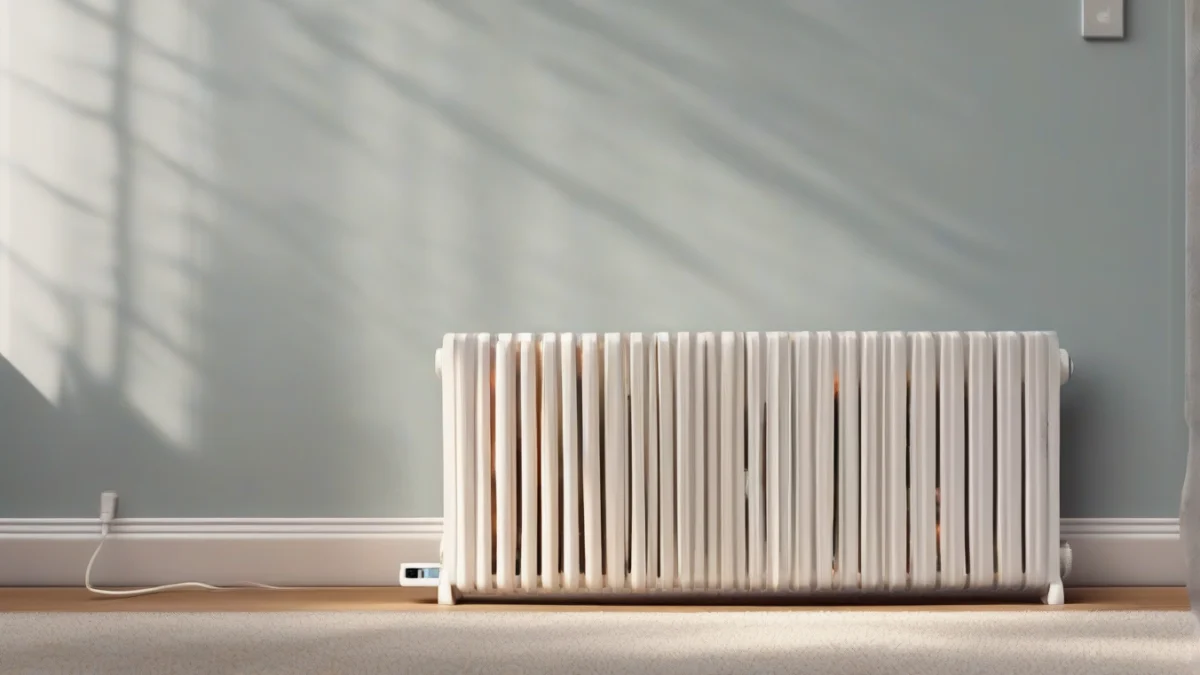
Place the heater on a hard, level surface with 3 feet of clearance in every direction. That means no bedding, curtains, laundry, furniture or rugs within reach of the hot surface or airflow. A heater tipped onto a duvet or shoved against a nightstand can ignite fabric in minutes.
- Look for UL, ETL, or CSA certification on the label. These marks confirm the heater passed third-party safety testing for electrical and fire hazards.
- Use only heaters with an automatic shutoff timer or a thermostat that cycles off when the room reaches your set temperature, reducing the hours the element stays energized.
- Inspect the power cord before each heating season. Replace the heater if the cord is frayed, the plug is loose, or the casing is cracked.
The safest heater to use overnight will have all of these features and a stable, low center of gravity that resists tipping. If you’re unsure whether your current heater meets the standard, replace it before the next cold night.
Running Costs: What Quiet Heating Costs Per Night
All electric heaters convert watts to heat at 100% efficiency. A 1,500 W ceramic heater costs exactly the same to run as a 1,500 W oil-filled radiator when both run continuously on high. The difference comes from how long each type actually runs. A ceramic heater on high for eight hours straight draws 1,500 W the entire time: 1,500 ÷ 1,000 × 8 hours × $0.17 per kWh = $2.04 per night. An oil-filled radiator with a thermostat cycles on and off once the room reaches temperature, averaging around 50% runtime. Over the same eight hours, it draws power for only four hours, cutting the cost in half.
| Appliance | Watts | Per hour | Per day (8 h) | Per month (30 days) |
|---|---|---|---|---|
| 1,500 W ceramic heater, high setting | 1,500 W | 26¢ | $2.04 | $61.20 |
| 1,500 W oil-filled radiator, 50% duty cycle | 750 W | 13¢ | $1.02 | $30.60 |
| Heated blanket | 100 W | 1.7¢ | 14¢ | $4.08 |
ECO mode reduces runtime further by maintaining a target temperature instead of blasting heat continuously. Most oil-filled and ceramic models with ECO mode drop to around 30–40% duty cycle in a moderately insulated room, saving another dollar or two per week. A heated blanket at 100 W costs about thirteen cents per night and keeps you warm without heating the entire room—the most economical choice for a student bedroom. For overall health and economy in a small student bedroom, an oil-filled radiator with a thermostat and tip-over shutoff is the best value: it runs quietly, maintains steady heat without drying the air, and costs less than two dollars per night on a cycling thermostat.
Quiet Heaters for Specific Bedroom Situations
Small bedrooms under 150 square feet heat quickly with a compact seven-fin oil-filled radiator or a ceramic heater with oscillation. The oil-filled model will be quieter, but the ceramic heater reaches temperature faster if you only heat the room for an hour or two before bed. Best heaters for small UK bedrooms cover both types in detail. For a one-bedroom flat, match the heater’s wattage to the room size: 1,500 W handles up to 150 square feet; anything larger needs a second heater or a higher-output model if you’re heating a combined living and sleeping space.
Loft and attic bedrooms lose heat through the roof and benefit from a heater placed at floor level, where rising warm air reaches you first. Oil-filled radiators work well here because they radiate heat in all directions and run silently through the night. Avoid placing any heater directly under a sloped ceiling where clearance is tight. If the loft has a ceiling fan, reverse it to push warm air back down, but the fan noise may offset the heater’s silence.
Entryways and foyers need quick heat when you arrive home, not all-night operation. A ceramic heater with a one- or two-hour timer delivers fast warmth and shuts off automatically. Never leave a heater running unattended in a high-traffic area where someone could knock it over. Stairwells present the same risk: a heater on a landing or mid-stair is a tripping hazard and a fire risk if tipped, and unattended heating in a stairwell is not recommended under any circumstance.
Damp or humid rooms—basements converted to bedrooms, poorly ventilated spaces—need a sealed heater with a moisture-resistant casing. Oil-filled radiators are fully enclosed, and most ceramic models with a plastic or metal housing handle humidity without issue. Never use an open-coil or radiant quartz heater in a damp space; moisture and exposed elements create a shock hazard. Students in shared housing benefit from a quiet ceramic heater with a remote control and ECO mode: you can adjust it from bed, keep noise low for flatmates, and running cost stays under two dollars per night with a thermostat cycling the unit.
Heaters That Need No Electricity Are Not Quiet or Safe Indoors
Propane, kerosene, and diesel heaters burn fuel to produce heat, which means they produce carbon monoxide—a colorless, odorless gas that causes poisoning and death. Only heaters explicitly rated for indoor use may be operated indoors, and even then only with the ventilation the manual requires and a working CO alarm in the room. Most portable fuel heaters sold in the US are designed for garages, job sites, and outdoor spaces, not bedrooms.
Fuel heaters are not quiet. Propane and kerosene models produce flame roar during operation, ignition clicks when the thermostat cycles, and fan noise if the model uses forced air to distribute heat. A garage heater running at 30,000 BTU sounds like a steady wind, not the near-silent background hum you want for sleep. Battery-powered electric heaters exist, but batteries drain in under an hour at the 500 to 1,500 watts needed to heat a bedroom, making them impractical for overnight use.
Plug-in electric heaters are the only practical option for quiet bedroom heating. Oil-filled radiators and ceramic heaters with silent modes deliver consistent warmth without combustion risk, without ventilation requirements, and at noise levels low enough to sleep through. They plug into a standard wall outlet, cost pennies per hour to run, and turn off automatically if tipped. No fuel heater matches that combination of safety, silence, and convenience for a bedroom.
Frequently Asked Questions
Are oil-filled radiators completely silent?
What is the quietest type of heater for a bedroom?
Are ceramic heaters quiet enough for sleep?
Can I use a space heater all night while I sleep?
What decibel level is quiet enough for sleeping?
Do infrared heaters make noise?
Readers in this position usually ask about power usage of oil-filled vs fan heaters as well.
Readers in this position usually ask about energy use in large spaces as well.

