
Your unheated utility room is a problem. Right now. It’s more than just an uncomfortable spaceit’s a risk. Frozen pipes can burst. Condensation breeds mould. Your boiler works harder, spiking energy bills. You need to warm it up, and you need to do it efficiently and safely.
This isn’t about a major renovation. It’s about targeted, actionable steps. We’ll move from immediate, cheap fixes to long-term solutions that lock the heat in. Your goal is a stable, protected space. Let’s start.
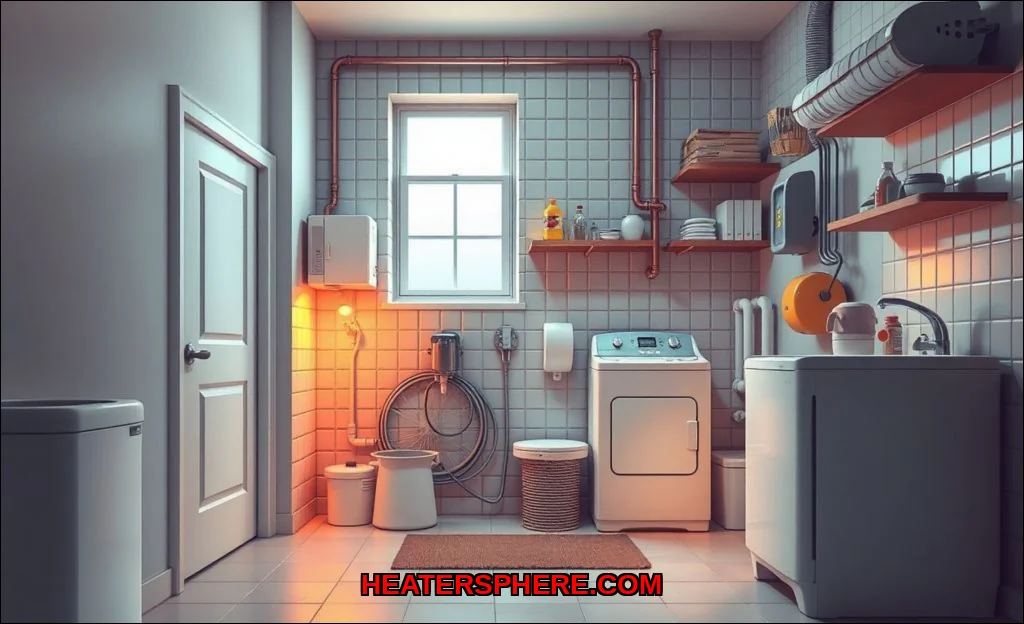
Assess Your Utility Room & Identify Heat Loss
Don’t just turn on a heater. First, you must understand why the room is cold. Walk in. Feel for drafts. Look for the weak points. This cold room is losing heat through specific avenues you can seal. For the detail, see our notes on how to warm a bathroom without central heating.
Check these areas immediately:
- Doors and Windows: Run your hand around the edges. Feel that cold air? That’s a direct draft.
- Vents and Pipe Penetrations: Holes where pipes or cables enter are major culprits for heat loss.
- Floors and Ceilings: Is the room above a garage or below an attic? These are often poorly insulated.
- Walls: Feel for cold spots. This could indicate thermal bridging, where structural elements like studs conduct cold inside.
- Water Pipes: Touch them. If they’re exposed and cold, they are your top priority for frost protection.
Immediate Actions: Quick Ways to Add Heat
You need to raise the temperature now, especially to prevent freezing. Portable solutions are key for how to heat a utility room without central heating.
For rapid, focused warmth, a quality space heater is your best first move. Look for models with safety features like tip-over protection and overheat shutoff. For a small unheated room, a compact ceramic or oil-filled radiator can be perfect. Many find the DREO Space Heater effective for its oscillation and precise thermostat control, making it a strong contender for the best heater for a small unheated room.
Other fast tactics include:
- Use a Frost Stat: This is non-negotiable. Plug your heater into a frost stat (a plug-in thermostat). Set it to 5-7C. It will only power the heater when the temperature drops to that critical point, saving energy and providing automatic frost protection.
- Hang a heavy blanket or an old duvet over the interior door. It’s a primitive but instant draft excluder.
- If you have a hot water tank in the room, ensure its jacket is fitted properly. That radiated heat can help.
- Consider smart plugs. You can schedule a heater to run for short bursts during the coldest night-time hours, a modern twist on cheap ways to warm a cold utility room.
Long-Term Solutions: Insulation & Sealing
Heating a drafty room is like filling a bucket with a hole in it. Seal the hole first. This is where you achieve real energy efficiency.
Stop the Drafts
- Doors/Windows: Install adhesive foam tape or rubber seals. Fit a proper draft excluder at the bottom of the door.
- Gaps & Holes: Use expanding foam or silicone sealant for larger gaps around pipework and cables.
- Install a thermal curtain over the door or any window. It acts as a movable insulation barrier.
Insulate Key Surfaces
Pipe insulation is your most important job. Foam tubing is cheap and slides right on. It prevents freezing and stops pipes from cooling the air around them. For ultimate preventing pipes from freezing in utility room, consider heat tape (frost protection heating cable) for vulnerable sections, controlled by a thermostat.
Walls are trickier. If you have hollow walls, injecting insulation can be highly effective. Learn more about the process for warming a room with hollow interior walls. For solid walls, reflective radiator panels behind a heater can bounce heat back into the room.
Don’t forget the ceiling or floor. If your utility room is above an unheated garage, that cold floor is sapping warmth. Addressing this requires a specific approach, detailed in our guide on improving warmth in rooms over unheated garages.
Critical Safety Precautions for Heating
This section is law. Ignoring it risks fire, carbon monoxide poisoning, or equipment failure. Be meticulous. There is more on cold bathroom with hot fan solutions in a guide of its own.
- Space Heater Rules: Keep it 1 metre away from anything combustible. Never leave it unattended for long periods unless it’s on a frost stat. Plug directly into a wall outletno extension cords.
- Ventilation: If you have a fuel-burning boiler or dryer in the room, ensure vents are never blocked. Combustion needs air.
- Electrical Safety: Don’t overload circuits. Your utility room likely already has high-draw appliances.
- Condensation & Mould: Warming a cold room can sometimes raise humidity levels. Ensure some air circulation to prevent mould growth on walls and contents. A small dehumidifier can be a wise addition.
For comprehensive guidance on efficient and safe heating practices, the Energy Saving Trust’s advice on heating your home is an excellent resource.
Maintaining a Consistently Warm Room
The goal is a stable environment, not wild temperature swings. This protects your belongings and your plumbing system.
Create a maintenance routine:
| Task | Frequency | Purpose |
|---|---|---|
| Check frost stat & heater operation | Weekly in winter | Ensure automatic protection is active |
| Inspect pipe insulation for damage | Seasonally | Maintain frost protection barrier |
| Re-seal drafty doors/windows | Annually | Combat ongoing heat loss |
| Clear vents and air intakes | Monthly | Ensure safe appliance operation |
Think about thermal mass. A few sealed water containers or even bricks painted black can absorb heat from a heater during its cycle and release it slowly after the heater switches off, smoothing out temperature dips.
Transforming an unheated utility room from a liability into a dry, protected space is straightforward. Act now. Start with the assessmentfind those drafts. Implement an immediate, safe heating solution like a thermostatically controlled heater. Then, commit to the sealing and insulation. The pipe insulation, the draft excluder, the sealed gaps. This layered approach solves the problem permanently. You’ll gain peace of mind, protect your home from costly damage, and yes, even save on energy. Stop losing heat. Start securing your home today.
