
Tankless water heaters offer a continuous supply of hot water, making them an attractive choice for modern homes. With numerous models on the market, selecting the best one for your needs can be overwhelming.
Vesta Tankless Water Heater Comparison
| Product | Best for | Flow Rate | Power | Temperature Control | Safety Features | Price |
|---|---|---|---|---|---|---|
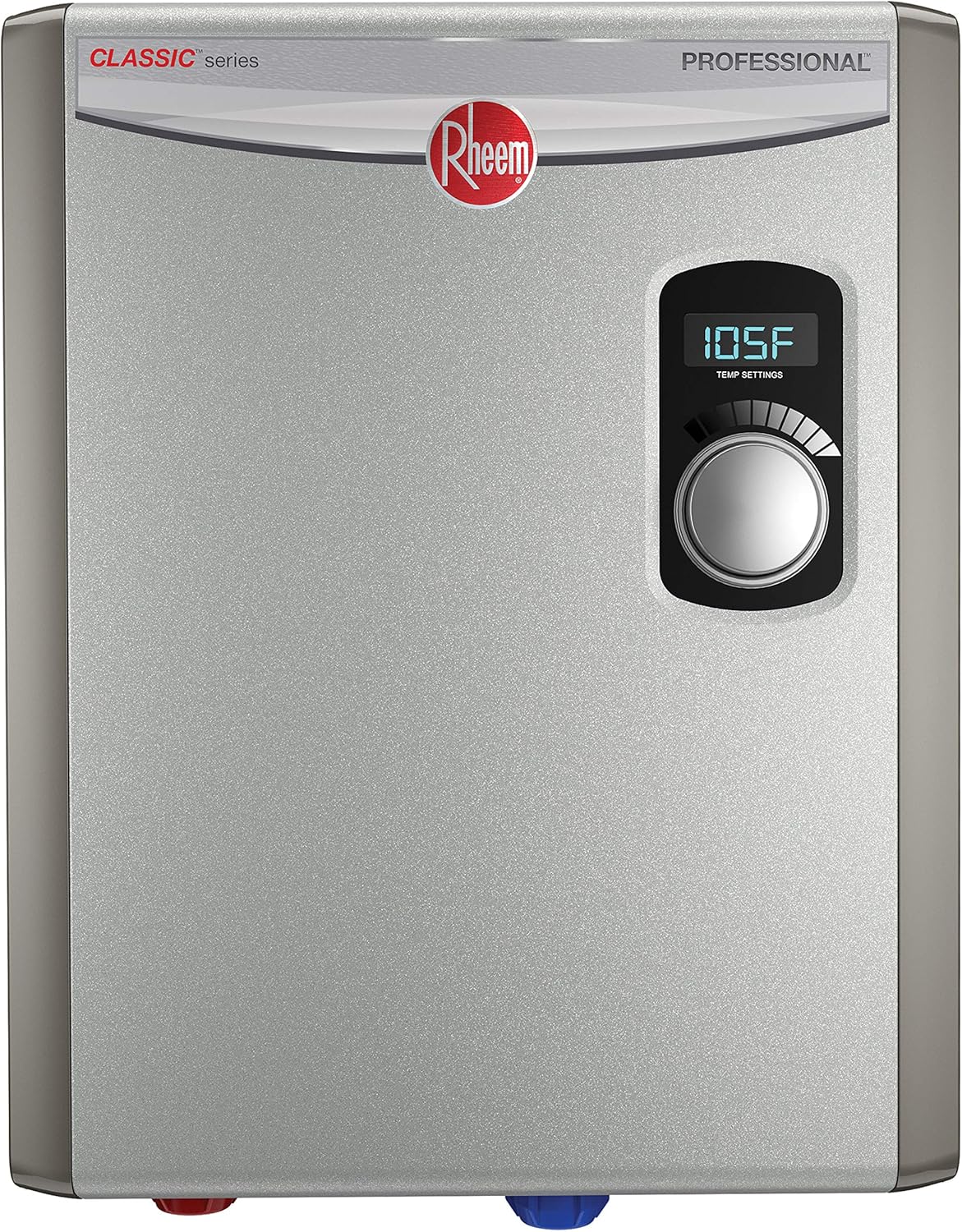
| Rheem 18kW Tankless Electric Water Heater | Best Overall | 4.4 GPM | 18kW | External digital thermostatic control | Advanced self-modulation, durable copper elements | Check price |
| Baococo 18L Propane Tankless Water Heater | Best Propane | 4.76 GPM | 115,425 BTU/hour | Adjustable 17°F to 113°F | Six safety protections including overheat and dry combustion | Check price |
| Westinghouse 14kW Tankless Electric Water Heater | Best Smart | — | 14kW | Smart WiFi with temperature memory | ETL certified, 4-layer protection, IPX4 | Check price |
| Orbek 14kW Tankless Electric Water Heater | Best Stable Temp | 3.38 GPM | 14kW | Built-in chip, LED display | ETL certified, leakage and over-temp protection | Check price |
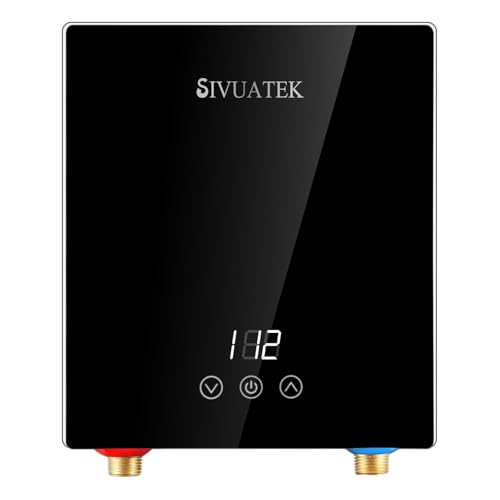
| SIVUATEK 6.5kW Tankless Electric Water Heater | Best Point-of-Use | — | 6.5kW | Touch LED display | Leakage and overheat protection with auto-stop | Check price |


Top Vesta Tankless Water Heaters
Rheem 18kW Tankless Electric Water Heater
- Power18kW 240V
- Flow Rate4.4 GPM
- Temperature ControlExternal digital thermostatic control with LED display
- Water Connections3/4 inch NPT bottom threaded
- Precise temperature control within 1 degree
- High flow rate up to 4.4 GPM
- Durable copper immersion heating elements
- Simple installation with threaded water connections
- Requires 240V power supply
- Installation needs compatible water connections
Baococo 18L Propane Tankless Water Heater
- FuelPropane
- Max Heat Output115,425 BTU/hour
- Flow Rate4.76 GPM
- Temperature Range17°F to 113°F
- High heating output of 115,425 BTU/hour
- Six safety protection systems
- Lightweight and portable design
- Adjustable temperature range from 17°F to 113°F
- Not designed for indoor residential use
- Requires propane fuel and ventilation
Westinghouse 14kW Tankless Electric Water Heater
- Power14kW 240V
- Flow Rate—
- Temperature ControlSmart WiFi with temperature memory
- Safety FeaturesETL certified with 4-layer protection
- Instant heating in 3 seconds
- WiFi and voice control integration
- Multiple safety protections and IPX4 rating
- Reduced corrosion with separated water-electricity pathway
- Requires dedicated 60A breaker and heavy gauge wiring
- Higher electrical demand limits some installations
Orbek 14kW Tankless Electric Water Heater
- Power14kW 240V
- Flow Rate3.38 GPM
- Temperature ControlBuilt-in chip with LED display
- Safety FeaturesETL certified, leakage and over-temp protection
- Stable temperature control within 1°F
- ETL certified with comprehensive safety systems
- Instant hot water with 3.38 GPM flow
- Intuitive LED display for temperature control
- Requires a 60A two-pole breaker and 6 AWG wiring
- Maximum flow rate lower than some models
SIVUATEK 6.5kW Tankless Electric Water Heater
- Power6.5kW 240V
- Flow Rate—
- Temperature ControlTouch LED display
- Safety FeaturesLeakage and overheat protection with auto-stop
- Compact size for point-of-use installation
- Smart self-modulation for consistent temperature
- Touch LED display for easy control
- Multiple safety protections including auto-stop
- Lower power limits flow rate and simultaneous use
- Not suitable for whole-house heating
How to Choose the Right Tankless Water Heater
Start by matching the power requirements to your home’s electrical system. Most electric tankless water heaters need a 240 V supply and a dedicated circuit rated for 30 to 50 amps. For compact, portable options, a 120 V model works but delivers less heat; these suit point-of-use needs like a single sink rather than whole-house heating.
Flow rate is critical. Measure your household’s peak hot water demand in gallons per minute (GPM). A family of three typically needs 3 to 4 GPM to run a shower and faucet simultaneously. Choose a unit with a flow rate that meets or exceeds this to avoid cold water gaps.
Temperature control accuracy affects comfort and efficiency. Look for models offering precise digital thermostats or thermostatic mixing valves. This ensures stable water temperature without wasting energy or causing scalding risks.
Safety features protect your home and family. Confirm the heater has automatic shut-off for overheating and dry-fire protection. Units with UL or ETL certification meet essential safety standards. Avoid plug-in heaters without these features for whole-house use.
| Type | Voltage | Max Flow Rate (GPM) | Typical Use |
|---|---|---|---|
| Portable Plug-In | 120 V | 0.5 to 1 | Single fixture or travel |
| Whole-House Electric | 240 V | 3 to 6 | Full home hot water |
| Combination Boiler and Tankless | Varies | Varies | Heating and hot water |
Sizing and Heat Output Considerations
Calculate required flow rate by adding the GPM of all fixtures you expect to use at once. For example, a shower uses about 2.5 GPM, a faucet 1.0 GPM, and a dishwasher 1.5 GPM. Add these to size your unit’s flow capacity.
Incoming water temperature affects heating performance. In colder climates, water entering the heater may be 40°F or lower, requiring more energy to reach the set temperature. Tankless units specify maximum temperature rise at a given flow rate; verify this matches your local conditions.
Heating output is measured in BTUs per hour for gas units or kilowatts (kW) for electric ones. A higher output means faster heating and higher flow rates. For example, an 18 kW electric model can provide about 4.4 GPM with a 35°F temperature rise, suitable for small to medium homes.
| Appliance | Watts | Per hour | Per day (1 h) | Per month (30 days) |
|---|---|---|---|---|
| 6.5kW Tankless Electric Water Heater | 6,500 W | $1.11 | $1.11 | $33.15 |
For setups like food trucks, compact propane models with digital controls offer quick heat and portability without high electrical demands. For small homes, electric units around 14 to 18 kW balance size, cost, and output efficiently. Consider best tankless water heater for small home options when sizing.
Understanding Running Costs and Energy Efficiency
Tankless water heaters cut energy waste by heating water only when needed, but running costs depend on your local energy rates and usage patterns. Calculate operating costs by multiplying the heater’s wattage or fuel consumption by hours used, then by your price per kWh or gallon of propane. For example, a 18 kW electric unit running 1 hour daily at $0.17 per kWh costs about $0.17 × 18 = $3.06 per day.
Energy efficiency ratings like Energy Factor (EF) or Uniform Energy Factor (UEF) show how well a model converts energy into hot water. Most electric tankless heaters reach around 0.98 EF, meaning 98% of electricity heats water. Gas and propane models usually range from 0.82 to 0.95 EF. Higher EF ratings lower fuel costs but may come with higher upfront prices.
Maintenance costs impact long-term expenses. Descaling is essential to prevent mineral buildup, especially in hard water areas. Using a tankless water heater flushing kit every 6 to 12 months keeps efficiency high and avoids costly repairs. Repairs vary by model but expect occasional replacement of parts like igniters or sensors. Budget for annual maintenance to extend heater life and efficiency.
Venting affects fuel efficiency and safety. Ventless propane tankless water heaters do exist but are rare and require strict ventilation rules and CO alarms. Most propane models need direct or power venting to exhaust combustion gases safely.
Safety Standards and Certifications
Safety certifications like ETL and UL confirm a tankless water heater meets industry standards for electrical and fire safety. Check for these labels before purchase to ensure compliance and insurance acceptance.
Common safety features include overheat protection, which shuts off the heater if water temperature exceeds safe limits, and flame failure devices that cut fuel supply if the burner goes out. These features prevent accidents and damage.
Some models offer temperature control with battery backup, allowing the heater to maintain settings during brief power outages. Propane tankless heaters do not have electrical backup to keep heating if propane supply stops; they rely on a steady fuel source and proper venting.
Proper installation by a licensed plumber or technician is crucial for safe operation. Incorrect venting or wiring can cause carbon monoxide buildup or electrical hazards. Regular maintenance keeps safety features functional and prevents leaks or malfunctions.
Maintenance Tips for Longevity
Regular descaling is the most important maintenance step for tankless water heaters. Mineral deposits, especially in hard water areas, build up inside the heat exchanger and reduce efficiency. Use a tankless water heater flushing kit every 6 to 12 months to remove scale. These kits include hoses and a pump to circulate a descaling solution safely through the system.
For Canadian users concerned about water quality, a water conditioner that reduces hardness is best. Look for a salt-free conditioner that prevents scale without adding salt to the water. Salt-based softeners can corrode components and void warranties.
Check and clean the inlet water filter regularly. Sediment and debris can clog this filter, restricting flow and causing error codes. Depending on your water quality, inspect the filter every 3 to 6 months and replace it if damaged or heavily clogged.
Some maintenance tasks, such as inspecting the burner, checking electrical connections, or testing safety controls, require professional service. Schedule a licensed technician to perform a thorough inspection every 1 to 2 years. This helps spot worn parts or leaks before they cause failure.
Frequently Asked Questions
What is the best Vesta tankless water heater for large households?
How does a tankless water heater work?
What are the benefits of a propane tankless water heater?
Can I install a tankless water heater myself?
What is the average lifespan of a tankless water heater?
Do tankless water heaters require a lot of maintenance?
We cover 50-gallon options for households in its own guide.
If that sounds like your room, read up on best fast heating water heaters next.