
Endless hot water is a priority for many homeowners, and Noritz tankless water heaters are designed to meet this demand efficiently. These units provide hot water only when needed, eliminating standby heat loss and reducing energy bills.
Noritz Tankless Water Heater Comparison
| Product | Best for | Flow Rate (GPM) | Energy Efficiency | Installation Type | Price |
|---|---|---|---|---|---|
| Noritz NR98SVNG Tankless Natural Gas Water Heater | Best Overall | 9.8 | — | Indoor/Outdoor | Check price |
| Noritz NRC98-OD-LP Outdoor Tankless Liquid Propane Heater | Best for Outdoor Use | 9.8 | — | Outdoor | Check price |
| Noritz NRC71DVNG Indoor Condensing Tankless Water Heater | Best Compact Design | 7.1 | Very High | Indoor | Check price |
| Noritz NRC66DVNG Indoor Condensing Tankless Water Heater | Best Efficiency | 6.6 | High | Indoor | Check price |
| Noritz NR50ODLP Outdoor Tankless Liquid Propane Heater | Best Budget Outdoor | 5.0 | High | Outdoor | Check price |

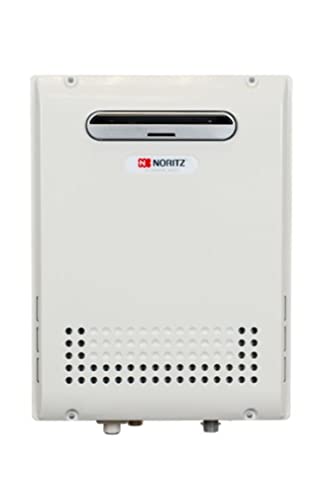
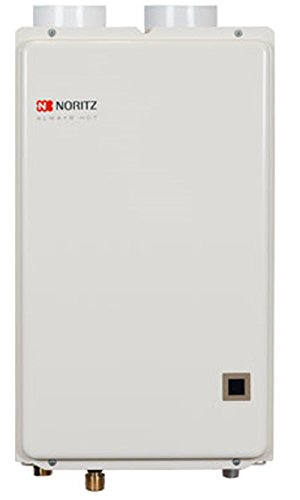

Top Noritz Tankless Water Heaters for Homes
Noritz NR98SVNG Tankless Natural Gas Water Heater
- Flow Rate9.8 GPM
- Heat ExchangerCommercial grade copper, 25% thicker piping
- InstallationIndoor/Outdoor
- Power Cord6 feet
- Linking CapabilityYes, with QC-2 Quick Connect Cord
- High maximum flow rate of 9.8 GPM
- Durable commercial-grade copper heat exchanger
- Supports linking two units for higher capacity
- Remote thermostat and power cord included
- Installation complexity if linking units
- Indoor/outdoor installation may require specific venting
Noritz NRC98-OD-LP Outdoor Tankless Liquid Propane Heater
- Flow Rate9.8 GPM
- BTU Input180,000 BTU
- InstallationOutdoor
- Fuel TypeLiquid Propane
- Power120 Volt
- High flow rate of 9.8 GPM
- Compact and reliable for outdoor use
- Liquid propane fuel suited for off-grid or propane setups
- Outdoor only installation limits indoor use
- Requires proper outdoor venting and weather protection
Noritz NRC71DVNG Indoor Condensing Tankless Water Heater
- Flow Rate7.1 GPM
- InstallationIndoor
- EfficiencyHigh, condensing
- Power CordPower Cord: Included
- Low NOxYes
- Very high efficiency with condensing technology
- Compact and space-saving design
- Low NOx emissions for cleaner air
- Lower maximum flow rate than larger models
- Requires PVC venting materials
Noritz NRC66DVNG Indoor Condensing Tankless Water Heater
- Flow Rate6.6 GPM
- InstallationIndoor
- VentingSchedule 40 PVC Pipe
- Low NOxYes
- Power Cord6 feet
- High energy efficiency
- Compatible with Schedule 40 PVC venting
- Low NOx emissions
- Lower flow rate limits large household use
- No linking option for higher capacity
Noritz NR50ODLP Outdoor Tankless Liquid Propane Heater
- Flow Rate5.0 GPM
- BTU Input120,000 BTU
- InstallationOutdoor
- Fuel TypeLiquid Propane
- Low NOxYes
- Affordable option for outdoor use
- High efficiency and low NOx emissions
- Suitable for moderate hot water demand
- Lower flow rate limits use in larger homes
- Outdoor only limits installation options
How to Choose a Noritz Tankless Water Heater
Start by matching the heater’s flow rate to your household size. A larger family needs a higher gallons-per-minute (GPM) capacity to supply multiple fixtures at once. Noritz models range from about 5 GPM to nearly 10 GPM, covering small to large homes.
Energy efficiency affects your utility bills. Look for models with high Uniform Energy Factor (UEF) ratings. Condensing models like the Noritz NRC66DVNG offer better efficiency by capturing heat from exhaust gases. This reduces gas use and lowers monthly costs.
Decide if you want an indoor or outdoor installation. Outdoor units, such as the Noritz NR50ODLP, avoid venting requirements but need protection from weather. Indoor units require venting through walls or chimneys but fit inside utility rooms or basements. Venting type affects installation complexity and cost.
For homes needing a whole-house solution with propane and battery ignition, Noritz offers models designed for LP gas with reliable ignition systems. Battery backup options exist for temperature control during power outages, ensuring consistent hot water.
If you want a compact, plug-in 120 V tankless water heater for a small point-of-use application, Noritz has smaller electric models, but their gas tankless heaters require gas lines and venting. Noritz does not combine tankless water heaters with boilers; these systems remain separate for now.
| Model | Max Flow Rate (GPM) | Fuel Type | Installation | UEF |
|---|---|---|---|---|
| NR98SVNG | 9.8 | Natural Gas | Indoor/Outdoor | 0.93 |
| NRC66DVNG | 6.6 | Natural Gas | Indoor | 0.95 |
| NR50ODLP | 5.0 | Propane | Outdoor | 0.82 |
| Appliance | Watts | Per hour | Per day (8 h) | Per month (30 days) |
|---|---|---|---|---|
| 1,500 W electric heater (approximate electric equi | 1,500 W | 26¢ | $2.04 | $61.20 |
Sizing and Heat Output of Noritz Tankless Water Heaters
Identify your home’s peak hot water demand first. Count how many fixtures will run simultaneously during busy times, like mornings or evenings. For example, a shower (2.5 GPM) plus a dishwasher (1.5 GPM) means you need a heater that supports about 4 GPM at once.
Calculate the required flow rate by adding the GPM of all fixtures you expect to use simultaneously. Choose a Noritz model with a maximum flow rate equal to or greater than this sum. Avoid undersizing to prevent running out of hot water or fluctuating temperatures.
Consider the temperature rise needed. Subtract your incoming water temperature from the desired output temperature. For example, if your groundwater is 50°F and you want 120°F water, the heater must raise the temperature by 70°F. Higher rises reduce the effective flow rate.
- Step 1: List simultaneous fixturesEstimate the flow rate in GPM for each fixture you expect to use at the same time.
- Step 2: Add flow ratesSum all fixture GPM values to find total peak demand.
- Step 3: Determine temperature riseCalculate the difference between incoming water temperature and desired hot water temperature.
- Step 4: Match heater capacitySelect a Noritz model with a max flow rate that meets or exceeds your total demand at the required temperature rise.
Noritz offers models with battery backup for temperature control, useful during power outages. These systems maintain reliable ignition and stable water temperature even when grid power fails. They do not run on just two D batteries alone; the batteries support control electronics, not the gas burner.
Running Costs of Tankless Water Heaters
Calculate the running cost by multiplying the heater’s power use by your local energy rate and hours of operation. Noritz tankless models use natural gas or propane, so estimate fuel consumption from the BTU input and the efficiency rating. For example, a 180,000 BTU heater running at 90% efficiency uses about 200,000 BTU of gas per hour of continuous operation, but actual use varies with demand.
Noritz models do not run on batteries; a propane tankless water heater requires electricity for controls and ignition. If propane supply is shut off, the heater will not operate, and there is no electrical backup for heating. The best budget tankless water heater with battery operation is not from Noritz but from specialized brands that offer electric ignition with battery backup.
Your energy consumption depends on hot water usage patterns. Frequent short draws use less fuel than continuous high flow. Lowering the temperature setting reduces fuel use but may not meet all needs. Proper sizing avoids cycling losses; oversizing wastes fuel and ups costs.
| Appliance | Watts | Per hour | Per day (3 h) | Per month (30 days) |
|---|---|---|---|---|
| Noritz NR98SVNG (180,000 BTU, 9.8 GPM) | 40 W | 4.0¢ | 12¢ | $3.60 |
| Noritz NRC66DVNG (120,000 BTU, 6.6 GPM) | 30 W | 3.0¢ | 9.0¢ | $2.70 |
Average US natural gas rates vary but $1.50 per therm is a reasonable estimate. Multiply your heater’s BTU/hour by hours used daily, convert to therms (divide by 100,000), then multiply by your rate and days used to estimate monthly cost. Electric power use for ignition and controls is minimal, about 30 to 40 watts per hour, adding only a few dollars to monthly electric bills.
Safety and Certification of Noritz Tankless Water Heaters
Noritz tankless water heaters carry safety certifications such as UL and CSA, which confirm compliance with US and Canadian safety standards. These certifications ensure the heaters meet electrical safety, combustion, and venting requirements.
Proper installation and venting are critical to avoid carbon monoxide buildup and fire hazards. Noritz heaters require venting systems specified by the manual; improper venting can cause dangerous exhaust gases to enter the home. Never install a ventless propane tankless water heater indoors; Noritz does not offer ventless models for safety reasons.
Key safety features include overheat protection, flame failure detection, and automatic shut-off if unsafe conditions occur. These systems prevent damage to the heater and reduce risks to occupants.
Regular maintenance is essential. Flushing a tankless water heater removes scale and sediment that can cause overheating and damage. Noritz recommends using a flushing kit designed for tankless water heaters, which includes a pump and hoses to circulate cleaning solution safely.
If you are unsure about installation, venting, or maintenance, hire a licensed plumber or gas technician. Improper work can void warranties and create hazards.
Common Misconceptions About Tankless Water Heaters
Tankless water heaters are not the same as traditional storage tank heaters. Instead of storing hot water, they heat water on demand, which saves space and energy. This means you never run out of hot water during use, but flow rate limits how much hot water you get at once.
Some buyers look for tankless water heaters with battery-operated ignition systems, thinking this means the unit is fully battery powered. That isn’t true. The battery powers only the ignition, not the heating itself. The heater still needs a gas supply or electricity to heat water.
Battery-operated ignition is common in gas-powered tankless units designed for locations where a pilot light isn’t practical. These batteries typically last months to years but will need replacement. There are no fully battery-powered tankless water heaters because heating water requires more energy than batteries alone can provide.
| Myth | Fact |
|---|---|
| Tankless heaters store hot water like a tank heater. | They heat water on demand without storing it, saving space and energy. |
| Battery-operated means the heater runs on batteries alone. | Battery powers only the ignition; heating needs gas or electricity. |
| Tankless heaters require no maintenance. | They need regular descaling and inspection to avoid mineral buildup. |
| Tankless water heaters provide unlimited hot water without flow limits. | Flow rate limits how much hot water is delivered at once. |
Tankless water heaters require maintenance different from traditional tanks. They don’t store water, so they avoid rust and sediment buildup inside a tank. However, mineral scale can accumulate in the heat exchanger, especially in hard water areas. Regular descaling every 1 to 3 years is needed to keep efficiency and prevent damage.
Maintenance also includes checking venting, filters, and burner condition. Unlike tank heaters, there is no anode rod to replace. Proper maintenance extends the heater’s life and maintains performance.
Understanding these facts helps avoid disappointment and costly mistakes. For households with limited space or high hot water demand, tankless heaters offer clear advantages. If you want a smaller model for a compact area, see our guide to the mini tankless water heaters for small spaces.
Frequently Asked Questions
What is the best Noritz tankless water heater for large families?
How do I calculate the flow rate needed for my home?
Are Noritz tankless water heaters energy efficient?
Can I install a tankless water heater myself?
What maintenance do Noritz tankless water heaters require?
Do tankless water heaters provide hot water instantly?
We cover best 50 gallon electric water heaters in its own guide.
Readers in this position usually ask about best ecosmart tankless water heaters as well.