
Finding the right hot water solution for small spaces can be challenging. Mini tankless water heaters offer a compact, efficient way to get instant hot water without the bulk of traditional tanks.
These heaters are perfect for apartments, RVs, or any setting where space is limited. In this guide, we highlight the top picks available, focusing on efficiency, installation ease, and safety.
Comparison of Mini Tankless Water Heaters for Small Spaces
| Product | Best for | Power (kW) | Flow Rate (GPM) | Size (inches) | Safety Features | Price |
|---|---|---|---|---|---|---|
| CAMPLUX Electric Tankless Water Heater 4.5kW | Best Overall | 4.5kW | 1.0 | 10.95×2.52×7.4 | CSA certified, auto shut-off | Check price |
| KENUOS Electric Tankless Water Heater 3kW 110V | Best Remote Control | 3kW | — | Compact, ultra-thin wall mount | Overheat, dry burn, leakage protection | Check price |
| Jialuodeng Mini Tankless Water Heater 3kW 110V | Best IPX4 Water Resistant | 3kW | — | — | IPX4 waterproof, dry boil and leakage protection | Check price |
| Generic Mini Tankless Water Heater 3kW 120V Plug-in | Best Plug-in Model | 3kW | — | 7.1×9.8×2.8 | Overheat, dry heating, IPX4 waterproof | Check price |

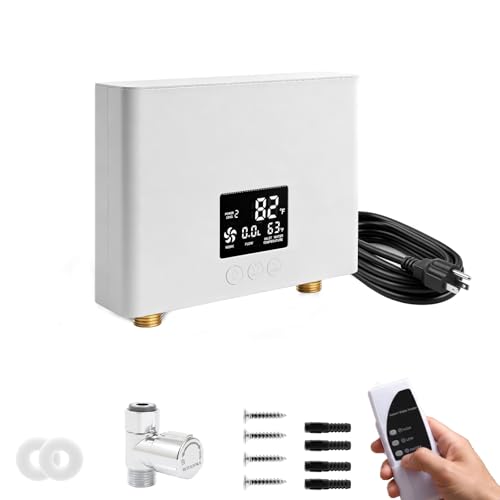


Best Mini Tankless Water Heaters for Small Spaces
CAMPLUX Electric Tankless Water Heater 4.5kW
- Power4.5kW
- Flow Rate1.0 GPM
- Size10.95×2.52×7.4 inches
- Safety FeaturesCSA certified, auto shut-off
- Voltage120V
- Instant hot water in 3 seconds
- Self-modulating power saves up to 99.8% energy
- Compact multi-angle mount fits tight spaces
- CSA certified for safety
- Requires hard wiring and a 40A breaker
- Only supports one sink due to minimum 0.26 GPM flow
KENUOS Electric Tankless Water Heater 3kW 110V
- Power3kW
- Flow Rate—
- SizeCompact, ultra-thin wall mount
- Safety FeaturesOverheat, dry burn, electric leakage protection
- Voltage110V
- Dual remote and touch controls
- Overheat, dry burn, and leakage protection
- Compact, slim design saves space
- Brass water connections for durability
- Limited to 3kW power, not for shower use
- Requires 32A circuit breaker and 2.5mm² wiring
Jialuodeng Mini Tankless Water Heater 3kW 110V
- Power3kW
- Flow Rate—
- Size—
- Safety FeaturesIPX4, dry boil and leakage protection
- Voltage110V
- IPX4 waterproof and water-electric isolation
- Multiple safety protections including dry boil and overheat
- Standard 1/2″ NPT connections for easy hookup
- 24-month warranty and support
- Maximum 3000W power limits flow and temperature rise
- Requires specific wiring and breaker size
Generic Mini Tankless Water Heater 3kW 120V Plug-in
- Power3kW
- Flow Rate—
- Size7.1×9.8×2.8 inches
- Safety FeaturesOverheat, dry heating, IPX4 waterproof
- Voltage120V
- Plug-in design for easy installation
- Big control knob with LED display
- Multiple safety protections including overheat and dry heating
- IPX4 waterproof
- Limited to low flow and single point use
- No remote control or advanced features
How to Choose a Mini Tankless Water Heater
Match the heater to your power source first. Electric models run on standard 120V household circuits and plug directly into an outlet; most draw 12 to 15 amps and need a dedicated 15-amp breaker to avoid tripping when you turn on the tap. Propane and natural gas models need fuel lines and ignition systems—many use battery-powered electronic ignition so they work during power outages, typically running on two D batteries that last months.
Flow rate determines how much hot water you get at once, measured in gallons per minute. A 0.5 to 1 GPM unit handles a single sink for hand washing or car detailing. A 1.5 to 2 GPM model can supply one shower or a kitchen faucet. Two showers running at the same time need 3 to 4 GPM, which moves beyond mini territory into whole-home tankless models.
Temperature rise is how many degrees the heater adds to incoming water. A 40°F rise turns 60°F groundwater into 100°F output; a 70°F rise reaches 130°F. Colder climates and higher desired temperatures require more rise. Check the spec sheet: manufacturers list GPM at specific temperature rises, and the two numbers trade off—higher flow means lower rise on the same unit.
Size and mounting style matter in tight spaces. Most mini units mount to a wall and measure 10 to 15 inches square and 3 to 4 inches deep. Under-sink electric 120V models fit inside cabinets and connect to existing plumbing with compression fittings. Portable models for car detailing or food trailers include a pump and garden-hose fittings so you can draw from a bucket or tank.
| Use | Flow Rate | Power Source | Mounting |
|---|---|---|---|
| Single sink, hand washing | 0.5–1 GPM | 120V plug-in | Wall or under-sink |
| Kitchen faucet, car detailing | 1–1.5 GPM | 120V or propane | Wall or portable |
| One shower | 1.5–2 GPM | Propane or 240V | Wall, outdoor OK |
| Garage or workshop sink | 0.5–1 GPM | Propane with vent | Wall-mounted |
Safety certifications are non-negotiable. Look for a UL, ETL or CSA listing on the label, which confirms the unit meets electrical and fire safety standards. Automatic shut-off cuts power or gas if the unit overheats or loses water flow. Overheat protection prevents the element or heat exchanger from melting. Skip any model that omits these.
For a plug-in compact portable 120V tankless water heater, choose a model with 1 to 1.5 GPM flow, a standard three-prong plug, and overheat shut-off. The CAMPLUX 120V fits under sinks and plugs into a 15-amp circuit without rewiring. For a battery-powered ignition on a propane model, most outdoor and RV units include electronic ignition that runs on two D batteries, so the heater lights even when shore power is off—useful for RV setups and food trailers where 120V may not always be available.
If you need heat and hot water from one appliance, a tankless boiler and water heater combo handles both jobs but requires professional installation and space for a larger unit. That solution suits whole-home heating, not a single sink or shower in a small space.
Sizing and Heat Output Considerations
Sizing a mini tankless water heater starts with determining your flow rate needs. Calculate the total gallons per minute (GPM) based on the fixtures you plan to run simultaneously. For example, a single bathroom sink needs about 0.5 GPM, while a shower uses 1.5 GPM or more. Add the flow rates of all fixtures you expect to use at once.
Temperature rise affects heater performance. It is the difference between the incoming cold water temperature and your desired output temperature. For instance, if your incoming water is 50°F and you want 110°F, the required rise is 60°F. Higher rises reduce the maximum flow rate the heater can maintain at the target temperature.
Choose a model that balances flow rate and temperature rise for your application. Mini heaters typically handle lower flow rates with moderate temperature rises. For multiple fixtures, select a higher-powered model or consider a larger unit. Small point-of-use heaters work best for single sinks or limited hot water needs.
| Appliance | Watts | Per hour | Per day (1 h) | Per month (30 days) |
|---|---|---|---|---|
| 1,500 W mini tankless water heater | 1,500 W | 26¢ | 26¢ | $7.65 |
| 3,000 W mini tankless water heater | 3,000 W | 51¢ | 51¢ | $15.30 |
For maintenance, use a tankless water heater flushing kit to remove scale buildup that reduces efficiency and flow. Regular flushing extends the heater’s life and maintains performance.
Some buyers consider tankless water heater boiler combos to save space and provide both hot water and heating. These units require professional installation and careful sizing to meet both needs safely and efficiently.
Running Costs of Mini Tankless Water Heaters
Calculate running costs by multiplying the heater’s wattage by hours used, then converting to kilowatt-hours (kWh). For example, a 3,000-watt model running 1 hour uses 3 kWh. Multiply kWh by your electricity rate to get the cost. The average US electricity rate is about 17 cents per kWh.
Mini tankless water heaters typically draw between 1,200 and 3,000 watts. Running a 3,000-watt heater for one hour costs about 51 cents (3 kWh × $0.17). Lower wattage models cost less but may deliver less hot water flow. Use this math to compare models based on your expected daily usage.
Tankless heaters are more efficient than tank models because they heat water on demand, eliminating standby heat loss. This efficiency reduces your monthly energy bill, especially if your hot water needs are intermittent or low volume.
Battery-operated mini tankless water heaters exist but are rare and usually designed for emergency or outdoor use. They run on low wattage and limited flow, making them a budget option only in very specific cases where power is unavailable.
For propane tankless water heaters, electrical backup is common to power ignition and controls. However, if propane supply stops, the heater will not produce hot water. The electrical backup does not heat water but ensures safe operation.
| Appliance | Watts | Per hour | Per day (2 h) | Per month (30 days) |
|---|---|---|---|---|
| 3,000 W mini tankless heater | 3,000 W | 51¢ | $1.02 | $30.60 |
| 1,200 W mini tankless heater | 1,200 W | 20¢ | 41¢ | $12.24 |
Safety and Certification Standards
Look for UL, CSA, or ETL certification when buying a mini tankless water heater. These marks prove the unit meets strict safety and performance standards.
Key safety features include overheat protection, which shuts the unit off if water temperature exceeds safe limits, and dry-burning prevention, which stops heating if water flow is too low or absent to prevent damage.
Some models offer temperature control with battery backup. This feature maintains safe operation during power interruptions, preventing scalding or damage when the main power is out.
Battery-operated ignition systems exist in certain propane or gas mini tankless heaters. These allow starting the unit without external power, useful in power outages but still require ventilation and CO alarms.
- Install on a dedicated circuitMini tankless water heaters often need a dedicated electrical circuit sized for their wattage to avoid tripping breakers.
- Maintain clearanceKeep at least 3 feet of clearance around the unit for ventilation and service access.
- Follow manufacturer instructionsUse a licensed plumber or electrician for installation to meet local codes and ensure safe operation.
Common Misunderstandings About Mini Tankless Water Heaters
Ventless Propane Models Do Not Exist for Indoor Use
No propane tankless water heater is rated for indoor use without venting. Propane combustion produces carbon monoxide, which requires outdoor installation or proper venting through a flue. A reader searching for a ventless propane model for a garage sink will find only electric point-of-use heaters or outdoor propane units. Install a CO alarm if you use any fuel-burning appliance indoors, and follow the manufacturer’s venting requirements exactly.
Battery Ignition Is Standard, Not Backup Power
Gas and propane tankless heaters use battery ignition to light the burner, typically with two or four D batteries. The batteries power only the spark and control board, not the heating itself. If the gas supply shuts off, the heater stops; no electrical backup can produce heat without fuel. Battery ignition eliminates the need for a dedicated electrical circuit, but the unit still needs gas pressure and flow to operate.
Tankless Boiler Combos Need Professional Design
A tankless boiler and water heater combo supplies both space heating and domestic hot water from one unit. These systems require careful sizing for combined BTU demand, proper piping to separate heating loops from potable water, and installation by a licensed technician. They save space and can reduce equipment costs, but incorrect setup risks inadequate heat or unsafe water temperatures. Our tankless boiler and water heater combo guide covers models sized for whole-house heating.
Mini Units Serve One Fixture, Not the Whole House
A mini tankless water heater heats water on demand at a flow rate of 0.5 to 2 gallons per minute, enough for a single sink or low-flow shower. Running two fixtures simultaneously drops the temperature because the heater cannot keep up with the combined flow. Buyers disappointed by weak performance usually picked a model undersized for their demand. For multiple bathrooms or simultaneous use, install separate point-of-use heaters or choose a whole-house tankless water heater.
Point-of-use installation cuts the distance hot water travels, so you get instant heat at the tap and waste less water waiting for it to arrive. A 120V plug-in model works for a bathroom sink where flow rate stays low; a 240V hardwired unit handles a shower. Both save energy compared to keeping a 40-gallon tank hot all day. See our best 120V tankless water heater picks for compact plug-in options.
Frequently Asked Questions
What is the best mini tankless water heater for small spaces?
How do I install a mini tankless water heater?
Can I use a mini tankless water heater for multiple fixtures?
What are the energy savings of using a tankless water heater?
Are there any safety concerns with mini tankless water heaters?
How do I maintain my mini tankless water heater?
If that sounds like your room, read up on tankless water heaters with backup next.
It helps to understand ecosmart water heater options before spending anything.