
As the evenings grow cooler, having a reliable source of heat on your patio can make all the difference. Infrared heaters are an excellent choice for outdoor spaces, providing direct warmth without wasting energy heating the air.
Infrared Patio Heater Comparison
| Product | Best for | Power (W) | Heating Range (sq ft) | Weather Resistance | Special Features | Price |
|---|---|---|---|---|---|---|
| DR. INFRARED HEATER Portable Infrared Patio Heater | Best Overall | 900, 1200, 1500 | — | IP55 | Remote control, Wall & ceiling mount | Check price |
| DR. INFRARED HEATER Freestanding & Mounted Infrared Heater | Best Flexibility | 900, 1200, 1500 | — | Rust-resistant aluminum | 3-way mounting, Timer, Safety shutoffs | Check price |
| DR. INFRARED HEATER Infrared Patio Heater with Thermostat | Best Thermostat Control | 1000, 1500 | — | IP55 | Thermostat, Digital display, Multiple mounts | Check price |
| Paraheeter Outdoor Electric Infrared Patio Heater | Best Weatherproofing | 1500 | — | IP65 | Carbon fiber tube, Tripod stand, IP65 rating | Check price |
| SereneLife 900W Outdoor Patio Infrared Heater | Best Compact Heater | 900 | 15 | IP65 | Remote control, Safety features, Compact size | Check price |
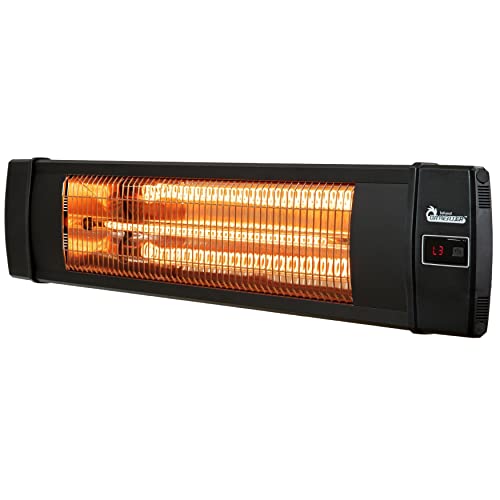


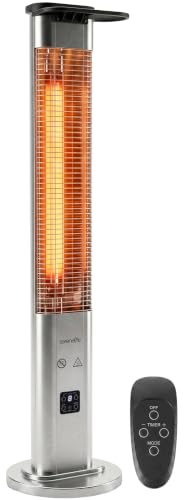
Top Infrared Heaters for Your Patio
DR. INFRARED HEATER Portable Infrared Patio Heater
- Power900W, 1200W, 1500W
- Weather ResistanceIP55
- Mounting OptionsWall and ceiling
- Voltage120V, 60Hz
- Weatherproof aluminum construction
- Remote control included
- Three power settings: 900W, 1200W, 1500W
- Wall and ceiling mounting options
- No thermostat control for precise temperature regulation
DR. INFRARED HEATER Freestanding & Mounted Infrared Heater
- Power900W, 1200W, 1500W
- Weather ResistanceRust-resistant aluminum housing
- Safety FeaturesTip-over and over-temperature protection
- TimerUp to 12 hours
- 3-way mounting flexibility
- Weighted base with wheels for portability
- Automatic safety shutoffs
- Programmable timer up to 12 hours
- Heavier than purely portable models
DR. INFRARED HEATER Infrared Patio Heater with Thermostat
- Power1000W, 1500W
- Weather ResistanceIP55
- Mounting OptionsWall, ceiling, hanging chain
- ThermostatCorded thermal probe
- Digital display with thermostat control
- Multiple mounting options
- Durable dual-layer aluminum construction
- Limited to two heat settings
Paraheeter Outdoor Electric Infrared Patio Heater
- Power1500W
- Weather ResistanceIP65
- Mounting OptionsWall, ceiling, tripod stand
- Heating ElementCarbon fiber tube
- IP65 weatherproof rating
- Carbon fiber heating element with long lifespan
- Multiple mounting and tripod stand included
- Foam protective pad must be removed before use to avoid damage
SereneLife 900W Outdoor Patio Infrared Heater
- Power900W
- Heating Range15 sq. ft.
- Weather ResistanceIP65
- Safety FeaturesTip-over switch, overheat protection
- Compact size for small areas
- IP65 weather resistance
- Safety features for children and pets
- Quiet operation with remote control
- Limited heating range of 15 sq. ft.
How to Choose the Best Infrared Heater for Your Patio
Infrared heaters warm people and objects directly instead of heating the air like convection heaters. Halogen heaters use quartz bulbs that glow red and heat quickly, but infrared heaters use ceramic or carbon elements that deliver steady, gentle heat with better energy efficiency.
Infrared heaters are more energy efficient than convection heaters for outdoor use because they do not waste heat warming the air, which quickly disperses. This makes them ideal for patios where open air reduces heating effectiveness.
Check the power output and heating range to match your patio size. A typical infrared patio heater has 1,200 to 1,500 watts, covering about 100 to 150 square feet. Look for weather resistance ratings like IPX4 or higher to ensure the heater can handle rain and moisture.
Features like remote control and adjustable heat settings improve usability. Some models offer multiple power levels to balance heat and energy use. Mounting options vary: wall, ceiling, or freestanding. Choose based on your patio layout and where you want the heat concentrated.
| Feature | What to Look For |
|---|---|
| Power Output | 1,200–1,500 watts for 100–150 sq ft |
| Weather Resistance | IPX4 or higher for outdoor durability |
| Controls | Remote, multiple heat settings |
| Mounting Options | Wall, ceiling, or portable |
| Energy Efficiency | Infrared technology uses energy directly for heating |
| Appliance | Watts | Per hour | Per day (4 h) | Per month (30 days) |
|---|---|---|---|---|
| 1,500 W infrared heater | 1,500 W | 20¢ | 78¢ | $23.40 |
| 1,200 W halogen heater | 1,200 W | 16¢ | 62¢ | $18.72 |
Sizing Your Infrared Heater for Patio Use
Calculate wattage by multiplying your patio’s square footage by 10 to 15 watts per square foot. For example, a 150 sq ft patio requires about 1,500 to 2,250 watts. Infrared heaters’ focused heat makes the lower end of this range often sufficient.
Infrared heaters warm people and objects directly, so they perform better outdoors than convection heaters that rely on heating air. Wind and open spaces reduce convection heaters’ effectiveness more than infrared models.
Outdoor factors affecting heating include wind, humidity, and how enclosed the patio is. Wind can carry heat away quickly, so a more powerful heater or windbreaks improve comfort. Humidity has less effect on infrared heat.
Infrared heaters work in winter by warming objects and people even in cold air. They do not warm the air itself, so they feel immediate and effective. Infrared heaters are less suitable for kitchens because they do not heat air evenly or ventilate cooking odors.
| Patio Size (sq ft) | Recommended Wattage (W) |
|---|---|
| 50 | 500–750 |
| 100 | 1,000–1,500 |
| 150 | 1,500–2,250 |
| 200 | 2,000–3,000 |
| Appliance | Watts | Per hour | Per day (4 h) | Per month (30 days) |
|---|---|---|---|---|
| 1,500 W infrared heater | 1,500 W | 20¢ | 78¢ | $23.40 |
Safety Features of Infrared Heaters
Infrared heaters are safer than many other outdoor heaters, but the right safety features are essential. Gas infrared heaters produce combustion gases and need ventilation and a carbon monoxide alarm. Electric infrared heaters pose no carbon monoxide risk and are safer for enclosed or semi-enclosed patios.
Infrared heaters differ from halogen heaters in safety and heat quality. Halogen heaters use a different heating element that gets hotter on the surface and cools faster. Infrared heaters provide steady radiant heat with less risk of burns and often have better safety features.
Outdoor infrared heaters need weatherproof ratings like IPX4 or higher. These ratings mean the heater can resist splashing water and rain, which is common on patios. Without proper weatherproofing, electrical components can short or corrode.
| Certification | What It Means |
|---|---|
| ETL | Tested to meet North American electrical safety standards |
| CSA | Certified for safety and performance in Canada and the US |
| UL | Underwriters Laboratories certification for electrical safety |
Certification from ETL, CSA or UL shows the heater passed independent safety tests. Uncertified models may not have reliable safety features or weatherproofing. Always choose a certified model for outdoor use.
Cost of Running an Infrared Heater
Infrared heaters use electricity to warm objects directly, which makes them energy efficient. They convert nearly all the electrical power into heat. To estimate running cost, multiply the heater’s wattage by hours of use, then by the electricity rate per kilowatt-hour (kWh). For example, a 1,500-watt heater running 4 hours at 17 cents per kWh costs 1.5 × 4 × 0.17 = $1.02 per day.
| Appliance | Watts | Per hour | Per day (4 h) | Per month (30 days) |
|---|---|---|---|---|
| 1,500 W infrared patio heater | 1,500 W | 26¢ | $1.02 | $30.60 |
| Heated blanket | 100 W | 1.7¢ | 6.8¢ | $2.04 |
Infrared heaters often cost less to run than propane or natural gas heaters because they avoid fuel delivery and combustion inefficiencies. They also heat people and objects directly, so less energy is wasted warming cold air that escapes outdoors.
Long-term savings come from using infrared heaters only when and where needed. Unlike central heating, they don’t heat the entire house or patio area. This targeted warmth reduces overall energy consumption, especially in mild outdoor conditions.
Infrared heaters are energy efficient when used properly. Running costs depend on wattage, usage time, and local electricity rates. Check the heater’s power rating and your utility’s price per kWh to budget accurately.
Common Misconceptions About Infrared Heaters
Infrared heaters warm objects and people directly by emitting infrared radiation, which is absorbed and converted to heat. This differs from conventional heaters that warm the air first. The direct heating means infrared heaters can feel warmer faster without raising the entire air temperature.
Infrared heaters often have a visible glowing element when operating, usually a red or orange glow. This glow is the heating element working and is normal. It should not be confused with a flame or spark and does not pose a fire risk if the heater is used as directed.
A common myth is that infrared heaters cannot warm a whole room. They can, but their effectiveness depends on room size, insulation, and heater wattage. Infrared heaters excel in open or semi-enclosed spaces like patios because they heat people and objects directly rather than wasting energy heating air that can quickly escape.
Infrared heaters do not dry the air like some convection heaters. Because they transfer heat directly to objects and skin, they maintain more comfortable humidity levels. This makes them a better choice for outdoor use or rooms where dry air is a concern.
Understanding these differences helps set realistic expectations. Infrared heaters provide efficient, targeted warmth with less energy wasted on heating air. They are especially useful outdoors or in drafty areas where conventional heaters struggle.
For more on sizing and safety features to get the most from an infrared patio heater, see our guides on best outdoor infrared heater and best heaters for windy UK gardens patios.
Frequently Asked Questions
What is the difference between halogen and infrared heaters?
Do infrared heaters work well in winter?
Can I use an infrared heater indoors?
How do I calculate the running costs of an infrared heater?
What safety features should I look for in an outdoor heater?
Are infrared heaters energy efficient compared to traditional heaters?
The other half of this decision is bird bath winter maintenance.
We cover best heaters for outdoor spaces in its own guide.
