
Keeping your pool warm and comfortable year-round is essential for enjoying your outdoor space. Electric pool heaters provide a convenient solution, but with many options available, it can be challenging to find the right one for your needs.
Electric Pool Heater Comparison
| Product | Best for | BTU Output | Pool Size | Energy Efficiency | WiFi Control | Price |
|---|---|---|---|---|---|---|
| Varpoolfaye 40000 BTU Pool Heater 220V | Best Overall | 40000 BTU | Up to 12,000 gallons | COP 6.2 | Yes | Check price |
| Varpoolfaye 65000 BTU Inverter Pool Heat Pump | Best for Large Pools | 65000 BTU | Up to 21,000 gallons | COP 6.6 | Yes | Check price |
| Vidapool 75000 BTU Pool Heat Pump | Most Powerful | 75000 BTU | Up to 21,000 gallons | — | Yes | Check price |
| MICOE 18000 BTU Pool Heater for Above Ground Pools | Best for Small Pools | 18000 BTU | Up to 5,500 gallons | — | Yes | Check price |
| NATURAQUELL 18000 BTU Pool Heat Pump | Best 110-120V Model | 18000 BTU | Up to 5,200 gallons | COP 4.1 | Yes | Check price |


Top Electric Pool Heaters for Efficient Heating
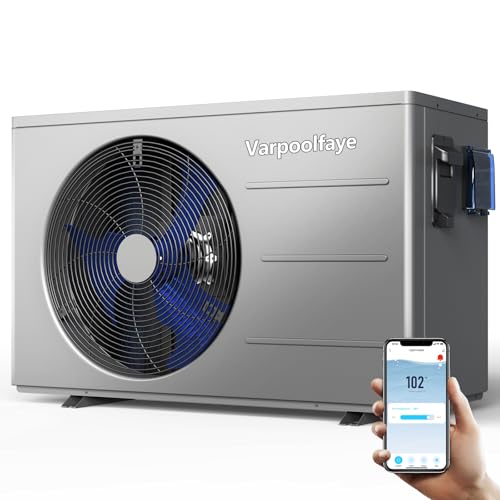
Varpoolfaye 40000 BTU Pool Heater 220V
- BTU Output40000 BTU
- Pool SizeUp to 12,000 gallons
- Energy EfficiencyCOP 6.2
- WiFi ControlYes
- Voltage220V
- High BTU output with energy-efficient performance
- WiFi app control for remote temperature adjustments
- Durable titanium heat exchanger for saltwater compatibility
- Requires 220V power supply, which may limit placement options
- Condensation drainage may require attention during operation
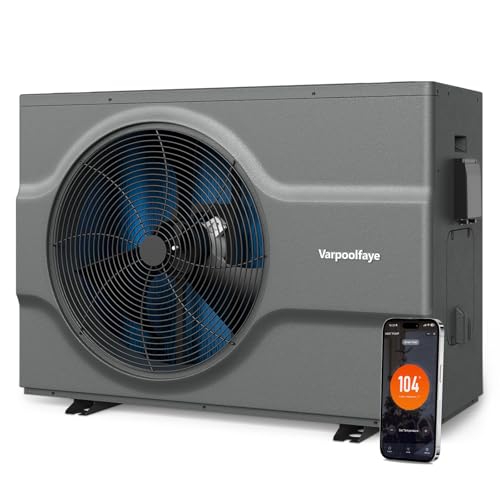
Varpoolfaye 65000 BTU Inverter Pool Heat Pump
- BTU Output65000 BTU
- Pool SizeUp to 21,000 gallons
- Energy EfficiencyCOP 6.6
- WiFi ControlYes
- Voltage220V
- High BTU output for large pools
- Inverter technology for energy savings and longevity
- Quiet operation at 45 dB
- Requires 220V power and space for installation
- Higher upfront size and capacity may be excessive for smaller pools
Vidapool 75000 BTU Pool Heat Pump
- BTU Output75000 BTU
- Pool SizeUp to 21,000 gallons
- Energy Efficiency—
- WiFi ControlYes
- Highest BTU output at 75,000
- Quiet operation at 36 dB
- Multiple connection options for easy installation
- No specific COP value provided
- May be oversized for smaller pools
MICOE 18000 BTU Pool Heater for Above Ground Pools
- BTU Output18000 BTU
- Pool SizeUp to 5,500 gallons
- Energy Efficiency—
- WiFi ControlYes (app and panel)
- Fast heating and energy savings
- Quiet operation at 50 dB
- Smart dual control by app or panel
- Lower BTU limits use to small pools
- No WiFi control, only app and panel
NATURAQUELL 18000 BTU Pool Heat Pump
- BTU Output18000 BTU
- Pool SizeUp to 5,200 gallons
- Energy EfficiencyCOP 4.1
- WiFi ControlYes
- Voltage110-120V
- Runs on standard 110-120V power
- Energy efficient with COP 4.1
- WiFi app and touch panel control
- Lower BTU limits use to small pools
- COP lower than some competitors
How to Choose the Right Electric Pool Heater
Choosing the best electric pool heater starts with matching the heater’s BTU output to your pool size. BTU, or British Thermal Units, measures the heat the unit can deliver. A heater with too low a BTU rating will struggle to warm your pool efficiently.
Energy efficiency is critical. Look for the Coefficient of Performance (COP) rating, which shows how much heat the heater produces per unit of electricity used. A higher COP means lower electricity bills.
Modern electric pool heaters often include WiFi controls. This feature lets you adjust settings remotely, saving energy by heating only when necessary. WiFi control also helps maintain consistent water temperature.
Installation needs vary by model and pool type. Some heaters fit both above ground and inground pools, while others require specific plumbing or electrical setups. Check compatibility with your pool and local electrical codes before buying.
Understanding Pool Heater Sizing and BTU Requirements
To size a pool heater correctly, start by calculating your pool’s volume in gallons. Multiply length by width by average depth, then multiply by 7.5 to convert cubic feet to gallons for rectangular pools. For irregular shapes, use the manufacturer’s formula.
The heater’s BTU output should be enough to raise your pool’s water temperature efficiently. A general rule is 50 to 60 BTU per gallon to increase the temperature by 1 degree Fahrenheit within a reasonable time.
Outdoor temperature and how quickly you want the pool heated affect the required BTU. Colder climates or faster heating needs require higher BTU output. Consider your local weather and usage patterns when sizing.
| Appliance | Watts | Per hour | Per day (6 h) | Per month (30 days) |
|---|---|---|---|---|
| Varpoolfaye 40,000 BTU Pool Heater | 3,500 W | 46¢ | $2.73 | $81.90 |
| MICOE 18,000 BTU Pool Heater | 1,500 W | 20¢ | $1.17 | $35.10 |
Running Costs of Electric Pool Heaters
Electric pool heaters do increase your electric bill, but understanding the costs helps you manage usage and budget wisely. The main factor is the heater’s BTU output, which converts to watts for power consumption. One BTU equals about 0.293 watts, so a 40,000 BTU heater uses roughly 11,720 watts or 11.7 kW when running at full power.
To estimate monthly costs, multiply the heater’s wattage by the hours you run it daily, then by the days per month, and finally by your electricity rate per kWh. For example, running an 11.7 kW heater 4 hours a day for 30 days at 17 cents per kWh costs 11.7 × 4 × 30 × 0.17 = $238.32.
| Heater Model | BTU Output | Approximate kW | Daily Use (hours) | Monthly Cost at $0.17/kWh |
|---|---|---|---|---|
| Varpoolfaye 40000 BTU | 40,000 | 11.7 | 4 | |
| Vidapool 21000 BTU | 21,000 | 6.15 | 4 | |
| MICOE 18000 BTU | 18,000 | 5.3 | 4 | |
| Varpoolfaye 65000 BTU | 65,000 | 19 | 4 | |
| NATURAQUELL | Varies | Estimate 10 | 4 |
Several factors affect energy consumption. Pool size and desired temperature increase runtime. Outdoor temperature and wind chill raise heat loss, requiring longer operation. Use a pool cover to cut heat loss and lower heater runtime. Heat pumps like the Varpoolfaye 65,000 BTU use electricity more efficiently than resistance heaters, reducing costs despite higher BTU ratings.
Running costs depend on your local electric rates and how long you run the heater daily. Using timers and thermostats to control operation prevents overheating and waste. Balance comfort and cost by adjusting the heater’s schedule and temperature settings.
Safety and Certification Standards for Pool Heaters
Electric pool heater safety starts with choosing models certified by ETL or UL. These certifications prove the heater meets strict electrical and fire safety standards. Certified units reduce risks of electrical faults and overheating.
Look for safety features like automatic shut-off if the heater overheats or the water temperature exceeds safe limits. Ground fault circuit interrupter (GFCI) protection is critical to prevent electric shock near water. Some models include freeze protection to avoid damage in cold climates.
Proper installation is essential. Always follow manufacturer instructions and local electrical codes. Installation by a licensed electrician ensures correct wiring, grounding, and GFCI integration. Poor installation can cause shock hazards or equipment failure.
Regular maintenance keeps your pool heater safe and efficient. Check electrical connections, clean filters, and inspect for corrosion or leaks. Replace damaged cords or parts promptly. Never operate a heater with visible damage or malfunctioning safety controls.
By prioritizing certified products, safety features, proper installation, and maintenance, you protect your home and family while enjoying year-round pool warmth.
Unique Features of Electric Pool Heaters Competitors Overlook
Electric pool heaters often include advanced technology that makes them more efficient and easier to use than basic models. These features go beyond simple heating elements to offer smarter, quieter, and more energy-conscious operation.
Smart control capabilities let you manage your heater remotely through a smartphone app or Wi-Fi connection. This means you can adjust the temperature, set schedules, and monitor energy use from anywhere. Models like the Varpoolfaye 40000 BTU Pool Heater include these controls, which help maintain comfort while avoiding unnecessary energy consumption.
Energy-saving technologies such as inverter systems adjust the heater’s power output to match the pool’s heating needs precisely. Instead of running at full power all the time, an inverter modulates the compressor speed. This reduces electricity use and extends the heater’s lifespan. Heat pumps with inverter technology, like the Varpoolfaye 65,000 BTU Inverter Pool Heat Pump, are especially efficient for year-round use.
Quiet operation is another feature some electric pool heaters offer. Advanced compressors and sound insulation reduce noise to a low hum, minimizing disturbance to your outdoor space. This is important if the heater runs overnight or near living areas. The NATURAQUELL Swimming Pool Heat Pump is known for its quiet performance, making it a good choice for noise-sensitive environments.
Frequently Asked Questions
What is the average lifespan of an electric pool heater?
How do I maintain my electric pool heater?
Can I use an electric heater for both above ground and inground pools?
What is the difference between a heat pump and an electric pool heater?
How much electricity does a typical electric pool heater use?
Are there any safety precautions for using electric pool heaters?
The other half of this decision is maintaining bird baths during winter.
There is more on Florida home pool heating in a guide of its own. If that sounds like your room, read up on cheapest way to heat a pool in florida next.