
Sleeping with a heater running changes the safety calculation. You cannot monitor the unit, react to a smell, or hear a warning beep. The heater must handle every contingency on its own, and it must do so for six to eight hours without your intervention.
The efficiency question is simpler than it appears. Electric resistance heaters all turn watts into heat at nearly the same rate. A 1,500 W ceramic heater, a 1,500 W oil-filled radiator, and a 1,500 W panel heater will consume 1.5 kilowatt-hours per hour of operation and cost the same to run. The difference lies in how that heat spreads through the room, how hot the surface gets, how reliably the thermostat maintains your set temperature, and whether the design can fail safely while you sleep.
Are Oil-Filled Heaters More Cost Efficient Than Other Electric Heaters?
Oil-filled heaters cost exactly the same to run as ceramic, panel, or fan heaters when all are set to the same wattage. Every electric resistance heater converts electricity to heat at near 100% efficiency, so a 1,500 W unit uses 1,500 watts per hour regardless of whether it heats oil, ceramic plates, or metal coils.
The confusion comes from how different heaters feel and how long they stay warm. Oil-filled radiators continue radiating heat for 15 to 30 minutes after the heating element shuts off, because the oil holds thermal energy and releases it slowly. A ceramic tower stops producing heat the moment it cycles off. That difference affects comfort and how often the thermostat clicks back on, but it does not change the fact that watts in equals heat out.
Running cost depends on wattage, hours of use, and your electricity rate. A 1,500 W heater running for eight hours at $0.17 per kWh costs $2.04 for the night, whether it is oil-filled, ceramic, or a panel model. The math is straightforward: 1,500 ÷ 1,000 × 8 × 0.17. If you run a lower-wattage oil heater at 1,000 W, the cost drops to $1.36 for the same eight hours.
| Appliance | Watts | Per hour | Per day (8 h) | Per month (30 days) |
|---|---|---|---|---|
| 1,500 W oil-filled heater | 1,500 W | 26¢ | $2.04 | $61.20 |
| 1,500 W ceramic heater | 1,500 W | 26¢ | $2.04 | $61.20 |
| 1,000 W panel heater | 1,000 W | 17¢ | $1.36 | $40.80 |
What does differ is thermostat accuracy, heat retention, and how evenly warmth spreads. An oil-filled radiator with a precise thermostat may cycle less often because it keeps radiating between heating cycles, reducing the on-off churn that wastes energy in poorly insulated rooms. A ceramic heater with a loose thermostat that swings three degrees either side of the setpoint will run longer to compensate. Choose your heater based on how you use it and which energy efficient heater types suit your room, but do not expect one electric resistance type to slash your bill compared to another at the same wattage.
Panel Heater vs Oil Heater: Which Is More Energy Efficient?
At equal wattage, a panel heater and an oil-filled heater consume identical energy. A 1,500 W panel and a 1,500 W oil radiator both draw 1.5 kilowatts per hour when running. Energy efficiency is the same; what changes is how quickly each heater warms a room and how long it stays warm after shutoff.
Panel heaters warm up faster because they have less thermal mass. The heating element sits directly behind a thin metal or glass surface, so the panel reaches operating temperature in a few minutes and begins convecting warm air immediately. Oil-filled heaters take 10 to 15 minutes to heat the oil and the metal fins, but once warm they continue radiating heat for 15 to 30 minutes after the element cycles off. That retained heat reduces the number of times the thermostat calls for power in a well-insulated room.
| Feature | Panel Heater | Oil-Filled Heater |
|---|---|---|
| Warm-up time | 3 to 5 minutes | 10 to 15 minutes |
| Heat retention after shutoff | Minimal | 15 to 30 minutes |
| Best use case | Short heating sessions | All-night operation |
| Surface temperature | Higher (140–180°F) | Lower (120–150°F) |
Wall-mounted panel heaters can be more effective in rooms with high ceilings because convection moves warm air upward naturally, and mounting the panel higher places the heat source closer to the top of the room where it circulates down. Oil-filled radiators sit at floor level and provide more even radiant warmth across the lower half of the room, which suits bedrooms where you want consistent heat near the bed rather than a plume of rising air.
For short heating sessions—warming the bathroom for 20 minutes in the morning or heating a bedroom for an hour before bed—a panel heater delivers comfort faster and wastes less energy because you are not waiting for thermal mass to catch up. For overnight use, an oil-filled heater’s ability to coast on stored heat between thermostat cycles can reduce total runtime by 10 to 15 percent in a draft-free room, though the energy consumed per hour of active heating remains identical.


Fan Heater vs Oil Heater: Energy Use and Practical Differences
At equal wattage, fan heaters and oil-filled heaters consume identical energy. A 1,500 W ceramic fan heater and a 1,500 W oil radiator both draw 1.5 kilowatts per hour when running, so your electric bill reflects only how long each runs and whether it has a thermostat that cycles it off.
Ceramic and fan heaters use a heating element—usually a PTC ceramic plate or metal coil—and a fan to blow warm air into the room. Oil heaters warm a reservoir of diathermic oil that radiates heat through metal fins and rises by convection, with no fan at all. The forced-air design heats a cold bedroom faster, often bringing a small space to comfort in five to ten minutes. An oil radiator takes twenty to thirty minutes to reach full output because the oil must warm first.
The trade-off is noise. Fan heaters generate 35 to 55 dB of steady air movement—not loud, but enough to wake light sleepers or mask white noise. Oil heaters are silent except for an occasional thermostat click.
| Feature | Fan / Ceramic Heater | Oil-Filled Heater |
|---|---|---|
| Warm-up time | 5 to 10 minutes | 20 to 30 minutes |
| Noise level | 35 to 55 dB | Silent |
| Overnight suitability | Safe with thermostat, but noisy | Ideal: silent and stable |
| Moving parts | Fan motor | None |
Ceramic heaters with accurate thermostats cycle on and off to hold temperature, which cuts actual runtime and saves energy. Budget models without thermostats run continuously until you switch them off, wasting power once the room warms. Oil heaters nearly always include a thermostat, and the warm oil keeps radiating heat for ten to fifteen minutes after the element shuts off, reducing the number of cycles.
Both types are safe when they include tip-over switches, overheat protection, and a safety certification. Oil heaters have fewer moving parts—no fan motor to fail—and their weight keeps them stable if bumped during the night.
What Makes a Heater Safe to Leave On Overnight
The safest heater to use overnight includes a tip-over switch, overheat protection, low surface temperature, no exposed heating elements, and a safety certification from UL, ETL, or CE. Oil-filled radiators meet every requirement and add inherent stability that ceramic and panel heaters often lack.
A tip-over switch cuts power instantly if the heater is knocked over by a pet, a blanket, or a sleeper’s foot. The switch is a weighted lever or tilt sensor inside the base; when the unit tilts beyond about fifteen degrees, the circuit opens and the heating element stops. This feature is non-negotiable for unattended operation.
Overheat protection is a thermal cutoff—a bimetallic fuse or sensor—that shuts the heater down if internal temperature exceeds the design limit, usually around 120 to 140 °F for the casing or 400 °F for the element. Blocked airflow, a covered vent, or a fan motor failure can all trigger it. The cutoff resets automatically once the unit cools, or requires a manual reset depending on the design.
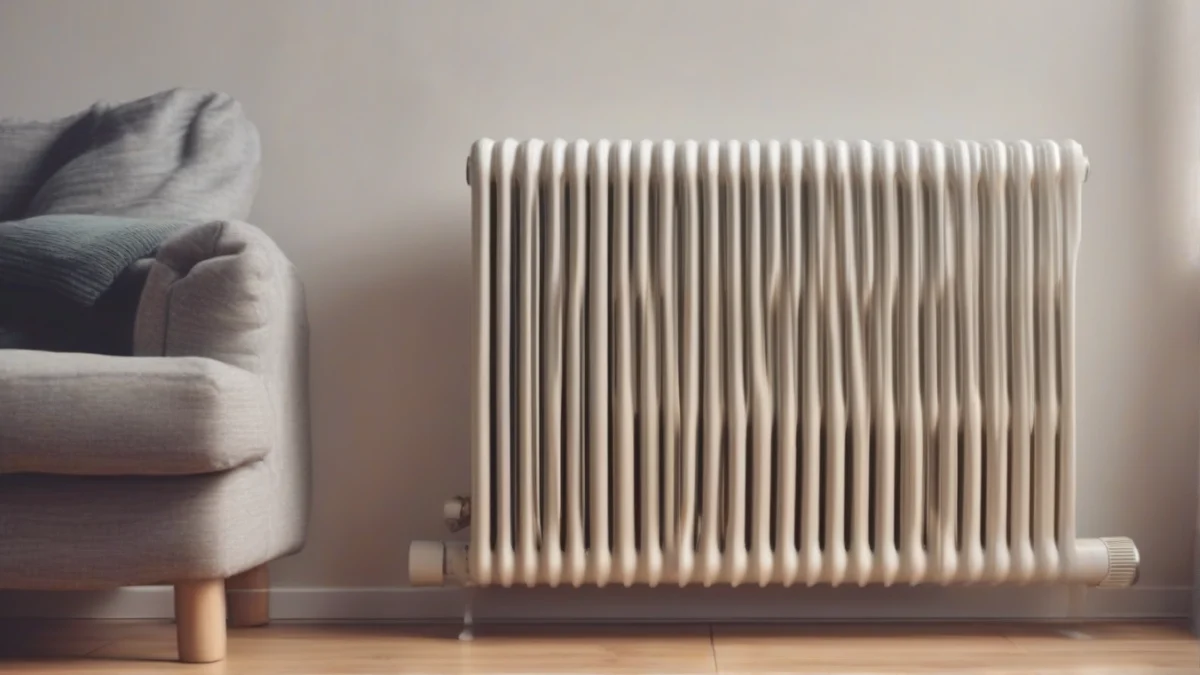
Oil-filled radiators have low surface temperatures—warm to the touch but rarely hot enough to cause immediate burns—because heat spreads across many square feet of metal fin. Ceramic heaters often use cool-touch plastic shells with air gaps around the element. Both designs reduce the risk of accidental contact, but oil radiators stay cooler overall because the oil acts as a thermal buffer.
Look for a heater with no exposed heating elements or glowing coils. Halogen and quartz infrared heaters use visible red coils that reach 900 °F and can ignite fabric on contact; they are not safe for overnight use. Oil, ceramic, and panel heaters enclose the element completely.
A UL, ETL, or CE certification means the heater passed third-party electrical safety tests for insulation, grounding, thermal runaway, and abnormal operation. The mark appears on the rating label or the plug. Heaters sold without certification may lack proper internal fusing or flame-retardant materials.
Place the heater on a flat, hard surface with three feet of clearance on all sides—no curtains, bedding, or furniture within reach of the warm air or casing. Keep the cord path clear so no one trips and pulls the unit over. The safest bedroom heaters guide covers room-specific placement in detail.
- Silent operation and low surface temperature
- Heavy, stable base resists tipping
- No fan or moving parts to fail
- Continues radiating heat after element cycles off
- Halogen and quartz infrared: exposed 900 °F elements
- Ceramic heaters without tip-over switches
- Any heater plugged into an extension cord or power strip
- Models lacking UL, ETL, or CE certification
Thermostat, Timer, and Low-Wattage Modes: Features That Cut Running Costs
A built-in thermostat measures room temperature and cycles the heater on and off to maintain your set point. This is where real savings happen. Once the room reaches your target temperature, the heater stops drawing power until the air cools again, cutting actual runtime by 40 to 60% compared to continuous operation.
Cheap heaters without thermostats run continuously, wasting energy once the room is warm. You pay for heat that escapes through walls and windows while the heater keeps feeding more in. A thermostat turns that waste into off-time.
Eco or low-wattage modes drop power from 1,500 W to 800 or 1,000 W, cutting cost by one-third to nearly half. The room takes longer to warm, but once it does, the lower wattage maintains temperature with less cycling. If you start the heater an hour before bed on high, then switch to eco mode overnight, you spend less without waking up cold.
| Appliance | Watts | Per hour | Per day (8 h) | Per month (30 days) |
|---|---|---|---|---|
| High mode, 1,500 W | 1,500 W | 26¢ | $2.04 | $61.20 |
| Medium or eco mode, 1,000 W | 1,000 W | 17¢ | $1.36 | $40.80 |
| Low mode, 800 W | 800 W | 14¢ | $1.09 | $32.64 |
Timers prevent the heater from running while you are awake and dressed or after you leave the house. A 12-hour timer lets you set the heater to shut off at 7 a.m., so you are not heating an empty bedroom while you shower and eat breakfast. That eliminates two to three hours of waste every day.
Many modern ceramic heaters combine accurate digital thermostats, eco modes, and 12-hour timers. Oil-filled radiators usually have mechanical thermostats—reliable but less precise than digital. A mechanical dial may overshoot your target by 2 to 3°F, causing the heater to run longer before shutting off. Digital thermostats hold tighter to the set point, trimming a few extra minutes from each heating cycle.
Propane and Vented Gas Heaters: Efficiency and Overnight Safety
Vented gas and propane heaters exhaust combustion gases outdoors through a flue or chimney. Unvented models—also called ventless or vent-free—burn cleanly enough to release exhaust into the room, relying on oxygen-depletion sensors and clean combustion to stay safe.
Vented heaters lose 10 to 30% of heat up the flue, depending on how much air the draft pulls with it. Efficiency runs between 70 and 90%, with newer sealed-combustion and direct-vent models at the high end. They produce no indoor carbon monoxide, because all exhaust leaves the house.
Unvented models operate at near 100% efficiency because all heat stays indoors. But they add moisture and combustion byproducts—carbon dioxide, trace carbon monoxide, nitrogen oxides—to the air. Oxygen-depletion sensors shut the burner off if air quality drops, but that is a failsafe, not a reason to ignore ventilation.
Vented gas wall heaters with built-in thermostats are safe for overnight use and cost less per BTU than electric resistance heat in areas with low natural gas prices. Natural gas averages $1.50 to $2.00 per therm (100,000 BTU) in much of the US; a 20,000 BTU vented heater running eight hours at 80% efficiency costs about 32 to 43 cents. The same heat from a 1,500 W electric heater—5,100 BTU per hour—costs $2.04 over eight hours at $0.17 per kWh.
Electric heaters remain the safest choice for bedrooms without chimneys or vents. They produce no combustion byproducts, require no fuel storage, and shut off instantly when tipped or overheated. If your home has no gas line and no flue, a safe indoor heater without electricity means propane—which brings the ventilation and carbon monoxide concerns right back. Plug-in electric heat trades fuel cost for peace of mind.
Placement, Clearance, and Room Insulation: Making Any Heater More Efficient
Where you place a heater and how well you seal the room determine how much energy you waste. A 1,500 W heater in a drafty ground-floor flat loses heat through single-pane windows and cold floors, forcing the thermostat to cycle on more often and driving up running costs. Proper placement protects against fire risk; good insulation lets a lower-wattage heater do the job.

- Place on a hard, flat surfaceSet the heater on a level floor, never on carpet, bedding, rugs, or furniture. Soft surfaces block airflow underneath and trap heat, raising the risk of overheat shutdown or fire.
- Maintain 3 feet of clearanceKeep at least 3 feet (1 meter) clear on all sides. Move curtains, bedding, clothing, and furniture out of range. Fabric ignites when it touches a hot surface or sits too close for too long.
- Plug directly into the wallUse a wall outlet only—no extension cords, power strips, or surge protectors overnight. A 1,500 W heater draws 12.5 amps, close to the 15-amp limit of most household circuits, and any added connection point raises resistance and fire risk.
- Close doors and curtainsShut the door and draw heavy curtains to trap heat in the room. If the air feels stuffy, crack the door an inch rather than opening a window; you paid to heat that air.
- Draft-proof floors and windowsGround-floor flats and older homes lose heat through gaps under doors, single-pane windows, and cold floors. Use draft excluders at door bottoms, hang thermal-lined curtains, and lay a thick rug over tile or wood floors in winter.
- Reverse ceiling fans in tall roomsIn high-ceilinged Victorian homes, warm air rises and pools at the ceiling. Set a ceiling fan to low reverse (clockwise) to push warm air back down without creating a draft.
A well-insulated room holds heat longer, allowing the thermostat to keep the heater off for longer stretches. That cuts energy use and running cost, and it means a lower-wattage setting can maintain comfort—often the safer choice for nighttime use.
Frequently Asked Questions
Is a ceramic heater more efficient than a halogen heater?
Are infrared heaters energy efficient for all-night heating?
Which is more efficient: a 3-panel or 5-panel oil heater?
Can I use a vented propane heater overnight indoors?
What is the most efficient low-wattage heater for sleeping?
Are panel convection heaters energy efficient compared to oil-filled radiators?
It helps to understand panel vs oil heater before spending anything.
There is more on how oil heaters work in a guide of its own.
