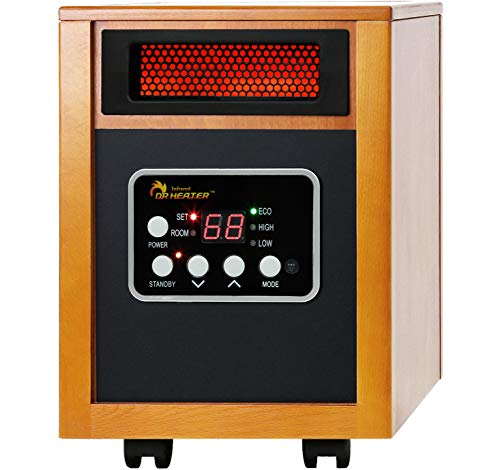
A small bedroom concentrates risk. Every object sits closer to the heater, and every misstep—a knocked cord, a draped towel—has less margin for error. The confined space also traps heat, which makes overheat protection and precise thermostat control essential.
Electric heaters remove one danger entirely: carbon monoxide. Fuel-burning models have no place in a bedroom unless they carry an explicit indoor rating and you install a CO alarm. That leaves you with three proven electric types and a short list of non-negotiable features.
What Makes a Space Heater Safe for a Small Bedroom
The safest space heaters for small bedrooms are electric models with tip-over shutoff, overheat protection, and cool-touch casings. Ceramic heaters and oil-filled radiators meet these requirements consistently, eliminate carbon monoxide risk, and provide controllable heat without open elements or high surface temperatures.
Small rooms amplify every heating hazard. A bed, nightstand, curtains, and charging cables sit within a few feet of the heater, and the confined space concentrates heat faster than a larger room. A model that seems safe in a living room becomes a fire risk in a 10×10 bedroom if it lacks automatic shutoff or if its surface reaches 150°F. Proximity to flammable materials and the likelihood that you will sleep while the heater runs make certified safety features non-negotiable.
Three features form the safety baseline:
- Tip-over shutoff: A switch or sensor cuts power instantly if the heater tilts beyond a set angle, preventing it from heating bedding, carpet, or anything it falls against.
- Overheat protection: An internal thermostat monitors the heater’s temperature and shuts it down if components exceed safe limits, even if the room thermostat is still calling for heat.
- Cool-touch casing: The outer surface stays below 140°F during operation, reducing burn risk if you brush against it and lowering ignition risk for anything placed too close.
Electric heaters are the only type suitable for unattended bedroom use because they produce no combustion gases. Propane, kerosene, and diesel models—even those rated for indoor use—emit carbon monoxide and require active ventilation and a working CO alarm. A small bedroom offers limited air exchange, and sleeping occupants cannot detect odorless CO buildup. Safest electric heater 120vac models plug directly into a standard 15-amp circuit and need no fuel handling or exhaust management.
Ceramic heaters and oil-filled radiators dominate the small-bedroom category because their designs align with the safety requirements. Ceramic models use a self-regulating PTC element that reduces output as it heats, and a fan keeps the casing cool. Oil-filled radiators have no fan, no exposed element, and a surface that stays warm rather than hot. Both types come with tip-over and overheat protection as standard equipment, and both operate on 120V household circuits at 1,500W or less.
Ceramic Heaters: Fast Heat With Built-In Shutoffs
Ceramic heaters use a PTC (positive temperature coefficient) element that heats air as it passes through a honeycomb ceramic core, then pushes the warmed air into the room with a fan. The element self-regulates: as its temperature climbs, electrical resistance increases and power draw falls, preventing runaway heat. A small bedroom feels warm within minutes because the fan distributes heat quickly and the confined space requires less total energy to raise the temperature.
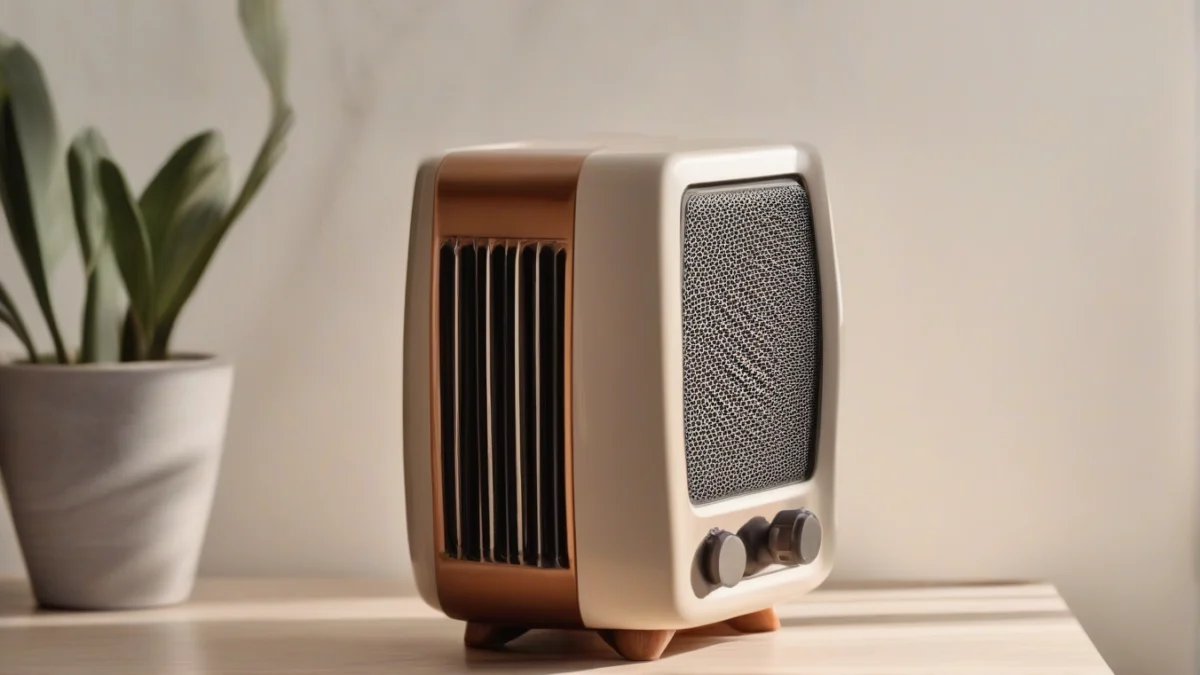
Three advantages make ceramic models suited to bedrooms. The PTC element reaches its maximum temperature and holds there, so the heater cannot overheat internally under normal operation. The fan keeps the outer casing cool to the touch even when the element inside runs at full power. Thermostatic control cycles the heater on and off to maintain a set temperature, which saves energy and prevents the stuffy, overheated feeling that comes from continuous operation in a small space.
Safety features are standard across ceramic models sold for residential use. Tip-over shutoff relies on a tilt switch or accelerometer; if the heater tilts more than 30 degrees or falls completely, power cuts within a fraction of a second. Overheat protection uses a thermal fuse or resettable cutoff that opens the circuit if internal temperature exceeds the design limit, typically around 185°F at the element. The fan itself acts as a cooling mechanism, preventing heat from concentrating in one area of the casing.
When evaluating a ceramic heater for bedroom use, verify these specifications:
- Thermostat range and precision: Models with 1-degree Fahrenheit increments let you set a narrow comfort band, reducing the on-off cycling that disturbs sleep. A range from 41°F to 95°F covers both mild and freezing nights.
- Timer function: A 12-hour timer lets the heater warm the room before bed and shut off automatically in the early morning, eliminating the risk of running unattended all night.
- Noise level: Fan noise matters in a bedroom. Models rated at 45 dB or lower—about the sound of a quiet office—are unobtrusive; anything above 50 dB becomes noticeable in a silent room.

A 1,500W ceramic heater is the plug-in maximum for a standard 120V, 15-amp circuit and produces roughly 5,100 BTU per hour, enough to maintain comfort in a bedroom up to 150 square feet when outdoor temperatures stay above freezing. Higher wattage requires a dedicated circuit or hardwired installation. Small space heater models at 750W or 1,000W suffice for rooms under 100 square feet and draw less current, leaving headroom on a shared circuit.


Oil-Filled Radiators: Silent and Steady Overnight
Oil-filled radiators heat a sealed reservoir of diathermic oil with an electric element, then radiate warmth through metal fins. No fan, no moving parts, no noise. The oil circulates by convection inside the unit and stays hot long after the heater clicks off, turning a small bedroom into a gently warmed envelope rather than a blast zone.
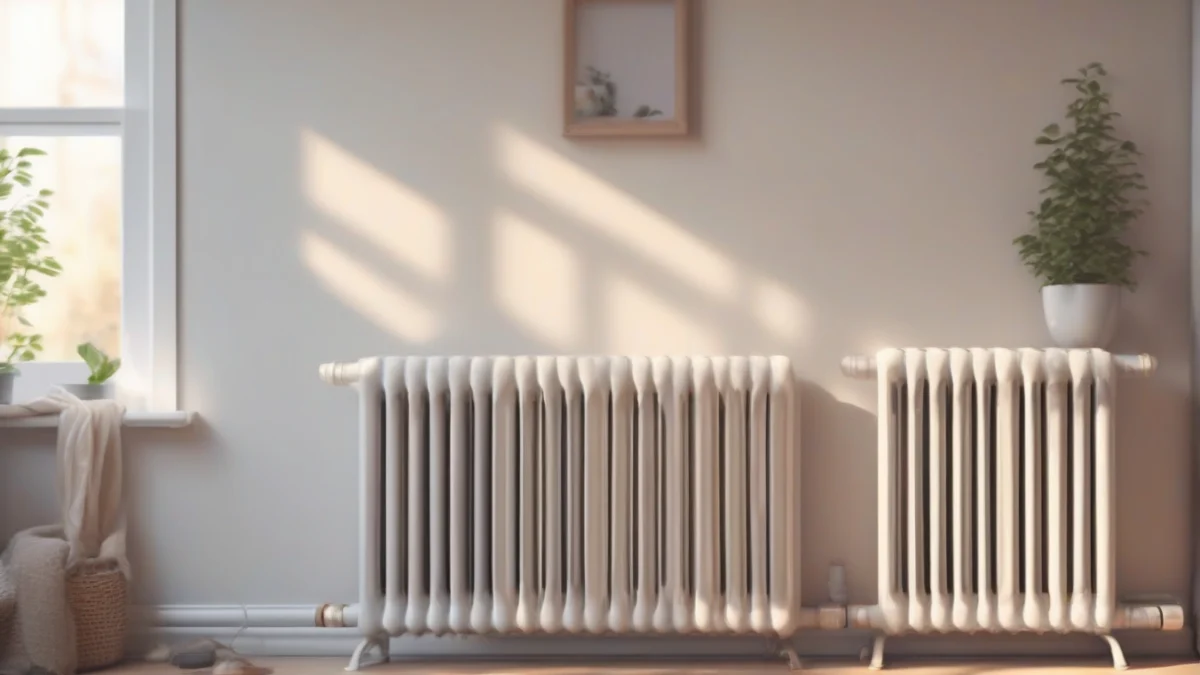
That silence makes them the best choice for light sleepers and anyone who keeps a heater running overnight. A ceramic heater’s fan hum registers around 40 to 50 decibels; an oil-filled model measures closer to the ambient sound of an empty room. The radiant heat spreads evenly without stirring dust, and the thermal mass of the oil smooths out temperature swings. You set the thermostat once and the room holds steady.
The safety profile suits bedrooms. Most oil-filled radiators ship with tip-over and overheat protection as standard, and their heavy base—typically 15 to 20 pounds—resists accidental knocks better than a lightweight ceramic tower. The fins stay warm to the touch but rarely hot enough to burn skin on brief contact, though you should verify the manufacturer’s cool-touch claim before placing the unit near a bed. No exposed heating element means nothing to ignite if a blanket falls against it.
The tradeoff is speed. An oil-filled radiator takes 20 to 30 minutes to reach full output, where a ceramic heater delivers heat in under five. The footprint is larger, too—traditional models stand as wide as a window and as tall as a nightstand. Vertical or slim-profile designs narrow that footprint to around 10 inches but still occupy more floor space than a compact ceramic tower. If you heat your bedroom for six or eight hours each night, the sustained warmth justifies the size. If you want quick heat before bed and then switch it off, a faster bedroom space heater makes more sense.
- Completely silent operation—no fan noise to disrupt sleep
- Radiant heat continues after shutoff, smoothing temperature swings
- Heavy base and enclosed element reduce tipping and ignition risk
- Takes 20 to 30 minutes to warm a cold room from startup
- Larger footprint than ceramic towers, even in slim models
- Heavier weight (15–20 lb) makes moving between rooms less convenient
Safety Features You Cannot Skip
Every bedroom heater needs a core set of protections. These features prevent the three failure modes that cause most heater incidents: tipping over near bedding, overheating from blocked airflow, and surface burns from accidental contact. A model missing even one belongs on a store shelf, not beside your bed.
| Feature | What It Does | Why It Matters |
|---|---|---|
| Tip-over switch | Gravity or tilt sensor cuts power instantly when the heater tips beyond 20–30 degrees | Prevents ignition if knocked into bedding, laundry, or curtains |
| Overheat protection | Thermal fuse or sensor shuts the unit down if internal temp exceeds safe threshold | Stops internal fire if a vent gets blocked by furniture or fabric |
| Cool-touch exterior | Insulated casing keeps outer surface below 140°F even at full power | Prevents burns from accidental contact during sleep or in the dark |
| Adjustable thermostat | Cycles heating element on and off to hold room at set temp, typically 41–95°F range | Stops energy waste and keeps the room from overheating overnight |
| Auto shut-off timer | Powers down after 1 to 12 hours without manual intervention | Essential failsafe for overnight use with auto shut-off |
| UL, ETL, or CSA listing | Independent lab tested electrical safety, fire risk, and thermal performance | Confirms the heater meets North American safety standards |
The thermostat and timer work together to manage long heating sessions. A thermostat prevents runaway heat by cycling the element; a timer guarantees shutoff even if you forget. Models with both let you set a target temperature and a maximum runtime, so the heater warms the room to 68°F and then turns off after eight hours—whether you’re awake to switch it off or not.
Cool-touch claims vary. Some manufacturers mean the casing stays below 100°F; others mean it won’t cause third-degree burns on prolonged contact, which still allows surface temps around 130–140°F. Read the manual’s safety section or check owner reports before placing the heater within arm’s reach of a sleeping person or a child’s bed.
Placement Rules for Confined Spaces
Small bedrooms concentrate heat and limit escape routes, so placement mistakes that might go unnoticed in a living room can ignite bedding or block your exit. Follow these rules every time you run a heater.
- Three feet of clearance on all sides. Nothing flammable—bedding, curtains, furniture, clothing, laundry piles, paper—within three feet of the heater. Measure from the front grille and from the sides.
- Stable, hard, level surface only. Never place a heater on carpet, a rug, a bed, or wobbly furniture. The surface must support the weight without tipping and allow air to flow underneath if the heater has bottom vents.
- Plug directly into a wall outlet. Extension cords and power strips overheat under the sustained 1,500 W load most space heaters draw. If you must use an extension cord, choose 14-gauge or heavier wire rated for at least 1,875 W, and keep it as short as possible.
- Keep the cord out of walkways. A tripped cord can unplug the heater mid-cycle or pull it off its surface. Route the cord along the wall, not across the path to the door or bathroom.
- Unplug when not in use. A switched-off heater still draws standby power and presents a risk if the switch is bumped or a child plays with the controls.
What About Non-Electric Heaters in Bedrooms
Propane, kerosene, and natural-gas heaters burn fuel and produce carbon monoxide as a byproduct. CO is colorless, odorless, and deadly in enclosed spaces. Only heaters explicitly rated for indoor use may be used inside a bedroom, and never construction heaters, patio heaters, or any model the manual designates for outdoor or well-ventilated spaces only.
Indoor-rated fuel heaters require ventilation as specified in the manual—usually a cracked window or door—and a working carbon monoxide alarm in the room. Even with those precautions, bedrooms remain the worst place for fuel heat. You sleep for hours in a confined space with the door often closed, and early CO symptoms—headache, dizziness, nausea—are easy to miss or attribute to something else when you are asleep or groggy.
Electric heaters eliminate carbon monoxide risk entirely. They produce no combustion gases, require no ventilation beyond normal airflow, and present no fuel-storage or spillage hazard. For bedrooms, electric models are the safer default. If you need portable fuel heat for a space without electricity, read the best small propane heaters guide and follow every ventilation and alarm requirement without exception.
Running Cost and Right-Sizing the Heater
Standard plug-in space heaters max out at 1,500 watts because a typical US household outlet supplies 15 amps at 120 volts, which equals 1,800 watts total. Manufacturers cap heaters at 1,500 W to leave a safety margin and prevent breaker trips when you plug in a lamp or phone charger on the same circuit.
A small bedroom under 150 square feet needs 1,000 to 1,500 watts to raise the temperature comfortably. Start at 1,000 W if the room is insulated and you want gentle background heat; use 1,500 W if the space is drafty or you need to heat it quickly before bed. Oversizing wastes energy and risks tripping the breaker. Undersizing means the heater runs continuously without cycling off, so you pay for the full wattage all night and save nothing.
Running cost follows one formula: watts divided by 1,000, multiplied by hours, multiplied by your electricity rate per kilowatt-hour. Most US households pay between $0.12 and $0.20 per kWh; the table below assumes $0.17, close to the national average.
| Appliance | Watts | Per hour | Per day (8 h) | Per month (30 days) |
|---|---|---|---|---|
| 1,500 W ceramic heater on high | 1,500 W | 26¢ | $2.04 | $61.20 |
| 1,000 W ceramic heater on medium | 1,000 W | 17¢ | $1.36 | $40.80 |
If you need help choosing a heater that fits your bedroom size and heating schedule, the best space heaters for small bedrooms guide walks through models sorted by room size and runtime.
Frequently Asked Questions
Can I leave a space heater on all night in a small bedroom?
Are ceramic heaters safe for overnight use in bedrooms?
What is the safest type of heater for a small bedroom?
Do I need a special heater for a bedroom in the UK?
Can I use an extension cord with a 1,500-watt bedroom heater?
How far should a space heater be from my bed?
It helps to understand comparing ceramic and panel heaters before spending anything.
Before you buy anything, it is worth looking at constant heat heater options.