
Tankless water heaters provide on-demand hot water, but they require regular maintenance to prevent scaling that can affect performance. A quality flushing kit is essential for this upkeep, allowing homeowners to descale their systems efficiently.
In this roundup, we review the best flushing kits available, highlighting their features, advantages, and suitability for different needs.
Flush Kit Comparison at a Glance
| Product | Best for | Pump Power | Hose Length | Descaling Solution | Bucket Capacity | Price |
|---|---|---|---|---|---|---|
| 6699 Tankless Water Heater Flushing Kit 1/4HP Pump | Best Overall | 1/4 HP | 6 feet | No | 3 gallons | Check price |
| VEVOR Tankless Water Heater Flush Kit 1/3HP Pump | Best for Heavy Duty | 1/3 HP | — | No | 3.7 gallons | Check price |
| Chromex Flush Kit with NSF Descaler & 1/6HP Pump | Best with Descaler | 1/6 HP | 6 feet | Yes | 5 gallons | Check price |
| Chromex Flush Kit with Gallon Descaler & 1/6HP Pump | Best for Standard Use | 1/6 HP | 6 feet | Yes | 5 gallons | Check price |
| 6699 Tankless Water Heater Flush Kit 1/6HP Pump | Best Budget | 1/6 HP | 6 feet | No | 3 gallons | Check price |
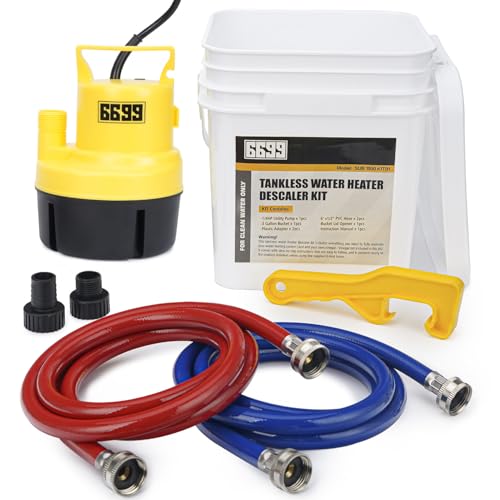


Top Picks for Tankless Water Heater Flush Kits
6699 Tankless Water Heater Flushing Kit 1/4HP Pump
- Pump Power1/4 HP
- Hose Length6 feet
- Descaling SolutionNo
- Bucket Capacity3 gallons
- Strong 1/4 HP pump with high flow rate
- Ergonomic bucket lid opener for easy access
- Quiet operation with thermal overload protection
- Bucket capacity is smaller than some competitors
- Pump max fluid temperature limited to 95 ℉
VEVOR Tankless Water Heater Flush Kit 1/3HP Pump
- Pump Power1/3 HP
- Hose Length—
- Descaling SolutionNo
- Bucket Capacity3.7 gallons
- Powerful 1/3 HP pump with high flow rate
- Durable dual-layer stainless steel hoses
- Waterproof pump design for reliability
- Heavier and bulkier than smaller kits
- No descaling solution included
Chromex Flush Kit with NSF Descaler & 1/6HP Pump
- Pump Power1/6 HP
- Hose Length6 feet
- Descaling SolutionYes
- Bucket Capacity5 gallons
- Includes NSF certified descaling solution
- Large 5-gallon bucket for extended cleaning
- Safe for metals and plastics
- Pump is less powerful than some competitors
- Cleaning solution may require disposal care
Chromex Flush Kit with Gallon Descaler & 1/6HP Pump
- Pump Power1/6 HP
- Hose Length6 feet
- Descaling SolutionYes
- Bucket Capacity5 gallons
- Includes NSF certified descaling solution
- Stainless steel hoses resist corrosion
- 5-gallon bucket for sufficient cleaning volume
- Pump power is lower than some alternatives
- Smaller descaling solution volume than other Chromex kit
6699 Tankless Water Heater Flush Kit 1/6HP Pump
- Pump Power1/6 HP
- Hose Length6 feet
- Descaling SolutionNo
- Bucket Capacity3 gallons
- Affordable and straightforward kit
- Ergonomic bucket lid opener
- Thermal overload protection on pump
- Lower flow rate than higher-powered kits
- No descaling solution included
How to Choose a Tankless Water Heater Flushing Kit
Choosing the best tankless water heater flush kit means matching the kit’s specs to your heater’s maintenance needs. Start with the pump power and flow rate. A stronger pump and higher flow rate clear scale faster and more thoroughly. Aim for pumps rated around 1/4 to 1/3 horsepower with flow rates near 1 to 2 gallons per minute for effective descaling.
| Pump Power (HP) | Flow Rate (GPM) |
|---|---|
| 1/4 HP | 1.0 GPM |
| 1/3 HP | 1.5 GPM |
| 1/2 HP | 2.0 GPM |
Check the hose length to ensure it fits your heater’s setup without stretching or kinking. A hose of at least 6 feet works for most installations but longer hoses help when the heater is hard to reach. Confirm if the kit includes a descaling solution and verify it’s safe for your tankless system’s materials. Some kits come with NSF-certified solutions, which avoid damage to heat exchangers and seals.
Bucket capacity matters for efficiency. A 5-gallon bucket is standard and balances volume with manageability. Larger buckets reduce refill frequency but are heavier to handle. Consider your workspace and how often you want to interrupt flushing to change water.
The Chromex Tankless Water Heater Flush Kit with NSF Certified Solution and the 6699 Tankless Water Heater Flushing Kit both offer solid pump power and include hoses suited for most setups. The 6699 kit stands out for ease of use and effective descaling, making it a top choice for most homeowners.
Understanding Tankless Water Heater Maintenance Costs
Tankless water heater maintenance costs mainly come from descaling solution and electricity to run the flushing pump. Descaling solutions typically cost $15 to $30 per gallon and one gallon handles one flushing session. Most manufacturers recommend flushing once a year to prevent scale buildup.
The flushing pump runs on standard electricity. A typical pump uses about 120 watts. Running the pump for an hour to complete a flush uses 0.12 kWh. At an average electricity rate of 17 cents per kWh, that adds about 2 cents per flush for electricity.
| Appliance | Watts | Per hour | Per day (1 h) | Per month (12 days) |
|---|---|---|---|---|
| Flushing pump | 120 W | 2.0¢ | 2.0¢ | 24¢ |
Regular flushing prevents costly repairs and efficiency losses caused by scale. Scale buildup reduces heat transfer, forcing the heater to work harder and increasing energy bills. It can also shorten the heater’s lifespan, leading to expensive replacements. Investing in a flush kit and solution saves money in the long run by maintaining efficiency and avoiding damage.
Factor these costs with your water hardness and usage. Hard water areas need more frequent flushing. If you live where water is soft, yearly flushing may be enough. This tailored approach keeps maintenance costs reasonable while protecting your heater.
For those comparing heating options, see our guides on the top tankless water heater brands to pair maintenance with the right unit.
Safety Considerations When Using Flushing Kits
Always disconnect power to the tankless water heater before starting the flushing process. This prevents electric shock and avoids damage to the unit’s electronics while water or cleaning solution circulates.
Wear protective gloves and eye protection when handling descaling solutions. These chemicals can irritate skin and eyes on contact, so avoid splashes and spills.
Ensure the area is well ventilated during flushing, especially if you use chemical descalers. Proper airflow reduces inhalation of fumes that may cause headaches or respiratory irritation.
- Turn off powerSwitch off the circuit breaker or unplug the heater before flushing.
- Put on protective gearUse gloves and safety glasses to handle chemicals safely.
- Check ventilationOpen windows or use fans to keep air moving in the work area.
- Follow instructionsUse the descaling solution as directed by the manufacturer to avoid overuse or spills.
- Dispose of solution properlyDo not pour used chemicals down drains without checking local disposal regulations.
Common Mistakes When Flushing Tankless Water Heaters
Not following the manufacturer’s instructions often leads to incomplete cleaning or damage to the heater. Each model may have specific steps or recommended solutions to ensure safe and effective flushing.
Skipping regular flushing can cause scale buildup inside the heat exchanger. This reduces efficiency and can cause costly repairs or premature failure of the unit.
Using harsh chemicals instead of recommended descaling solutions risks corrosion or damage to internal components. Always use products designed for tankless water heater maintenance.
Frequently Asked Questions
What is a tankless water heater flushing kit?
How often should I flush my tankless water heater?
Can I use vinegar instead of a descaling solution?
What tools do I need to flush my tankless water heater?
Are flushing kits compatible with all tankless water heaters?
What are the signs that my tankless water heater needs flushing?
The other half of this decision is maintaining your water heater.
If that sounds like your room, read up on advantages of aluminum anodes next.
