
Homeowners today are looking for efficient solutions to meet their hot water needs without taking up too much space. Tankless boiler and water heater combos provide an excellent answer, delivering instant hot water while saving energy and space.
Comparison of Tankless Boiler + Water Heater Combos
| Product | Best for | Flow Rate (GPM) | BTU Output | Energy Factor | Installation Type | Price |
|---|---|---|---|---|---|---|
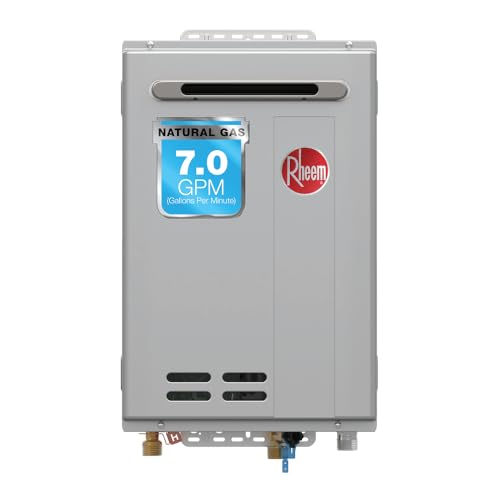
| Rheem RTG Series 7.0 GPM Natural Gas Tankless Water Heater | Best Overall | 7.0 | 160,000 BTU/hr | 0.82 UEF | Outdoor | Check price |
| Chromex Tankless Water Heater Flush Kit with Pump and Descaler | Best Maintenance Kit | — | — | — | Maintenance Kit | Check price |
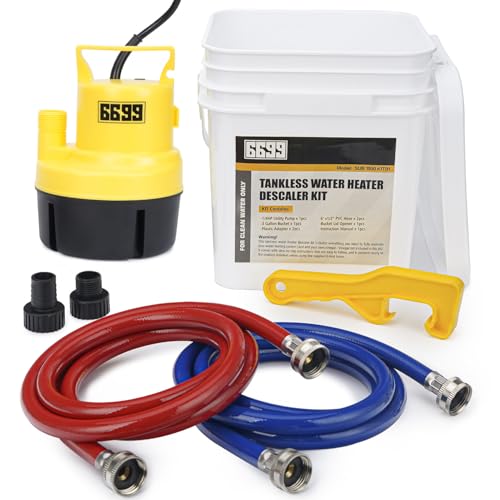
| 6699 Tankless Water Heater Flushing Kit with 1/4 HP Pump | Best Powerful Flush Kit | — | — | — | Maintenance Kit | Check price |
| Rheem 18kW 240V Tankless Electric Water Heater | Best Electric Model | 4.4 | — | — | Indoor Electric | Check price |
| CAMPLUX 4.5kW 120V Point of Use Electric Tankless Water Heater | Best Point of Use | 1.0 | — | — | Wall Mounted Point of Use | Check price |



Top Tankless Boiler + Water Heater Combos
Rheem RTG Series 7.0 GPM Natural Gas Tankless Water Heater
- Flow Rate7.0 GPM
- BTU Output160,000 BTU/hr
- Energy Factor0.82 UEF
- Installation TypeOutdoor
- Temperature ControlDigital LED ±1°F
- High 7.0 GPM flow rate suits larger households
- Energy efficient with 0.82 UEF rating
- Built-in freeze and flame failure protection
- 15-year heat exchanger warranty
- Outdoor installation only, not for indoor use
- Professional installation required
- Non-condensing design less efficient than condensing units
Chromex Tankless Water Heater Flush Kit with Pump and Descaler
- Pump Power1/6 HP
- Hose Length6 feet
- CompatibilityMost tankless heaters
- Cleaning Time30 minutes or less
- Works with most tankless brands
- Safe citric acid-based descaling solution
- Complete kit with pump, hoses, and bucket
- Easy 30-minute cleaning process
- Not a water heater, only a maintenance accessory
- Requires some plumbing connection knowledge
6699 Tankless Water Heater Flushing Kit with 1/4 HP Pump
- Pump Power1/4 HP
- Max Flow Rate1500 GPH
- Pump Max Head16.5 ft
- Bucket Capacity3 gallons
- Stronger 1/4 HP pump for heavy-duty cleaning
- Thermal overload protection on pump motor
- Ergonomic bucket lid opener included
- Quiet and portable design
- Heavier and more complex than smaller kits
- Requires 115V power outlet near heater
Rheem 18kW 240V Tankless Electric Water Heater
- Flow Rate4.4 GPM
- Power18 kW
- Installation TypeIndoor Electric
- Temperature ControlDigital LED
- Precise digital temperature control
- Self-modulating for energy savings
- Durable copper heating elements
- Easy installation with standard water connections
- Lower flow rate than gas models
- Requires 240V electrical circuit
- No built-in freeze protection
CAMPLUX 4.5kW 120V Point of Use Electric Tankless Water Heater
- Power4.5 kW
- Voltage120 V
- Flow Rate1.0 GPM
- Installation TypeWall Mounted Point of Use
- Compact size fits small spaces easily
- Instant hot water in about 3 seconds
- Self-modulating for energy efficiency
- Digital touch controls with temperature display
- Requires a dedicated 40A circuit breaker
- Lower flow rate limited to one sink
- Must be hard wired, no plug included
How to Choose a Tankless Boiler and Water Heater Combo
A tankless water heater and boiler combo saves space by combining hot water and heating in one unit. The best tankless boiler water heater combo balances flow rate, energy efficiency, and heat output to fit your home’s needs.
Flow rate, measured in gallons per minute (GPM), is crucial. Higher flow rates allow multiple fixtures to run hot water simultaneously without drops in temperature. For example, a 7.0 GPM unit can supply two showers and a sink at once without losing pressure.
Energy efficiency matters too. The Uniform Energy Factor (UEF) rating shows how effectively the unit converts fuel into hot water. A higher UEF means lower utility bills. Look for models with UEF above 0.90 for natural gas units and above 0.95 for electric models.
BTU output determines heating capacity. A higher BTU rating means the boiler can heat more water faster and support larger homes. Typical ranges for residential tankless boilers are 50,000 to 199,000 BTU.
Installation type affects where and how you place the unit. Wall-mounted models save floor space and can be installed indoors or outdoors if rated. Some require dedicated venting, while electric units need only an electrical connection.
| Specification | What It Means | Typical Range |
|---|---|---|
| Flow Rate (GPM) | How many gallons per minute the unit can deliver | 4.0 to 9.0 |
| Energy Efficiency (UEF) | Ratio of energy used to heat water | 0.85 to 0.98 |
| BTU Output | Heat energy produced per hour | 50,000 to 199,000 |
| Installation Type | Indoor or outdoor, venting needs | Wall-mounted, vented or electric |
Sizing and Heat Output Considerations
Sizing a tankless combo correctly starts with calculating total hot water demand. Add the GPM of all fixtures you expect to use at once. For example, a shower uses about 2.5 GPM, a sink about 1.0 GPM, and a dishwasher 1.5 GPM.
Peak usage times are critical. Morning routines or multiple appliances running simultaneously require a unit that can handle the combined flow without temperature drops. Oversizing slightly is better than undersizing to avoid cold water bursts.
Incoming water temperature affects the heating load. In colder climates, water entering the unit may be 40°F or lower, requiring more BTU to heat it to 120°F. Warmer climates reduce this demand.
The best quality tankless combi boiler and water heater fit your climate and household size. Small homes under 1,000 square feet often need units with 4 to 6 GPM flow and 50,000 to 80,000 BTU output. Larger homes need higher ratings.
| Appliance | Watts | Per hour | Per day (8 h) | Per month (30 days) |
|---|---|---|---|---|
| 1,500 W electric tankless heater | 1,500 W | 26¢ | $2.04 | $61.20 |
Safety and Certification in Tankless Units
Tankless boiler and water heater combos must meet strict safety standards to protect your home and family. Look for CSA or UL certification on any unit you consider. These certifications mean the product has passed tests for electrical safety, fire resistance, and performance reliability.
Built-in safety features are a must. Flame failure protection immediately shuts off the gas supply if the burner goes out, preventing gas leaks. Overheat sensors and automatic shut-off switches guard against overheating and system malfunctions.
Installation requirements vary between gas and electric models. Gas units need proper venting to exhaust combustion gases safely. They must be installed by a licensed technician who follows local codes. Electric models require correctly rated wiring and circuit breakers to handle their power load, typically 240 volts for whole-home units.
Best tankless boiler water heater combo reviews often emphasize safety certifications and reliable safety features. Units like the Rheem RTG Series include flame failure protection and CSA certification, making them safer choices for most homes.
Maintenance Tips for Tankless Boiler Water Heater Combos
Regular maintenance keeps your tankless combo running efficiently and extends its life. Mineral buildup from hard water can clog the heat exchanger and reduce heat transfer. Descaling every 6 to 12 months is essential, especially in areas with hard water.
Use compatible flushing kits designed for tankless water heaters. The Chromex and 6699 flushing kits are NSF certified and help remove scale safely without damaging internal components. Follow the kit instructions carefully to avoid voiding warranties.
- Turn off power and waterShut off the heater’s power supply and close the water valves before starting maintenance.
- Connect flushing kitAttach the flushing kit to the heater’s service ports as directed.
- Circulate descaling solutionRun the descaling solution through the system for the recommended time to dissolve mineral deposits.
- Flush with clean waterAfter descaling, flush the heater thoroughly with clean water to remove any residue.
- Restore power and waterClose the flushing kit valves, reopen the water supply, and power the unit back on.
Schedule professional inspections for gas tankless combos annually. A technician checks the burner, venting, and safety controls to ensure safe operation. Electric units benefit from a less frequent but still regular check to spot wiring or element wear early.
Following these maintenance tips prevents costly repairs and keeps your combo delivering steady hot water and heat. If you want advice on smaller units or electric models, see our guides on mini tankless water heaters for small spaces and best electric tankless water heater.
Frequently Asked Questions
What is a tankless boiler and water heater combo?
How do I size a tankless water heater for my home?
What are the benefits of a tankless water heater?
How do I maintain my tankless water heater?
What safety features should I look for in a tankless unit?
How much can I expect to save on energy bills with a tankless system?
If that sounds like your room, read up on best tankless water heater with battery backup in 2026 next.
There is more on efficient tankless water heaters in a guide of its own.