
Cold indoor spaces can be uncomfortable, especially when central heating is too expensive or ineffective. Low-watt space heaters provide a practical solution by delivering targeted warmth without significantly raising your energy bills.
Low-Watt Heater Comparison
| Product | Best for | Power Output | Heat Settings | Safety Features | Price |
|---|---|---|---|---|---|
| EZ-HEAT Portable Indoor Space Heater 750/1500W | Best Overall | 750/1500 W | 2 | Overheat sensor, tip-over switch | Check price |
| EZ-HEAT Milkhouse Utility Space Heater 1500W | Best for Garages | 1500 W | 3 (including fan-only) | Overheat protection, tip-over switch | Check price |
| ZOOY Mini PTC Ceramic Desk Heater | Best Compact | Low wattage | 1 | Overheat protection, tip-over switch | Check price |
| shinic Mini PTC Ceramic Space Heater 500W | Best Quiet | 500 W | 1 | Tip-over and overheat auto shut-off | Check price |
| EZ-HEAT Milkhouse Utility Heater Matte Black 1500W | Best Durable | 1500 W | 3 (including fan-only) | Overheat protection, tip-over switch | Check price |


Top Low-Watt Space Heaters for Efficient Heating
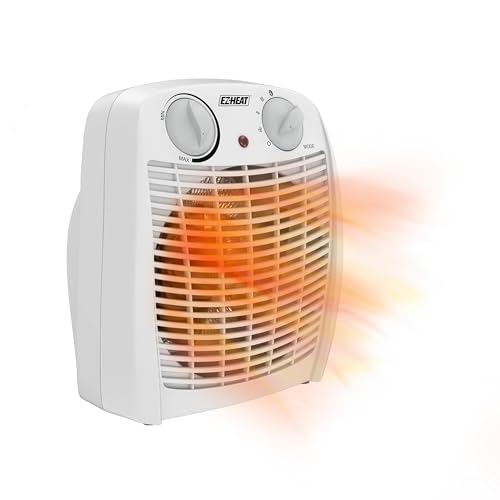
EZ-HEAT Portable Indoor Space Heater 750/1500W
- Power Output750/1500 W
- Heat Settings2
- Safety FeaturesTip-over switch, overheat sensor
- Energy-efficient with 30% less power use
- Adjustable thermostat for comfort control
- Tip-over and overheat safety features
- Stay-cool housing and molded handle for portability
- Only two heat settings may limit fine control
EZ-HEAT Milkhouse Utility Space Heater 1500W
- Power Output1500 W
- Heat Settings3 (including fan-only)
- Safety FeaturesTip-over switch, overheat protection
- Three heat settings including fan-only
- Durable all-metal housing
- Tip-over protection and power indicators
- Large carry handle for portability
- Heavier and bulkier than desk models
ZOOY Mini PTC Ceramic Desk Heater
- Power OutputLow wattage
- Heat Settings1
- Safety FeaturesOverheat protection, tip-over switch
- Fast heating in 2 seconds
- Compact and lightweight
- Overheat and tip-over protection
- Quiet operation
- Limited to very small areas
shinic Mini PTC Ceramic Space Heater 500W
- Power Output500 W
- Heat Settings1
- Safety FeaturesTip-over and overheat protection
- Very quiet below 45 decibels
- Energy-efficient 500W power
- Tip-over and overheat auto shut-off
- Compact and lightweight
- Low heat output limits to very small spaces
EZ-HEAT Milkhouse Utility Heater Matte Black 1500W
- Power Output1500 W
- Heat Settings3 (including fan-only)
- Safety FeaturesTip-over switch, overheat protection
- Durable all-metal housing
- Three heat settings with fan-only mode
- Adjustable thermostat
- Tip-over and overheat protection
- Heavier than plastic models
- No digital controls
How to Choose a Low-Watt Space Heater
A low watt high output heater gives you focused warmth using 500–1,000 watts instead of a full 1,500 W blast. Think about what you want to warm: your whole small room, your legs under a desk, or just the spot by your chair. Then choose the lowest wattage that can cover that area so you are not paying to heat air you do not feel.
Match Wattage and Heater Type to the Job
For a small bedroom or home office up to about 100 sq ft, a 500–750 W heater is usually enough for background warmth; go higher only if the room is very drafty. For a slightly larger or colder room, a 1,000–1,500 W model can work, but use the lower setting once the room is warm. If you truly need fast whole-room heat above 1,500 W, step up to a best 2000W space heaters guide instead of running a small unit flat out all day.
Ceramic fan heaters give fast, directional heat that feels strong for their wattage, so they suit people who want immediate warmth at a desk or sofa. Oil-filled radiators warm slower but hold heat longer once hot, which works well for bedrooms you keep warm all night. Infrared heaters throw heat at your body and surfaces instead of the air, so a low-watt unit can feel powerful across a short distance in a workshop corner or reading nook.
What Makes a Low-Watt Heater “Efficient”
All plug-in electric heaters turn almost 100% of their watts into heat, so the “most efficient low wattage heater” is the one that wastes the fewest watts on space you do not use. Look for a built-in thermostat that cycles the heater off once the room reaches your set temperature, and a timer so it is not running after you leave. A model with two stages, such as 750/1,500 W, lets you warm up fast, then drop to the low setting to maintain temperature and cut running cost.
If you only need to warm one person, a low-watt radiant or under-desk heater aimed at you will feel warmer per watt than a big unit trying to lift the whole room temperature. For light sleepers, a quiet oil-filled unit or one from a best quiet space heater list makes more sense than a loud fan heater on the same wattage.
Humidity, Damp Rooms, and Special Cases
If the humidity is high and you are chilly, you can put the heater on to raise air temperature, which often makes a room feel less clammy. A space heater does not remove moisture from the air like a dehumidifier or air conditioner; if the room feels warm but still sticky, you need ventilation or dedicated moisture control, not more heat.
If you searched for a high quality waterbed heater, that is a different product from a space heater: it is a low-watt heating pad built into the mattress and must match the bed maker’s specifications. Do not point a portable heater close to a waterbed or vinyl surface; the concentrated heat can warp or damage it.
Safety and Build Quality to Check First
Choose low-watt heaters with solid, tip-resistant bases, tip-over shutoff, and overheat protection so the unit cuts power if it gets too hot. Look for a UL, ETL, or CSA mark and, for night use, favor models discussed in guides to the safest low watt heaters for winter bedroomssafest low watt heaters for winter bedrooms. Always plug directly into a wall outlet, keep at least 3 feet from bedding and curtains, and avoid leaving any space heater running unattended unless the manual explicitly allows overnight use.
| Feature | Best For |
|---|---|
| 500–750 W output | Small rooms, desks, and spot heating one person |
| 1,000–1,500 W output | Colder or slightly larger rooms, short warm-up times |
| Heater type: ceramic fan | Fast, focused heat at your feet or by a chair |
| Heater type: oil-filled | Steady, quiet all-night bedroom heat |
| Heater type: infrared | Heating people and objects within line of sight |
| Thermostat + timer | Avoiding wasted run time and cutting power use |
| Tip-over + overheat shutoff | Households with kids, pets, or overnight use |
| Safety certification (UL/ETL/CSA) | Meeting tested electrical and fire standards |
Sizing and Heat Output for Efficient Heating
Electric heat is simple: every watt gives about 3.41 BTU per hour, no matter if the heater is ceramic, oil-filled, or infrared. A low watt high output heater is not magic; it is a 400–1,000 W unit that focuses that limited heat on a small, enclosed area so it feels strong instead of weak.
To size a heater efficiently, match watts to room size. As a rough guide in an average insulated room, plan on about 10 W of electric heat per square foot. That means 500 W for ~50 sq ft, 750 W for ~75 sq ft, 1,000 W for ~100 sq ft, and 1,500 W for ~150 sq ft. In a drafty room, cold climate, or high ceiling, you may need more watts per square foot or accept a cooler target temperature.
| Heater watts | Approx. BTU/h | Typical area | Best use |
|---|---|---|---|
| 250–400 W | 850–1,365 | 20–35 sq ft | Under a desk, close-by legs/feet, tiny office corner |
| 500 W | 1,705 | 40–60 sq ft | Single person at a desk, very small bedroom or RV bunk |
| 750 W | 2,558 | 60–90 sq ft | Small bedroom or den with the door closed |
| 1,000 W | 3,410 | 80–120 sq ft | Closed office, small living room |
| 1,500 W | 5,115 | 120–150 sq ft | Standard bedroom or small living room; this is full power, not “low watt” |
For most people chasing the “most efficient low wattage heater,” that means choosing the lowest wattage that still fully covers the space you actually sit in. Use 250–400 W for under-desk leg heat, 500 W for a tiny room or work nook, and 750–1,000 W for small closed bedrooms or offices; 750 W models are a sweet spot if you want to warm small rooms fast warm small rooms fast without jumping straight to 1,500 W.
If you try to heat a 200–300 sq ft open-plan area with a 400–750 W heater, it will run constantly and still feel weak. In big rooms, treat a low-watt unit as a personal spot heater near your chair or desk, and use your main heating system for the rest of the space instead of oversizing a plug-in heater.
Energy use scales directly with wattage. Dropping from a 1,500 W heater to a 500 W low-watt heater cuts energy use to one-third, but only works if 500 W is actually enough for the room size and insulation you have.
| Appliance | Watts | Per hour | Per day (8 h) | Per month (30 days) |
|---|---|---|---|---|
| 1,500 W space heater | 1,500 W | 26¢ | $2.04 | $61.20 |
| 500 W low-watt heater | 500 W | 8.5¢ | 68¢ | $20.40 |
Safety Standards for Low-Watt Space Heaters
Safer low-watt heaters for winter bedrooms have UL or ETL certification. These certifications show the heater passed strict electrical and fire safety tests. Avoid models without them, as they may lack essential safety features.
- Check for Tip-Over ProtectionA heater with tip-over protection shuts off automatically if it falls. This prevents fires if the heater tips over accidentally.
- Look for Overheat ProtectionOverheat protection turns the heater off if internal temperatures get too high. This stops damage to the heater and reduces fire risk.
- Consider Heater MaterialsMetal housings and ceramic heating elements resist fire better than plastic. Avoid heaters with cheap plastic parts near the heating element.
Space heaters should always be plugged directly into a wall outlet, never an extension cord or power strip. Keep at least 3 feet of clearance around the heater. Never leave a heater running unattended or while sleeping unless the manufacturer explicitly states it is safe to do so.
For more on safety in bedroom heating, see our guide to the safest low watt heaters for winter bedrooms.
Running Costs of Low-Watt Space Heaters
Portable low-watt heaters do raise your electric bill, but modestly if used wisely. To estimate running costs, multiply the heater’s wattage by hours used, divide by 1,000 to get kilowatt-hours (kWh), then multiply by your local electricity rate.
| Appliance | Watts | Per hour | Per day (8 h) | Per month (30 days) |
|---|---|---|---|---|
| 1,500 W space heater | 1,500 W | 26¢ | $2.04 | $61.20 |
| 500 W low-watt heater | 500 W | 8.5¢ | 68¢ | $20.40 |
For example, a 1,500 W heater running 8 hours a day for 30 days at 17 cents per kWh costs about $61. A 500 W heater under the same conditions costs about $20. Reducing wattage and runtime cuts costs proportionally.
Low-watt heaters cost less to run than traditional central heating, which heats the whole house. Use a low-watt heater to warm a single room instead of raising the thermostat for the entire home.
To save even more, set the heater on a timer or thermostat to run only when needed. Lowering the heater’s output setting can also reduce costs without making the room uncomfortable.
For more tips to manage electric bills with portable heaters, see Do Portable Heaters Raise Your Electric Bill? Tips to Save.
Common Mistakes When Using Space Heaters
Heating an open-plan lounge on a budget requires strategy beyond just buying a low-watt heater. Focus on zoning the space by closing off unused areas and using fans to circulate warm air efficiently. Place your heater in the main seating area to concentrate warmth where you need it most without cranking up power.
Frequently Asked Questions
What is the best low watt space heater for small rooms?
How much electricity does a low watt space heater use?
Can I use a low watt heater in a large room?
Are low watt space heaters safe for overnight use?
What features should I look for in a low watt heater?
How do I calculate the running costs of my space heater?
If that sounds like your room, read up on keeping dorms warm without heaters next.
The other half of this decision is efficient home heating solutions.
