
Electric heaters with thermostats provide efficient heating while helping you manage energy costs. Choosing the right model is crucial for comfort and safety, especially in colder months.
Electric Heater and Thermostat Specs at a Glance
| Product | Best for | Wattage | Heat Settings | Noise Level | Safety Features | Price |
|---|---|---|---|---|---|---|
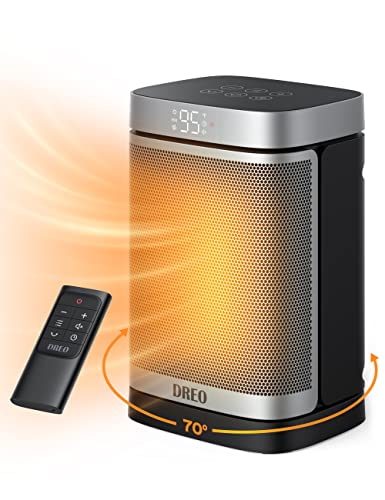
| DREO Space Heater with Advanced PTC Thermostat | Best Overall | 1500W | Multiple including Power heat, ECO, Fan Only | 34dB | Tilt-detection sensor, overheat protection, flame retardant materials | Check price |
| DREO Indoor Space Heater with Ceramic PTC and Timer | Best for Quiet Operation | 1500W | ECO mode, Power mode | 34dB | Smart tip-over protection, overheat protection, 12-hour timer | Check price |
| DREO Atom One Heater with Hyperamics Technology | Best for Fast Heat and Wide Co | 1500W | ECO mode, multiple heating levels | 37.5dB | Tip-over and overheat protection, flame retardant materials | Check price |
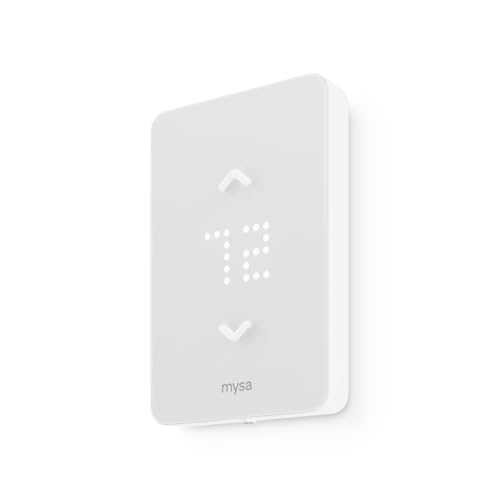
| Mysa Smart Thermostat LITE for Electric Baseboard Heaters | Best Smart Thermostat | — | 7-day scheduling via app | — | WiFi with voice assistants, no physical heater | Check price |
| meross Matter Smart Thermostat for Baseboard Heaters | Best for Ecosystem Flexibility | — | Smart scheduling and energy monitoring | — | Open window detection, multi-platform smart control | Check price |



Top Electric Heaters With Thermostats
DREO Space Heater with Advanced PTC Thermostat
- Wattage1500W
- Heat SettingsMultiple including Power heat, ECO, Fan Only
- Noise Level34dB
- Safety FeaturesTilt-detection sensor, overheat protection, V0 flame retarda
- Fast heat delivery with wide reach
- Precise temperature control with 1℉ increments
- Strong safety with tilt detection and flame-retardant casing
- Quiet operation at library noise levels
- Limited to indoor use only
- No built-in smart home integration
DREO Indoor Space Heater with Ceramic PTC and Timer
- Wattage1500W
- Heat SettingsECO mode, Power mode
- Noise Level34dB
- Safety FeaturesSmart tip-over protection, overheat protection, 12-hour time
- Quiet operation with reduced wind noise
- Wide 70° oscillation covers large rooms
- Energy-efficient ECO mode adjusts power automatically
- Safety features include smart tip-over and overheat protection
- Oscillation may not suit small confined spaces
- No remote control included
DREO Atom One Heater with Hyperamics Technology
- Wattage1500W
- Heat SettingsECO mode, multiple heating levels
- Noise Level37.5dB
- Safety FeaturesTip-over and overheat protection, flame-retardant materials
- Rapid heating with advanced Hyperamics system
- Wide 70° oscillation for broad heat distribution
- Precise digital thermostat with fine temperature increments
- Quiet operation at 37.5dB
- Slightly louder than quietest models
- No smart home app control
Mysa Smart Thermostat LITE for Electric Baseboard Heaters
- Voltage Compatibility120V-240V
- ControlWiFi, voice assistants
- Installation Time15 minutes DIY
- Scheduling7-day customizable
- No hub needed; connects directly to WiFi
- Works with major voice assistants
- Customizable 7-day scheduling saves energy
- Easy DIY installation with app guidance
- Requires compatible wiring with neutral or second live wire
- Not a heater but a thermostat controller
meross Matter Smart Thermostat for Baseboard Heaters
- Voltage Compatibility120-240VAC
- Smart FeaturesMatter, Alexa, HomeKit, Google Home
- Energy MonitoringYes
- Open Window DetectionYes
- Universal Matter compatibility across major platforms
- Energy monitoring with historical data
- Open window detection saves energy automatically
- Smart scheduling for convenience and savings
- Not compatible with 24V HVAC systems
- Requires proper wiring for installation
How to Choose the Best Electric Heater With a Thermostat
Start with the room. A 1,500-watt plug-in space heater with a built-in thermostat is about right for a closed room up to roughly 150 square feet, like a small bedroom or office. Long, narrow areas such as a stairwell or hallway do better with a slim baseboard or wall heater controlled by a wall thermostat so the unit stays off the walking surface and heat spreads along the length of the space. In a cottage where rooms cool down between visits, favor heaters that warm the air evenly and recover quickly, not tiny spot heaters.
An “ambient” electric heater is one that heats and controls based on the room air, not just the temperature of its heating element. Look for wording like “digital thermostat” or “ambient temperature” control, which means the heater cycles on and off to keep the whole room near your chosen setting instead of running flat-out until the unit itself is hot. This kind of thermostat makes comfort more predictable and usually trims wasted run time.
Decide how you want to set and change the temperature. A simple dial thermostat gives you a rough warm/cool range but no exact number, while a digital thermostat lets you pick a specific room temperature and see it on a display. Smart heaters and plugs add app, schedule, and voice control and can be grouped, which helps if you are turning on several space heaters together; our best smart space heater picks focus on that style.
Baseboard electric heaters usually use a separate line-voltage thermostat instead of a built-in one. For a clean install, choose a wall thermostat specifically rated for electric baseboard heaters and for the total wattage on the circuit, and have a licensed electrician wire it. Smart thermostats made for high-voltage baseboards can give you app control, schedules, and energy tracking across one or several baseboard units in a room; smart thermostats for baseboard heating walks through those options in detail.
| Choice Point | What to Look For |
|---|---|
| Room size and layout | Up to about 150 sq ft: 1,500 W portable heater with a built-in thermostat; long stairwells and hallways: fixed baseboard or wall heater with a wall thermostat. |
| Heater style | Fan-forced or ceramic heater for quick spot heat; oil-filled radiator or baseboard for steady, gentle background warmth, which suits bedrooms and cottages. |
| Thermostat type | Digital or smart thermostat that senses room (ambient) temperature and lets you set a target, rather than a vague warm/cool dial. |
| Noise level | Fanless or very quiet models for bedrooms, offices, and cottages; fan heaters are fine for short bursts in active spaces. |
| Control and automation | Remote, app, schedule, or voice control if you want to manage several heaters or pre-warm a room before you walk in. |
Understanding Heater Sizing and Heat Output
Match heater output to room size for effective warmth. Heating needs depend on the room’s square footage and insulation quality.
Calculate BTUs by multiplying the room’s square feet by 20 to 30 for typical insulation. For example, a 200 sq ft room needs 4,000 to 6,000 BTUs.
Convert BTUs to watts by dividing by 3.41. A 5,000 BTU requirement equals about 1,466 watts. This wattage tells you the heater’s power needed to maintain comfort.
| Room Size (sq ft) | BTUs Needed | Wattage Needed (approx.) |
|---|---|---|
| Up to 150 | 3,000 – 4,500 | 880 – 1,320 |
| 150 to 300 | 4,500 – 9,000 | 1,320 – 2,640 |
| 300 to 500 | 9,000 – 15,000 | 2,640 – 4,400 |
Higher wattage heats faster but uses more electricity. A 1,500 W heater warms a small room quickly, while lower wattage models take longer but save power.
Choose supplemental heaters for occasional use or small spaces. Primary heaters suit whole rooms or consistent heating needs. Oil-filled radiators or baseboard heaters often serve as primary sources.
Running Costs of Electric Heaters
Calculate running costs by multiplying watts by hours of use, dividing by 1,000 to get kWh, then multiplying by your electricity rate. For example, a 1,500 W heater running 8 hours at $0.17/kWh costs about $2.04 a day.
| Appliance | Watts | Per hour | Per day (8 h) | Per month (30 days) |
|---|---|---|---|---|
| 1,500 W space heater | 1,500 W | 26¢ | $2.04 | $61.20 |
| Heated blanket | 100 W | 1.7¢ | 14¢ | $4.08 |
Electricity rates vary by location, typically from $0.10 to $0.25 per kWh. Higher rates increase running costs proportionally.
Heaters with thermostats reduce costs by cycling power to maintain set temperatures. Models without thermostats run continuously, wasting energy.
Compare models by their wattage and thermostat accuracy. A 1,500 W heater with a reliable thermostat costs less to run than a 1,500 W heater without temperature control.
Smart thermostats add control to baseboard heaters and can cut costs by scheduling and remote adjustments. See smart thermostats for baseboard heating for options.
Safety Features in Electric Heaters
Tip-over and overheat protection are essential safety features in electric heaters. These mechanisms shut the heater off automatically if it tips over or reaches unsafe temperatures, preventing fires and burns.
Look for heaters made with fire-resistant materials and that have safety certifications such as UL, ETL, or CSA listings. These certifications verify that the heater meets strict safety standards for electrical and fire hazards.
- Place Heater on a Flat SurfaceAlways set your heater on a stable, level surface to reduce the risk of tipping.
- Keep Clearance Around HeaterMaintain at least 3 feet of space between the heater and combustible materials like curtains, furniture, or bedding.
- Plug Directly into a Wall OutletDo not use extension cords or power strips, which can overheat and cause electrical fires.
- Use Models with Auto Shut-OffChoose heaters that turn off automatically if tipped or overheated, especially in homes with children or pets.
- Never Leave Heater UnattendedTurn off the heater when leaving the room or going to sleep, unless the manufacturer states it is safe for unattended use.
Smart Thermostats for Enhanced Control
Smart thermostats let an electric heater hold a steady ambient room temperature and cut wasted run time. You use schedules, timers and remote control instead of walking over to a dial and guessing at a number.
Smart Control For Baseboard Electric Heaters
Electric baseboard heaters run on line voltage (usually 120 V or 240 V), so they need a line-voltage smart thermostat, not the low-voltage model used with a furnace. Look for “compatible with electric baseboard” or “line-voltage thermostat” on the spec sheet, and confirm the thermostat is rated for your heater voltage.
- Match voltage and loadAdd up the wattage of all baseboard heaters you want one thermostat to control, then divide by the supply voltage to estimate the amperage. Compare that to the thermostat’s amp rating in the manual; if the load is higher, split the heaters across multiple thermostats or circuits.
- Plan modular controlFor modular control of several baseboard units, wire multiple heaters to one wall thermostat only if the combined load stays within its rating. This lets one smart thermostat change the temperature in a whole zone like a hallway or open stairwell.
- Check for the right featuresOn line-voltage smart thermostats, look for schedules, vacation mode, frost-protection settings and app control, which work well for cottages or rooms that sit empty for days.
If you want more model-specific advice and wiring approaches, see our guide to smart thermostats for baseboard heating.
Smart Zones For Cottages, Stairwells And Hallways
In a cottage, a smart thermostat lets you keep baseboards at a low setback temperature to protect pipes, then raise the setting from your phone a few hours before you arrive. That costs less than holding the cottage at full comfort temperature all week.
Stairwells and long hallways often feel cold because warm air stratifies and they have little direct heat. A wall thermostat on a mid-level landing, tied to baseboard or wall heaters on that circuit, lets you treat the stairwell as its own zone and nudge it a few degrees cooler than living areas so heat from other rooms can rise in naturally.
Smart Options For Portable Electric Heaters
Many modern space heaters now have built-in Wi‑Fi, digital thermostats and app control. They let you set a target room temperature, change modes from bed or work and check that the heater is off after you leave the house.
If your current heater has only a mechanical knob, avoid pairing it with a generic smart plug that simply cuts power, because many manuals forbid timers or remote switches that can restart the heater unattended. A purpose-built smart space heater with integrated app control and safety features is a safer choice; our best smart space heater guide focuses on those models.
What An Ambient Electric Heater Is
An ambient electric heater warms the air in a whole room rather than blasting heat in a tight beam or strong fan stream. Baseboard heaters, wall convectors and oil-filled radiators are typical ambient heaters, gently heating the surrounding air so the overall room temperature rises.
Smart thermostats work best with ambient heaters because they sense room temperature and cycle power to hold a steady setpoint. That gives fewer hot–cold swings than a simple on/off switch and keeps the room comfortable without running the heater longer than needed.
Frequently Asked Questions
What are the primary advantages of an electric heater with a thermostat?
Which types of electric heaters typically include integrated thermostats?
How does a programmable thermostat enhance an electric heater’s functionality?
Are electric heaters with thermostats suitable for primary heating?
What safety features complement a thermostat in premium electric heaters?
How can I maintain my electric heater for optimal performance?
The other half of this decision is smart control for baseboard heaters.
Readers in this position usually ask about best heaters for workspaces as well.
