
Chilly nights in your campervan can quickly ruin your adventure. A reliable diesel heater is essential for staying warm and comfortable while on the road.
Diesel Heater Comparison
| Product | Best for | Heat Output | Fuel Consumption | Control Options | Size | Price |
|---|---|---|---|---|---|---|
| VEVOR 8KW Diesel Heater All in One | Best Overall | 8KW | 1 gallon per night (0.18-0.36L/h) | Remote, LCD display | Compact all-in-one | Check price |
| VEVOR 8KW Diesel Heater with Altitude Adjustment | Best for High Altitude | 8KW | 1 gallon per night (0.16-0.62L/h) | Remote, Bluetooth app | Larger with 10L tank | Check price |
| VEVOR 8KW Diesel Heater Portable All in One | Best Portable | 8KW | 1 gallon per night (0.16-0.62L/h) | Remote, Bluetooth app | Portable, no install needed | Check price |
| TURBRO 9KW Diesel Heater with Smart LCD | Best for Power & Versatility | 9KW | 0.16–0.4 L/h | LCD, remote, Bluetooth app | Compact toolbox style | Check price |
| Triclicks 5-8KW Diesel Air Heater All in One | Best Budget Option | 5-8KW | — | Remote only | Compact all-in-one | Check price |




Top Diesel Heaters for Campervans
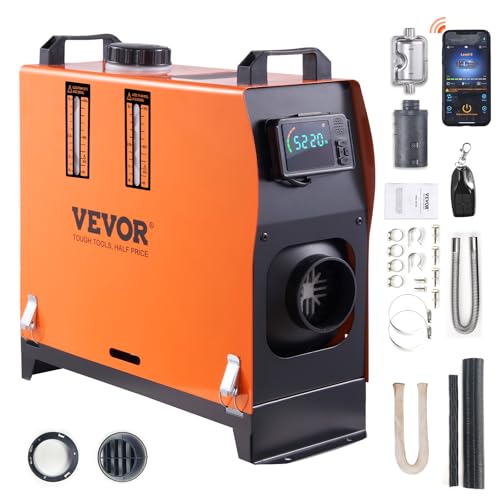
VEVOR 8KW Diesel Heater All in One
- Heat Output8KW
- Fuel Tank Capacity5L (1.3 gallons)
- Applicable Area161-215 ft²
- VoltageDC 12-24V
- Remote Control Range98 ft
- Fast heating with ceramic igniter
- Remote control with 98ft range
- Fuel gauge and leak-proof cap for safety
- Low noise and low fuel consumption
- Fuel tank capacity is 5L, smaller than some competitors
- No automatic altitude adjustment
VEVOR 8KW Diesel Heater with Altitude Adjustment
- Heat Output8KW
- Fuel Tank Capacity10L (2.6 gallons)
- Applicable Area215-269 ft²
- Voltage12V DC
- Remote Control Range32 ft + Bluetooth app
- Automatic altitude compensation to 18,045 ft
- Large 10L fuel tank for extended use
- Bluetooth app and remote control
- Low fuel consumption with precision pump
- Heavier and larger than basic models
- Bluetooth control may require app setup
VEVOR 8KW Diesel Heater Portable All in One
- Heat Output8KW
- Fuel Tank Capacity5L (1.3 gallons)
- Applicable Area215-269 ft²
- Voltage12V DC
- Remote Control Range32 ft + Bluetooth app
- No installation needed, fully portable
- Automatic altitude compensation
- Bluetooth app and remote control
- Compact size with 5L fuel tank
- Smaller fuel tank limits runtime compared to bigger models
- Not suited for permanent installation
TURBRO 9KW Diesel Heater with Smart LCD
- Heat Output9KW
- Fuel Tank Capacity1.6 gallons (6.06L)
- Voltage12V/24V/110V
- Altitude ModeUp to 16,400 ft (5,000 m)
- Control OptionsLCD, remote, Bluetooth app
- High 9KW heat output
- Multi-voltage compatibility (12V, 24V, 110V)
- Smart LCD and app control with timers
- Advanced safety features and altitude mode
- Fuel tank smaller than some competitors at 1.6 gallons
- More complex controls may require learning curve
Triclicks 5-8KW Diesel Air Heater All in One
- Heat Output5-8KW
- Fuel Tank Capacity5L
- Voltage12V DC
- Control OptionsRemote control
- Compact all-in-one design
- Remote control with adjustable heat and fan
- Suitable for many 12V diesel vehicles
- Low emissions and fuel consumption
- No altitude compensation
- Less detailed specs than premium models
How to Choose the Right Diesel Heater for Your Campervan
Choosing the right diesel heater starts with matching the heat output to your campervan’s size. The VEVOR 8KW Diesel Heater stands out as the best make for campervans, offering a balance of power and efficiency. If you need an 8kW diesel heater, this model is a reliable choice with easy installation and remote control.
Fuel efficiency matters because diesel heaters run for hours in cold conditions. Look for models that consume less diesel while maintaining steady heat. This reduces running costs and extends your fuel supply on the road.
Control options vary. Some heaters come with wired or wireless remotes, allowing temperature adjustments from inside the campervan. Choose one with a clear display and simple controls to avoid fussing with settings in cold weather.
Safety features are crucial in tight campervan spaces. Ensure the heater includes overheat protection, flame failure sensors, and automatic shut-off if tipped over. Proper ventilation is mandatory to avoid carbon monoxide buildup. Always use heaters certified for indoor use.
| Appliance | Watts | Per hour | Per day (8 h) | Per month (30 days) |
|---|---|---|---|---|
| VEVOR 8KW Diesel Heater | 8,000 W | $1.36 | $10.88 | $326.40 |
Sizing and Heat Output for Diesel Heaters
Measure your campervan’s square footage to pick the right heater size. An 8kW diesel heater typically covers 215 to 269 square feet, enough for most campervans under 270 square feet.
For a 16-foot by 10-foot garage, about 160 square feet, an 8kW heater like the VEVOR model provides ample heat with some margin. It can maintain a constant temperature even in cold weather, thanks to its fuel-efficient burner and thermostat control.
Overlanding vans often require durable heaters that handle rough conditions and variable temperatures. Diesel heaters designed for overlanding combine compact size with reliable heat output, making models like the VEVOR 8KW Diesel Heater suitable choices. They provide steady warmth without excessive fuel use.
| Appliance | Watts | Per hour | Per day (8 h) | Per month (30 days) |
|---|---|---|---|---|
| 8kW Diesel Heater | 8,000 W | $1.36 | $10.88 | $326.40 |
Running Costs of Diesel Heaters
Running costs for a campervan diesel heater come almost entirely from diesel fuel use, not electricity. Most compact 5–8 kW heaters burn about 0.1–0.5 gallons of diesel per hour depending on heat setting and model.
To estimate your cost, multiply the heater’s hourly fuel use by the diesel price and the hours of use. For instance, if your heater uses 0.2 gallons per hour and diesel costs around $4 per gallon, running it for 8 hours consumes 1.6 gallons. Lowering the thermostat to reduce fuel use to 0.1 gallons per hour cuts consumption roughly in half.
In a small campervan you rarely run an 8 kW heater flat out. Most of the night it cycles at a lower rate, closer to the bottom of its consumption range, which is why diesel heaters are considered fuel‑efficient compared with propane space heaters of similar BTU output.
The same math applies if you use an 8 kW unit to heat a 16′ × 10′ garage or workshop: a higher setting for longer will simply burn more gallons per hour. If you mainly need to heat a fixed workspace, compare van heaters with best diesel garage heaters for cold workspaces to match output and fuel use to the room size.
All 12V diesel air heaters draw some electrical power for the fan, glow plug and control board, but once running they only use about 1 amp per hour at 12V in steady state. That is roughly 12 watts, tiny next to a 1,500 W electric space heater that heats with electricity instead of fuel.
| Appliance | Watts | Per hour | Per day (8 h) | Per month (30 days) |
|---|---|---|---|---|
| Electric space heater at 1,500 W | 1,500 W | 26¢ | $2.04 | $61.20 |
| Diesel heater fan draw (about 12 W) | 12 W | 0.2¢ | 1.6¢ | 49¢ |
Some “self‑powering” or all‑in‑one diesel heaters include their own battery so they do not draw from your van’s house battery. This reduces wiring and helps for off‑grid camping, but it does not change how much diesel they burn per hour to make heat.
A “diesel air intake heater” for an engine is a different device: it preheats intake air for cold starts on a truck or generator and runs only for short bursts. It has almost no impact on campervan heating costs and should not be confused with a diesel air heater that warms your living space; for engine cold‑start gear, see best diesel air intake heaters for cold starts.
Diesel water heaters for RV showers and sinks use similar combustion technology and fuel efficiency but run in short cycles. You might burn a fraction of a gallon per day for hot water, vs several times that to heat the van all night, which is why space heating dominates your fuel budget; if you need both, compare options in best diesel water heaters for rvs boats.
For frequent winter trips or full‑time van life, choose a heater with a clear, low fuel consumption rating at partial load and a good thermostat control. Spending more once on an efficient 12V unit from the best 12v diesel heaters for vans rvs list can save you many gallons of diesel over a season.
Safety and Certification for Diesel Heaters
Diesel heaters are safe in campervans only if they are certified for indoor or RV use and installed as sealed‑combustion appliances with the exhaust vented outdoors. The fuel burns in a closed metal chamber, the exhaust leaves under the van or away from the campsite, and a fan blows separate room air across the heat exchanger into your living space. Any setup that lets exhaust or raw diesel fumes into the van is unsafe.
Certifications For Campervan Diesel Heaters
In North America, look for a safety mark such as UL, ETL or CSA on the heater label or power module. These listings mean the electrical parts, overheat protection and enclosure have been checked against recognized safety standards for insulation breakdown, short circuits and fire risk.
Many budget 5–8 kW diesel parking heaters and all‑in‑one boxes are not UL‑ or ETL‑listed even though they are widely used. If you choose one, treat the manual as mandatory reading, double‑check all fuel and exhaust connections, and add your own layers of protection such as a carbon monoxide alarm and a properly sized fuse on the 12V feed.
Exhaust, Cold Air Inlets, And Intake Placement
Every diesel air heater, from compact 2 kW units to large 8 kW models, must have a metal exhaust pipe that terminates outside the van or garage. That includes “self‑powering diesel heater” boxes and 20,000 BTU portable off‑grid heaters sold for camping, overlanding, RVs, trucks and garages; they are safe only with the exhaust fully outside and joints sealed with the clamps and gaskets supplied.
On most heaters the small combustion‑air intake pipe should also draw from outside. Using a cold air inlet for combustion keeps the burner supplied with oxygen without stealing air from the campervan and helps prevent carbon monoxide buildup inside.
Mount the intake where it will not suck in its own exhaust, road spray or dust, typically on the opposite side of the underbody from the exhaust outlet with a clear gap between them. Point both pipes so water can drain out, keep them away from moving parts and fuel lines, and inspect them periodically for corrosion or damage.
Engine Intake Heaters Vs Cabin Diesel Heaters
Searches for a “diesel air intake heater” often refer to electric grid or glow‑plug heaters that warm the air going into a diesel engine or generator for cold starts. Those devices belong in the engine bay, wire into the starting system, and are not designed to heat a campervan interior.
Do not try to build a home‑made fuel‑burning air heater from engine parts for space heating; the combustion path will not be sealed, and the carbon monoxide risk is high. If you need a cold‑start aid for a truck or generator rather than cabin heat, look at purpose‑built products such as the best diesel air intake heaters for cold starts and follow their installation instructions.
12V Power, Batteries, And Wiring Safety
Most campervan diesel air heaters run from a 12V system. They pull a surge of current on startup, then settle to around 1 amp per hour, so they must be wired on a dedicated fused circuit with cable sized for the run length, not through a cigarette‑lighter socket or thin accessory wiring.
All‑in‑one and “self‑powered” diesel heaters with built‑in batteries or dual power sources still need the same basic protections. Keep the unit level and unobstructed, charge it only as described in the manual, and never bypass its fuses or safety cut‑outs.
CO Alarms, Ventilation, And Overnight Use
A properly installed, sealed‑combustion diesel parking heater is intended for continuous operation and many van owners run them overnight while sleeping. For that to stay safe you need a working carbon monoxide alarm at sleeping height, a little fresh air through a cracked roof vent or window, regular checks of the exhaust and intake pipes, and prompt attention to any new smells, smoke or unusual noise from the burner.
- Confirm Indoor/RV RatingVerify the heater is intended for vehicle or RV use and, if possible, carries a UL, ETL or CSA mark.
- Route Exhaust And Intake OutdoorsPlan the exhaust and combustion‑air intake runs so both end outside the living space with no leaks or loose joints.
- Secure Fuel SystemMount the fuel tank and lines securely, away from hot exhaust parts, moving components and sharp edges that could cause leaks.
- Protect The 12V CircuitWire the 12V feed directly from the battery or fuse box through an appropriately sized fuse and suitable‑gauge cable.
- Install And Test A CO AlarmFit a carbon monoxide alarm in the campervan, test it regularly, and replace it on the schedule the manufacturer gives.
Common Misconceptions About Diesel Heaters
A frequent myth is that higher BTU ratings always mean better heating performance. In reality, BTU measures maximum heat output, but efficiency depends on installation, insulation, and fuel quality. An 8kW heater that’s poorly vented or installed in a large, drafty campervan won’t perform well despite its rating.
Proper installation and venting are critical for safe and effective operation. All diesel heaters, including large models like the Poxurio 8kW, must have exhaust pipes routed outside to prevent carbon monoxide buildup inside the vehicle. Venting also ensures that combustion air is fresh, which affects fuel efficiency and heater longevity.
The difference between all-in-one diesel heaters and traditional setups often causes confusion. All-in-one units, like the VEVOR 8KW Diesel Heater, combine the burner, fan, and fuel pump in one compact unit, simplifying installation and reducing wiring complexity. Traditional setups separate these components, which can mean more installation work but sometimes easier maintenance.
Regarding Poxurio diesel heater reviews, many users note solid heating performance but emphasize the need for professional installation to ensure safety and optimal operation. The large Poxurio 8kW heater does require proper exhaust venting just like other diesel heaters to meet safety standards.
- Check heater placementInstall the heater where exhaust and intake pipes can be routed outside without sharp bends.
- Use the right exhaust pipeUse manufacturer-supplied or approved exhaust components rated for high temperatures.
- Test for leaksAfter installation, check exhaust connections for leaks using a smoke test or soapy water.
Frequently Asked Questions
What is the best diesel heater for a campervan?
How do I install a diesel heater in my campervan?
What are the running costs of a diesel heater?
Are diesel heaters safe for indoor use?
How do I maintain my diesel heater?
What size diesel heater do I need for my campervan?
We cover safest indoor heater without electricity in its own guide.
For the detail, see our notes on safety considerations for heaters.