
Most heaters blast hot air that creates temperature swings: too hot near the unit, cold pockets elsewhere, and a thermostat that can’t find the middle ground. The room feels stuffy one moment and chilly the next, your heater runs longer than it should, and the electric bill climbs.
The solution isn’t a bigger heater or a higher setting. It’s choosing a heater designed for gentle, sustained output and pairing it with the features that prevent overshoot. Thermal mass, accurate thermostat control, and the right wattage for your space make the difference between a heater that maintains 68°F steadily and one that swings between 72°F and 64°F all evening.
How Heaters Maintain Lower Temperatures Without Spiking
Heaters maintain lower room temperatures efficiently by cycling on and off around a precise setpoint, storing heat in materials that release it gradually, and matching wattage to the room size so the heating element doesn’t overshoot. A digital thermostat cycles within 1 to 2 degrees of your target temperature—say, 65°F—while dial controls can vary by 5 degrees or more, creating the hot-cold swings that waste energy and feel uncomfortable.
Thermal mass is the key to smoothing those temperature curves. Oil-filled radiators store heat in several pounds of diathermic oil; when the heating element shuts off at your setpoint, the oil continues radiating warmth for 20 to 30 minutes. The room temperature drifts down slowly rather than dropping the moment the heater clicks off, so the thermostat doesn’t trigger another heating cycle as quickly. Fan-forced ceramic and convection heaters lack that stored heat, so they cool within minutes and cycle back on sooner.
Wattage matching prevents overshoot. Running a heater at 500 W or 750 W in a small room gives the thermostat time to sense the rising temperature and cut power before the space gets too warm. A 1,500 W element in the same room heats faster than the thermostat can react, pushing the temperature 3 to 5 degrees above your setpoint before shutting off. Multi-wattage models—typically 600 W, 900 W and 1,500 W—let you tune output to room size and avoid that overshoot.
Convection heaters warm air evenly when paired with a thermostat, circulating heat throughout the room so the sensor reads an accurate average temperature. Radiant heaters—including infrared panels and quartz tube models—heat objects and people directly, which feels comfortable at lower air temperatures but doesn’t give the thermostat consistent air-temperature data. Radiant models work best for spot heating rather than maintaining a steady room temperature, since the air near the sensor may read cool while objects across the room stay warm.
Why Oil-Filled Radiators Hold Steady Heat Longer
Oil-filled radiators excel at low, consistent temperatures because of thermal mass: the diathermic oil inside each fin absorbs heat during the on-cycle and releases it slowly for 20 to 30 minutes after the heating element shuts off. That stored energy keeps the room temperature from dropping sharply the way it does with a fan heater, which stops delivering heat the instant the element clicks off. The result is a gentler temperature curve with fewer and shorter heating cycles, and no cold drafts between cycles.
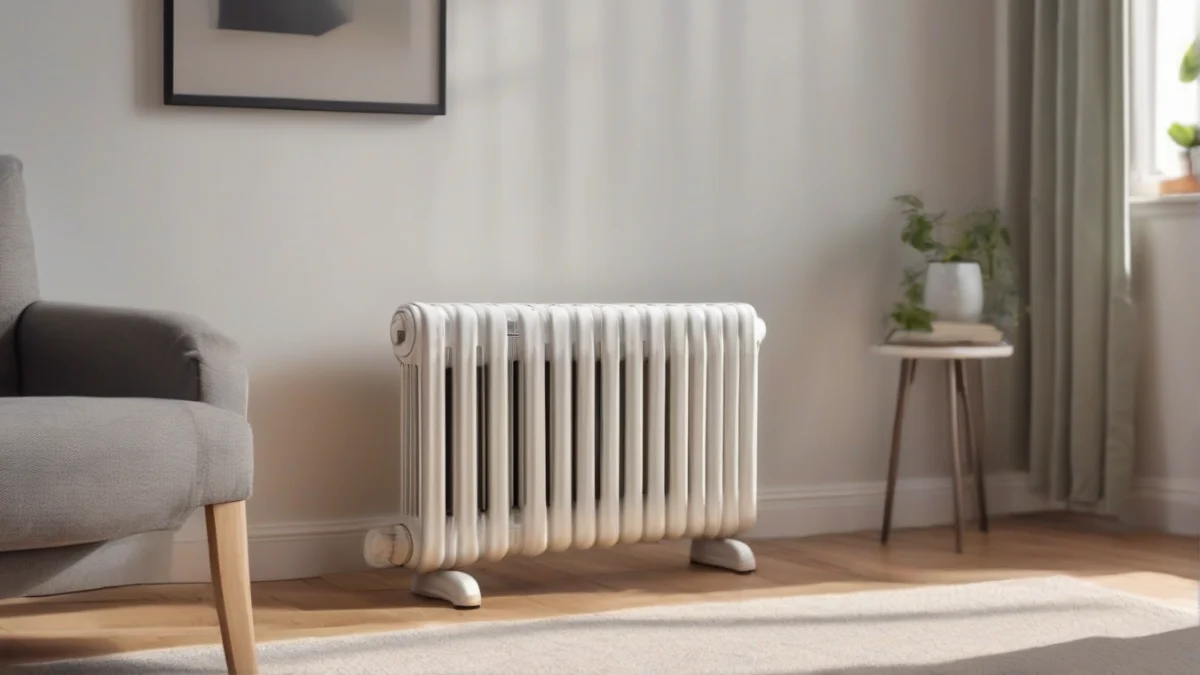
An oil-filled radiator takes 15 to 20 minutes to reach full output as the oil warms and begins convecting heat into the room, so it’s not the right choice when you walk into a cold space and want fast heat. But for all-night or all-day heating—bedroom, home office, nursery—that slow, steady delivery is exactly what holds a room at 65°F or 68°F without spiking to 72°F and waking you with dry air. Oil heaters feel warmer at lower wattage because the radiant heat from the fins reaches your skin even when the air temperature stays moderate.
Silent operation is the other advantage. Oil-filled models have no fan, no clicking relay in most digital-thermostat versions, and only the occasional quiet tick of the metal fins expanding as they heat. You can set one to maintain 66°F in a bedroom and sleep through the night without hearing it cycle, while a ceramic fan heater announces every on-cycle with a rush of air. That makes oil-filled radiators the top recommendation for steady overnight heating at lower temperatures where both comfort and quiet matter.
The tradeoff is size and weight. A 1,500 W oil-filled radiator weighs 15 to 20 pounds and stands two feet tall, compared to a compact ceramic heater you can tuck in a corner. But that mass is what stores the heat, and most models include caster wheels so you roll them room to room rather than carrying them. For maintaining a lower, steady temperature efficiently, the thermal mass is worth the footprint.

Ceramic Heaters With Thermostats: Fast Response, Tight Control
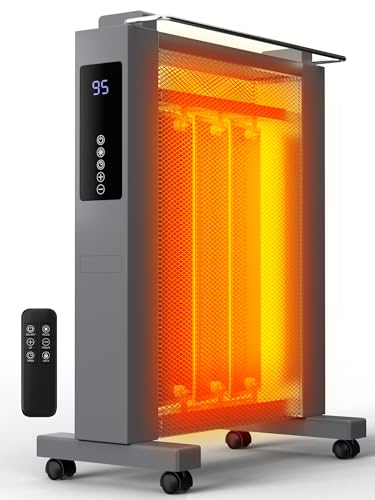
Ceramic heaters with digital thermostats maintain set temperature through rapid on-off cycling rather than thermal storage. The ceramic element heats in seconds—most models reach full output within 30 seconds of startup—and a digital thermostat cuts power the moment the target temperature is reached. This fast response prevents the overshoot that happens when a heating element continues radiating stored heat after the thermostat says stop.
Ceramic elements have almost no thermal mass, so they cool within minutes when power cuts. That sounds like a disadvantage, but tight thermostat control compensates by cycling the heater on frequently for short bursts. A ceramic heater holding 68°F might run for two minutes, off for three, then on again—dozens of brief cycles per hour that keep the room within a degree of your setpoint. Oil-filled radiators cycle less often but stay warm longer between cycles; ceramic heaters cycle more often but respond faster to drafts or a door opening.
Look for models with 1-degree temperature increments and an LED display showing actual room temp, not just your target. The Uthfy convection heater adjusts from 50°F to 95°F in single-degree steps and displays current room temperature, so you know whether it’s holding steady or drifting. Avoid ceramic heaters with only low, medium and high dials: these lack the precision needed to hold a steady 67°F and will swing between too cold and too warm as you fiddle with the knob.
For desks and small spaces where you want gentle background warmth rather than full room heating, a 500W ceramic model provides the control you need. It won’t spike a 60 sq ft office to 78°F the way a 1,500W unit on high will, and it stays cool enough to sit on a shelf or under a desk without clearance anxiety. If you’re comparing best heaters for consistent, even room temperature, ceramic with a digital thermostat belongs on the shortlist alongside oil-filled radiators—choose ceramic when speed matters more than the long, coasting warmth of thermal mass.
Matching Heater Wattage to Room Size for Lower, Stable Temps
A heater too powerful for the room guarantees overshoot. The standard formula—10 watts per square foot for a well-insulated room, 12 to 15 watts for poor insulation or high ceilings—tells you what wattage will raise the temperature quickly. A 150 sq ft bedroom needs 1,500W to warm from 60°F to 68°F in fifteen minutes. But once the room reaches your target, you need far less power to hold it there: only 500 to 750W maintains a steady 68°F against normal heat loss through walls and windows.
Using a 1,500W heater on high in a 100 sq ft room guarantees the temperature will climb to 75°F or higher before the thermostat reacts and cuts power. The air near the thermostat sensor lags behind the air at the heater’s grille, so the room overshoots by several degrees every cycle. The solution is a multi-wattage heater with 500W, 1,000W and 1,500W settings: run it on high to warm up, then switch to low or medium to maintain. Models like the Uthfy convection heater and most oil-filled radiators offer this flexibility.
| Room Size | Warm-Up Wattage | Maintain Wattage |
|---|---|---|
| 80–100 sq ft (small bedroom, office) | 1,000–1,200W | 400–600W |
| 120–150 sq ft (medium bedroom) | 1,200–1,500W | 500–750W |
| 180–200 sq ft (large bedroom, living room) | 1,500W | 750–1,000W |
| Poor insulation or high ceilings (any size) | Add 20–30% | Add 20–30% |
If your heater has only a single 1,500W setting and a thermostat, it will still work—the thermostat cycles it off when the setpoint is reached—but expect wider temperature swings and more frequent on-off cycles than a model that can drop to 500W for maintenance duty. Matching wattage to the job keeps the room closer to your target and reduces the energy wasted heating air you then have to let escape. For advice on pairing heater type with room conditions, see which heater type holds the steadiest temperature.
Settings and Features That Prevent Temperature Spikes
A heater’s ability to hold a lower temperature without overshooting depends on the precision of its controls and how it responds when the target is reached. A digital thermostat with 1- or 2-degree increments lets you set an exact target—say, 68°F—and the heater cycles off as soon as it’s reached, then back on when the room drops a degree or two. Mechanical dials guess. You turn a knob somewhere between “low” and “3,” the room climbs to 74°F, and you’re left cracking a window.
- Digital thermostat with narrow increments: Look for 1°F or 2°F steps and an LCD readout that shows the current room temperature and your setpoint. The heater knows when to stop.
- Adjustable wattage (500W / 1000W / 1500W): Lower wattage means gentler heat. A 500W setting in a small bedroom prevents the rapid climb that leads to overshoot.
- Eco mode: Automatically drops wattage or cycles off earlier once the target temperature is within range, common on convection and panel heaters.
- Timer and sleep mode: Some models reduce the setpoint by 5°F after a programmed interval, ideal for overnight heating when you want the room cooler while you sleep.
Avoid heaters with only a rotary temperature dial and no digital readout. You’re guessing the setpoint every time you adjust it, and the room temperature swings accordingly. Also skip models that advertise “high heat fast” but lack a thermostat altogether—they run full-blast until you manually turn them off.
Zone Heating and Insulation: Keeping Heat Where You Want It
A heater can only hold a steady lower temperature if the heat stays in the room. Zone heating means closing doors, heating only the space you occupy, and turning the central thermostat down by 5 to 10°F. The furnace or heat pump runs less, the space heater handles the room you’re in, and your overall energy use drops. But if heat leaks out through drafts, cold glass, or an uninsulated floor, the heater cycles on more often and runtime climbs.
- Seal drafts around windows and doors with adhesive weather stripping or a fabric draft stopper along the threshold. A quarter-inch gap under a door moves as much air as a fist-sized hole in the wall.
- Hang heavy curtains at night. Thermal or blackout curtains reduce heat loss through single-pane glass by about 25 percent. Open them during the day if the sun hits the window.
- Put rugs on cold floors. Tile, concrete, and hardwood act as thermal mass that absorbs heat you paid to generate. A rug insulates your feet and keeps warmth in the air where you feel it.
- Close vents in the room if you have forced-air heat. No point heating with the furnace and the space heater at the same time.
| Appliance | Watts | Per hour | Per day (8 h) | Per month (30 days) |
|---|---|---|---|---|
| 1,500 W space heater | 1,500 W | 26¢ | $2.04 | $61.20 |
If you’re comparing energy efficient heater types or looking for models that hold temperature with minimal cycling, start with the heating strategy around the heater. A well-sealed room lets a lower-wattage setting do the work, and the most energy efficient way to heat a room combines zone heating with insulation rather than relying on the heater alone.
Safety for Extended Low-Heat Use and Overnight Heating
Oil-filled radiators and ceramic heaters with tip-over and overheat shutoff are safe to leave on overnight at low settings when the manufacturer’s manual explicitly permits unattended operation. Most models designed for bedroom use include these protections and cool-touch exteriors that stay below burn temperature even after hours of continuous heating. Old fan heaters and radiant coil heaters without automatic shutoff are not safe for unattended use: their exposed elements can ignite nearby material if knocked over or if airflow is blocked.
Maintain 3 feet of clearance on all sides of the heater. Curtains, bedding, furniture, and clothing must stay outside this zone. A heater placed at the foot of a bed or against a nightstand can ignite fabric if a blanket slides off or a person shifts during sleep. Cool-touch exteriors reduce burn risk if you brush against the heater at night, but they do not eliminate fire risk from nearby combustibles.
- Check that tip-over and overheat shutoff work before the first overnight use.
- Place the heater on a hard, level surface, never on carpet, bedding, or upholstery.
- Test smoke detectors and, if you use any fuel-burning heater, carbon monoxide detectors before heating season starts.
- Replace any heater with a frayed cord, cracked housing, or controls that stick.
- Keep the heater away from water: no bathroom use while showering, and keep at least 3 feet from sinks.
If the model lacks a thermostat and runs continuously at full power, it is not designed for overnight heating. Heaters built for consistent, even room temperature include the controls and safety features that make extended low-heat use practical.
Frequently Asked Questions
What type of heater maintains the most consistent room temperature?
Can a heater maintain 65°F without cycling on and off constantly?
Is 500W enough to keep a small room warm?
Do oil-filled radiators use less electricity than ceramic heaters?
Can you leave a heater on low setting all day while at work?
Why does my heater make the room too hot even on the lowest setting?
Readers in this position usually ask about power usage of oil-filled vs fan heaters as well.
Before you buy anything, it is worth looking at warmest low setting heaters.
