
Torpedo heaters move a lot of air and heat a space fast, but they also burn through propane faster than radiant heaters or wall-mount units. Knowing how much fuel you’ll use matters when you’re heating a jobsite all day or trying to warm a garage before the electricity bill climbs.
Propane consumption scales directly with BTU output. The higher the heat, the more fuel burns. Understanding the relationship between BTUs, gallons per hour, and tank size lets you plan refills, estimate costs, and choose the right heater size for your budget and space.
How Much Propane Does a Torpedo Heater Use Per Hour
A torpedo heater burns 0.5 to 1 gallon of propane per hour, depending on its BTU output and heat setting. A 50,000 BTU model uses about 0.54 gallons per hour on high, while an 85,000 BTU heater consumes closer to 0.92 gallons per hour.
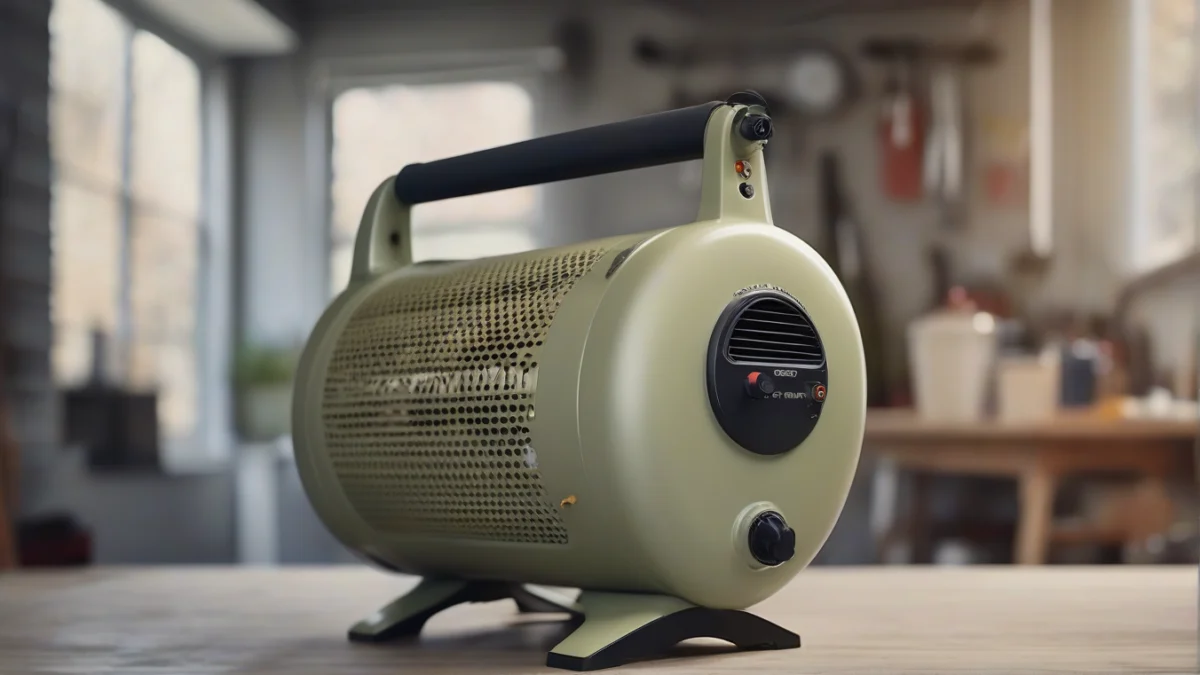
The fuel consumption follows a simple formula: divide the BTU rating by 91,500 to get gallons per hour. Propane contains roughly 91,500 BTUs per gallon, so a 60,000 BTU heater running at full output burns 60,000 ÷ 91,500 = 0.66 gallons every hour. This calculation assumes the heater runs continuously at its rated output.
| BTU Rating | Gallons Per Hour | Propane Used in 8 Hours |
|---|---|---|
| 30,000 BTU | 0.33 gal/hr | 2.6 gallons |
| 50,000 BTU | 0.54 gal/hr | 4.3 gallons |
| 60,000 BTU | 0.66 gal/hr | 5.3 gallons |
| 75,000 BTU | 0.82 gal/hr | 6.6 gallons |
| 85,000 BTU | 0.93 gal/hr | 7.4 gallons |
| 100,000 BTU | 1.09 gal/hr | 8.7 gallons |
Torpedo heaters burn more fuel than radiant propane heaters of the same BTU rating because they use a fan to push heated air across a space. The fan runs on electricity, but the forced-air design also burns propane faster to maintain the high volume of heated air flowing through the unit. A best propane indoor heater with a radiant burner delivers warmth in a narrower pattern and typically cycles on and off more, reducing actual fuel use.
Most torpedo heaters offer adjustable output, letting you dial down the flame to half or two-thirds of maximum BTU. Running a heater on its low setting cuts fuel consumption nearly in half. An 85,000 BTU model with a 50,000 BTU low setting drops from 0.93 gallons per hour to about 0.54 gallons per hour, stretching your propane supply without leaving the space cold.

Runtime You Get from a 20 lb Propane Tank
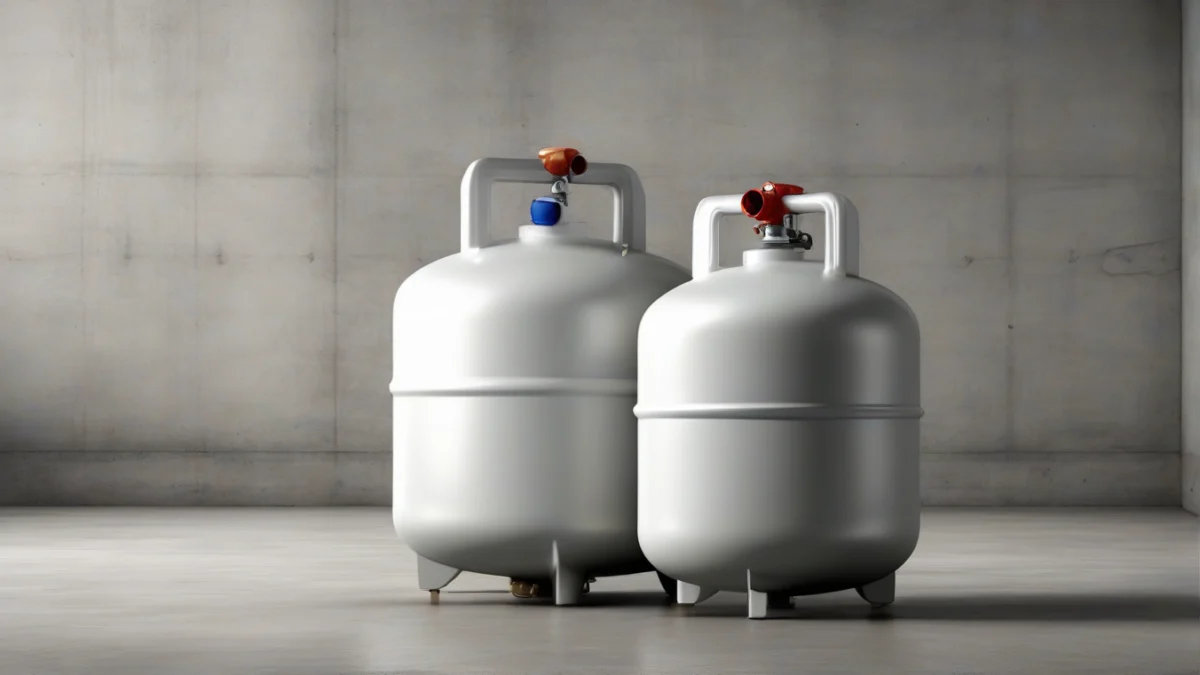
A standard 20 lb propane tank holds 4.7 gallons of usable propane. Divide that by your heater’s consumption rate and you get runtime: a 50,000 BTU torpedo heater running on high burns through a full tank in about 8.7 hours, while an 85,000 BTU model empties it in closer to 5 hours.
Most torpedo heaters offer a low setting that cuts fuel use roughly in half. A 60,000 BTU heater on low uses about 0.33 gallons per hour instead of 0.65, stretching a 20 lb tank to 14 hours. That difference matters if you’re heating a jobsite through a full workday or keeping a garage above freezing overnight.
| BTU Rating | High Setting (gal/hr) | Runtime (hours) | Low Setting (gal/hr) | Runtime (hours) |
|---|---|---|---|---|
| 40,000 BTU | 0.43 | 10.9 | 0.22 | 21.4 |
| 50,000 BTU | 0.54 | 8.7 | 0.27 | 17.4 |
| 60,000 BTU | 0.65 | 7.2 | 0.33 | 14.2 |
| 75,000 BTU | 0.81 | 5.8 | 0.41 | 11.5 |
| 85,000 BTU | 0.92 | 5.1 | 0.46 | 10.2 |
Larger tanks extend runtime without the need to swap cylinders mid-shift. A 30 lb tank holds 7 gallons and runs a 60,000 BTU heater for nearly 11 hours on high. A 40 lb tank carries 9.4 gallons, good for 14 hours. Contractors working multi-day events or heating uninsulated warehouses often keep a 100 lb tank on hand; its 23.6 gallons power a 75,000 BTU heater for 29 hours on high.
Runtime matters most where refilling is inconvenient. A crew pouring concrete in January can’t afford to lose heat mid-cure. A farmer using a torpedo heater to thaw frozen equipment needs predictable burn time. Knowing your tank size and burn rate tells you exactly when to swap tanks or refill, so the heat stays on as long as the work does.
What It Costs to Run a Torpedo Heater
Propane prices swing with the season and your region, from under $3 per gallon in summer to over $4 in a cold snap. A reasonable planning figure is $3.50 per gallon. Multiply that by your heater’s gallons per hour and you have your hourly cost: a 60,000 BTU torpedo heater on high burns 0.65 gallons per hour, so it costs $2.28 per hour to run.
An eight-hour workday of heat adds up. That same 60,000 BTU heater costs $18.24 to run for a full shift on high, or $9.24 on low. A larger 85,000 BTU model pushes the daily cost to $25.76 on high. The low setting cuts fuel cost nearly in half without sacrificing much warmth in a well-insulated space.
| BTU Rating | Gallons per Hour (High) | Cost per Hour | Cost per 8 Hours |
|---|---|---|---|
| 40,000 BTU | 0.43 | 1.51 | 12.08 |
| 50,000 BTU | 0.54 | 1.89 | 15.12 |
| 60,000 BTU | 0.65 | 2.28 | 18.24 |
| 75,000 BTU | 0.81 | 2.84 | 22.68 |
| 85,000 BTU | 0.92 | 3.22 | 25.76 |
Propane delivers more heat per dollar than electric resistance heating in most of the country. A 1,500 W electric space heater costs about $2.04 to run for eight hours at the national average of $0.17 per kWh, but it only puts out 5,100 BTU. A propane torpedo heater produces ten times the heat for roughly ten times the cost, making the cost per BTU comparable or lower, especially where electricity rates top $0.20 per kWh.
Refilling a 20 lb tank costs less than exchanging it. Most refill stations charge by the gallon, so a full 4.7-gallon fill runs about $16.45 at $3.50 per gallon. Tank exchange programs charge a flat rate, typically $22 to $25, and the exchanged tank is often filled to only 15 lb (3.5 gallons) rather than the full 20 lb capacity. Over a heating season, refilling saves $5 to $8 per tank and gives you more fuel each time.
What Affects Fuel Consumption in Real Use
Rated fuel consumption assumes steady operation at maximum output in still air. Your actual propane use will differ, sometimes by a lot.
Running a torpedo heater on low instead of high cuts fuel consumption by 40 to 50 percent. A 60,000 BTU heater that burns 0.65 gallons per hour on high will use 0.35 to 0.40 gallons on low. If the space only needs to stay above freezing, low settings stretch a 20 lb tank from six hours to ten or eleven.
Heaters with a thermostat cycle on and off to hold a set temperature, burning less fuel than continuous operation. A model rated for 0.75 gallons per hour might average 0.4 to 0.5 gallons if it only fires half the time. Manual torpedo heaters without a thermostat burn at the set rate until you shut them off or the tank empties.
Ambient temperature and wind make a big difference in semi-outdoor spaces like open garages or job sites. A heater working in 20°F weather with a breeze burns through propane faster than the same unit in a closed, 40°F workshop. Wind strips heat away before it warms the space, forcing the heater to run longer.
The space itself matters as much as the heater. Poor insulation and air leaks let heat escape, so the heater runs more to replace it. Sealing gaps around doors and adding a tarp or plastic sheeting over open bays can cut fuel use by a third in a drafty garage.
Altitude reduces propane combustion efficiency because the air holds less oxygen. Above 5,000 feet, expect a heater to burn five to ten percent more fuel to produce the same heat output. Some models include high-altitude orifices or adjustment instructions in the manual.
Choosing the Right BTU Rating for Your Space
Match the heater’s BTU output to the space, not the other way around. Too much heat wastes propane and creates safety problems; too little leaves you cold.
The rule of thumb for propane shop heaters and unheated spaces is 30 to 40 BTU per square foot if the area is uninsulated or drafty, and 20 to 30 BTU per square foot for insulated garages and workshops with decent weatherstripping. A 400 square foot insulated garage needs 8,000 to 12,000 BTU; the same space uninsulated and open to wind might need 14,000 to 16,000 BTU.
| BTU Rating | Insulated Space (sq ft) | Uninsulated Space (sq ft) |
|---|---|---|
| 30,000 BTU | 1,000 – 1,500 | 750 – 1,000 |
| 50,000 BTU | 1,650 – 2,500 | 1,250 – 1,650 |
| 60,000 BTU | 2,000 – 3,000 | 1,500 – 2,000 |
| 85,000 BTU | 2,800 – 4,250 | 2,100 – 2,800 |
| 125,000 BTU | 4,150 – 6,250 | 3,100 – 4,150 |
Bigger is not always better. An oversized heater in a small, sealed space will raise the temperature too fast, waste fuel cycling on and off if it has a thermostat, and increase carbon monoxide buildup if ventilation is poor. A 125,000 BTU torpedo heater in a 300 square foot shed will roast you out or run through a tank in four hours.
Adjustable-output models solve the sizing problem if you heat different spaces. A heater with a dial that drops from 85,000 BTU down to 50,000 BTU works in both a large pole barn and a smaller two-car garage without burning excess propane.
For permanent installation in a house or attached garage, a vented wall-mount unit is safer and more efficient than a portable torpedo heater. See our best garage heater and best propane indoor heater guides for models with thermostats and proper venting.
Safety and Ventilation for Indoor Propane Heaters
Most torpedo heaters are construction heaters designed for job sites, garages, and semi-enclosed spaces with plenty of airflow. They burn cleanly when properly adjusted, but they consume oxygen and produce carbon monoxide, water vapor, and combustion gases that must go somewhere. The manual tells you whether your model is rated for indoor use and what ventilation it requires; many are not approved for occupied indoor spaces at all.
Indoor-rated propane heaters include oxygen depletion sensors that shut off the flame if oxygen drops below a safe threshold, typically 18 percent. Torpedo heaters built for construction work often lack this sensor and rely instead on ventilation to supply fresh air and carry away exhaust. Read the label and the manual before bringing any propane heater into a living space, workshop, or cabin.
Even with an indoor-rated model, crack a window or door to let fresh air in. A gap of an inch or two supplies oxygen and prevents moisture and combustion gases from building up. Never seal the space completely, even if the heater has a safety sensor. For a heated workshop, the air exchange also prevents condensation and keeps fumes from paint, solvents, or dust from concentrating.
If you heat a cabin or workshop regularly through the winter, a vented wall heater with a thermostat offers safer, more efficient heat than a portable torpedo heater. The best propane wall heater models vent combustion gases outside through a direct-vent pipe, so all the nasty stuff leaves and you get only the heat. They mount to an exterior wall, regulate temperature automatically, and eliminate the need to refill tanks every few hours. For whole-house heating, you need a central furnace or boiler vented to a chimney or power-vented flue, installed by a licensed technician who pulls permits and tests for leaks and backdrafting.
Torpedo heaters excel at heating large open spaces quickly: a garage while you work on a car, a barn during chores, a patio during a party. They move a lot of air and throw heat across a wide area. But for daily indoor heating in a space where people sleep, cook, or spend hours at a time, a vented appliance with a thermostat and an oxygen sensor is the smarter, safer choice for continuous all-day use.
Frequently Asked Questions
How long will a 20 lb propane tank last on a torpedo heater?
Do torpedo heaters use more propane than other propane heaters?
Can you run a torpedo heater on a 1 lb propane bottle?
How much propane does a 100,000 BTU heater use?
Are torpedo heaters safe to use indoors?
What size propane tank do I need for all-day heating?
We go through reliable boilers for residential use step by step in a separate article.
For the detail, see our notes on best propane heaters for quick warmth.
