Running a heater overnight, all day in a home office, or continuously in a nursery requires more than basic safety features. It demands a system: intelligent temperature control that prevents the unit from running flat-out for hours, passive protections that work even when you’re asleep, and construction designed for endurance rather than short bursts.
The difference between a heater rated for occasional use and one built for 24/7 operation shows up in the thermostat precision, the quality of the tip-over switch, the flame-retardant materials in the housing, and whether the manufacturer’s manual explicitly approves unattended operation.
Comparison: Heat Settings, Safety, and Coverage
| Product | Best for | Heat settings | Auto shut-off | Noise level | Coverage | Price |
|---|---|---|---|---|---|---|
| DREO PTC Ceramic Heater with Thermostat | Best overall | 5 modes including ECO and Fan Only | 12 hours | 34 dB | — | Check price |
| Dr Infrared DR-968 Dual Heating System | Best for large rooms | High and Low | 12 hours | 39 dB | Large rooms, 5200 BTU | Check price |
| Dr Infrared DR-998 with Humidifier | Best with humidifier | — | 1 to 12 hours | — | — | Check price |
| R.W.FLAME Mini Ceramic Heater | Best compact | Multiple levels, ECO mode | 24 hours | Quiet | — | Check price |
| R.W.FLAME 1500W Ceramic Office Heater | Best budget | — | — | Quiet | — | Check price |



Best Heaters for Safe, Continuous Operation
DREO PTC Ceramic Heater with Thermostat
- Power1500W PTC ceramic
- Thermostat range41°F to 95°F, 1°F increments
- Noise level34 dB
- Timer12 hours
- SafetyTip-over protection, overheat shutoff, V0 flame-retardant ma
- Thermostat range of 41°F to 95°F in 1°F steps for precise cycling
- 34 dB operation, among the quietest ceramic heaters
- Tilt-detection sensor improves tip-over accuracy over mechanical switches
- ECO mode adjusts power automatically to save energy
- No automatic shut-off timer stated in the specifications
- 1500W maximum means you’ll need multiple units for large rooms
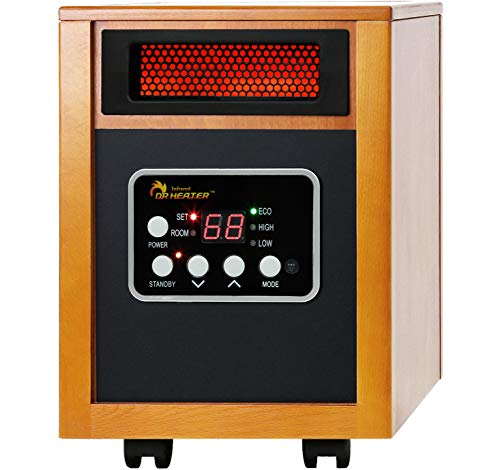
Dr Infrared DR-968 Dual Heating System
- Power1500W dual infrared quartz + PTC
- Heat output5200 BTU
- Thermostat range50°F to 85°F
- Noise level39 dB
- Timer12 hours automatic shut-off
- Weight19 lbs
- Dual infrared quartz and PTC system delivers 5200 BTU from 1500W
- Infrared heat warms objects directly, not just air
- Caster wheels and 6-foot cord make placement flexible
- Lifetime washable filter reduces ongoing costs
- 39 dB is louder than the quietest models
- Weighs 19 lbs, heavier than compact ceramics
- Thermostat stops at 85°F, lower than some prefer
Dr Infrared DR-998 with Humidifier
- Power1500W dual infrared quartz + PTC
- Thermostat range50°F to 85°F
- Timer1 to 12 hours
- FeaturesOscillation, ultrasonic humidifier, remote control
- SafetyTip-over protection, overheat protection, no exposed heating
- Built-in ultrasonic humidifier combats dry winter air
- Dual infrared quartz and PTC system for efficient, direct warmth
- Oscillation distributes heat evenly across the room
- Remote control, digital thermostat, and 1-12 hour timer included
- Humidifier requires refilling and cleaning to prevent mold
- Heavier and larger footprint than single-function heaters
- No specifications given for humidifier capacity or runtime
R.W.FLAME Mini Ceramic Heater
- TypePTC ceramic
- Timer24 hours
- FeaturesThermostat, remote control, ECO mode
- SafetyTip-over protection, overheat protection
- Compact size fits desks, shelves, and tight spaces
- 24-hour timer for extended scheduling flexibility
- ECO mode reduces energy use by cycling to temperature
- Remote control included
- Lower heat output than full-size 1500W models
- No wattage, coverage area, or noise level stated in the data
- Smaller heaters often lack the thermal mass to hold temperature steady
R.W.FLAME 1500W Ceramic Office Heater
- Power1500W ceramic
- CertificationETL
- FeaturesThermostat, portable
- SafetyTip-over protection, overheat protection
- 1500W ceramic element heats efficiently
- ETL certified for electrical safety
- Thermostat, tip-over protection, and overheat shutoff included
- Quiet operation suitable for offices
- No timer or remote control
- No wattage settings, thermostat range, or noise level given in the data
- Basic feature set compared to other models on this list
What Makes a Heater Safe for Overnight and All-Day Use
A heater designed for continuous operation includes multiple passive safety features that work together, even when no one is watching. The safest heaters for overnight use combine UL or ETL certification with tip-over protection, overheat shutoff, and a thermostat that cycles power automatically. These features mean the unit can respond to hazards without human intervention.
UL and ETL certifications confirm that a heater meets North American safety standards for electrical construction, fire risk, and component quality. A heater without one of these marks has not been independently tested. Tip-over switches cut power the moment the heater tilts beyond a safe angle, stopping heat output before a fall becomes a fire. Overheat protection monitors internal temperature and shuts the unit down if components exceed their design limits, whether from a blocked vent, a failing thermostat, or fabric draped too close.
The thermostat is what makes all-day operation practical. Once the room reaches the set temperature, the heater cycles off. When the air cools, it cycles back on. This pattern prevents the heating element from running continuously at full power, which would stress components and waste electricity. A digital or mechanical thermostat with a narrow dead band keeps the room stable without overworking the unit.
Cool-touch housing remains safe to brush against even after hours of operation. Metal grilles, double-wall plastic, and recessed elements keep surface temperatures low enough that brief contact will not burn skin. Flame-retardant materials in the housing and cord resist ignition if an internal fault creates a spark. For homes with children, cool-touch construction and a heater designed for a child-friendly house are non-negotiable.
When a manufacturer states a heater is designed for unattended use, the manual will include guidance on clearance, thermostat use, and maintenance. It does not mean the heater is invincible. It means the unit can handle the thermal and electrical demands of extended operation when placed correctly and kept clear of obstructions. Check the manual for the specific clearance distances and whether the model is rated for overnight operation.
Oil-Filled Radiators vs. Ceramic Heaters for Continuous Use
Oil-filled radiators and ceramic heaters are the two types genuinely suited to running all day. Oil-filled models heat a sealed reservoir of diathermic oil, which radiates warmth long after the element cycles off. They operate silently, produce steady radiant heat, and maintain even temperatures without a fan. The tradeoff is slow warm-up: expect twenty to thirty minutes before the room feels noticeably warmer. Once at temperature, though, an oil-filled radiator holds heat and cycles infrequently, making it ideal for bedrooms, nurseries, and spaces where you want safe overnight heating.
Ceramic heaters use a ceramic heating element and a fan to distribute warm air quickly. A room feels warmer within minutes. Models equipped with digital thermostats and ECO modes are well-suited to continuous use because they cycle the fan and element based on room temperature, preventing the unit from running flat-out for hours. Basic fan heaters without precise thermostat control tend to overheat the space, cycle crudely, and wear components faster. For all-day operation, choose a ceramic heater with a digital display and adjustable temperature settings.
Surface temperature differs sharply between the two. Oil-filled radiators run warm to the touch—not scalding, but enough that prolonged contact with bare skin is uncomfortable. Ceramic heaters with cool-touch housings stay safe to brush against, though the exhaust grille will be hot. If young children are present, a ceramic model with full cool-touch construction is safer than an oil-filled radiator.
Oil-filled radiators weigh fifteen to twenty-five pounds, and most include caster wheels. They are portable within a room but awkward to carry between floors. Ceramic heaters typically weigh five to ten pounds and include a carry handle. If you move the heater daily, ceramic wins. If the heater stays in one room all season, weight is irrelevant.
| Feature | Oil-Filled Radiator | Ceramic Heater |
|---|---|---|
| Warm-up time | 20–30 minutes | 5–10 minutes |
| Noise | Silent | Fan hum |
| Heat distribution | Radiant, even | Convection, directional |
| Surface temperature | Warm, not scalding | Cool-touch housing available |
| Weight | 15–25 lbs | 5–10 lbs |
| Best for continuous use | Bedrooms, nurseries | Living rooms, offices |
Choosing the Right Wattage and Placement
A 1,500 W heater suits rooms up to 150 square feet; smaller spaces need less. The rule is roughly 10 watts per square foot, meaning a 100-square-foot bedroom runs comfortably on a 1,000 W model. Oversizing causes the heater to reach temperature quickly, then cycle on and off aggressively, wearing the relay and thermostat. Undersizing forces the unit to run continuously at full output, never reaching the thermostat’s setpoint and working harder than it was designed for.
Placement determines whether passive safety features can do their job. Keep three feet of clearance on all sides—no curtains overhead, no furniture blocking the front, no bedding within reach. That distance gives the tip-over switch room to work and prevents radiant heat from slowly warming a nearby surface to ignition. Oil-filled radiators and heater types safest from overheating with good thermostats manage their own temperature, but they cannot manage what you place next to them.
- Set the heater on a hard, level, non-flammable surface such as tile, wood or laminate—never carpet, which insulates the base and traps heat.
- Position it where foot traffic will not knock it over and where the cord lies flat against the wall, not across a walkway.
- Plug directly into a wall outlet on a circuit with no other high-draw appliances running.
- Point the heater toward the center of the room rather than a wall, distributing heat evenly and reducing the thermostat’s on-cycles.
Running Costs for Heaters Left On All Day
A 1,500 W space heater running 24 hours straight uses 36 kilowatt-hours per day. At the US average electricity rate of $0.17 per kWh, that costs $6.12 daily, or $183.60 per month. Few heaters actually run that way. The thermostat cuts power when the room reaches the set temperature, and the unit stays off until the air cools again. In a well-insulated room, the heater may run only 40 to 50 percent of the time; in a drafty space, closer to 60 percent.
A lower-wattage heater with a longer duty cycle can cost the same or less than a high-wattage model that runs intermittently, because the total energy delivered matches the room’s heat loss. A 1,000 W oil-filled radiator running 60 percent of the day uses 14.4 kWh, compared to 18 kWh for a 1,500 W ceramic heater running 50 percent. The difference is modest but real over a month of continuous use.
| Appliance | Watts | Per hour | Per day (8 h) | Per month (30 days) |
|---|---|---|---|---|
| 1,500 W heater, 8 hours/day | 1,500 W | 26¢ | $2.04 | $61.20 |
| 1,500 W heater, 16 hours/day | 1,500 W | 26¢ | $2.04 | $61.20 |
| 1,500 W heater, 24 hours/day | 1,500 W | 26¢ | $2.04 | $61.20 |
The safest indoor heater without electricity uses no grid power but burns fuel, which carries its own cost and carbon monoxide risk. For continuous electric heating, the least expensive approach is the smallest wattage that holds the room at a comfortable temperature without running constantly.
What to Check Before Leaving a Heater Running Unattended
Every heater left running unattended needs a deliberate safety check, even models marketed for continuous use. The manufacturer’s manual is the first stop: if it does not explicitly permit unattended or overnight operation, the heater is not designed for it. Oil-filled radiators and many advanced ceramic models state this permission clearly; portable fan heaters and older designs rarely do.
- Read the manual for unattended-use approvalLook for language permitting overnight or unattended operation. If the manual says only “do not leave unattended,” follow that instruction.
- Inspect the cord and plugCheck for fraying, exposed wire, or discoloration at the plug. Replace a damaged cord rather than wrapping it with tape. A plug that feels warm after an hour of use signals a poor connection or an overloaded circuit.
- Test the tip-over switchTilt the heater gently to one side until it clicks off. Set it upright and confirm it restarts. A switch that does not respond reliably means the unit is unsafe for unattended use.
- Check the outletPlug the heater directly into a wall outlet, never a power strip or extension cord. The outlet should fit the plug snugly and stay cool to the touch. A loose or warm outlet needs an electrician’s attention before you run a heater on that circuit.
- Clear a three-foot radiusRemove curtains, bedding, laundry, furniture and papers from all sides of the heater. Even surfaces that feel only warm can ignite fabric over hours of contact.
- Provide fresh airCrack a window an inch in rooms where you sleep or spend the day with the heater running. Electric heaters do not produce carbon monoxide, but air exchange prevents stuffiness and keeps humidity from condensing on cold walls.
Readers in the UK looking for models explicitly rated for bedroom use overnight will find options in our guide to the safest bedroom heaters in the UK. The same checks apply to every heater, every season.
Frequently Asked Questions
Can I leave an oil-filled radiator on all night?
What is the safest type of heater to leave on overnight?
Do space heaters use a lot of electricity if left on all day?
Can you leave a ceramic heater on 24/7?
What heater is safest for a child’s room during sleep?
Should I plug a space heater into a surge protector for continuous use?
We cover understanding heater types in its own guide.
For the detail, see our notes on ideal nighttime heaters for bedrooms.