
Heat retention determines how long a room stays comfortable after the heater cycles off. A heater with high thermal mass—oil-filled radiators, ceramic cores with dense elements—stores heat in its materials and releases it gradually. A fan heater or basic infrared unit stops warming the moment power cuts.
Retention matters most for overnight heating, large rooms, and anyone trying to lower runtime and electricity use. The oil inside a radiator holds heat far longer than a metal coil or thin ceramic plate, and that difference shows up in comfort and in the monthly bill.
Heat Retention and Features at a Glance
| Product | Best for | Heat modes | Oscillation | Auto shut-off | Noise level | Price |
|---|---|---|---|---|---|---|
| Pelonis Oil-Filled Radiator 1500W | Best overall | 600W, 900W, 1500W | — | Tip-over and overheat shutoff | Silent after stability | Check price |
| Dreo Ceramic Heater 1500W | Fastest heating | ECO mode toggles 1000W/1500W | 70° | Tip-over, overheat, 12-hour timer, 24-hour auto-off | 34 dB | Check price |
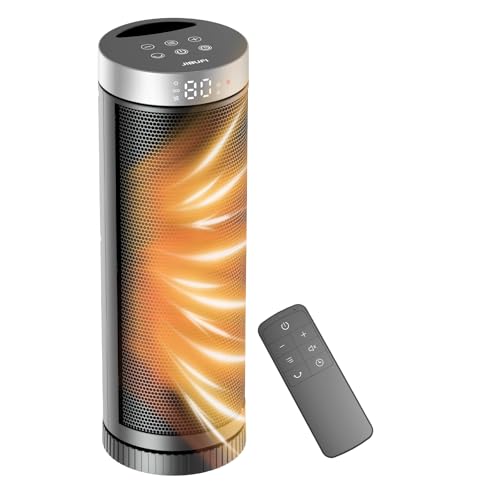
| JIBUFI Ceramic Heater 1500W | Best remote control | 700W, 1000W, 1500W | 70° | Tip-over, overheat, 12-hour timer, 24-hour auto-off | — | Check price |
| R.W.FLAME Mini Ceramic Heater | Most portable | — | — | Tip-over and overheat shutoff | Quiet | Check price |
| R.W.FLAME Ceramic Heater 1500W | Best budget | 1500W | — | Tip-over and overheat shutoff | Quiet | Check price |




Five Heaters Ranked for Heat Retention and Efficiency
Pelonis Oil-Filled Radiator 1500W
- Power modes600W, 900W, 1500W
- Fins7
- SafetyTip-over and overheat protection, ETL certified
- NoiseSilent after heating stability
- ThermostatAdjustable
- Continues radiating warmth long after shutoff as oil cools
- Completely silent after reaching stable temperature
- ETL-listed tip-over and overheat protection
- Three power modes for different room sizes and budgets
- Takes longer to heat a cold room than ceramic models
- Heavier and less portable than compact ceramic heaters
Dreo Ceramic Heater 1500W
- Heating elementPTC ceramic, 1500W
- Oscillation70°, trackball system
- Noise level34 dB
- Timer12 hours
- SafetyTip-over and overheat protection, ETL certified, V0 flame-re
- Heats rooms in seconds with 1500W ceramic element
- 70-degree oscillation covers large spaces evenly
- ECO mode adjusts power automatically to save energy
- 34 dB operation, quieter than traditional electric heaters
- Stops radiating heat within minutes of shutoff
- No mention of casters or handles for moving between rooms
JIBUFI Ceramic Heater 1500W
- Power modes700W, 1000W, 1500W
- Heating elementPTC ceramic
- Timer1 to 12 hours
- Oscillation70°
- SafetyTip-over and overheat protection, ETL certified, flame-retar
- Remote control for all functions including timer and power modes
- PTC ceramic heats rooms in 3 seconds
- Smart thermostat adjusts output for energy efficiency
- 24-hour automatic power-off if left without interaction
- Cools quickly once turned off, no residual heat
- Product description mentions flame-retardant materials but cuts off mid-sentence
R.W.FLAME Mini Ceramic Heater
- TypeMini portable ceramic heater
- Timer24 hours
- ThermostatAdjustable
- ControlRemote included
- SafetyTip-over and overheat protection
- Small footprint fits desks and tight spaces
- Remote control included
- 24-hour timer and ECO mode
- Quiet ceramic heating for offices and bedrooms
- Lower heat output than full-size models, not for large rooms
- No residual heat after shutoff
R.W.FLAME Ceramic Heater 1500W
- Power1500W
- Heating elementCeramic
- ThermostatAdjustable
- SafetyTip-over and overheat protection, ETL certified
- NoiseQuiet
- 1500W ceramic heating at a lower price point
- Adjustable thermostat
- ETL certified with tip-over and overheat protection
- Quiet operation
- No timer or remote control
- No oscillation, so coverage is narrower than the Dreo or JIBUFI
- Stops radiating heat immediately after shutoff
How Long Heaters Stay Warm After Shutoff
Oil-filled radiators stay warm for 30 to 60 minutes after shutoff, radiating stored heat as the diathermic oil inside cools slowly. Ceramic core heaters retain residual warmth for 5 to 15 minutes—the fan stops immediately, but the heating element releases its heat gradually. Fan heaters and basic infrared models stop producing warmth the moment you switch them off because they lack thermal mass to hold heat.
The difference comes down to what stores the heat. Oil-filled radiators circulate heated oil through metal fins, and that oil acts as a thermal battery. Even when the heating element shuts off, the oil continues to radiate warmth into the room. Ceramic heaters use a ceramic core that absorbs some heat during operation, so you get a brief cooldown period where the element stays warm. But lightweight fan heaters and infrared panels have nothing to hold heat—when power stops, so does the warmth.
| Heater Type | Cooldown Time After Shutoff | Thermal Mass |
|---|---|---|
| Oil-filled radiator | 30 to 60 minutes | High (diathermic oil and metal fins) |
| Ceramic core heater | 5 to 15 minutes | Moderate (ceramic element) |
| Fan heater | Under 2 minutes | None |
| Infrared panel | Under 2 minutes | None |
Room conditions shape how long you feel that residual heat. Well-insulated spaces hold warmth longer, so a bedroom with weather-stripped windows and closed doors will stay comfortable for the full hour an oil-filled radiator cools down. Drafty rooms or spaces with high ceilings lose heat faster, cutting the perceived warmth window in half. Ambient temperature matters, too—if the room starts at 65°F, you’ll notice the heater’s afterglow longer than if it starts at 50°F.
Choosing Between Oil-Filled, Ceramic, and Infrared for Retention
Buy an oil-filled radiator if you heat a bedroom or office for hours at a time and want warmth that lingers after shutoff. These heaters take 20 to 30 minutes to reach full temperature because the oil must heat first, but once warm they radiate gentle, silent heat that continues for up to an hour after you switch them off. The Pelonis oil-filled model runs quietly enough for overnight use and keeps a bedroom comfortable through the cooldown period, cutting the need to leave it on all night.
Ceramic heaters deliver fast heat—the Dreo model heats a room within seconds using dual motors and fan-forced airflow—but retain warmth for only 5 to 15 minutes after shutoff. The fan noise makes them better suited to living rooms and offices where you need quick warmth during active hours. PTC ceramic elements self-regulate as they heat, stabilizing temperature without overshooting and improving efficiency by a few percentage points compared to standard ceramic. The difference is small but measurable over a full heating season.
Infrared heaters produce zero air retention because they warm objects and people directly, not the air. Flip the switch and the warmth stops instantly. That makes them ideal for spot heating—a desk, a workbench, a bathroom—where you want immediate warmth only while you’re present. Infrared works well in drafty spaces where convection heaters struggle, because moving air doesn’t carry the heat away.
- Radiate warmth for 30 to 60 minutes after shutoff, lowering runtime
- Silent operation with no fan noise, safe for bedrooms
- Gentle, even heat that doesn’t dry the air
- Heat rooms in seconds with fan-forced airflow
- Lighter and easier to move between rooms
- Lower upfront cost than oil-filled models
Match the heater to the schedule. Oil-filled suits long sessions where you want the room to stay warm after the heater cycles off—sleeping, working from home, or heating a nursery. Ceramic suits short bursts where speed matters more than retention—warming up a cold bathroom before a shower or heating a living room for an evening. Infrared suits moments where you need warmth only while you’re in the space and want nothing wasted on heating empty air.
Sizing and Heat Output for Rooms Up to 300 Sq Ft
A 1,500 W heater covers 150 to 300 sq ft depending on insulation, ceiling height, and how cold the room starts. Well-insulated rooms with standard 8-foot ceilings reach the upper end of that range; drafty rooms with vaulted ceilings or single-pane windows stay closer to 150 sq ft. Both oil-filled radiators and ceramic heaters cap at 1,500 W because that is the maximum a standard 15 A household circuit handles safely when plugged directly into a wall outlet.
Three power modes—600 W, 900 W, and 1,500 W—let you match heat output to room size and season. Run 600 W in a 120 sq ft bedroom on a mild fall evening, 900 W in a 200 sq ft office during the day, and 1,500 W in a 300 sq ft living room when the temperature drops below freezing. The Pelonis oil-filled radiator and Dreo ceramic both offer all three modes with a digital thermostat that cycles the heater off once the setpoint is reached.
Oscillation increases effective coverage by roughly 20 percent in large or irregular rooms. The Dreo oscillates 70 degrees, sweeping warm air across a long bedroom or an L-shaped office where a stationary heater leaves corners cold. Oil-filled radiators do not oscillate, but their seven-fin design radiates heat in all directions, warming the air through convection heating as it rises and circulates naturally. For heaters in long rectangular rooms, place the unit on the long wall near the center to minimize the distance warm air travels to the far ends.
Running Cost and Energy Efficiency Over Long Heating Sessions
All electric heaters convert 100 percent of watts to heat, so a 1,500 W ceramic and a 1,500 W oil-filled radiator deliver identical heat output at full power. The difference in efficiency comes from how long each runs to maintain a comfortable temperature. An oil-filled radiator stores heat in its diathermic oil and continues radiating warmth for 30 to 60 minutes after the thermostat cycles it off, reducing the frequency and duration of heating cycles. A ceramic heater cools within minutes of shutoff and must cycle back on sooner to hold the setpoint.
Ceramic heaters with ECO mode adjust power between 1,000 W and 1,500 W to maintain the temperature you set, lowering consumption once the room reaches your target. The Dreo drops to 1,000 W after the initial warmup, cutting runtime cost by a third compared to continuous 1,500 W operation. Oil-filled models cycle off entirely once at temperature, then stay off longer because the residual heat in the fins keeps the room warm. Over an 8-hour session, the oil-filled radiator typically runs 5 to 6 hours of actual heating; the ceramic runs 6 to 7 hours depending on thermostat accuracy and room losses.
| Appliance | Watts | Per hour | Per day (8 h) | Per month (30 days) |
|---|---|---|---|---|
| Oil-filled radiator (1,500 W, 5.5 hrs actual runti | 1,031 W | 18¢ | $1.40 | $42.06 |
| Ceramic heater with ECO mode (avg 1,250 W, 6.5 hrs | 1,016 W | 17¢ | $1.38 | $41.45 |
| Ceramic heater, full power (1,500 W, 6.5 hrs) | 1,219 W | 21¢ | $1.66 | $49.74 |
Heat retention lowers bills by reducing the number of times the heater must restart and rewarm the room from scratch. A bedroom heated continuously from 10 p.m. to 6 a.m. costs about $7 per month with an oil-filled radiator or a ceramic in ECO mode at typical US electricity rates, versus $8.50 for a ceramic running at 1,500 W the entire session. The savings grow in well-insulated rooms where the heater cycles off more often. For continuous heating over long winter nights, oil-filled radiators and ECO-enabled ceramic heaters deliver the lowest operating cost without sacrificing comfort.
Noise Levels and Overnight Safety for Bedroom Heating
Oil-filled radiators produce no fan noise during operation. The sealed diathermic oil circulates by convection alone, so the only sound you hear is the thermostat relay clicking on and off once the set temperature is reached. That makes them the quietest choice for bedrooms where any hum or whir disrupts sleep.
Ceramic heaters range from 34 to 45 dB depending on fan speed and motor design. The Dreo claims 34 dB at low speed using oblique airflow fan technology that moves air without the turbulence of a traditional axial fan. At full power most ceramic models rise to 42 to 45 dB, comparable to a refrigerator hum. If you tolerate white noise or run a fan year-round, a ceramic heater on low will not bother you. If you wake to a dripping faucet, stick with oil-filled.
| Heater Type | Noise Level | Source |
|---|---|---|
| Oil-filled radiator | 0 dB (silent) | No fan, convection only |
| Ceramic (low speed) | 34–38 dB | Manufacturer specs, oblique fan |
| Ceramic (high speed) | 42–45 dB | Axial fan at full power |
Overnight safety depends on three features: tip-over shutoff, overheat protection, and a UL, ETL or CSA listing. Every heater in this guide carries all three. Plug directly into a wall outlet; never use an extension cord or power strip, which can overheat under sustained 1,500 W draw. Keep three feet of clearance around the unit and place it on a hard, level surface away from bedding and curtains.
For continuous heating in spaces where people sleep or work alone for extended periods, see our guide to the safest heaters for continuous all-day use. Those models include longer auto shutoff windows and redundant thermal fuses.
Maintenance and Longevity Across Heater Types
Oil-filled radiators are sealed for life. The diathermic oil never evaporates or needs refilling, and there is no filter or fan to service. Dust the fins with a dry cloth every few weeks to keep airflow unrestricted around the metal surface, and inspect the power cord twice a season for fraying or cracks near the plug. That is the complete maintenance schedule.
Ceramic heaters require monthly vacuuming of the intake vents to prevent dust buildup on the heating element. A clogged vent forces the fan to work harder, raises internal temperature, and shortens the life of both the motor and the ceramic plate. Use a brush attachment on low suction and wipe the exterior grille with a damp cloth. Oscillation motors in tower models are rated for 750,000 cycles, enough for years of daily eight-hour use if you keep the mechanism free of lint.
Replace any heater immediately if you see a frayed or exposed wire, a cracked housing, scorch marks on the plug, or inconsistent heating that cycles on and off within seconds. These are signs of a failing thermostat, loose connection, or damaged element, all of which present fire risk. Repair is not an option; electric heaters are sealed assemblies and tampering voids safety certifications.
Store heaters in a clean, dry location when the season ends. Let the unit cool completely, wipe dust from all surfaces, and coil the cord loosely without wrapping it tightly around a hot chassis, which can melt insulation. A cardboard box in a closet works better than a damp basement or attic where moisture corrodes contacts and control boards.
Frequently Asked Questions
How long does a ceramic heater stay warm after you turn it off?
Do oil-filled radiators use less electricity than ceramic heaters?
Is it safe to leave an oil-filled radiator on all night?
Can I use an extension cord with a 1,500 W space heater?
What is the difference between PTC ceramic and standard ceramic heaters?
Which heater type is quietest for sleeping?
We cover heaters that retain warmth in its own guide.
We cover why oil heaters stay warm after turning off in its own guide.
