
Older tank water heaters can lose significant heat through standby loss, leading to higher energy bills. Insulation blankets are a practical solution to minimize this loss and improve efficiency.
Insulation Blanket and Water Heater Comparison
| Product | Best for | Material | R-Value | Size | Best Use Case | Price |
|---|---|---|---|---|---|---|
| Trade Winds Insulation Water Heater Jacket Kit 40 Gallons | Best Overall | Non-toxic insulation | 7.1 | 40 Gallons | Reduce standby heat loss on older large tanks | Check price |
| ThermoMate 2.5 Gallons Under Sink Electric Water Heater | Best for Small Tanks | Foam insulation | — | 2.5 Gallons | Instant hot water at sink, point-of-use | Check price |
| Ranein 18kW Tankless Electric Water Heater 240V | Best Tankless | Stainless steel elements | — | Tankless | Whole house on-demand hot water, no standby loss | Check price |
| UTank 1.7 Gallons Under Sink Hot Water Heater 120V | Best Budget Mini | PUF insulation, stainless steel tank | — | 1.7 Gallons | Under sink small tank with basic insulation | Check price |
| Coituer Koire 2000W Portable Immersion Water Heater | Best Portable | Stainless steel guard | — | Portable immersion | Temporary water heating in tubs or buckets | Check price |


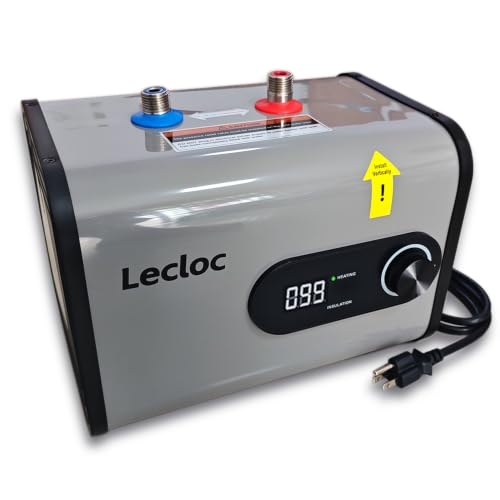

Top Insulation Blankets for Older Tank Water Heaters
Trade Winds Insulation Water Heater Jacket Kit 40 Gallons
- R-Value7.1
- Size40 Gallons
- Fire ratingClass 1 / Class A
- MaterialNon-toxic insulation
- High R-value of 7.1 for strong insulation
- Fire-rated Class 1 / Class A safety standard
- Non-toxic, won’t irritate skin or eyes
- Easy to install and clean
- Fits mainly 40-gallon tanks, less versatile for other sizes
- No adjustable sizing for smaller or larger tanks
ThermoMate 2.5 Gallons Under Sink Electric Water Heater
- Capacity2.5 Gallons
- Voltage120V
- InstallationWall or floor mounted
- CertificationUL listed
- Compact size fits under sinks or in cabinets
- Foam insulation reduces standby heat loss
- Includes temperature and pressure relief valve
- UL certified for safety
- Only suitable for small point-of-use hot water needs
- No high R-value insulation for large tank standby loss reduction
Ranein 18kW Tankless Electric Water Heater 240V
- Power18 kW
- Voltage240V
- Flow rate4.3 GPM
- CertificationCSA certified
- 99% thermal efficiency with no standby loss
- Supports multiple outlets simultaneously
- Precise temperature control with LED display
- Compact wall-mounted design saves space
- Requires two dedicated 240V circuits and professional installation
- Higher upfront cost than insulation blankets
UTank 1.7 Gallons Under Sink Hot Water Heater 120V
- Capacity1.7 Gallons
- Voltage120V
- Cord length53 inches
- Tank material304 Stainless Steel
- Premium 304 stainless steel tank
- PUF insulation with flame retardant
- Multiple safety features including dry combustion protection
- Long 53-inch power cord for easy installation
- Small capacity limits use to single fixtures
- Lower insulation R-value compared to full blankets
Coituer Koire 2000W Portable Immersion Water Heater
- Power2000W
- SafetyIntelligent auto shut-off
- MaterialStainless steel guard
- Use casePortable immersion heating
- Fast 2000W heating element
- Auto shut-off for safety
- Stainless steel guard protects container
- Digital temperature sensor for real-time monitoring
- Not designed for permanent water heater insulation
- Requires careful use to avoid electric shock
How to Choose an Insulation Blanket for Your Water Heater
Choose an insulation blanket by focusing on its R-value, size, and material. The R-value measures how well the blanket resists heat flow. Higher R-values mean better insulation and less standby heat loss. For tank water heaters, an R-value between 4 and 8 is typical and effective.
Match the blanket size to your water heater’s tank dimensions. A blanket too small leaves parts exposed; too large can be hard to secure and may interfere with controls or vents. Check the blanket’s dimensions and whether it fits your tank’s height and circumference.
Evaluate the insulation material for safety and thermal efficiency. Fiberglass is common and effective but must be covered with a flame-resistant outer layer to prevent irritation and fire hazards. Some blankets use foam or reflective foil layers to improve insulation and safety. Avoid materials that degrade with moisture or pose health risks.
| R-Value | Effectiveness | Typical Use |
|---|---|---|
| 2-4 | Low to moderate | Thin blankets for small tanks |
| 5-7 | Good | Standard blankets for most tanks |
| 8+ | High | Premium blankets for colder areas |
Sizing and Compatibility with Different Tank Sizes
The right size blanket depends on your water heater’s tank capacity and dimensions. Most insulation blankets are designed to fit tanks from 40 to 80 gallons, the common residential range. Confirm the blanket’s stated compatibility before purchase.
Measure your water heater’s height and circumference before buying. Use a tape measure around the widest part of the tank and from base to top, excluding pipes and controls. These measurements ensure a proper fit and full coverage.
Look for blankets with adjustable straps or customizable panels. These features help secure the blanket tightly and accommodate slight size variations. Some blankets include cut lines or overlap sections for a tailored fit.
- Measure Tank HeightMeasure from the floor or base to the top of the tank, excluding pipes.
- Measure Tank CircumferenceWrap a tape measure around the widest part of the tank body.
- Compare to Blanket DimensionsCheck the product specifications to confirm fit within your tank’s size.
- Check AdjustabilityEnsure straps or panels allow a snug, secure fit to prevent heat loss.
For a 40 gallon tank, choose blankets labeled for that size or adjustable to 40 gallons. A blanket too large adds bulk and may block access to valves, while a small one wastes energy by leaving insulation gaps. Proper sizing maximizes heat retention and energy savings.
Insulating your water heater complements other energy-saving steps. For more ideas on reducing heat loss, consider exploring insulation hacks for older apartment buildings.
Running Costs and Energy Savings Potential
Insulating your water heater can reduce standby heat loss by 25% to 45%, cutting energy use and lowering your heating bills. The exact savings depend on the blanket’s R-value, which measures resistance to heat flow. Higher R-values mean better insulation and more energy retained in the tank.
A typical electric water heater uses about 4,500 watts when heating. Standby losses can account for roughly 10% to 20% of its energy use. Adding a blanket with an R-value around 7 can reduce those losses significantly, saving about 7% to 16% on your water heating costs.
Calculate savings by estimating your current water heater energy use, then apply the percentage reduction from insulation. For example, if your water heater costs $30 per month to run, a 10% cut in standby loss saves $3 monthly, or $36 yearly. Multiply by your local electricity rate; we use 17 cents per kWh as a standard.
| Appliance | Watts | Per hour | Per day (3 h) | Per month (30 days) |
|---|---|---|---|---|
| Electric water heater (4,500 W) | 4,500 W | 77¢ | $2.30 | $68.85 |
| With insulation blanket saving 10% | 4,050 W | 69¢ | $2.07 | $61.97 |
Return on investment varies. Insulation blankets typically cost $20 to $50 and install in under an hour. Savings of $30 or more per year mean the blanket pays for itself in less than two years. After that, the energy savings add up as long as the blanket stays intact and properly fitted.
For older tanks with little or no factory insulation, the upgrade is most effective. Newer models already have better insulation, so the savings shrink. Still, even a small cut in standby loss adds up over the heater’s 10- to 15-year life.
Safety and Certification Standards
Water heater insulation blankets must meet safety standards to avoid fire hazards and toxic exposure. Look for materials with a Class A or Class 1 fire rating, which resist ignition and slow flame spread. Most quality blankets use fiberglass or mineral wool with a vinyl or foil facing to meet these standards.
Check for certifications from recognized testing agencies like UL (Underwriters Laboratories) or CSA (Canadian Standards Association). These labels ensure the blanket passes fire, smoke, and toxicity tests. Certified blankets provide peace of mind that the product is safe for indoor use near hot surfaces.
Some blankets include safety features like flame-retardant coatings and non-toxic binders. Avoid blankets with asbestos or other hazardous fibers. Also, do not use general-purpose insulation materials not designed for water heaters, as they may lack proper fire resistance or release harmful fumes.
Proper installation matters. The blanket should fit snugly without compressing the insulation, which reduces effectiveness. Secure it with the supplied straps or fasteners and keep a 1-inch clearance around controls. Inspect the blanket annually for damage or moisture, replacing it if necessary.
Are water heater blankets safe? Yes, when you choose a certified product and install it correctly. They reduce energy waste without increasing fire risk or indoor air pollution. Use a working smoke detector in the area as an added precaution.
Common Misconceptions About Water Heater Insulation
Some believe any cheap insulation wrap will cut energy use, but low-quality blankets often lack sufficient R-value and durability. These thin foils or plastic wraps may reduce surface heat loss only slightly and degrade quickly, losing effectiveness.
Another misconception is that insulation blankets work regardless of installation quality. Gaps, folds, or loose fitting reduce coverage and allow heat to escape. Proper installation—covering the tank fully without blocking vents or controls—is crucial for performance and safety.
Insulation blankets do not heat water faster or replace regular maintenance. They only reduce standby heat loss, which saves energy when hot water is not in use. Proper sizing and material choice are key factors in effectiveness.
Many expect insulation blankets to solve all energy waste in a home. They are just one part of reducing heat loss. Combining them with pipe insulation and efficient water heaters yields the best results.
For older tanks, adding a quality insulation blanket with an R-value of around 7 can cut standby losses by up to 40%. This translates directly to lower heating bills without changing water heater settings or usage habits.
Choosing the right blanket and installing it correctly ensures you get the expected savings and maintain water heater safety. For detailed selection tips, see How to Choose an Insulation Blanket for Your Water Heater and Sizing and Compatibility with Different Tank Sizes.
Frequently Asked Questions
How much energy can I save with an insulation blanket?
What is the best R-value for a water heater blanket?
Can I use an insulation blanket on any water heater?
How do I install an insulation blanket on my water heater?
Are insulation blankets safe for gas water heaters?
What materials should I look for in a water heater insulation blanket?
There is more on preventing leaks in water heaters in a guide of its own.
We cover best heaters for large tubs in its own guide.
