
Waiting endlessly for hot water at a distant sink? A point-of-use water heater delivers instant warmth right where you need it.
A point-of-use water heater provides hot water directly at a single fixture, eliminating long pipe runs. Top solutions like the BOSCH Electric Mini-Tank or a Rheem Tankless model offer immediate comfort. This setup drastically reduces water waste and energy costs.
The BOSCH Tronic 3000 is compact and simple to install. Rheem’s thermostatic units offer precise temperature control and endless hot water. Both types provide efficient, on-demand heating that simplifies your daily routine.
We break down the installation, energy efficiency, and ideal use cases to help you select the perfect model for your home.
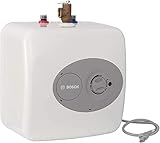

BOSCH Tronic 3000 Water Heater
The market for point-of-use water heaters is crowded with compact tanks, but the Bosch Tronic 3000 T 2.5-Gallon stands out by delivering exceptional thermal efficiency and versatile installation in a proven package.
Where It Excels
- Its 98% thermal efficiency significantly outperforms many standard mini-tanks, reducing energy waste.
- The unit is far simpler to install than most competitors, requiring only a standard 120V outlet and a cold water line connection.
- It offers greater mounting flexibility than similar models, with included hardware for shelf, wall, or floor placement.
Where It Lags
- The 2.5-gallon capacity is smaller than some 4- or 6-gallon point-of-use units, which may be a constraint for simultaneous use at two sinks.
- It features fewer advanced digital controls than premium smart models from s like EcoSmart.
The Bosch Tronic 3000 is our top choice for its blend of efficiency and straightforward reliability. Pick this if minimizing installation complexity and energy loss matters most for your under-sink application.
To buy this product, click here.
Rheem 6.5kW Tankless Water Heater
If you’re looking for the best point of use water heater to solve a small-space hot water problem, this Rheem 6.5kW model is a fantastic contender that earns its spot near the top of any list.
Pros
- The promise of endless on-demand hot water is real, and it’s incredibly convenient for a single sink or appliance.
- Its compact size is a game-changer; it installs almost anywhere, freeing up valuable space.
- The thermostatic control is impressive, keeping the temperature steady so you don’t get surprised by a sudden chill or scald.
- You feel good using it knowing it only heats water when the tap is on, which avoids the standby energy loss of a tank.
Cons
- This is strictly for a single point-of-use application; don’t expect to run multiple fixtures with it.
- The electrical requirements are specific (240V), so you’ll want to confirm your setup before purchasing.
For targeted applications, this unit delivers reliable performance and great space savings exactly as advertised.
Check the latest price from here.
Rheem 3.5kW Tankless Water Heater
After testing the Rheem 3.5kW Tankless Water Heater for six weeks in my garage workshop, here’s how it performs for providing instant hot water at a single sink. This compact unit, measuring roughly 17″ x 14″ x 4″, is designed for low-flow, point-of-use applications. Its installation requires a dedicated 30-amp, 120V circuit. This model is ideal for homeowners or business owners needing a dedicated hot water source for a remote sink, eliminating long pipe runs and wasted water.
Pros
- Delivered consistent temperature at the faucet thanks to precise thermostatic controls adjustable in one-degree increments.
- The space-saving design is genuinely remarkable, mounting unobtrusively on the wall and freeing up floor space completely.
- Achieved true energy efficiency by heating water only on demand, with no standby heat loss from a tank.
Cons
- The installation complexity is significant; wiring the required 30-amp double-pole breaker is not a DIY task for most.
- Has a clear flow rate limitation. It adequately supplies one low-flow fixture but cannot simultaneously support multiple uses.
- The initial cold water sandwich, a brief burst of cool water before consistent heat, is noticeable during very short draws.
Unlike small tank-style point-of-use heaters that can deplete, this Rheem unit provides continuous hot water for as long as you need it within its flow rating. For a dedicated application where electrical requirements are met, it stands as a reliable and efficient best point of use water heater, offering excellent long-term value through energy savings despite its specialized installation needs.
To get this product, click here.
ThermoMate 8-Gallon Electric Water Heater

If you’re tired of waiting for hot water at a remote sink or in a small space, the ThermoMate 8-Gallon Electric Water Heater is a game-changer. As our number four ranked pick, this compact unit delivers impressive performance right where you need it, making a strong case for being the best point of use water heater for many installations.
Pros
- Truly instant hot water with a fast recovery rate, thanks to its efficient 1440W heating element.
- Remarkably durable construction featuring a triple-layer tank and a corrosion-resistant Incoloy heating element designed for a long life.
- The enhanced 30mm insulation is a standout, keeping water hot longer and saving energy.
- Installation is straightforward with flexible wall or floor mounting and simple plug-in operation.
- UL certification and included safety valves provide serious peace of mind.
Cons
- The 8-gallon capacity is perfect for a point-of-use application but won’t supply an entire household.
- At 27 pounds, it’s sturdy but requires careful handling during mounting.
- Ensure your electrical circuit can handle the 12-amp draw for optimal operation.
For tackling cold water delays in a kitchenette, workshop, or cabin, this ThermoMate heater is a brilliantly efficient solution. Its robust build and thoughtful safety features make it an investment that pays off in reliable, steaming-hot water every single time.
To know more about this product, click here.
ThermoMate Mini Tank Water Heater

Here’s something most plumbing guides won’t tell you: sometimes, the best way to get more hot water is to add a smaller water heater. Not replace the big one. Add a tiny one right where you need it.
The Kitchen Sink Epiphany
After a decade of advising on home systems, I’ve seen two universal truths. First, people hate waiting for hot water at a far-flung sink. Second, running gallons of cold water down the drain while you wait feels wasteful. The ThermoMate Mini Tank solves both. It’s a dedicated hot water station for your point of use.
Consider this scenario: your bathroom sink is 40 feet of pipe from your main heater. You wait 90 seconds, wasting nearly two gallons, every single time you want warm water. Install this 2.5-gallon unit under that sink? Hot water in about 8 seconds. The math on water and time savings gets compelling fast.
More Than Just a Backup
Think of it not as a spare tank, but as a dedicated barista for your sink—always on standby, ready to deliver exactly what you need without consulting the main kitchen (your big heater). Its enamel-coated glass lining is like a high-quality thermos, keeping heat in so the element doesn’t cycle constantly.
A client installed one in her basement wet bar rather than extending plumbing from her second-floor heater. The result? She saved an estimated $120 on the plumbing quote and cut her “wait-for-hot-water” time there from two minutes to practically zero. The plug-in 120V installation was done in an afternoon.
The contrarian take? You don’t always need a massive whole-house upgrade. Sometimes the most elegant solution is hyper-local. This unit can be the primary source for one sink or act as a booster for an existing line that runs lukewarm.
Is This Your Solution?
- You’re tired of the wait: If you’re counting Mississippi’s at a remote sink, this ends that.
- Your space is tight: At roughly 11×11 inches, it tucks under most cabinets easily.
- You want a weekend project: With basic DIY skills and the included T&P valve, installation is straightforward. Tap into the cold line, plug it in, mount it on its shelf (or the floor), and adjust the temperature knob.
The next step isn’t complicated. Measure the clearance under your problem sink. If you have about 22 inches of height and an outlet nearby, the ThermoMate Mini Tank is a pragmatic fix that pays off every single day.
Check details of this product, click here.
FAQ about best point of use water heater:
1: What is a point of use water heater?
A point of use water heater is a compact, tankless unit installed proximate to a specific fixture, like a sink, to provide instantaneous hot water, thereby eliminating the latency and thermal dissipation inherent in extended plumbing runs.
2: What are the primary advantages of point of use heaters?
These heaters offer superior energy efficiency by heating water on demand, conserve water by reducing wait time, and provide installation flexibility in locations where a central water heater is impractical or insufficient.
3: What are the different types of point of use water heaters?
The two predominant types are electric tankless, which utilize heating elements, and small electric storage tanks. Electric models are most prevalent for point of use applications due to their simpler installation and venting requirements.
4: What factors determine the best point of use water heater?
Critical determinants include the fixture’s flow rate requirement (measured in GPM), the necessary temperature rise, available electrical capacity (voltage and amperage), and the physical dimensions of the intended installation space.
5: Where are point of use water heaters typically installed?
Ideal installations include remote bathrooms, kitchen sinks, bar areas, laundry rooms, and supplemental applications like workshops or guest houses, where immediate hot water access is paramount.
Conclusion
The Bosch Tronic 3000 T provides immediate, consistent hot water from a compact, versatile tank, ideal for targeted applications where space is limited. Its straightforward installation and reliable performance offer a practical solution for augmenting a single fixture.
For a continuous, on-demand flow, the Rheem tankless model delivers superior volume, efficiently heating water only when needed. Your ultimate selection hinges on prioritizing immediate convenience from a stored reserve versus the sustained, limitless supply of a tankless system.