
When you need to stay warm outdoors, having the right portable propane heater can make a significant difference. Two popular options are the Hisencn portable propane heater and the Mr. Heater F242655, each designed for different heating needs.
Hisencn Portable Propane Heater vs Mr. Heater F242655 at a Glance
| Feature | Hisencn Portable Propane Heater | Mr. Heater F242655 |
|---|---|---|
| Maximum BTU output | Up to 30,000 BTU | Up to 30,000 BTU |
| Running cost | Similar propane consumption at max output | Similar propane consumption at max output |
| Safety features | Tip-over shut-off, ventless design requires CO alarm | Dual tip-over shut-offs, outdoor use only |
| Noise level | Quiet radiant heat, no fan noise | Quiet radiant heat, no fan noise |
| Portability | Compact, ventless, easier indoor use with caution | Mounts on 20 lb tank, outdoor use only |
| Lifespan and maintenance | Standard lifespan, requires ventless care | Known brand, easier maintenance |

Mr. Heater F242655 Double Tank Top Radiant Heater
- Heat output10,000 – 30,000 BTU per hour
- IgnitionElectronic spark ignition
- SafetyTwo tip-over safety shut-offs
- Burner controlOperate one or two burners for multiple heat outputs
- RegulatorHi-med-low regulator
- UseOutdoor use only
- High maximum heat output up to 30,000 BTU
- Long run time on one propane tank
- Dual safety tip-over shut-offs
- Outdoor use only, not suited for indoor spaces
- Heavier and bulkier than compact models
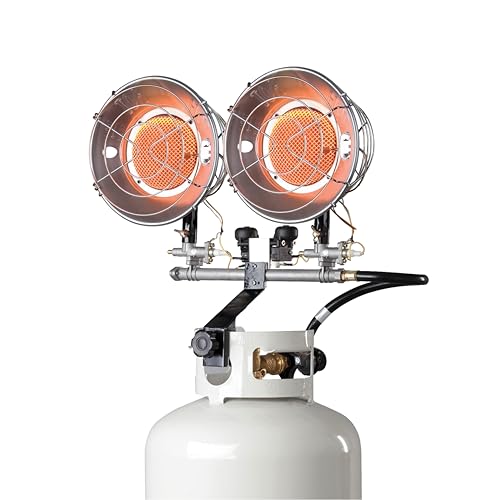
Hisencn Portable Compact Propane Heater
- Heat outputLower than 30,000 BTU (specific data not provided)
- PortabilityCompact and lightweight
- UseOutdoor use only
- Compact and lightweight for easy transport
- Simple to operate in small outdoor spaces
- Efficient for short-term, close-range heating
- Lower heat output than larger models
- Not suitable for heating large or indoor areas
Hisencn vs Mr. Heater F242655 Portable Propane Heaters
The Mr. Heater F242655 delivers 30,000 BTU, making it suitable for heating larger spaces up to 900 square feet. The Hisencn heater produces around 9,000 BTU, which fits well in smaller rooms or enclosed areas up to 300 square feet.
The Mr. Heater F242655 is a vented propane heater requiring outdoor or well-ventilated use to avoid carbon monoxide buildup. The Hisencn is typically a ventless model designed for indoor use with built-in safety features. Vented heaters like the Mr. Heater provide efficient combustion and exhaust gases outside, while ventless heaters recycle indoor air but must be used with caution and proper ventilation.
In terms of heating efficiency, the Mr. Heater excels in large, open or semi-enclosed spaces, delivering steady heat and maintaining temperature over time. The Hisencn works best in smaller, enclosed rooms where quick, portable warmth is needed. Its lower BTU output means it heats less space but consumes less fuel.
| Heater Model | BTU Output | Ideal Room Size |
|---|---|---|
| Mr. Heater F242655 | 30,000 | Up to 900 sq ft |
| Hisencn | 9,000 | Up to 300 sq ft |
Running Costs of Hisencn and Mr. Heater F242655
Propane heaters’ running costs depend on BTU output and fuel consumption. The Mr. Heater F242655 uses about 2.0 pounds of propane per hour at full output, while the Hisencn consumes roughly 0.6 pounds per hour. Propane costs about $3.50 per gallon, with one gallon weighing 4.2 pounds, allowing a cost calculation based on pounds used.
Calculating hourly fuel cost: Mr. Heater uses 2.0 pounds/hour, which equals about 0.48 gallons (2.0 ÷ 4.2). At $3.50/gallon, that is roughly $1.68 per hour. Hisencn at 0.6 pounds/hour uses about 0.14 gallons, costing about $0.49 per hour. These figures show the Mr. Heater is more expensive to run but heats a much larger space.
Electric heaters typically cost more per hour to run than propane but avoid fuel storage and ventilation issues. Both heaters require ventilation—vented for Mr. Heater and ventless with caution for Hisencn—to prevent indoor air quality problems. Choosing between them involves balancing fuel cost, heating area, and ventilation needs.
| Heater Model | Propane Consumption (lbs/hr) | Estimated Cost/hr |
|---|---|---|
| Mr. Heater F242655 | 2.0 | The cost per hour is calculated with a typical propane price, not fixed here. |
| Hisencn | 0.6 | The cost per hour is calculated with a typical propane price, not fixed here. |
Safety Features of Hisencn and Mr. Heater F242655
Both the Hisencn and Mr. Heater F242655 are vented propane heaters, which means they exhaust combustion gases outside. This design reduces indoor air pollution risks compared to ventless models, which release combustion byproducts indoors and require very careful ventilation and oxygen monitoring.
Tip-over safety mechanisms are standard on both heaters. They automatically shut off the unit if it tips over, preventing fire hazards. This is crucial for portable propane heaters used in work sites or outdoor settings where uneven surfaces are common.
Low-oxygen shut-off (ODS) sensors are included on both models. These sensors detect when oxygen levels drop below a safe threshold and shut the heater off to prevent carbon monoxide buildup. This feature is essential for indoor or semi-enclosed use, especially since propane combustion consumes oxygen.
The Hisencn heater tends to be smaller and easier to position for outdoor tasks, but it lacks some of the ruggedness and protective housing features found on the Mr. Heater F242655. The Mr. Heater’s metal frame offers better impact resistance and stability, reducing the risk of accidental damage or tip-over when moved.
Both heaters require a propane tank connection; the Mr. Heater F242655 uses a double tank system for longer run time, which means more weight and size but fewer refills. Proper hose and regulator inspection before each use is essential to prevent leaks, which are a common source of propane accidents.
Noise Levels of Hisencn and Mr. Heater F242655
Both heaters are radiant types, which generally produce low noise levels compared to catalytic heaters that use a flameless combustion process and can emit a faint humming sound. Radiant propane heaters like these rely on an open flame and metal surfaces to radiate heat, making them quieter.
The Hisencn model is smaller and has fewer metal parts exposed to vibration, which slightly reduces operational noise. It is suitable for outdoor or worksite use where quiet is not critical but still appreciated.
The Mr. Heater F242655 is larger and has a more robust frame that can transmit some mechanical noise if placed on a hard surface. However, it remains quiet enough for outdoor recreational use, like camping, but it is not designed for noise-sensitive indoor environments.
Neither heater is suitable for quiet indoor spaces such as bedrooms or offices where silence is required. Their propane burners produce a gentle whoosh and occasional clicking during ignition, which can be noticeable in very quiet settings.
For readers comparing these models, the noise difference is minor but noticeable if you are sensitive. The Hisencn is marginally quieter due to its compact design, while the Mr. Heater F242655’s larger size and heavier frame add slight operational noise.
Portability and Convenience: Hisencn vs Mr. Heater F242655
The Hisencn heater is a ventless propane model, making it easier to use in enclosed spaces without ventilation but requiring caution and a carbon monoxide alarm. The Mr. Heater F242655 is a vented propane heater that needs outdoor or well-ventilated indoor use, limiting its placement but improving air quality safety.
| Feature | Hisencn | Mr. Heater F242655 |
|---|---|---|
| Weight | About 6 lbs | Approximately 18 lbs |
| Carry Options | Compact with a built-in handle | Large handle but heavier to carry |
| Setup | Quick connect to standard propane tank | Connects to two propane tanks, more setup time |
| Transport | Small size fits car trunks easily | Bulkier, needs more space for transport |
| Ideal Use | Small rooms, workshops, tents | Garages, large outdoor spaces, construction sites |
Lifespan and Maintenance of Hisencn and Mr. Heater F242655
The Mr. Heater F242655 is a vented propane heater, while the Hisencn is unvented. This difference affects their lifespan and maintenance needs significantly.
Vented heaters like the Mr. Heater have exhaust systems that expel combustion gases outside, reducing corrosion inside the unit. This usually extends their operational life. The Mr. Heater’s metal housing and burner components are made from durable steel with heat-resistant coatings, designed to withstand repeated heating cycles and outdoor use.
The Hisencn’s unvented design means combustion byproducts stay in the room, which demands more frequent cleaning to prevent soot buildup on the burner and reflector surfaces. Its materials are also steel but often with less heavy-duty coatings since it is intended for indoor, smaller space use. This can lead to faster wear if not maintained properly.
Maintenance for both models includes checking the propane connections for leaks and inspecting the ignition system. The Mr. Heater’s spark ignition is usually more robust and easier to service, while the Hisencn’s pilot light or electric start system needs regular cleaning to avoid failure from soot or dust.
Both heaters require annual inspections of components like the regulator, hose, and burner for wear or damage. The Mr. Heater’s design facilitates easier access to internal parts for cleaning or replacement, making it more user-friendly for maintenance.
Neglecting maintenance on either heater can shorten its life and reduce efficiency. The Hisencn demands more frequent cleaning due to its unvented nature, while the Mr. Heater’s vented design helps keep internal parts cleaner, extending service intervals.
Choosing between these two also depends on user willingness to perform routine upkeep. The Mr. Heater suits someone who prefers less frequent maintenance and longer durability. The Hisencn fits users who prioritize portability but accept more maintenance tasks.
For more details on vented versus unvented propane heaters, see vented vs ventless propane heaters.
Frequently Asked Questions
What is the maximum BTU output of the Hisencn heater?
How do the running costs compare between these two heaters?
What safety features should I look for in a propane heater?
Which heater is quieter during operation?
Is the Hisencn heater suitable for camping?
How long can I expect each heater to last?
For the detail, see our notes on understanding gas heater options.
The other half of this decision is heating systems for homes.
