
Cold rooms can be uncomfortable and unwelcoming. Portable electric heaters provide fast, targeted warmth to transform any space into a cozy environment.
With various models available, it’s essential to choose one that fits your needs in terms of heating efficiency, safety features, and user-friendly operation.
Portable Electric Heater Comparison
| Product | Best for | Heat Output | Safety Features | Noise Level | Size | Price |
|---|---|---|---|---|---|---|
| DREO Space Heater with Thermostat | Best Overall | 1500W | Tilt-detection sensor, overheat protection, V0 flame retardant | 34dB | Portable with handle | Check price |
| DREO Indoor Space Heater with Oscillation | Best for Large Rooms | 1500W | Tip-over and overheat protection, V0 flame retardant | 34dB | Portable with oscillation | Check price |
| DREO Atom One Heater with Oscillation | Quietest Heater | 1500W | Tip-over and overheat protection, ETL-listed Shield360° | 37.5dB | Portable with 70° oscillation | Check price |
| BREEZOME 1500W Portable Heater | Best Budget | 1500W | Tip-over, overheat protection, 24-hour auto shutdown, ETL certified | 37.5dB | Portable with 90° oscillation and handle | Check price |
| Takywep Small Portable Heater | Best Compact | 1500W/750W | Overheat and tip-over protection, fuse protection | Compact with 6-foot cord | Check price |




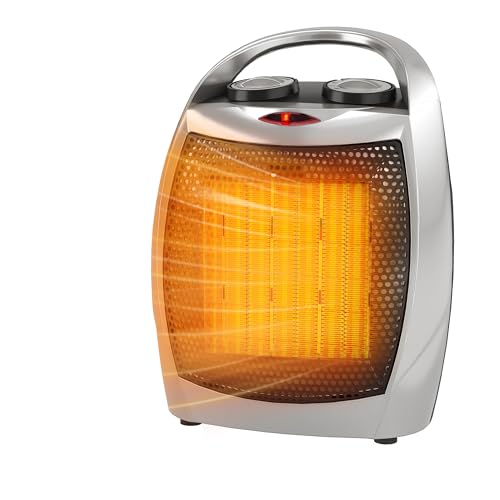
Best Portable Electric Heaters for Quick Heating
DREO Space Heater with Thermostat
- Heat Output1500W
- Safety FeaturesTilt-detection sensor, overheat protection, V0 flame-retarda
- Noise Level34dB
- SizePortable with handle
- Fast heating with wide heat circulation
- Precise thermostat with 1℉ increments
- Quiet operation at only 34dB
- Multiple heat modes and remote control
- No oscillation feature
DREO Indoor Space Heater with Oscillation
- Heat Output1500W
- Safety FeaturesTip-over and overheat protection, V0 flame-retardant materia
- Noise Level34dB
- SizePortable with oscillation
- Wide 70° oscillation for better coverage
- Quiet at 34dB with smooth airflow
- Smart ECO mode saves energy
- Multiple safety certifications
- No remote control included
DREO Atom One Heater with Oscillation
- Heat Output1500W
- Safety FeaturesTip-over and overheat protection, ETL-listed
- Noise Level37.5dB
- SizePortable with handle and oscillation
- Fast heating with wide oscillation
- Very quiet at 37.5dB
- Precise digital thermostat with ECO mode
- Enhanced safety with ETL-listed Shield360° system
- Slightly noisier than the quietest model
BREEZOME 1500W Portable Heater
- Heat Output1500W
- Safety FeaturesTip-over, overheat protection, 24-hour auto shutdown
- Noise Level37.5dB
- SizePortable with handle
- Rapid heating with wide 90° oscillation
- Adjustable thermostat with ECO mode
- Multiple ETL-certified safety features
- Quiet operation at 37.5dB
- Thermostat starts at 59℉, less precise than others
- No remote control included
Takywep Small Portable Heater
- Heat Output1500W/750W
- Safety FeaturesOverheat and tip-over protection, fuse protection
- Noise Level
- SizeCompact with 6-foot cord
- Fast heating with two power levels
- Compact size with integrated handle
- Adjustable thermostat with auto shut-off
- Dual safety protection including fuse
- Higher noise level than other models
- No oscillation or remote control
How to Choose the Right Portable Electric Heater
Start by matching the heater’s wattage to the room size. A 1,500-watt heater covers up to 150 square feet comfortably. Smaller rooms need less power, while larger spaces require multiple units or a different heating solution.
Safety features are essential. Look for tip-over switches that shut off the heater if it falls. Overheat protection prevents damage or fire by cutting power if the unit gets too hot. Certified models carry UL, ETL, or CSA marks.
Noise level matters in bedrooms or offices. Ceramic and oil-filled heaters tend to run quietly. Fans add sound but improve heat circulation. Check product specs for decibel levels when available.
Portability means size and weight. Compact heaters with handles or wheels move easily between rooms. Measure your space to ensure the heater fits without blocking walkways or outlets.
- Clean the Heater RegularlyUnplug the heater before cleaning. Use a soft brush or vacuum to remove dust from vents and grills. Avoid water; use a dry or slightly damp cloth on exterior surfaces.
- Troubleshoot If It Doesn’t WorkCheck the power source and reset any tripped breakers. Inspect the cord for damage; do not use if frayed. Test the heater in another outlet to rule out wiring issues.
- Address Clicking and FlashingClicking sounds and flashing lights often mean the thermostat or safety switch is cycling. This is normal if intermittent. Continuous clicking may signal a faulty switch requiring repair or replacement.
Understanding Heat Output and Room Sizing
Heater capacity is measured in watts or BTUs. One watt equals about 3.41 BTUs per hour. A 1,500-watt heater produces roughly 5,115 BTUs, enough for a typical small to medium room.
Calculate room size by multiplying length and width in feet. For example, a 10-by-15-foot room is 150 square feet. Use about 10 watts per square foot as a baseline for heating needs.
Insulation quality and drafts greatly affect heating efficiency. Poorly insulated rooms or those with gaps in windows and doors lose heat fast, requiring more wattage or longer run times.
| Appliance | Watts | Per hour | Per day (8 h) | Per month (30 days) |
|---|---|---|---|---|
| 1,500 W space heater | 1,500 W | 26¢ | $2.04 | $61.20 |
| Heated blanket | 100 W | 1.7¢ | 14¢ | $4.08 |
Running Costs of Portable Electric Heaters
Electric heaters convert nearly all their power into heat, so running cost depends mainly on wattage, usage time and electricity rates. A 1,500-watt heater running for one hour uses 1.5 kilowatt-hours (kWh) of electricity.
| Appliance | Watts | Per hour | Per day (8 h) | Per month (30 days) |
|---|---|---|---|---|
| 1,500 W space heater | 1,500 W | 26¢ | $2.04 | $61.20 |
| 750 W space heater | 750 W | 13¢ | $1.02 | $30.60 |
| Heated blanket | 100 W | 1.7¢ | 14¢ | $4.08 |
Electricity rates vary widely. The U.S. average is about 17 cents per kWh, but rates can be higher or lower depending on your state or provider. Multiply your heater’s wattage by hours used and your local rate to estimate your actual cost.
Energy-saving features can reduce costs. A built-in thermostat cycles the heater off when the room reaches the set temperature, avoiding continuous running. Timers let you limit operation to when you need heat. Eco modes lower power use by reducing heat output or fan speed.
Using a smaller heater with a thermostat in a well-insulated room costs less than running a large heater at full power. For quick warm-up, use the highest setting briefly, then switch to a lower setting to maintain temperature efficiently.
Safety Features to Look For in Portable Heaters
Look for safety certifications such as UL or ETL marks, which confirm the heater meets tested electrical and fire safety standards. These certifications reduce the risk of faulty wiring or components.
Tip-over protection is essential. It automatically shuts off the heater if it falls over, preventing fires. Most modern portable heaters include this feature.
Automatic overheat shutoff stops the heater if internal components get too hot. This prevents damage or fire if vents are blocked or the heater runs too long.
Cool-touch exteriors keep the heater’s surface safe to touch, reducing burn risk for children and pets. Even when running on high, the casing stays at a safe temperature.
Always plug heaters directly into a wall outlet, never an extension cord or power strip. Keep at least 3 feet of clearance around the heater to avoid flammable materials catching fire. Only use heaters indoors that are rated for indoor use.
Follow the manufacturer’s instructions on unattended use. Some heaters are safe to run overnight or while sleeping, but many are not. Use a carbon monoxide alarm with fuel-burning heaters, but electric heaters do not produce CO.
For more on safe heater choices, see safest large-room space heaters that heat fast.
Common Issues with Portable Electric Heaters
A portable electric heater that will not turn on often has simple causes. For example, the milkhouse heater not turning on usually means a power supply problem or a tripped internal safety switch.
Start troubleshooting by checking that the heater is plugged directly into a working outlet. Avoid extension cords or power strips, which can cause voltage drops or overloads. Confirm the outlet has power by testing it with another device.
If the heater still does not start, inspect the power cord and plug for damage. A damaged cord can prevent power flow and is a fire hazard. Never use a heater with a frayed or cut cord.
Clicking sounds when the heater is on often come from the internal thermostat or heating elements expanding and contracting as they heat up or cool down. This noise is normal unless it is loud, frequent, or accompanied by a burning smell or sparks.
If the heater turns off unexpectedly or trips your circuit breaker, it may be overheating or drawing too much current. Check that the heater’s air intake and exhaust are clear of dust and debris. Clean vents regularly to maintain airflow.
Reset any built-in safety switches or circuit breakers on the heater, if available. Follow the manufacturer’s instructions for resetting thermal cut-offs or tip-over switches.
When a heater shows signs of electrical faults—such as sparking, burning odors, persistent tripping, or failure to restart after resetting—stop using it immediately. These issues require a qualified electrician or appliance repair technician to inspect and fix the problem.
Do not attempt to open or repair the heater yourself unless you have the proper training. Incorrect repairs can cause shocks or fires.
For persistent problems, consider replacing the heater with a new model that has updated safety features and certifications. Choose one with tip-over and overheat protection and a UL, ETL, or CSA listing.
If you want more options or need a heater with a thermostat, see our guide to best heaters with thermostats for small bedrooms.
Frequently Asked Questions
What types of portable electric heaters are available?
How do I know which heater is best for my room size?
Are portable electric heaters energy efficient?
What safety features should I prioritize in a portable heater?
Can I use a portable heater in a bathroom?
How do I maintain my portable electric heater?
If that sounds like your room, read up on top small heaters next.
There is more on best electric garage heaters for work comfort in a guide of its own.