
Cold bathroom tiles can be a rude awakening on winter mornings. A portable bathroom heater can provide quick and safe warmth, transforming your chilly space into a cozy retreat.
With various options available, it’s crucial to choose a model that fits your needs, whether you’re looking for safety features, heating speed, or portability.
Comparison of Portable Bathroom Heaters
| Product | Best for | Heat Settings | Auto Shut-off | Size | Safety Features | Price |
|---|---|---|---|---|---|---|
| DREO Space Heater for Bathroom and Indoor | Best Overall | 5 (900W,1300W,1500W, Eco, Fan) | 24 hours | 10.3 inches | ALCI plug, tip-over, overheat protection | Check price |
| Lasko Electric Ceramic Space Heater for Bathroom | Trusted Brand | 2 | — | ALCI plug, overheat protection | Check price | |
| DREO Space Heater Portable Electric with Thermostat | Best Thermostat | Multiple (Power, ECO, Fan) | — | — | Tilt detection, overheat protection | Check price |
| GiveBest Portable Space Heater for Indoor Use | Best Quiet Operation | 2 plus fan only | Automatic on overheat and tip-over | — | V0 flame retardant, tip-over, overheat protection | Check price |
| Amazon Basics Ceramic Space Heater Mini 500W | Best Compact | — | — | 5.9 x 3.2 x 6.0 inches | Tip-over protection | Check price |
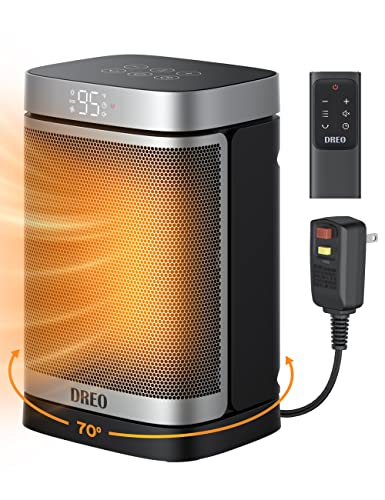


Top Portable Bathroom Heaters
DREO Space Heater for Bathroom and Indoor
- Watts1500W
- Heat Settings5 (H1-900W, H2-1300W, H3-1500W, Eco, Fan Only)
- Auto Shut-off24 hours
- Size10.3 inches
- Safety FeaturesALCI plug, tip-over, overheat protection
- ALCI safety plug for bathroom use
- Five heat modes including eco and fan only
- Tip-over and overheat protection plus 24-hour auto shut-off
- Compact size with a carrying handle
- Heating coverage limited to 95℉
- Some modes may require manual adjustment
Lasko Electric Ceramic Space Heater for Bathroom
- Watts1500W
- Heat Settings2
- Auto Shut-off—
- SizeLess than 8 inches tall
- Safety FeaturesALCI plug, overheat protection
- ALCI safety plug and ETL listed
- Two heat settings with ceramic element
- Automatic overheat protection
- Compact footprint and easy to use
- Only two heat settings
- No timer or auto shut-off feature
DREO Space Heater Portable Electric with Thermostat
- Watts1500W
- Heat SettingsMultiple (Power heat, ECO, Fan Only)
- Auto Shut-off—
- Size—
- Safety FeaturesTilt detection, overheat protection
- Precise thermostat control from 41-95℉
- Advanced PTC heating with wide air circulation
- Tilt detection and overheat protection
- Quiet operation at 34 dB
- Lacks ALCI plug for bathroom-specific safety
- Slightly larger size than some bathroom models
GiveBest Portable Space Heater for Indoor Use
- Watts1500W/750W
- Heat Settings2 plus fan only
- Auto Shut-offAutomatic on overheat and tip-over
- Size—
- Safety FeaturesV0 flame retardant, tip-over, overheat protection
- Very quiet operation
- Two heat modes with thermostat control
- Tip-over and overheat safety shut-offs
- Flame retardant materials and long cord
- No ALCI safety plug for bathrooms
- Limited heat settings
Amazon Basics Ceramic Space Heater Mini 500W
- Watts500W
- Heat Settings—
- Auto Shut-off—
- Size5.9 x 3.2 x 6.0 inches
- Safety FeaturesTip-over protection
- Small footprint and lightweight
- Fast heating at 500W
- Tip-over protection included
- Low heat output not ideal for full bathroom warming
- No auto shut-off or multiple heat settings
How to Choose a Portable Bathroom Heater
Pick a heater with safety certifications like ALCI plugs and overheat protection. Bathrooms are wet environments. ALCI plugs cut power fast if water causes a fault. Overheat protection stops the heater if it gets too hot, preventing fires.
Size matters. The heater should fit your bathroom without blocking access or creating a tripping hazard. Compact heaters with a stable base work best in small spaces.
Heat output determines how well the heater warms the room. Portable oil-filled radiators hold heat longer but take more time to warm up. Halogen heaters heat instantly with radiant heat but cool quickly after turning off.
Between radiant and convector heaters, convectors warm the whole room by circulating air. Radiant heaters target objects and people directly. For bathrooms, convectors provide even warmth, but radiant heaters can be better for quick spot heating.
Sizing and Heat Output of Bathroom Heaters
Measure your bathroom’s square footage before choosing a heater. A 100-square-foot bathroom typically needs about 1,000 to 1,500 watts of heat.
Check the heater’s wattage or BTU output. 1 watt equals about 3.4 BTUs. For most bathrooms, a heater rated 1,200 to 1,500 watts (4,000 to 5,100 BTUs) provides sufficient warmth.
If you want fast heat, choose a heater with higher wattage or a radiant element. Radiant heaters warm people and surfaces quickly, including floor tiles.
To warm bathroom floor tiles specifically, use a radiant heater or a heated floor mat designed for wet areas. Portable heaters mostly warm the air, so their effect on tiles is indirect.
Heaters turning on and off frequently can signal a thermostat set too low or a heater too powerful for the space. Choose a heater sized to your bathroom to avoid cycling and save energy.
Safety Features in Portable Bathroom Heaters
Bathroom heaters must have safety features designed for humid environments. Most importantly, pick a model with tip-over protection that automatically shuts off the heater if it falls. This prevents fires from accidental knocks.
Automatic shut-off is another key feature. It stops the heater if it overheats or runs too long. This reduces risk of damage or fire. Make sure the heater you choose has this built in.
Bathroom heaters increase air temperature but do not raise humidity. They do not add moisture; ventilation and bathroom use control humidity levels. Using a heater will not cause condensation or mold by itself.
Look for heaters made specifically for bathroom use. These have moisture-resistant components and sealed controls to prevent water damage or electrical shorts. Standard room heaters lack these protections and pose a hazard in bathrooms.
An ALCI (Appliance Leakage Circuit Interrupter) plug or built-in GFCI is essential. It senses electrical leakage and cuts power quickly. This prevents shocks in wet areas. Most bathroom heaters include this feature to meet safety codes.
Maintenance keeps a convection heater safe and efficient. Clean dust from vents and fan blades regularly. Check cords and plugs for damage. Never use a heater with frayed wires or a cracked casing.
Understanding Running Costs of Bathroom Heaters
Calculate running costs by multiplying the heater’s wattage by hours used, divide by 1,000 to get kilowatt-hours (kWh), then multiply by your electricity rate. For example, a 1,500-watt heater running 1 hour at 17 cents per kWh uses 1.5 kWh, costing about 25 cents.
Electric heaters convert almost all electricity into heat, so efficiency differences between ceramic, oil-filled, or fan heaters affect how quickly they warm a room, not energy use. A 1,500-watt heater uses the same electricity regardless of type.
Fuel-powered heaters like 12 V portable diesel models use fuel, not electricity. They have different running costs and need ventilation. They are not suitable for indoor bathroom use due to carbon monoxide risks.
Fan heaters use a fan to push warm air around. Their basic design can be taken apart to clean or repair the fan and heating element, but only do this if you know electrical safety and unplug the heater first.
| Appliance | Watts | Per hour | Per day (1 h) | Per month (30 days) |
|---|---|---|---|---|
| 1,500 W space heater | 1,500 W | 26¢ | 26¢ | $7.65 |
| Heated blanket | 100 W | 1.7¢ | 1.7¢ | 51¢ |
Common Misconceptions About Bathroom Heaters
Not all heaters are safe for bathroom use. Models lacking water-resistant features or proper safety certifications can cause electrical hazards in humid spaces. Always pick a heater with an ALCI (Appliance Leakage Circuit Interrupter) plug and overheat protection designed for bathrooms.
Warming a cold bathroom fast in the morning calls for a heater with quick heat-up times and focused output. Ceramic heaters with fan-forced heat deliver warm air rapidly, making them a better choice than oil-filled radiators, which heat slower but maintain warmth longer.
Infrared heaters, sometimes called radiant heaters, work by warming objects and people directly rather than heating the air. This makes them effective for spot heating but less suited for larger or drafty bathrooms where air temperature matters. Check reviews for the best infrared bathroom heater models to ensure they have sufficient wattage and safety features.
Some people believe oil-filled heaters are best for all bathrooms. While oil-filled models provide steady, quiet heat and keep radiating warmth after switching off, their slow heat-up makes them less effective for quick morning warm-ups in small bathrooms.
Ceramic heaters use ceramic plates and fans to heat air quickly. They suit small to medium bathrooms where you want fast, adjustable heat. Radiant heaters suit close-range use and dry conditions. Oil-filled heaters fit bedrooms or larger spaces where slow, steady heat is acceptable.
Avoid using heaters without bathroom certification or those designed solely for dry rooms. They may lack the moisture protection needed and pose shock risks. Also, bigger isn’t always better: a high-wattage heater in a small bathroom can trip breakers, while a low-wattage model in a large bathroom won’t warm the space effectively.
For more on warming a cold bathroom fast, see our detailed guide on the topic, which covers heater types and safety for quick, reliable heat in the morning.
Frequently Asked Questions
What is the best type of heater for a bathroom?
How do I safely use a heater in my bathroom?
Can a portable heater increase humidity in the bathroom?
How much does it cost to run a portable bathroom heater?
What size heater do I need for my bathroom?
Are there any heaters specifically designed for bathroom use?
Before you buy anything, it is worth looking at comparing heater running costs.
The other half of this decision is heaters for damp basements.