
Shoulder pain can limit mobility and impact daily life. Targeted heat therapy is a proven method to soothe stiff muscles and improve circulation, providing drug-free relief.
Heating pads designed specifically for shoulder pain deliver focused warmth to relax tight muscles and promote healing. Here are the top options available.
Heating Pad Feature Comparison
| Product | Best for | Heat Settings | Auto Shut-off | Size | Price |
|---|---|---|---|---|---|
| InVarme 2X Graphene-Infused Heating Pad | Best Overall | 8 (104℉ ~ 160℉) | Up to 4 hours | 20″ x 24″ | Check price |
| Pulax Weighted Far Infrared Heating Pad | Best Weighted | 8 (up to 160℉) | Up to 240 minutes | 20″ x 24″ | Check price |
| Lenmen Graphene-Infused Heating Pad | Best for Deep Heat | 6 (108℉ ~ 144℉) | Up to 2 hours | — | Check price |
| Comfytemp Weighted Heating Pad for Neck and Shoulders | Best Customizable | 9 (131℉ ~ 140℉) | Up to 9 hours | 19″ x 23″ | Check price |
| ThermaCare Heat Wraps for Neck & Shoulder | Best Disposable | — | Up to 8 hours continuous | — | Check price |


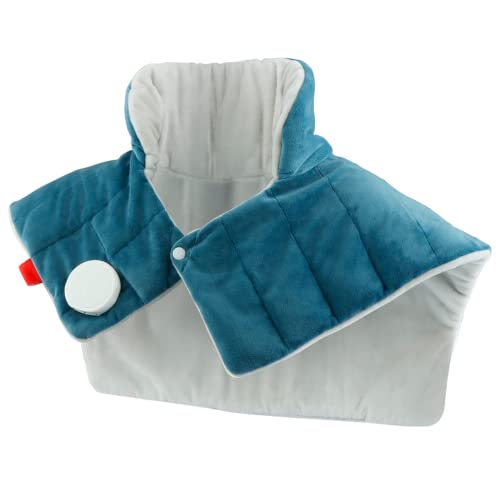

Best Heating Pads for Shoulder Pain Relief
InVarme 2X Graphene-Infused Heating Pad
- Heat Settings8 (104℉ ~ 160℉)
- Auto Shut-offUp to 4 hours
- Size20″ x 24″
- Fast heating in 3 seconds
- Large coverage area (20″x24″)
- 8 heat settings with memory function
- Auto-off timer limited to 4 hours
- May be too large for small frames
Pulax Weighted Far Infrared Heating Pad
- Heat Settings8 (up to 160℉)
- Auto Shut-offUp to 240 minutes
- Size20″ x 24″
- Far-infrared heat penetrates deeply
- Weighted with 1.76 lbs tourmaline
- Very fast 30-second heat-up
- Heavier weight may be uncomfortable for some
- Long 7.87-foot power cord can tangle
Lenmen Graphene-Infused Heating Pad
- Heat Settings6 (108℉ ~ 144℉)
- Auto Shut-offUp to 2 hours
- Size—
- Extended 354″ heating coil for wide coverage
- Graphene-infused for deeper heat
- Vertical and horizontal wiring for comfort
- Max temperature lower than some competitors (144℉)
- Shorter auto-off timer options
Comfytemp Weighted Heating Pad for Neck and Shoulders
- Heat Settings9 (131℉ ~ 140℉)
- Auto Shut-offUp to 9 hours
- Size19″ x 23″
- Wide range of heat (9 settings) and timer (11 options)
- Weighted with micro-glass beads
- Backlit controller with countdown reminder
- Lower max temperature compared to some pads
- Not recommended for use on bare skin
ThermaCare Heat Wraps for Neck & Shoulder
- Heat Settings—
- Auto Shut-offUp to 8 hours continuous
- Size—
- Up to 16 hours total heat relief
- No cords or plugs needed
- Contoured, secure fit
- Single use only, not reusable
- Cannot adjust heat level
How to Choose the Best Heating Pad for Shoulder Pain
A heating pad increases blood flow to your shoulder and relaxes tight muscles, reducing pain from strains, frozen shoulder, arthritis and overuse. The mechanism is simple: heat dilates blood vessels, delivering more oxygen and nutrients to damaged tissue while flushing out metabolic waste that irritates nerve endings.
Use a heating pad for 15 to 20 minutes at a time, up to three or four sessions per day. Sessions longer than 20 minutes do not increase relief and raise the risk of skin irritation or burns. Wait at least an hour between sessions to let your skin return to normal temperature. Apply heat only after the first 48 hours of a new injury; ice comes first to control swelling.
Choose a pad with at least three heat settings so you can start low and adjust upward without overshooting. Low settings around 110°F suit sensitive skin and all-day wear; high settings near 140°F deliver faster relief for deep muscle pain but require closer attention. A heating pad designed for neck and shoulders wraps around the joint and stays in place without your hands.
Size determines coverage. A 12 by 15 inch pad covers the shoulder and upper back muscles that refer pain into the joint. Smaller pads miss the trapezius and rotator cuff attachments. Larger pads around 12 by 24 inches work for shoulder and mid-back pain at once, useful if stiffness spreads or you cannot pinpoint the source.
Safety features prevent burns during longer sessions or if you fall asleep. Look for automatic shut-off after 1 or 2 hours and UL, ETL or CSA certification. Replace any pad with a frayed cord, cracked controller or scorch marks on the fabric. Never fold or bunch a heating pad while it is on; concentrated heat in one spot damages the internal wiring and can start a fire.
Weight affects whether you can wear the pad while moving. Lightweight pads under 2 pounds let you cook, work at a desk or do light stretches with heat in place. Heavier pads between 3 and 5 pounds add gentle pressure that some people find soothing, but they pull on your shoulder if you stand or lean forward. Weighted models work best when sitting or lying down.
The InVarme 2X Graphene-Infused Heating Pad heats to therapeutic temperature in under two minutes, covers the shoulder and surrounding muscles, includes a 2-hour auto shut-off, and weighs 1.8 pounds. It delivers the fast, even heat and safety features that make daily use practical for most shoulder pain.
Sizing and Heat Output for Effective Pain Relief
The size of your heating pad affects how well it covers your shoulder and surrounding muscles. Pads about 12 by 15 inches or larger provide full coverage. Smaller pads focus heat but may miss key areas that contribute to pain.
Heat output is measured in watts. Most effective heating pads for shoulder pain use between 50 and 150 watts. Higher wattage means faster and deeper heating but also more power consumption. Adjustable heat settings let you control this output for comfort and safety.
Use a heating pad for about 15 to 30 minutes per session. Longer use can cause skin irritation or burns. Most manufacturers recommend no more than 2 hours per use, and auto shut-off timers usually activate at 1 to 2 hours to prevent overheating.
| Appliance | Watts | Per hour | Per day (0.5 h) | Per month (30 days) |
|---|---|---|---|---|
| Typical heating pad | 100 W | 1.7¢ | 0.9¢ | 26¢ |
Longer sessions do not increase pain relief and can increase the risk of burns. Use the heating pad multiple times a day if needed, but allow your skin to cool between sessions.
Choose a pad with a size and heat output that matches your shoulder area and pain level. For example, the InVarme 2X Graphene-Infused Heating Pad offers 3 heat settings and a size that suits most shoulders, making it a versatile choice for effective relief.
For more options on heat settings and sizes, see our guide to the best heating pad for neck and shoulders.
Safety Features to Look for in Heating Pads
Heating pads must include safety features to prevent burns and electrical hazards. An auto shut-off timer is essential. It turns the pad off after a set time, usually 1 to 2 hours, which stops overheating if you fall asleep or forget to turn it off.
Look for heating pads made from safe, non-toxic materials. FDA clearance or UL certification shows the product meets safety standards. Materials should be durable, washable, and comfortable for sensitive skin.
Cord length and placement matter for safe use. A cord that is too short restricts how you position the pad and can cause strain. Too long, and it may tangle or create a tripping hazard. Aim for a cord between 5 and 7 feet for most users.
Always plug heating pads directly into a wall outlet. Avoid extension cords or power strips, which can overheat. Keep the cord away from water or heat sources to prevent damage.
The Benefits of Weighted Heating Pads
A weighted heating pad adds 3 to 5 pounds of pressure to heat therapy. That weight keeps the pad in full contact with your shoulder without your hands, which improves heat transfer and lets you move around or rest without the pad sliding off. The pressure also triggers deep pressure stimulation, which reduces muscle tension the same way a massage does.
The weight distributes evenly across your shoulder and upper back, so heat reaches the trapezius, deltoid and rotator cuff muscles at once. A standard flat pad loses contact when you shift position. A weighted pad conforms to your shoulder contour and stays put.
| Feature | Effect on Shoulder Pain |
|---|---|
| 3 to 5 lb weight | Maintains contact without hand pressure, improves heat penetration |
| Even weight distribution | Covers trapezius, deltoid and rotator cuff at once |
| Deep pressure stimulation | Reduces muscle guarding and tension |
Use a weighted heating pad for 15 to 20 minutes per session. Most models include auto shut-off at 60 or 90 minutes. You can repeat sessions every two hours if needed, but stop if your skin turns red or feels tender. Do not use a weighted pad while sleeping unless the manufacturer states the model is designed for overnight use.
People with frozen shoulder report that the combination of heat and weight helps more than heat alone, because the pressure counteracts the instinct to guard the joint. The pad feels secure rather than precarious. However, if you find any pressure uncomfortable, a large electric heating pad without weight covers the same area with less sensation.
Frequently Asked Questions
How long should I use a heating pad for shoulder pain relief?
Is it safe to sleep with a heating pad on my shoulder?
What temperature should I set my heating pad for effective pain relief?
Can heating pads help with chronic shoulder pain?
Are there any risks associated with using a heating pad?
What is the difference between a heating pad and a heat wrap?
For the detail, see our notes on how to use a heating pad safely.
There is more on best heating pad for menstrual cramps in a guide of its own.
