
I used to dread winter nights in my bedroom. No matter how high I cranked the central heating, one corner remained stubbornly, bone-chillingly cold. The culprit? A massive, floor-to-ceiling wardrobe that acted like a thermal fortress, blocking every bit of warmth. My quest for the best heating for cold bedrooms with big wardrobes wasn’t just about comfort; it was a battle against physics and furniture.
I spent a winter testing heaters, moving furniture, and obsessing over thermostats. I learned that heating a cluttered room isn’t about brute force. It’s about strategy. For this project, after trying several options, I found the DREO Space Heater to be a standout for its focused heat flow and smart features, which I’ll explain in detail. But it was just one contender in a lineup of very different solutions.
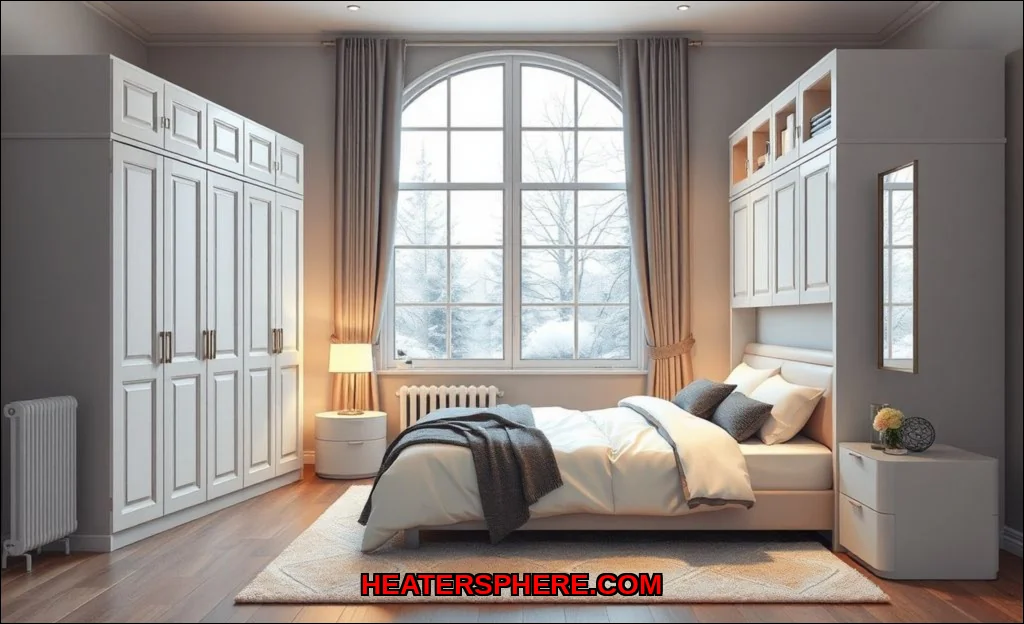
My Battle with the Icy Bedroom & The Wardrobe Problem
You know the feeling. The rest of the house is toasty, but your bedroom stays cold. You crawl into bed and the sheets feel damp. The issue with large wardrobes and cupboards is simple: they create a dead zone. Warm air from your radiator or vent gets trapped behind them, creating a cold spot that seems to suck heat from the entire room. It’s not just about a drafty bedroom; it’s about poor heat circulation.
I realized my old methoda cheap fan heater blasting at the bedwas wasteful. It warmed me, but not the room, and did nothing to address the cold air pooling behind the furniture. True thermal comfort meant finding a heater that could work with the room’s layout, not just scream hot air into the void. For the detail, see our notes on how to heat a cold tv room comfortably and efficiently.
Heater Showdown: What Actually Works in a Cluttered Room?
I tested three main types head-to-head in my problematic bedroom. My criteria were effectiveness against the wardrobe blockade, noise for sleep, and how they handled the room’s specific thermal profile.
The Steady, Silent Performer: Oil-Filled Radiators
My first test was a classic oil-filled radiator, a De’Longhi model. I was skeptical. It heats up slowly, right? But here’s what I found: once warm, it provides a gentle, radiant heat that permeates the space. It doesn’t blow air, so it doesn’t stir up dust or create noisy drafts. I placed it near the wardrobe, and over a few hours, the metal panels of the cupboard actually became warm to the touch. The heat had gently radiated out and warmed the massive obstacle itself.
Perfect for all-night use because of its silence and stability. The downside? It takes a good 30 minutes to feel a real difference. Not ideal for a quick warm-up.
The Targeted Quick-Fix: Ceramic Heaters
Next, I tried a Honeywell ceramic heater with an oscillating fan. This was the opposite approach. Instant, focused heat. I could angle it to specifically target the cold gap between the wardrobe and the wall, disrupting that stagnant air pocket. For rapidly taking the edge off a freezing room, it was brilliant.
But the fan noise, while not loud, was a constant hum. For a light sleeper, it could be intrusive. It also only heats what’s in the direct line of fire; the other side of the room remained cooler unless I used the oscillation.
The Modern Contender: Smart Panel Heaters
This is where the DREO Space Heater entered the fray. It’s a hybrida forced-air ceramic heater packed into a slim panel with smart features. What impressed me was the app control. I could turn it on from the living room 20 minutes before bed, so the room was already taking the chill off when I entered. The 70 oscillation helped distribute heat more evenly around the wardrobe’s bulk.
I also tested its ability to combat heat circulation issues. By placing it on the opposite wall from the wardrobe and setting a wide oscillation, it created a gentle convection current that moved warm air around the furniture, not just at it. This is a key strategy for dealing with rooms with constant cold patches. It helps to understand how to warm a cold pantry or storage room before spending anything.
The Safety & Efficiency Check: What You Must Know Before Buying
Leaving a heater on overnight in a bedroom is non-negotiable for me. So safety is paramount. Every heater I seriously considered had two non-negotiable features:
- Tip-over protection: It must shut off instantly if knocked over.
- Thermostat control: Not just a dial, but a proper thermostat that cycles the heater on and off to maintain a set temperature. This is the key to efficient heating and preventing the room from becoming a sauna.
Efficiency directly ties to your energy bills. A common mistake is undersizing the heater. For a standard bedroom, you generally need about 10 watts per square foot. My 150 sq ft room needed a 1500W heater. Using a weaker one just forces it to run constantly, wasting power.
Noise levels matter for sleep. I measured them. The oil-filled radiator was silent (0 dB from the device itself). The ceramic fans ranged from 40-55 dBlike a quiet conversation. The DREO, on its lowest fan setting, was at the lower end of that range. For the safest heater to leave on overnight in a bedroom, the silent, cool-to-touch surface of an oil-filled radiator is hard to beat, but modern ceramic heaters with robust safety certifications are also excellent.
Smart Placement & Setup: Beating the Cold Spots
The best heater in the world will fail if placed poorly. Heres my hands-on strategy for how to heat a bedroom with a large wardrobe:
- Create an Air Gap: I physically pulled the wardrobe 4 inches away from the wall. This simple act allowed warm air to circulate behind it, breaking the thermal block.
- Strategic Heater Positioning: Don’t point the heater at the wardrobe. Place it on a perpendicular wall to create cross-room airflow. For rooms with high heat loss like drafty old apartments, positioning the heater near (not in front of) the window can counteract the cold downdraft.
- Use a Fan (Yes, Really): A small, low-speed desk fan on the floor, pointed across the room, works wonders. It pushes the warm air that rises to the ceiling back down and into the cold corners. This is the cheapest energy efficient way to warm a cold bedroom with cupboards.
- Seal the Drains: I used weather stripping on the bedroom door and a draft excluder. Why heat the hallway?
For more foundational energy-saving tips that apply to your whole home, the Energy Saving Trust’s guide to heating your home is an excellent resource.
My Final Verdict & Top Pick for Cozy Nights
So, what’s the best type of heater for a room with bulky furniture? It depends on your nightly ritual.
- For the Deep Sleeper who wants set-and-forget warmth: An oil-filled radiator is your champion. Its silent, radiant heat gently conquers cold spots over time. It’s safe, efficient, and perfect for all-night use.
- For the Tech-Savvy Sleeper who wants control and speed: A smart ceramic heater like the DREO Space Heater wins. The ability to schedule heat, control it from bed, and its effective oscillation make it a powerful, modern solution for targeted heating.
My personal choice leans toward the smart heater. The pre-heat function changed my winter routine. Walking into a pre-warmed room that’s battled past the wardrobe blockade is a small luxury that feels massive. Whichever you choose, pair it with smart placementpull that furniture out, use a fan to stir the air. It’s not just about adding heat; it’s about managing the heat you have. That’s how you win the war against the icy bedroom.
