
You walk up the stairs and hit that one spot. It’s noticeably colder, maybe even drafty. That freezing stair corner landing isn’t just an annoyance; it’s a sign your home’s comfort and efficiency are out of balance. You’re dealing with a classic thermal comfort issue, but the good news is you can fix it. This guide walks you through practical steps, from quick wins to permanent solutions, to reclaim that space.
We’ll start by diagnosing the “why” before jumping to the “how.” You’ll learn about immediate fixes, strategic insulation, and smart heating choices. The goal is a warmer landing and a more energy-efficient home. Let’s get started.
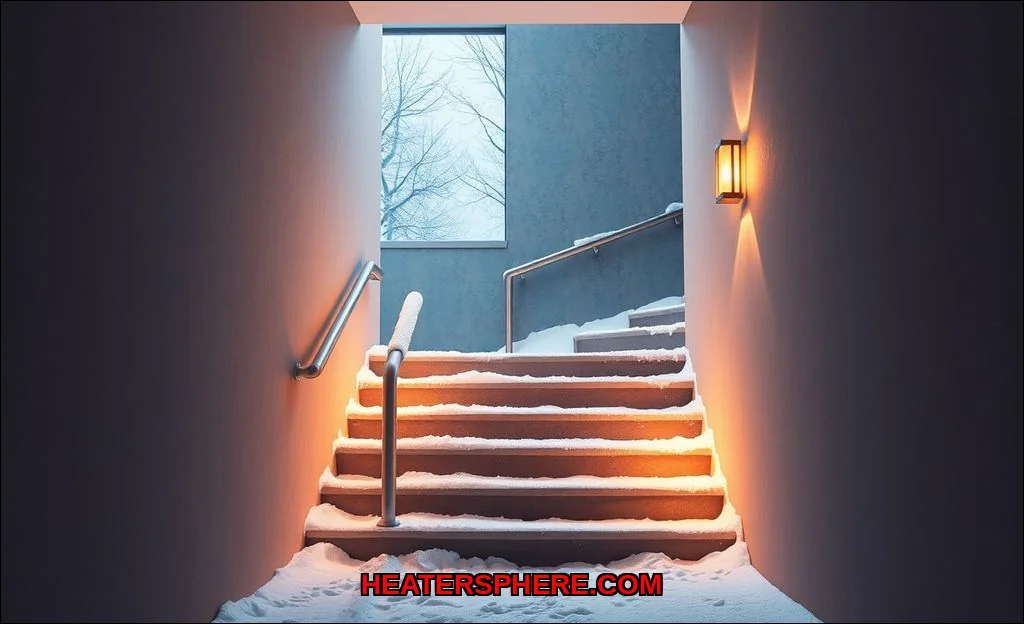
Why Your Stair Landing is a Cold Spot
Staircases are often thermal weak points in a home’s envelope. Several factors conspire to make that corner landing a freezing zone. The primary culprit is thermal bridging. This occurs when structural materials like wood studs or concrete, which conduct temperature easily, create a path for heat to escape. Your landing’s corner might be where an exterior wall, an unheated garage, or a poorly insulated attic space meets the house frame. There is more on heating a long stairwell in a guide of its own.
This leads to a significant temperature differential between the landing and the rest of your home. You might also feel a drafty landing due to air leaks around windows, doors, or where the staircase framing meets the wall. This heat loss isn’t just uncomfortable; it can lead to problems like condensation and mold if warm, moist air hits the cold surface. Understanding these causes is the first step to an effective solution.
Immediate Fixes to Warm the Area
You don’t need a major renovation to feel a difference tonight. Start with these actionable steps to stop drafts on stairs and improve the immediate feel of the space.
- Seal the Obvious Gaps: Run your hand along the baseboards, window frames, and any access panels on the landing. Feel for cold air? Use weatherstripping or caulk to seal these leaks. This simple draft proofing can have a dramatic impact.
- Address Door Gaps: If a door leads to the outside or an unheated space from the landing, its threshold is a major leak source. For a quick, reversible fix, consider a draft stopper. A product like the Vellure Door Draft blocker can be placed along the bottom to seal out cold air instantly.
- Rearrange for Airflow: Is furniture blocking a vent or radiator near the stairs? Even a large rug on the landing can help insulate the floor from cold air below. Sometimes, the best way to heat a drafty stair corner is simply to remove barriers to your existing system.
- Use a Portable Heater (Safely): For spot heating, a small ceramic or oil-filled radiator can provide immediate relief. Always follow safety guidelines: keep it away from curtains and flammable materials, and never leave it unattended on the landing.
Insulation Solutions for Long-Term Improvement
For a permanent fix, you need to address the root cause: inadequate insulation. This is where you tackle the thermal bridging and create a continuous thermal barrier. The approach depends on your home’s construction and access.
Accessible Walls and Cavities
If the cold wall on the landing is a standard interior wall with access (like from a closet), you can add insulation. Blown-in cellulose or fiberglass batts are common choices. For tricky gaps and irregular spaces around the staircase stringers, spray foam can be incredibly effective. It expands to fill every crevice, providing both insulation and an air seal. For a detailed guide on this process, see our article on how to insulate staircase gaps and landings.
When Walls are Closed
No easy access? Don’t despair. You can add insulation from the outside or the cold side. If the landing is above an unheated garage, insulating the garage ceiling is your project. Rigid foam boards are excellent for this. For exterior walls, the only option might be professional injection foam, which is installed through small holes drilled in the wall.
Improving Airflow and Heat Circulation
Often, the landing is cold because warm air simply isn’t reaching it. This is a classic airflow management challenge. Stairwells can act like chimneys, but for cold air. Heres how to improve the situation. If that sounds like your room, read up on warm a cold upstairs room next.
- Redirect Existing Heat: Use a small, quiet fan placed on a higher, warmer step to gently push warm air down toward the cold landing. Ceiling fans, if present, should be set to run clockwise on low in winter to push warm air down from the ceiling.
- Balance Your HVAC System: Ensure the vents on your upper floor are partially open. Sometimes, closing vents too much upstairs increases pressure and reduces airflow to distant spots like the stair landing. A professional HVAC technician can help balance your system.
- Consider a Transfer Fan: For a more engineered solution, a ducted transfer fan can be installed in the wall or ceiling between a warm room and the cold stairwell. It actively moves air to equalize temperatures.
Effective airflow management ensures the heat you’re paying for actually reaches where you need it, addressing the core issue of improve heat circulation.
Energy-Efficient Heating Options for the Landing
Sometimes, adding a dedicated heat source is the most practical answer. The key is choosing an option that matches the need without wasting energy. This is where energy efficiency meets comfort.
Electric Radiant Heat Panels
This is a superb solution for a cold stairwell. Thin, wall-mounted panels provide radiant heat directly to objects and people in the room, similar to sunshine. They are silent, have no moving air (great for allergies), and can be zoned with their own thermostat. You can install one directly on the cold wall of the landing for targeted warmth. They are highly efficient for their purpose because they heat the occupant, not the entire air volume.
Smart Space Heaters
Modern electric heaters offer thermostats, timers, and even Wi-Fi connectivity. You can schedule a heater to warm the landing before you wake up or return from work. Look for models with “tip-over” and “overheat” protection for safety. While they heat the air, their controllability makes them more efficient than old, unregulated models.
Extending Your Central System
For a whole-home solution during a major renovation, extending a duct or hot water baseboard to the landing is possible. However, it’s often the most expensive and invasive option. It’s crucial to consult with an HVAC professional to see if your current boiler or furnace can handle the additional load. For a broad overview of home heating systems, the Department of Energy has a great resource on home heating systems types and efficiency.
For a deep dive into one of the most targeted options, explore whether infrared heaters are effective for stair landing areas.
Making the Choice: A Quick Comparison
| Solution | Best For | Relative Cost | Key Benefit |
|---|---|---|---|
| Draft Sealing & Weatherstripping | Immediate air leak fixes | Low | Fast, cheap, high impact |
| Adding Insulation | Permanent thermal barrier | Medium-High | Solves the root cause, saves energy year-round |
| Electric Radiant Panel | Targeted, comfortable spot heating | Medium | Silent, efficient, zoned comfort |
| Smart Space Heater | Flexible, scheduled warmth | Low-Medium | Portable, highly controllable |
Putting It All Together
Fixing a freezing staircase landing is a process of diagnosis and targeted action. Start with the simple stuff. Seal the drafts you can feel. Then, investigate the hidden causesthe thermal bridging and missing insulation. Improve how air moves in your home. Finally, consider a dedicated, efficient heat source if needed.
Each step you take improves your thermal comfort and your home’s overall energy efficiency. You’re not just warming a corner; you’re building a more consistent, comfortable, and cost-effective living environment. Tackle the easy wins this weekend, and plan for the bigger solutions. Your warm, draft-free landing is within reach.
