
Choosing the right gas hot water heater affects your home’s comfort and energy use. Gas models differ in size, venting requirements, and efficiency. Pick one that fits your household’s water demand and installation setup to avoid safety risks and extra costs.
Gas Hot Water Heater Comparison
| Product | Best for | Flow Rate (GPM) | BTU Input | Energy Factor | Dimensions | Price |
|---|---|---|---|---|---|---|
| Rinnai RX199iN Condensing Tankless Water Heater | Best Overall | 11.1 | — | .98 | Compact suitcase size | Check price |
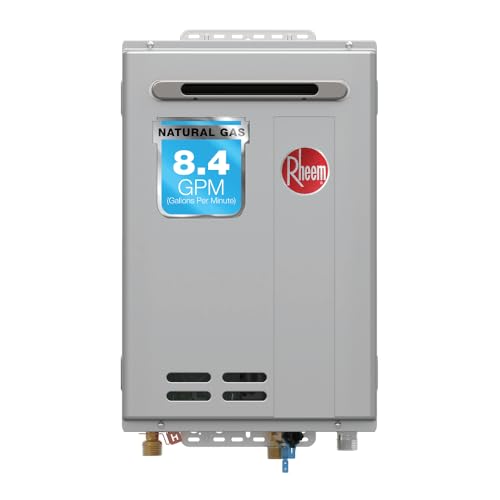
| Rheem RTG Series 8.4 GPM Natural Gas Tankless Heater | Best for Large Homes | 8.4 | 180,000 | 0.82 | — | Check price |
| APUS Propane Tankless Water Heater 95,000 BTU | Best for Propane Use | 4.42 | 95,000 | 0.81 | 20.55″H × 13.27″W × 5.91″D | Check price |
| Novieex Natural Gas Tankless Water Heater 4.3 GPM | Best Budget Indoor Model | 4.3 | 100,000 | — | — | Check price |
| Ranein Propane Tankless Water Heater 80,000 BTU | Best for Families with Kids | 3.6 | 80,000 | — | — | Check price |



Top Picks for Gas Hot Water Heaters
Rinnai RX199iN Condensing Tankless Water Heater
- Flow Rate (GPM)11.1
- Energy Factor (UEF).98
- InstallationIndoor or outdoor with RX-OVC vent cap
- Fuel TypePropane or natural gas
- SizeCompact, suitcase-sized
- High flow rate supports multiple fixtures at once
- Energy efficiency factor of .98 reduces gas consumption
- Compact size fits small spaces and versatile installation options
- Requires professional installation
- WiFi control module sold separately
Rheem RTG Series 8.4 GPM Natural Gas Tankless Heater
- Flow Rate (GPM)8.4
- BTU Input180,000
- Energy Factor (UEF)0.82
- InstallationOutdoor only
- High BTU output for large homes
- Outdoor installation avoids venting hassles
- Advanced safety features including freeze protection
- Non-condensing design is less efficient than condensing models
- Limited to outdoor installation only
APUS Propane Tankless Water Heater 95,000 BTU
- Flow Rate (GPM)4.42
- BTU Input95,000
- Energy Factor (UEF)0.81
- Fuel TypePropane
- Precise temperature control ±1°F
- High thermal efficiency and energy savings
- Built-in freeze protection for cold climates
- Lower flow rate than larger models
- Shorter warranty coverage
Novieex Natural Gas Tankless Water Heater 4.3 GPM
- Flow Rate (GPM)4.3
- BTU Input100,000
- Temperature Range95°F to 149°F
- Power Supply110V-120V AC
- Precise digital temperature control
- Compact, wall-mounted design saves space
- Efficient burner system reduces energy waste
- Lower flow rate limits simultaneous fixture use
- Requires 110V power supply
Ranein Propane Tankless Water Heater 80,000 BTU
- Flow Rate (GPM)3.6
- BTU Input80,000
- Temperature Range95°F to 149°F
- Fuel TypePropane
- Child lock and preset modes for family safety
- Dual heating chamber improves efficiency and quiet operation
- Anti-freeze protection for cold climates
- Lower flow rate limits simultaneous use
- Indoor installation only
How to Choose the Best Gas Hot Water Heater
Flow rate is the volume of hot water a heater can deliver per minute, measured in gallons per minute (GPM). It determines whether you can run multiple showers, faucets, or appliances at once without losing temperature. A heater rated for 7 GPM supports two full showers simultaneously, while 3 GPM suits a single shower and sink.
Temperature rise is the difference between incoming cold water and the desired hot water temperature. In colder climates, the water entering the heater can be as low as 40°F. The higher the temperature rise needed, the lower the flow rate a heater can maintain. For example, a heater rated at 7 GPM with a 70°F rise might only deliver 4 GPM with a 100°F rise.
Household examples illustrate this well. A couple in a mild climate might need a 3 GPM heater with a 60°F rise. A family of four in a northern state should choose an 8 GPM heater to cover showers, dishwasher, and laundry. Ventless tankless gas water heaters save space and venting but require good ventilation and a CO alarm to operate safely indoors.
Understanding Flow Rates and Heat Output
Flow rate is the amount of hot water a heater can deliver per minute, measured in gallons per minute (GPM). It determines how many fixtures you can use at once without running out of hot water. A higher flow rate suits larger households or simultaneous use, like multiple showers and appliances running together.
Temperature rise is the difference between the incoming cold water temperature and the desired hot water temperature. The colder your water supply, the more energy the heater needs to raise the temperature. This reduces the maximum flow rate because the heater must work harder to maintain the set temperature.
For example, in a cold climate where water enters at 40°F and you want 120°F water, a heater rated for 7 GPM at a 70°F rise will deliver less flow than in a warmer climate. You might get only about 4 to 5 GPM under these conditions, enough for one shower and a faucet but not two showers at once.
Typical flow rates for household needs vary: a single shower uses about 2.5 GPM, a dishwasher about 1.5 GPM, and a washing machine 2 GPM. Adding these up helps size the heater to match your usage. A family of four using two showers and a dishwasher simultaneously needs a heater with at least 6 to 7 GPM capacity at the required temperature rise.
Ventless tankless gas water heaters do not require a vent pipe because they use sealed combustion and direct exhaust to the outside. This design saves installation space but requires careful placement to avoid moisture buildup indoors. Ventless hot water heaters are best for well-ventilated areas and must comply with local building codes.
Safety Considerations and Certifications
CSA certification indicates that a gas water heater meets North American safety and performance standards. Certified models undergo testing for combustion safety, emissions, and electrical components. Choosing a CSA-listed heater reduces risks of gas leaks, carbon monoxide, and electrical faults.
Key safety features include automatic shut-off, which stops gas flow if the flame goes out or if overheating occurs. Freeze protection prevents damage in cold climates by maintaining a minimum temperature in the unit. These features protect your home and extend the heater’s lifespan.
Professional installation is essential for gas water heaters. A licensed plumber or gas technician ensures correct gas line sizing, proper venting or exhaust, and secure connections. Improper installation can lead to gas leaks, carbon monoxide buildup, or poor performance.
- Check CertificationVerify the heater has CSA or an equivalent certification label.
- Inspect Safety FeaturesConfirm the model includes automatic shut-off and freeze protection if needed.
- Hire a Licensed InstallerUse a professional with experience in gas water heater installation for safety and code compliance.
The anode rod in a gas hot water heater protects the tank from corrosion by attracting corrosive elements in the water. Replacing the anode rod every 3 to 5 years extends the tank’s life and prevents leaks. Check it annually if you have hard water or notice rusty water.
Cost of Running a Gas Hot Water Heater
Battery ignition on-demand gas water heaters avoid the constant pilot light of older models, saving fuel and reducing operating costs. They only ignite the burner when hot water is needed, cutting standby losses.
Calculate running costs by converting the heater’s BTU input to therms (100,000 BTU = 1 therm). Multiply therms used per hour by your gas rate to estimate expenses. For example, a 40,000 BTU heater running one hour uses 0.4 therms. At $1.50 per therm, that costs 60 cents.
Energy efficiency ratings like the Uniform Energy Factor (UEF) show how well the heater converts fuel to hot water. A higher UEF means less gas wasted. A model with a 0.90 UEF uses 10% less fuel than one rated 0.80, cutting annual costs proportionally.
Aluminum anode rods resist corrosion better and last longer than magnesium rods, reducing the need for frequent replacements and helping the tank last longer. This lowers maintenance costs over time.
Turn off the water heater when away for extended periods. Consider a timer or smart controller to avoid heating water unnecessarily.
Choosing a heater with a high UEF and battery ignition reduces fuel consumption and operating costs. Regular maintenance, including anode rod checks and tank flushing, keeps efficiency high.
For more on efficient gas water heaters, see our guide to the best gas tankless water heater models.
Frequently Asked Questions
What is the best gas hot water heater for large families?
How do I maintain my gas hot water heater?
What are the advantages of tankless gas water heaters?
How can I improve the efficiency of my gas hot water heater?
What is the average lifespan of a gas hot water heater?
Do I need a special vent for a gas tankless water heater?
If that sounds like your room, read up on tankless water heaters with backup next.
We go through best small gas water heaters for compact homes step by step in a separate article.
