
When it comes to heating your home, the choice of heater can significantly impact comfort and energy efficiency. The Vornado VH200 and various ceramic tower heaters both offer unique advantages, making it essential to understand their differences.
Vornado VH200 vs Ceramic Tower Heaters at a Glance
| Feature | Vornado VH200 | Ceramic Tower Heaters |
|---|---|---|
| Heat output and room size | Up to 1,500 watts, heats rooms up to 150 sq ft | Varies by model, generally less for small spaces |
| Running cost | Energy efficient with adjustable settings | Varies, often less efficient for whole-room heating |
| Safety features | Tip-over protection, 2-stage auto shutoff, cool-touch casing | Usually tip-over and overheat protection, varies by model |
| Noise levels | Quiet humming from internal fan | Usually quieter, some models nearly silent |
| Portability and convenience | Compact but heavier, less portable | Lightweight and easy to move |
| Lifespan and maintenance | Designed and supported for 5 years | Typically 5 to 10 years with normal use |
| Temperature control | 3 heat settings plus fan-only mode | Varies widely, often multiple heat settings |

Vornado Rise 20H Whole Room Tower Heater
- Heat settings3
- Safety featuresTip over protection, 2-stage auto shutoff, cool-touch casing
- ModesHeat and fan-only
- ColorBlack
- Three distinct heat settings for flexible warmth
- Fan-only mode for cooling or air circulation
- Advanced safety with tip-over and auto shutoff
- No digital thermostat for precise temperature control
- Slightly larger footprint than some ceramic towers
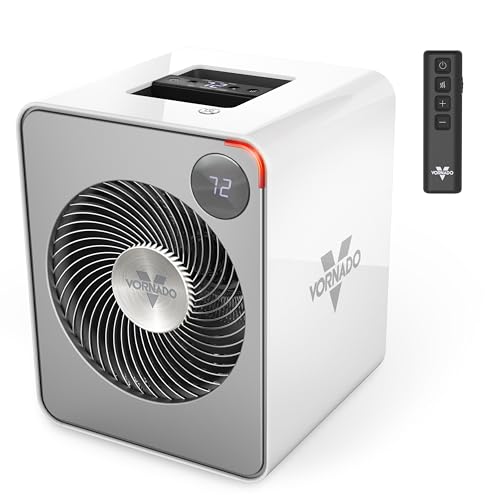
Vornado VMHi500 Metal Space Heater
- Heat settings2
- Timer12-hour
- Safety featuresTip over protection, auto shutoff, cool-to-touch metal finis
- ColorWhite
- Digital thermostat with Auto Climate Control
- 12-hour timer and remote control included
- Cool-to-touch metal finish for safe handling
- Only two heat settings limit fine tuning
- Less powerful for whole-room heating than larger tower units
Why I Prefer the Vornado VH200 Over Ceramic Tower Heaters
I prefer the Vornado VH200 because it heats larger rooms more efficiently and distributes warmth evenly. Ceramic tower heaters suit smaller spaces and offer precise temperature control but fall short on whole-room coverage.
The VH200 delivers up to 1,500 watts of heat and uses Vornado’s vortex technology to circulate warm air throughout the room, reducing cold spots. Ceramic tower heaters typically provide similar wattage but focus heat in a narrower area, making them better for personal or spot heating.
Energy efficiency and running costs are comparable since both usually run at 1,500 watts max. The difference lies in how effectively they warm the space, affecting how long you run them. I find the VH200 reduces runtime in larger rooms thanks to better air circulation.
Both types include safety features like tip-over and overheat protection, but the VH200’s sturdy design and UL listing make it reliable for everyday use. Noise levels are low on both, though ceramic heaters sometimes click when cycling the heating element.
Portability favors ceramic tower heaters, which are lighter and often have built-in handles. The VH200 is heavier but still manageable and suited for stable placement in living rooms or bedrooms.
Lifespan depends on maintenance, but ceramic elements can degrade faster than the metal components in the VH200. Regular cleaning keeps both working longer.
| Appliance | Watts | Per hour | Per day (8 h) | Per month (30 days) |
|---|---|---|---|---|
| 1,500 W space heater | 1,500 W | 26¢ | $2.04 | $61.20 |
| Heated blanket | 100 W | 1.7¢ | 14¢ | $4.08 |
Heat Output and Room Size
The Vornado VH200 provides a maximum heat output of 1,500 watts, which is sufficient for rooms up to about 150 square feet. It uses vortex air circulation to spread warmth evenly, making it effective for whole-room heating.
Ceramic tower heaters generally also run at 1,500 watts but their heat output is concentrated. They are ideal for personal heating or smaller rooms, typically up to 100 square feet.
The VH200’s design pushes warm air across the room, reducing cold spots and maintaining a consistent temperature. Ceramic heaters rely on radiant and convection heat but often warm only the immediate area in front of the unit.
| Heater Model | Heat Output (Watts) | Recommended Room Size (sq ft) |
|---|---|---|
| Vornado VH200 | 1,500 | Up to 150 |
| Typical Ceramic Tower Heater | 1,200–1,500 | Up to 100 |
If you need to heat a larger room, the VH200 is the better choice because it moves air more efficiently. Ceramic heaters work best for smaller spaces or when you want to direct heat to a specific spot.
For those deciding between the two, consider the size of the room and how you want the heat distributed. The VH200 excels at whole-room comfort, while ceramic tower heaters offer targeted warmth.
Learn more about how ceramic heaters compare to fan heaters for different heating needs in our ceramic vs fan heater coverage.
Running Cost
Look for tip-over protection and overheat shut-off as essential safety features in any space heater. The Vornado VH200 includes both. It automatically turns off if it tips over or if internal temperatures exceed safe limits. These features reduce fire risk and make the heater safer to use around pets and children.
Ceramic tower heaters generally include similar safety measures, such as automatic shut-off on tip-over and overheating. Many models also have cool-touch exteriors to prevent burns. However, safety features vary by brand and model, so check the specifications before buying.
Always use heaters with UL, ETL, or CSA certification to ensure they meet recognized safety standards. Follow the manufacturer’s guidelines about placement, clearance, and unattended use. Never plug a heater into an extension cord or power strip, and keep at least 3 feet of clearance from flammable materials.
Safety Features
Look for tip-over protection and overheat shut-off as essential safety features in any space heater. The Vornado VH200 includes both. It automatically cuts power if it tips over or overheats, reducing fire risk. These features are non-negotiable for safe operation.
Ceramic tower heaters typically have similar safety features. Most include tip-over switches and overheat sensors. Some models add cool-touch exteriors to prevent burns. Safety certifications from UL, ETL, or CSA indicate the heater meets industry safety standards.
Always follow the user guidelines. Keep at least 3 feet of clearance from combustibles. Plug heaters directly into a wall outlet, never an extension cord or power strip. Never leave a space heater running unattended or while sleeping unless the manufacturer explicitly states it is safe.
Noise Levels
The Vornado VH200 operates quietly for its size, producing a low humming sound from its internal fan. It is suitable for living rooms and bedrooms where moderate background noise is acceptable. The fan speed changes with heat settings, so noise varies slightly.
Ceramic tower heaters vary more in noise. Some models use quiet fans similar to the Vornado, while others have louder fans or rattling components. The ceramic heating element itself is silent. Noise level depends largely on fan design and quality.
If you need a heater for a bedroom or workspace, check the decibel rating if available. Quieter models typically produce under 40 dB, roughly the noise of a quiet conversation. Avoid ceramic heaters known for noisy fans if silence is a priority.
Portability and Convenience
Ceramic tower heaters are generally easier to move than the Vornado VH200. They tend to be lighter and slimmer, making them more convenient for quick relocation between rooms or storage.
The Vornado VH200 weighs about 8 pounds, which is moderate but heavier than many ceramic towers. Its bulkier design includes a stable base and integrated handle, which helps when moving it but does not make it as portable as smaller ceramic models.
Ceramic heaters often have compact footprints and can fit in tight spaces. Their vertical design also makes them easier to carry with one hand. The Vornado VH200’s wider footprint and fan assembly add weight and size, limiting portability for frequent moves.
Convenience features vary between the two types. Many ceramic tower heaters include remote controls and programmable timers, allowing users to adjust settings from a distance and schedule heating periods.
The Vornado VH200 has a simple control panel without a remote. It offers basic settings but lacks timers or advanced programming. This suits users who want straightforward operation without extra features.
Lifespan and Maintenance
Ceramic tower heaters typically last between 5 and 10 years with normal use. Their ceramic heating elements are durable but can degrade if the unit overheats or is dropped.
The Vornado VH200 also has an expected lifespan around 7 to 10 years. Its motorized fan and heating element require occasional cleaning to maintain airflow and prevent overheating.
Maintenance for ceramic heaters involves periodic dusting and vacuuming of air intake and outlet vents. This prevents dust buildup, which can reduce efficiency and increase fire risk.
The Vornado VH200 needs more attention to its fan. Cleaning the fan blades and grill every few months keeps the unit running quietly and efficiently. Avoid using water; use a dry cloth or compressed air.
Maximize lifespan by avoiding running either heater unattended for long periods and keeping them on stable, flat surfaces. Proper storage during off-season months also helps protect the components.
Frequently Asked Questions
What is the difference between the Vornado VH200 and ceramic heaters?
Which heater is best for small rooms?
Are Vornado heaters energy efficient?
Can I leave a ceramic heater on overnight?
What features should I look for in a tower heater?
How do I safely use a space heater?
Before you buy anything, it is worth looking at running costs for oil filled heaters.
We go through selecting a powerful heater step by step in a separate article.