
The terms get thrown around as if ceramic and convection are opposite types of heaters. They’re not. Most ceramic heaters are actually convection heaters that use a ceramic heating element and a fan to move warm air. The real question is whether you want fan-forced heat that warms you quickly in one spot, or fanless convection that heats a room slowly and stays quiet.
The confusion comes from lumping oil-filled radiators, panel heaters, and fan-forced ceramic towers under vague labels. What matters is how the heater moves air, how much noise it makes, and whether it matches the room size and the way you actually use the space.
Ceramic Heater vs Convection Heater at a Glance
| Feature | Ceramic Heater | Convection Heater |
|---|---|---|
| Heating speed | Warms objects and air within 30 to 60 seconds | Takes 5 to 15 minutes to raise room temperature noticeably |
| Room coverage | Effective in rooms up to 150 sq ft; uneven beyond that | Heats rooms up to 300 sq ft evenly with natural circulation |
| Noise level | 37.5 to 52 dB fan noise on high settings | Silent operation with no fan or moving parts |
| Running cost | 1,500 W max; $18.36/month at 8 hours daily, $0.17/kWh | 1,500 W max; $18.36/month at 8 hours daily, $0.17/kWh |
| Safety features | Tip-over and overheat shut-off; ETL listed; runs hotter externally | Tip-over and overheat shut-off; IP24 water protection; cooler touch |
| Portability | 4 to 8 lbs with carry handle; compact tower or desktop size | Panel models wall-mount; oil-filled units weigh 15 to 25 lbs |
| Lifespan | 3 to 5 years before fan motor or dust buildup degrades performance | 5 to 10 years; no fan to fail, fewer mechanical parts |
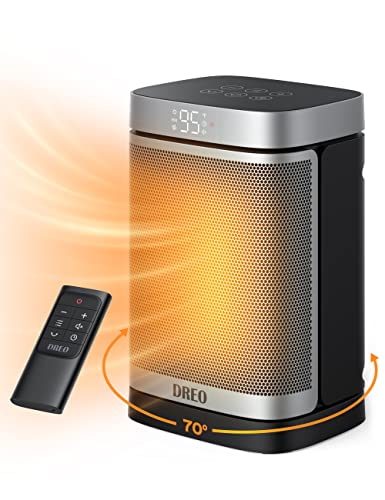
DREO Atom One PTC Ceramic Heater
- TypePTC Ceramic with fan
- Power1,500 W
- Oscillation70°
- Thermostat range41–95°F, 1°F increments
- Timer12 hours
- Noise level37.5 dB
- Heats faster than convection models; you feel warmth within seconds
- 70° oscillation covers a wide area without repositioning the heater
- Quiet brushless motor at 37.5 dB, suitable for bedrooms and offices
- Fan noise is audible, even at the lowest setting
- Dries the air more than convection heat

DREO Convection Panel Heater
- TypeWind-free convection panel
- Power1,500 W
- Heating elementX-shaped aluminum
- Timer1–24 hours
- Water resistanceIP24
- SafetyFortPlug technology, overheat protection
- Completely silent; natural convection means no fan or moving parts
- Less air movement preserves humidity and feels gentler
- IP24 splash protection and FortPlug technology suit bathrooms and damp spaces
- Takes longer to feel warmth compared to a ceramic fan heater
- No oscillation; position matters for even coverage
Ceramic Heater vs Convection Heater: How They Work and Heat Differently
Ceramic heaters use a ceramic heating element that emits infrared radiation to warm objects and people directly, then rely on a fan to push hot air into the room. Convection heaters work by warming air itself—either through natural circulation as hot air rises, or by forcing it with a fan—and include oil-filled radiators, panel heaters, and fan-forced models.
The confusion arises because most ceramic heaters sold today are fan-forced convection heaters that happen to use a ceramic element. The ceramic plate heats up when electricity passes through it, radiating infrared heat that warms anything in front of the heater. A built-in fan then blows air across that hot ceramic surface, spreading warmth quickly into the surrounding space. This combination delivers both direct radiant warmth and moving air.
Pure convection heaters—oil-filled radiators and wall-mounted panel heaters—contain no fan. They heat a metal surface or oil reservoir, and warm air rises naturally, creating a slow, steady circulation that eventually fills the room. The process takes longer but produces even, silent warmth with no moving parts.
The practical difference comes down to spot heat versus whole-room warmth. A ceramic heater with a fan delivers a stream of hot air that you feel immediately at your desk, feet, or bedside. It heats the person, not the room. A fanless convection heater raises the temperature of the entire space slowly and keeps it there, suited to living rooms, bedrooms you occupy for hours, or offices where you want steady background warmth without a draft.
Oil-filled radiators retain heat in the oil long after the heating element cycles off, continuing to radiate warmth. Ceramic heaters stop producing heat the moment they switch off. That thermal inertia makes convection models better for maintaining a set temperature overnight, while ceramic models excel when you need warmth right now and plan to turn the heater off when you leave. For a detailed look at how radiant and convection mechanisms compare, see our guide to convection vs radiant heaters.
Heating Speed and Room Coverage
Ceramic heaters heat up in seconds and deliver focused warmth to a person or small area within a minute. The ceramic element reaches operating temperature almost instantly, and the fan pushes that heat forward in a narrow column. You feel it at your feet or hands before the room temperature changes at all.
Fan-forced convection heaters—ceramic or otherwise—move heat quickly but unevenly. The air near the heater warms first, and a cold spot lingers in the far corner until the fan has cycled enough air through the room. Fanless convection heaters take fifteen to thirty minutes to warm a room because they rely on natural air currents. Hot air rises from the heater, cool air sinks to replace it, and the cycle gradually raises the room’s temperature. The wait is longer, but the heat spreads evenly from floor to ceiling with no cold pockets.
| Heater Type | Heat-Up Time | Coverage | Heat Distribution |
|---|---|---|---|
| Ceramic (fan-forced) | 30 seconds to 1 minute | Up to 150 sq ft | Focused, uneven |
| Convection (fan-forced) | 2 to 5 minutes | 150 to 250 sq ft | Faster but uneven |
| Convection (fanless oil-filled or panel) | 15 to 30 minutes | 150 to 300 sq ft | Slow, even |
Oil-filled radiators retain heat after you turn them off. The oil inside stays hot for twenty to forty minutes, continuing to warm the room as it cools. A ceramic heater stops producing heat the moment the element switches off. That makes oil-filled models more efficient for long heating sessions—they cycle on and off to maintain temperature, coasting on stored heat between cycles—and ceramic models better for short bursts when you need warmth now and don’t want residual heat later.
Room size guidance: use a ceramic heater for rooms up to 150 square feet where you want quick warmth at a desk, couch, or bed. Use a convection heater for rooms from 150 to 300 square feet where you want the whole space warm and can wait fifteen minutes for it to happen. A ceramic heater in a large room will warm the person in front of it but leave the rest of the space cold. For targeted warmth in a specific area, explore our guide to the best heaters for spot heating.
Noise Level: Which Heater Is Quieter
Ceramic heaters produce fan noise that ranges from 38 to 52 dB depending on the heat setting, a steady whoosh similar to a desk fan running a few feet away. The DREO ceramic heater measures 37.5 dB on its lowest setting, quieter than most but still audible in a silent room. Oil-filled radiators operate at around 30 dB, nearly silent except for occasional metallic clicks as the oil expands and contracts. Panel convection heaters emit a low electrical hum between 32 and 35 dB, softer than a whisper but constant.
Perception matters as much as the decibel reading. Fan noise is active and directional, drawing attention even when it is not particularly loud. An electrical hum is passive and fades into the background after a few minutes, the way a refrigerator does. A ceramic heater on low becomes manageable background noise in an office or living room, but it will wake light sleepers. An oil-filled radiator stays quiet enough for bedrooms where even small sounds matter.
| Heater Type | Noise Level (dB) | Sound Character |
|---|---|---|
| Ceramic heater (low) | 37–42 | Steady fan whoosh |
| Ceramic heater (high) | 48–52 | Louder fan noise |
| Oil-filled radiator | ~30 | Silent with occasional clicks |
| Panel convection heater | 32–35 | Low electrical hum |
Convection heaters win on noise, especially oil-filled models that run without a fan. Panel heaters hum quietly but consistently. Ceramic heaters work for daytime use where a little background sound is tolerable, but they are the wrong choice for light sleepers or quiet home offices.
Running Cost and Energy Efficiency
Both ceramic and convection heaters max out at 1,500 watts on a standard 15-amp US circuit. Running cost at full power is identical because watts determine energy use, not the heater’s internal mechanism. A 1,500 W ceramic heater and a 1,500 W oil-filled radiator each consume 1.5 kilowatt-hours for every hour they run, and both cost the same to operate when the thermostat calls for heat.
The difference appears in how each heater cycles. Ceramic heaters heat fast and shut off once the target temperature is reached, then cycle back on when the room cools. Short bursts mean slightly lower energy use during quick heating sessions of an hour or two. Oil-filled radiators stay warm for fifteen to thirty minutes after the heating element shuts off, continuing to radiate heat without drawing power. Over an eight-hour session the oil-filled model runs fewer total minutes to maintain the same room temperature, cutting energy use by ten to fifteen percent in practice.
ECO modes on both heater types adjust power output to hold a set temperature rather than running continuously at maximum. The energy savings come from the thermostat, not the heating technology. A panel heater with an accurate thermostat saves as much as a ceramic model with the same feature.
| Appliance | Watts | Per hour | Per day (8 h) | Per month (30 days) |
|---|---|---|---|---|
| 1,500 W ceramic heater (full power) | 1,500 W | 26¢ | $2.04 | $61.20 |
| 1,500 W oil-filled convection heater (full power) | 1,500 W | 26¢ | $2.04 | $61.20 |
The winner is a tie at full power. Oil-filled radiators save slightly over longer heating sessions because retained heat reduces the number of minutes the element draws power. For spot heating that lasts twenty minutes, a ceramic heater uses less energy overall because it reaches temperature faster and shuts off sooner.
Safety Features and Certifications
Both ceramic and convection heaters require tip-over protection and overheat shut-off to meet US safety standards. Look for a UL, ETL, or CSA certification mark on the label—these show the heater passed third-party testing for electrical and fire safety.
Ceramic heaters run hot at the grille. The metal or plastic face where air exits can reach 150°F or more on high, enough to burn skin on contact. A child or pet brushing against the front of a running ceramic heater risks a burn. Oil-filled radiators heat the entire metal surface to around 160°F, but they lack exposed fans or sharp grilles. Panel convection heaters spread heat over a larger surface area, so the exterior stays cooler—many reach only 120 to 140°F, warm but less likely to cause immediate injury.
Both DREO models include tip-over and overheat protection. The panel heater carries an IP24 rating, meaning it resists water splashes and suits bathroom use when mounted out of reach. The ceramic tower does not have an ingress rating and should stay in dry rooms.
Winner: panel convection heaters for cooler exterior surfaces and lower burn risk, especially in homes with children or pets.
Portability, Mounting, and Convenience
Ceramic heaters weigh four to eight pounds and most include a carry handle. Many oscillate left and right to spread heat across a wider area. You can pick one up, move it to another room, and have heat within a minute. They suit spaces where you shift the heater often: from the kitchen in the morning to the bedroom at night, or from one side of an office to the other.
Oil-filled radiators weigh fifteen to twenty-five pounds and their tall, narrow shape makes them awkward to carry. Some models roll on caster wheels, but stairs remain a problem. Panel heaters mount to the wall with a bracket or stand on fold-out feet, and a few offer both options. Wall-mounting keeps the heater out of the way and frees floor space, useful in small rooms or bathrooms.
Convection heaters suit permanent or semi-permanent placement. Install a panel heater once and leave it; move an oil-filled radiator at the start of the season and leave it in place until spring.
- Lightweight with carry handles
- Oscillation covers more area
- Easy to move room to room
- Oil-filled models too heavy to carry often
- Panel heaters need wall installation
- No oscillation on convection models
Winner: ceramic for portability, panel convection for wall-mounting and fixed installation.
Lifespan and Maintenance Requirements
Ceramic heaters typically last three to five years before the fan motor wears out or dust buildup degrades performance. The fan and motor are moving parts that collect dust inside the housing, and over time the ceramic element itself can crack from repeated heating and cooling cycles. Convection heaters without fans—oil-filled radiators and sealed panel heaters—have no moving parts and routinely last ten to fifteen years. Oil-filled radiators retain their heating fluid indefinitely, and panel heaters use sealed resistance wire that needs no servicing.
Ceramic heaters demand monthly cleaning to keep the intake grille and fan vents clear of dust. A clogged vent restricts airflow, forcing the element to overheat and trip the safety shut-off, and in rare cases accumulated lint near the element creates a fire risk. Wipe the grille with a dry cloth and use a vacuum brush attachment to pull dust from the vents. Panel heaters and oil-filled models need only an occasional wipe-down of the exterior; the sealed design keeps dust away from the heating components.
Replace any heater—ceramic or convection—immediately if the power cord is frayed, the plug is loose or scorched, or the housing has cracks. A damaged cord can arc and start a fire, and a cracked housing exposes live components. Convection heaters win on longevity and low maintenance, making them the better choice for anyone who wants to set up a heater once and run it for years without upkeep.
Frequently Asked Questions
Are ceramic heaters a type of convection heater?
Which heater type is safer for children or pets?
Can convection heaters be wall-mounted?
Can I leave a ceramic or convection heater on overnight?
Can ceramic heaters heat large rooms effectively?
Is it efficient to use both a ceramic and convection heater together?
If that sounds like your room, read up on comparing heater types next.
For the detail, see our notes on heating the top of a room.