You’re looking at a solid wall in your home, maybe brick or stone, and wondering how to warm it up effectively. It feels perpetually cold, sapping the warmth from your room. The question isn’t just about heating the airit’s about heating the wall itself. Do infrared heaters heat solid walls better? The short answer is yes, and the reason lies in the fundamental physics of heat transfer.
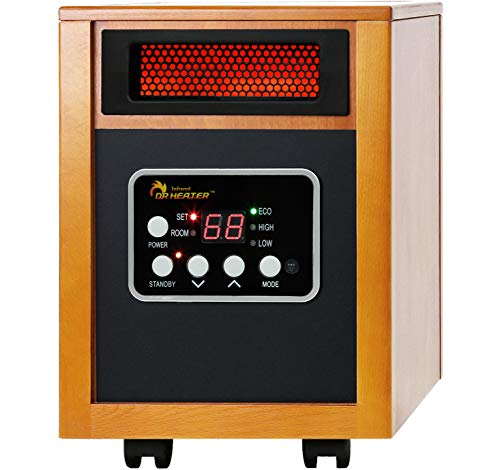
Unlike traditional heaters that primarily warm the air, infrared heaters emit radiant heat. This energy travels directly to solid objectsyour walls, floors, furniture, and youwarming them first. For a property with substantial masonry, this direct approach can be a game-changer. A popular choice for tackling such spaces is the Dr Infrared Heater, which combines powerful infrared elements with a quiet fan for secondary convection, making it a versatile option for challenging rooms.

How Infrared Heaters Work: The Science of Radiant Heat
Think of the sun’s warmth on your skin on a cool day. The air might be chilly, but you feel warm because the sun’s infrared radiation is directly heating your body. An infrared heater works on the same principle. It uses an element, often quartz or ceramic, to generate electromagnetic waves in the infrared spectrum.
These waves travel unimpeded through the air until they strike a solid surface. Upon impact, the energy is absorbed and converted into heat. This is known as direct heat transfer. The object’s surface temperature rises, and it then re-radiates warmth and conducts heat inward. This process is exceptionally efficient because it bypasses the air intermediary, minimizing heat loss to drafts or high ceilings.
Key Terms in Action
- Infrared Radiation: The invisible wave energy that carries heat from the source to solid objects.
- Radiant Heat: The warmth you feel as a result of absorbing infrared radiation.
- Direct Heat Transfer: The energy moving straight from the heater to an object without heating the air in between.
Understanding Heat Transfer: Convection vs. Radiation
To see why infrared is special for walls, you need to contrast it with the most common alternative: convection heating. This includes oil-filled radiators, ceramic fan heaters, and standard electric radiators.
| Heating Method | How It Works | Primary Target | Best For |
|---|---|---|---|
| Convection | Heats the air, creating convection currents (warm air rises, cool air falls). | The Air | Quickly warming a sealed, insulated room with standard walls. |
| Radiation (Infrared) | Emits energy waves that heat solid objects and people directly. | Solid Surfaces & People | Spaces with high ceilings, drafts, or significant thermal mass like solid walls. |
The classic infrared vs oil filled radiator debate hinges here. An oil radiator is a convection heater. It warms the oil inside, which then heats the metal casing, which in turn warms the air around it. In a room with cold solid walls, that warm air will immediately start losing its heat to those cold surfacesa constant, inefficient battle.
Do Solid Walls Absorb and Retain Infrared Heat?
This is the core of your question. Solid walls, whether solid masonry, brick, or stone, have two critical properties: high thermal mass and a favorable surface for heat absorption.
Thermal mass refers to a material’s ability to absorb, store, and slowly release heat. Materials like brick, concrete, and stone have high specific heat capacitythey take a lot of energy to warm up, but once warm, they hold that heat for a long time. This leads to a time-lag effect.
The Time-Lag and Emissivity Factors
Heres what competitors often miss. When infrared radiant heat strikes a brick wall, the surface absorbs it. The heat then slowly conducts through the wall’s thickness. This time-lag means the wall itself becomes a gentle, secondary heat emitter hours after the heater is off, smoothing out temperature fluctuations.
the emissivity of common wall surfaces like plaster or brick is relatively high. This means they are good at both absorbing and re-radiating infrared energy. So, does radiant heat warm up thick walls faster than convection? In terms of the wall’s core temperature, yes, because energy is deposited directly onto its surface rather than relying on slow air-to-surface transfer.
For a deeper dive into solutions for these specific building types, explore our guide on the best heater for older houses with cold walls.
Comparing Efficiency: Infrared vs. Other Heaters for Solid Walls
Efficiency isn’t just about wattage consumed; it’s about useful warmth delivered where you need it. In a solid-wall house, infrared often wins on comfort and targeted efficiency.
- Reduced Heat Stratification: Convection heat pools at the ceiling. Infrared heats the lower half of the room and the walls where you live.
- Draft Resistance: Since it doesn’t rely on air movement, a drafty window won’t steal your radiant warmth as quickly.
- Faster “Feel” of Heat: You feel warm the moment the heater is on, as your body absorbs the radiation, even if the air temperature is still rising.
- Wall Warming: This is key. By directly warming the thermal mass of the walls, you reduce the radiant temperature difference between you and the wall, eliminating that “cold wall” feeling that makes a room feel chilly even in warm air.
Is an infrared heater the absolute best heater for solid wall insulation challenges? It’s a top contender, especially for spot heating. For whole-room solutions in larger spaces, you might consider our recommendations for the best infrared heaters for large rooms.
Practical Tips for Using Infrared Heaters in Solid-Wall Properties
To maximize the benefits of infrared heat penetration in your stone or brick building, a few strategic steps make all the difference.
Optimal Placement and Use
- Aim at the Cold Mass: Position the heater so its rays strike the coldest wall or the area where you sit most. Think about heating brick walls efficiently by making them the target.
- Mind the Reflectors: Keep the heater’s reflective rear panel clean and unobstructed to direct energy forward.
- Use a Timer: Leverage the time-lag effect. Run the heater for a period before you need the room, then let the warmed thermal mass maintain comfort.
- Combine with Insulation: While infrared performs well in drafty spaces, improving insulation (like internal dry-lining) will dramatically boost any heating system’s efficiency. For broader energy-saving strategies, the Energy Saving Trust’s quick tips to save energy is an excellent resource.
Choosing the Right Heater
When searching for a radiant heater for stone walls, consider these features:
- Fixed vs. Portable: A fixed, wall-mounted infrared panel can be aimed perfectly at a problem wall and left in place. Portable units offer flexibility.
- Wattage: Match the wattage to the space. A 1500W heater is standard for a medium-sized room.
- Element Type: Quartz tubes heat up and cool instantly. Ceramic elements have a longer heat-up/cool-down but can offer a more even warmth.
So, are infrared heaters good for old stone buildings? Absolutely. They address the core challenge of cold thermal mass directly, providing comfort that convection systems can struggle to match in such structures.
The physics is clear. Infrared heaters excel at delivering direct heat transfer to solid surfaces, making them uniquely suited for homes with brick, stone, or solid masonry walls. They turn the wall’s high thermal mass from a heating liability into an asset. While they may not instantly change the core temperature of a two-foot-thick stone wall, they efficiently warm the surface you interact with, stop the feeling of radiant cold, and use energy in a targeted, sensible way. For taking the chill off a solid-walled room, infrared isn’t just an optionit’s often the most intelligent tool for the job.