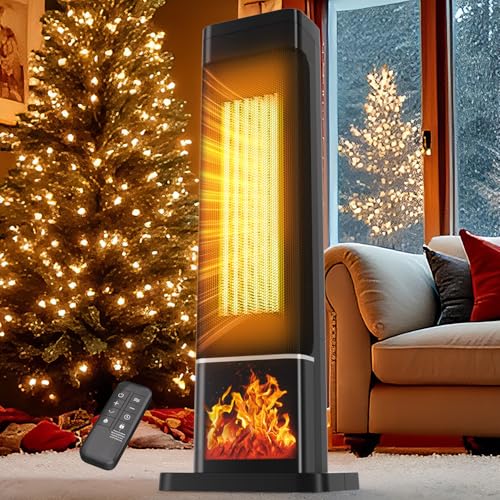
Cold rental homes share a problem: you can’t modify the heating system, install anything permanent, or wait weeks for a landlord to act. You need a portable electric heater that plugs into a standard outlet, heats the space fast, and meets safety standards strict enough to protect your deposit.
The right heater depends on your room size, how long you need heat, and whether you’re fighting drafts or just raising the baseline temperature. A ceramic heater works for most situations—fast heat, compact, safe. Oil-filled radiators suit overnight bedroom heating. Small desk heaters handle a home office. Here’s how to choose.
Compare Heat Settings, Timers and Coverage
| Product | Best for | Heat settings | Auto shut-off | Noise level | Coverage area | Price |
|---|---|---|---|---|---|---|
| DREO Ceramic Space Heater with Thermostat | Best overall | 5 modes, 1,500 W max | 12-hour timer, tip-over, overheat | 34 dB | Up to 200 sq ft | Check price |
| KEGIAN Tower Heater with 120° Oscillation | Best for large rooms | Multiple modes, 1,500 W max | 24-hour timer, tip-over, overheat | 30 dB | — | Check price |
| R.W.FLAME Ceramic Heater with Thermostat | Best budget | 1,500 W ceramic | Tip-over, overheat | Quiet | — | Check price |
| BLACK+DECKER Personal Ceramic Heater | Lightest | Low (750 W), High (1,500 W), Fan only | Tip-over, overheat | Quiet | Personal space | Check price |
| R.W.FLAME Mini Portable Heater with Remote | Most compact | Ceramic, ECO mode | 24-hour timer, tip-over, overheat | Quiet | Small rooms | Check price |



The Five Best Heaters for Cold Rentals
DREO Ceramic Space Heater with Thermostat
- Power1,500 W
- Heating technologyPTC ceramic
- Thermostat range41–95°F, 1°F increments
- Noise level34 dB
- Timer12 hours
- Heats up to 200 sq ft in seconds with enhanced air circulation
- Precise thermostat with 1°F increments saves energy
- 34 dB operation—quiet enough for light sleepers
- Tip-over and overheat protection with flame-retardant materials
- Remote control adds convenience but one more item to keep track of
- No oscillation—position it where you need the heat most
KEGIAN Tower Heater with 120° Oscillation
- Power1,500 W
- Oscillation120°
- Noise level30 dB
- Timer24 hours
- CertificationETL and UL
- 120° oscillation spreads heat across large open spaces
- 30 dB—the quietest model in this lineup
- ECO mode adjusts heating automatically to save energy
- 3D flame effect adds ambiance without installation
- Tower design takes up more floor space than compact models
- ETL and UL certified but no mention of flame-retardant material grade
R.W.FLAME Ceramic Heater with Thermostat
- Power1,500 W
- Heating technologyCeramic
- ThermostatAdjustable
- CertificationETL
- Safety featuresTip-over and overheat protection
- 1,500 W ceramic heat at a budget-friendly price
- ETL certified with tip-over and overheat protection
- Compact and portable for small apartments
- Quiet operation suitable for offices and bedrooms
- No remote control—adjust settings by hand
- No timer, so you turn it off manually or use a smart plug
BLACK+DECKER Personal Ceramic Heater
- Power750 W / 1,500 W
- Weight2.8 lbs
- Heat settingsLow, High, Fan only
- ThermostatAdjustable manual
- Safety featuresTip-over and overheat shutoff
- 2.8 lbs—the lightest model here, easy to carry room to room
- Two heat settings (750 W and 1,500 W) plus fan-only mode
- Tip-over and overheat shutoff for safe portable use
- Compact footprint fits under a desk or beside a chair
- No remote or timer—bare-bones controls
- Manual thermostat is less precise than digital models
R.W.FLAME Mini Portable Heater with Remote
- Heating technologyCeramic
- ThermostatAdjustable
- Timer24 hours
- ModesECO mode
- ControlRemote included
- Mini size fits desks, nightstands and RVs
- Remote control and 24-hour timer for convenience
- ECO mode adjusts heat automatically to save electricity
- Quiet ceramic heating suitable for small bedrooms and offices
- Lower heat output than full-size 1,500 W models—warms a smaller area
- Compact design means shorter heat reach
How to Choose a Heater for Your Cold Rental
Every plug-in heater sold for home use in the US maxes out at 1,500 watts, because standard household circuits deliver 120 volts on a 15-amp breaker. The difference between models is not raw power but how quickly and evenly they spread that heat, how precisely they hold temperature, and whether they suit the way renters live: moving between rooms, paying their own electric bills, and protecting a security deposit.
Heat output matters most in poorly insulated homes and drafty apartments where cold air dilutes warmth as fast as the heater produces it. Ceramic heaters with fans push heated air across the room in minutes. Oil-filled radiators take longer to warm up but hold heat after they cycle off, useful for bedrooms you heat all night. Infrared models warm the person in front of them but do little for the air around you.
Thermostat precision separates budget heaters from models that save money. A mechanical dial cycles on and off with wide temperature swings, wasting energy. An NTC sensor with 1°F increments holds the room within a degree of your target, cutting runtime by up to 30 percent over a month. For renters who pay utilities, that difference compounds.
Portability and size matter because renters move heaters between rooms, carry them up stairs, and pack them when leases end. A handle and weight under 10 pounds make a heater practical for daily use. Compact footprints fit under desks and beside beds without blocking walkways, which also reduces tip-over risk.
Noise level separates bedroom heaters from office models. Fan-driven ceramic heaters produce between 30 and 50 dB depending on speed. A unit running at 30 to 34 dB is library-quiet and disappears into the background while you sleep or study. Anything above 40 dB becomes noticeable during focused work or light sleep. Oil-filled radiators and infrared panels run silently because they have no fan.
Safety certifications and features protect both your deposit and your life. ETL or UL listing means the heater has passed independent testing for electrical and fire safety. Tip-over shutoff cuts power when the unit falls. Overheat protection stops the element before it ignites nearby fabric. Flame-retardant plastic casing contains internal failures. These features are standard on reputable models and non-negotiable in a rental where you are liable for damage.
Oscillation spreads heat across drafty or irregularly shaped rooms by sweeping 60 to 120 degrees. Fixed-direction models concentrate warmth in one zone, useful at a desk or beside a chair. The best heaters for cold drafty apartments pair a wide oscillation arc with a strong fan to counter air leaks.
Heating a Drafty Apartment: Oscillation and Heat Reach
Drafts dilute warm air the moment a heater produces it. Cold air leaking through window frames, door gaps, and baseboards mixes with heated air and drops the room temperature faster than a fixed heater can compensate. Oscillating heaters with a 120-degree sweep spread warmth continuously across the room, reducing cold pockets and warming the space more evenly than a stationary model pointing at one wall.
Convection heaters—ceramic elements paired with fans—move large volumes of air and suit drafty spaces better than radiant models. The fan forces heated air into circulation, mixing it with cold drafts and raising the average room temperature. Infrared heaters warm objects and people directly by emitting electromagnetic waves that heat surfaces rather than air. They work well if you sit in one spot, like a desk chair or a reading corner, but do little for a drafty room overall because they do not address the air temperature.
- Spreads heat across the room, reducing cold spots
- Fan-driven convection mixes warm and cold air
- Warms the space, not just one person
- Heats only objects in the beam path
- Does not raise air temperature
- Cold drafts bypass the warmth entirely
No heater can fight an open door or an unsealed window efficiently. Temporary fixes—draft excluders under doors, adhesive foam tape around window frames, plastic shrink film over single-pane glass—cut heat loss by 20 to 40 percent and make any heater more effective. Paired with insulation fixes for rental apartments, even a modest 1,500 W heater holds a room comfortable without running continuously.
Running Costs: What a 1,500 W Heater Costs Per Month
Every 1,500 W space heater costs exactly the same to run at full power, whether it’s ceramic, oil-filled, or infrared. The formula is watts ÷ 1,000 × hours × your electricity rate per kWh. A heater running at 1,500 W for eight hours a day at $0.17 per kWh costs about $20.40 per month. Run it twenty-four hours and the bill climbs to $61.20.
| Appliance | Watts | Per hour | Per day (8 h) | Per month (30 days) |
|---|---|---|---|---|
| 1,500 W heater, 8 hours/day | 1,500 W | 26¢ | $2.04 | $61.20 |
| 1,500 W heater, 24 hours/day | 1,500 W | 26¢ | $2.04 | $61.20 |
| 750 W heater (low setting), 8 hours/day | 750 W | 13¢ | $1.02 | $30.60 |
| 100 W heated blanket, 8 hours/day | 100 W | 1.7¢ | 14¢ | $4.08 |
Thermostats are where the savings hide. A heater without one runs continuously and burns through $61.20 a month. A heater with a precise thermostat cycles off the moment the room reaches your set temperature, then kicks back on only when the air cools. The DREO adjusts in 1°F increments, so it holds a narrow range and wastes less energy overshooting. Models with 5°F or 10°F steps swing wider and run longer.
ECO modes drop wattage automatically as the room warms, cutting costs without manual adjustment. Manual low settings—usually 750 W—cost half as much as high and still warm a small space. If you’re heating only yourself and not the whole room, a 100 W heated blanket costs about $1.36 per month for eight hours a day, a fraction of what any space heater demands.
Home Office and Study Heating: Desk Models and Noise
A small ceramic heater tucked under your desk heats your legs and feet directly, which feels warmer faster than raising the temperature of the entire room. Running 750 W on low is enough for a single person and costs half what full power draws. The best heaters for a cold home office focus heat where you sit instead of chasing drafts across the floor.
Noise wrecks concentration and bleeds into Zoom calls. Quiet models run at 30 to 34 dB—about as loud as a library whisper—because they use brushless DC motors instead of standard fans. The DREO and BLACK+DECKER both stay under 35 dB, low enough to forget they’re running. Cheaper heaters with older fan designs hum at 45 to 50 dB, which sounds fine until you’re on your third hour of a deadline.
- Adjustable thermostats that hold a set temperature, so you’re not reaching down every twenty minutes to dial it back or crank it up
- Lightweight build under 5 lbs, easy to move from desk to chair to floor as you shift positions through the day
- Remote controls and timers that let you adjust settings without breaking focus or ducking under the desk mid-task
- Compact footprint that fits under a desk or beside a monitor stand without crowding your workspace
Models designed for personal heating aim the warmth low and forward rather than scattering it across the ceiling. Ceramic elements heat up in seconds, so you’re not waiting ten minutes for the chill to lift when you sit down in the morning. The R.W.FLAME small heater weighs 3.5 lbs and fits on a bookshelf or under a chair, and its thermostat keeps the temperature steady without constant fan cycling.
Safety Rules for Renters: Protecting Your Deposit and Your Life
A space heater draws more current than almost any other plug-in appliance in your apartment. That electrical load, combined with the heat it produces, creates two risks renters face directly: fire and liability. Fire damage caused by your heater can void your deposit protection and leave you responsible for repair costs that exceed what insurance covers, because most policies require you to follow the manufacturer’s safety instructions.
Every heater needs three feet of clearance on all sides. Curtains, furniture, bedding, laundry, and paper ignite when they contact a hot surface or block airflow, causing the heater to overheat. Check the space around your heater each time you turn it on, because things shift.
Tip-over protection and overheat protection are not optional features. Tip-over switches cut power the moment the heater tilts or falls, which happens when a pet, a child, or a tangled cord knocks it over. Overheat protection shuts the heater down if internal temperature spikes beyond safe limits, usually because something blocked the vents. Look for a UL, ETL, or CSA certification mark on the heater or its box; that tells you a third-party lab tested the unit and it met national safety standards.
Inspect the cord and plug before each heating season and again every few weeks during use. A frayed cord or a scorched, discolored plug means the heater has overheated its own wiring. Replace the heater; do not attempt to repair the cord. Damaged wiring causes electrical fires that start inside walls where you cannot see them until it is too late.
- Plug goes directly into a wall outlet, not a power strip or extension cord
- Three feet of clearance in every direction, checked each time you turn it on
- Tip-over and overheat protection both present and working
- UL, ETL, or CSA certification mark visible on the unit
- Cord and plug show no fraying, scorch marks, or discoloration
- Manual confirms unattended use is safe, or heater is off when you leave or sleep
These rules apply to every portable heater, whether it is ceramic, oil-filled, or infrared. The heater for a cold room that keeps you warm in January is the same appliance that can cost you your deposit and your lease if it starts a fire, so treat the safety checklist as non-negotiable.
Frequently Asked Questions
What is the best heater for a cold room in a rental?
Do infrared heaters work in cold, drafty homes?
How does convection work in a home heater?
Can a space heater cause dry nose without a cold?
What is the safest heater for a rental flat?
Can I use a space heater in a student home or apartment building landing?
It helps to understand kitchen heater options before spending anything.
If that sounds like your room, read up on portable heating options for cold next.