
A cold landing at the top of the stairs wastes heat and makes that part of your home uncomfortable. The problem stems from three issues working together: air leaks that let cold drafts enter, insufficient insulation in the walls and floors around the stairwell, and a heating system that doesn’t move enough warm air to the upper level.
You can fix most cold landings without tearing out drywall. The work follows a logical order: stop air movement first, slow heat loss through solid materials second, and adjust airflow third. Each step builds on the previous one.
How to Stop Cold Air at the Top of the Staircase
Stop cold air at the top of the staircase by sealing every air leak around the landing first, adding insulation to walls and floors that border unconditioned spaces second, and adjusting your heating system to push more warm air upward third. Air sealing delivers the fastest improvement because even a small gap pulls cold air in and pushes warm air out through stack effect, the natural pressure difference that drives air up through a stairwell.
The order matters. Sealing leaks before you insulate keeps cold air from moving through wall cavities and canceling out the insulation’s work. Balancing your HVAC after you seal and insulate ensures you’re not just heating air that escapes through gaps.
- Seal air leaks around the landingCheck every joint where the landing floor meets walls, where baseboards sit, around door frames, and at the ceiling. Use low-expansion foam for gaps wider than a quarter inch and silicone or acrylic caulk for narrower cracks. Pay attention to the stairwell itself: the space under the bottom step, the gap between stringers and drywall, and any opening around a handrail that passes through a wall. Cold air moves fast through these paths, and sealing them stops convective loss before it starts. Fix gaps between stairs and the landing if the stairwell structure has visible separations.
- Insulate walls and floors adjacent to unconditioned spacesAdd insulation wherever the landing borders an attic, garage, unheated closet, or exterior wall. If the landing floor sits over an unheated garage or basement, insulate the ceiling below it to at least R-19. If an exterior wall faces the landing, check the wall cavity; older homes often have little or no insulation there. Blown-in cellulose or fiberglass batts both work, but the cavity must be sealed first or the insulation won’t perform. Insulation slows conductive heat loss, the transfer of warmth through solid materials, which is why it comes after air sealing.
- Balance your heating systemIf your furnace or heat pump runs but the landing stays cold, the system isn’t delivering enough warm air to that zone. Start by opening or adjusting the damper in the duct serving the landing, if your system has one. If the landing has no dedicated register, a booster fan installed in the nearest duct pushes more conditioned air toward the upper level. Closing registers on the lower floor slightly can redirect pressure upward, though this works only if the system has enough capacity. Upstairs rooms that stay colder than downstairs often share this airflow imbalance.


Find and Seal Air Leaks Around the Landing
Air leaks pull more heat out of a landing than thin insulation or an undersized heater ever will. A quarter-inch gap under a door or around an attic hatch lets cold air rush in every time wind hits the house, and sealing those gaps costs less than ten dollars per opening. Start here before you insulate or adjust the thermostat.
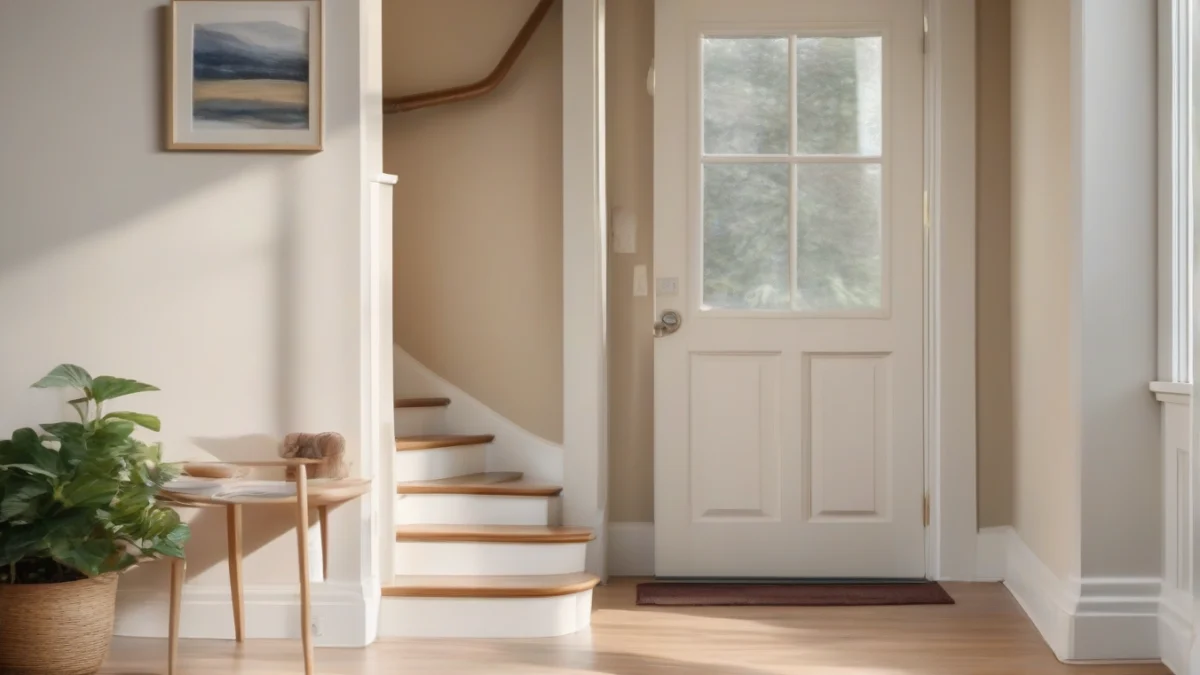
Test for leaks on a windy day by holding a lit stick of incense near doors, baseboards, electrical outlets, light fixtures and attic access points. Watch the smoke. A steady plume means no leak; smoke that dances, flattens or gets sucked toward the wall marks a gap that needs sealing.
- Seal gaps around exterior doors and attic hatchesApply adhesive-backed foam weatherstripping to the stop on exterior doors that open onto or near the landing. For attic access doors, use weatherstripping around the perimeter and add a latch or hook to pull the hatch tight against the seal. A loose attic hatch lets stack effect pull cold air through the landing all winter.
- Install foam gaskets behind outlet and switch coversRemove the cover plate from every electrical box on exterior walls or walls that border unconditioned attic space. Slide a foam gasket over the outlets or switches, then replace the plate. Each box is a hole straight through to the stud cavity, and five gaskets cost two dollars.
- Caulk small cracks where walls meet ceiling and floorRun a bead of latex or acrylic caulk along the joint where the baseboard meets the floor and where the ceiling meets the wall, especially on exterior walls. Cracks open as wood dries and the house settles. A single tube seals an entire landing.
- Fill larger gaps with low-expansion foamUse low-expansion polyurethane foam around plumbing and electrical penetrations, behind junction boxes and where the top plate of the wall meets the underside of the attic floor. Standard expanding foam can bow drywall and jam doors; low-expansion foam fills the void without distorting framing. Let it cure for an hour, then trim any excess with a utility knife.
- Weatherstrip the door to any unconditioned roomIf the landing opens to a spare room, storage closet or other space you don’t heat, treat that door like an exterior door. Apply foam or vinyl weatherstripping to the stop, and install a door sweep at the bottom to block the gap above the threshold.
Air sealing delivers more comfort per dollar than any other fix because it stops the mechanism that makes a landing feel coldest: moving air. A draft at 68°F feels ten degrees colder than still air at the same temperature, and even a small gap lets that draft reach skin. Seal first, then assess whether you need to add insulation or adjust airflow.
Improve Insulation in Walls and Floors Near the Stairwell
Once air leaks are sealed, insulation stops heat from escaping through the structure itself. Walls that face unconditioned spaces—attics, garages, or the outdoors—and floors over unheated areas lose heat fast. Adding the right insulation in the right place turns a cold landing into a room that holds warmth.
Exterior Walls
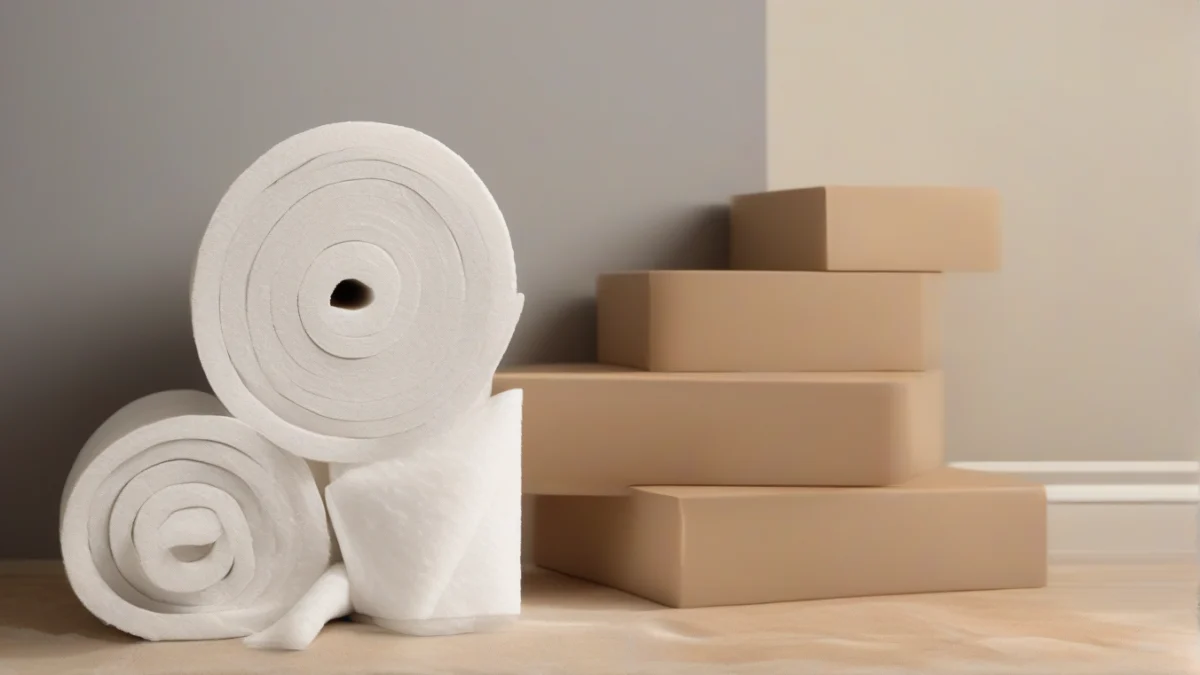
Exterior walls on a landing lose heat through thin or missing insulation. If the wall is closed, blown-in cellulose or fiberglass fills the cavity through small holes drilled from inside or outside, reaching an R-value of 13 to 15 in a standard 2×4 wall. If you’re renovating and the wall is open, fiberglass batts rated R-13 or R-15 fit between studs, or closed-cell spray foam delivers R-21 in the same space and seals gaps at the same time. Spray foam costs more but eliminates the air movement that cuts batt insulation’s performance.
Knee Walls and Attic Spaces
Knee walls—the short walls under sloped ceilings or staircases—are often left uninsulated during construction. Pull off the panel or drywall if you can access it, and install R-13 or R-15 batts between the studs, with the vapor barrier facing the conditioned side of the house. If the attic space behind the knee wall is vented, insulate and air-seal that boundary; heat moves into cold attic air faster than most homeowners expect.
Floors Over Garages and Crawlspaces
A floor over an unheated garage or vented crawlspace needs R-19 to R-30 insulation between the joists, with the vapor barrier facing up toward the heated room. Fiberglass batts work if the crawlspace stays dry; in damp areas, closed-cell spray foam prevents moisture from condensing inside the insulation. Secure batts with wire supports or plastic netting so they stay tight against the subfloor. Gaps let cold air circulate and cut the effective R-value in half.
Attic Access Doors and Hatches
An attic access on or near the landing leaks heat through the thin panel and around its edges. Glue a piece of foil-faced rigid foam insulation—1 to 2 inches thick, R-5 to R-10—to the back of the hatch panel. Add adhesive weatherstripping around the frame where the door meets the trim. If the hatch sits flat, install spring-loaded latches that compress the weatherstrip and hold the seal tight.
| Location | Insulation Type | R-Value | Best For |
|---|---|---|---|
| Exterior wall, closed | Blown-in cellulose or fiberglass | R-13 to R-15 | Retrofit without opening walls |
| Exterior wall, open | Fiberglass batts or spray foam | R-13 to R-21 | New construction or renovation |
| Knee wall, attic boundary | Fiberglass batts | R-13 to R-15 | Short walls under stairs or slopes |
| Floor over garage or crawlspace | Fiberglass batts or spray foam | R-19 to R-30 | Unheated spaces below the landing |
| Attic hatch or access door | Rigid foam board | R-5 to R-10 | Thin panel that opens frequently |
Balance Your Heating System to Reach the Landing
A forced-air system that warms the ground floor perfectly can starve an upper landing of heat. Warm air rises, but your ducts and registers decide where it goes. If supply vents upstairs are partially closed, if return air can’t circulate back to the furnace, or if dampers in the ductwork favor the lower level, the landing stays cold no matter how high you set the thermostat.
Check Supply Vents and Registers
Walk to every supply vent on or near the landing and confirm each is fully open. Furniture, boxes and area rugs block airflow. Remove obstructions and turn the lever or dial on adjustable registers to the wide-open position. Hold your hand in front of each vent while the system runs; you should feel steady airflow. Weak or absent flow means a closed damper in the duct upstream or a blockage inside the duct itself.
Open Return Air Pathways
Closed bedroom doors trap warm air and create positive pressure that keeps more air from entering. The furnace pulls return air from a central grille, usually downstairs. If that return air can’t flow back from upper rooms, warm supply air can’t push in to replace it. Cut an inch off the bottom of each bedroom door, install a transfer grille in the wall above the door, or add a jumper duct between the room and the hallway. A two-inch undercut allows about 50 cubic feet per minute of return air, enough for a typical bedroom.
Adjust Dampers in the Ductwork
Metal dampers inside trunk ducts let you restrict airflow to one zone and increase it to another. Find the main trunk lines in the basement or crawlspace. Each branch has a handle; align it with the duct to open fully, or turn it perpendicular to close. Partially close dampers serving the ground floor and fully open those serving the upper level. Wait a day, measure temperatures in each room, and adjust again. Mark each damper position with a permanent marker so you can return to a balanced setting.
When to Add Supplemental Heat
If the ductwork can’t be modified—common in older homes with undersized or inaccessible ducts—a small electric heater gives you direct control. A 1,500 W ceramic heater warms a landing and the adjacent hall without waiting for the furnace to catch up. Plug it into a wall outlet, never a power strip, and choose a model with tip-over protection and overheat shutoff. Run it only while you’re home and awake unless the manufacturer states the model is rated for unattended use.
Why Landings Stay Cold: Common Causes
A landing at the top of a staircase sits between floors, often beside exterior walls, and connects to multiple rooms. That geometry creates four conditions that pull heat away faster than your heating system replaces it. Understanding the mechanism behind each one shows you which fix to prioritize.
Air Leaks Pull Cold Air In
Gaps around window frames, baseboards, electrical boxes and attic hatches let outdoor air infiltrate the landing directly. Cold air is denser than warm air, so it flows in through low gaps and pushes warm air out through high ones. A quarter-inch gap around a window frame moves as much air as a 3-inch hole. Sealing leaks stops infiltration at the source and cuts heat loss by 20 to 30 percent in most homes.
Insufficient Insulation Lets Heat Escape
Walls facing an unheated attic, garage, or the outdoors transfer heat through the structure itself. Studs, drywall and siding conduct heat from the warm side to the cold side. Standard R-13 fiberglass insulation in a 2×4 wall slows that transfer but does not stop it. If the wall cavity is empty or compressed, or if the landing sits above an uninsulated garage ceiling, heat flows out continuously. Adding insulation to R-19 or higher reduces conductive loss and raises the surface temperature of interior walls, which makes the space feel warmer even at the same air temperature.
HVAC Imbalance Leaves Upper Floors Undersupplied
Forced-air systems are sized and balanced for the whole house. Ductwork often favors ground-floor rooms because they are closer to the furnace and easier to reach. Upper-level ducts may be longer, narrower, or fewer in number. If dampers are closed or return air pathways are blocked by shut doors, warm air never reaches the landing in sufficient volume. Upstairs rooms stay colder than downstairs because the system delivers most of its output to the lower level, and no amount of insulation compensates for missing airflow.
Thermal Bridging Through Framing
Wood studs, joists and headers conduct heat 10 to 20 times faster than fiberglass insulation. Stairwell framing includes doubled studs, long headers and exposed floor joists that create continuous paths for heat to travel from the warm interior to the cold exterior sheathing. These thermal bridges account for 10 to 20 percent of total heat loss in an insulated wall. Rigid foam sheathing on the exterior or continuous insulation inside reduces bridging, but most retrofit fixes focus on air sealing and bulk insulation because framing is inaccessible without major demolition.
When to Call a Professional
Most air sealing and insulation work on a landing is straightforward. Weatherstripping a door, caulking a window frame, and adding outlet gaskets are all safe DIY projects that need basic tools and an afternoon. Insulating an open attic floor with unfaced fiberglass batts is the same: measure, cut, lay. You can handle these jobs without special training or permits.
Hire a professional when the work requires cutting into walls, moving electrical circuits, altering ductwork, or using equipment that needs certification. Dense-pack cellulose and spray foam both demand specialized rigs and training; an uneven application leaves gaps, and overfilled cavities can bow drywall or trap moisture. An HVAC contractor balances airflow with a manometer and adjusts dampers without starving other rooms. An electrician moves a circuit safely and pulls a permit when code requires it.
- Weatherstripping doors and windows
- Caulking gaps around trim and baseboards
- Installing outlet and switch gaskets
- Laying batt insulation in an open attic floor
- Sealing accessible duct joints with mastic
- Dense-pack cellulose or spray foam insulation
- Moving or adding electrical circuits
- Cutting into walls to add insulation
- Balancing or extending HVAC ductwork
- Energy audits with blower door and thermal imaging
- Remediation if mold or asbestos is present
A professional energy auditor uses a blower door to measure total air leakage and a thermal camera to show exactly where heat escapes. That data tells you which fixes deliver the most savings. If you find mold during insulation work, or if the house was built before 1980 and you plan to disturb old insulation or drywall, hire a certified remediation contractor. Asbestos and mold both need containment and safe removal, not a shop vacuum and a trash bag.
Frequently Asked Questions
Why is the top of my staircase always colder than downstairs?
What is the best way to insulate a cold stairwell?
How do I know if I have air leaks around my staircase?
Can a space heater help with a cold landing?
Does closing doors make upstairs landings colder?
What is thermal bridging and how does it affect staircase landings?
We cover why some homes are colder in its own guide.
Before you buy anything, it is worth looking at ensuring comfort on stair landings.
