
Heating your space with panel heaters or convector heaters offers different benefits. Knowing how they work, their efficiency, and which suits your home helps you choose wisely.
Panel Heater vs Convector Heater at a Glance
| Feature | Panel Heater | Convector Heater |
|---|---|---|
| Heating method | Radiates heat directly from a flat surface | Heats air and circulates it with a fan |
| Speed of warmth | Provides quick, targeted warmth | Warms whole room gradually |
| Heat distribution | Localized near the heater | Evenly spreads heat through room |
| Energy efficiency | Efficient for small areas or personal use | Efficient for larger spaces with thermostat control |
| Safety features | Low surface temperature, tip-over protection | Thermal shutoff, tip-over switch, fan noise |
| Noise levels | Silent operation | Fan produces low humming noise |
| Portability and convenience | Lightweight, slim, easy to move or wall-mount | Heavier, freestanding or wall-mount options |

Ballu Convection Space Heater with WiFi
- Power1,500 W
- Room SizeUp to 250 sq ft
- ControlWiFi, remote, digital panel, Alexa voice
- Heating ElementPatented Hedgehog aluminum
- MountingFreestanding or wall mount with casters
- Fast heat spread with 36% more air contact surface
- Multiple control methods including app and voice
- Quiet operation with consistent warmth
- Heavier metal body may reduce portability
- More complex controls may be unnecessary for simple needs
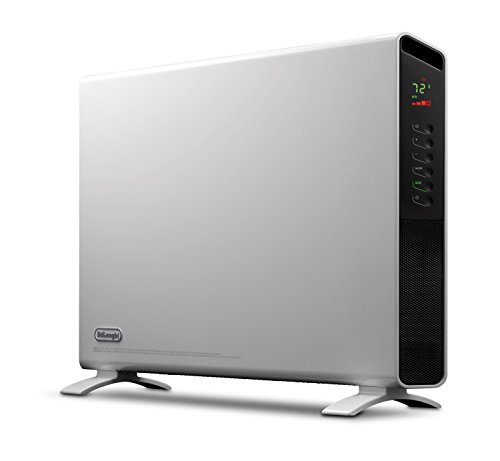
De’Longhi Convection Panel Heater 1500W
- Power1500 W
- Room SizeMedium to large rooms
- SafetyThermal shutoff, tip-over switch
- MountingFreestanding or wall mount with included kit
- Heat DistributionDual lateral fan system
- Energy-saving ECO PLUS function
- Built-in thermal shutoff and tip-over switch
- Dual lateral fan for even heat distribution
- Smaller maximum room size than some convection heaters
- Limited smart control options
Panel Heater vs Convector Heater
A panel heater delivers warmth by radiating heat directly from a flat surface, while a convector heater warms the air by drawing it in, heating it, and then releasing it to circulate around the room. The main difference is how they transfer heat: panel heaters use radiant heat for quick, direct warmth, and convector heaters rely on convection to heat the entire space evenly.
Panel heaters typically warm objects and people in their path without needing to heat all the air first. This makes them efficient for small areas or personal use. Convector heaters heat the air, which rises and circulates, making them better for whole-room heating but sometimes slower to feel warm.
Energy efficiency depends on usage. Panel heaters can save energy when used for short periods or spot heating because they don’t waste power warming unused space. Convector heaters are more efficient for maintaining a steady temperature in a larger room over time, as they distribute heat evenly.
Safety features vary but are crucial for both types. Panel heaters usually have a lower surface temperature, reducing burn risk on contact. Convector heaters often include tip-over and overheat protection, but their hotter surfaces require more clearance. Both types should have UL, ETL, or CSA certification and never be plugged into extension cords.
| Feature | Panel Heater | Convector Heater |
|---|---|---|
| Heating Method | Radiant heat from a flat panel | Convection heating by circulating air |
| Warm-up Speed | Fast, direct warmth | Slower, heats whole room |
| Energy Efficiency | Best for spot heating | Best for whole-room heating |
| Surface Temperature | Lower, safer to touch | Higher, needs clearance |
| Noise Level | Quiet, no fan | May have fan noise |
| Safety Features | Overheat protection, low surface heat | Tip-over and overheat protection |
Heat Output and Room Size
Convector heaters generally produce higher heat output measured in watts and BTUs, making them suitable for larger rooms. Panel heaters deliver lower heat output, ideal for small to medium rooms or personal spaces. For example, a panel heater might range from 500 to 1,500 watts, while convector heaters often start at 1,500 watts and go higher.
Room size and insulation impact performance significantly. A well-insulated room retains heat better, so a lower wattage panel heater can keep it comfortable. In poorly insulated or large rooms, a convector heater’s higher heat output and air circulation are more effective at maintaining an even temperature.
| Heater Type | Typical Heat Output (Watts) | Ideal Room Size (Square Feet) |
|---|---|---|
| Panel Heater | 500–1,500 | Up to 150 |
| Convector Heater | 1,500 and above | 150 to 300+ |
Running Costs of Panel and Convector Heaters
The running cost of a panel heater depends on its wattage, usage hours, and your electricity rate. A typical panel heater runs at about 1,200 watts. To calculate the cost, multiply the wattage by hours used, divide by 1,000 to get kilowatt-hours, then multiply by your rate per kWh.
Convector heaters often use around 1,500 watts. They can be more energy-efficient in larger rooms because they heat air evenly, reducing the need to run longer. However, their higher wattage means they draw more power per hour than panel heaters.
Energy efficiency depends on insulation, room size, thermostat accuracy, and how well the heater distributes warmth. A panel heater might cost less to run for short periods or in small spaces, while a convector heater can be more cost-effective for heating whole rooms over longer times.
| Appliance | Watts | Per hour | Per day (8 h) | Per month (30 days) |
|---|---|---|---|---|
| 1,200 W panel heater | 1,200 W | 20¢ | $1.63 | $48.96 |
| 1,500 W convector heater | 1,500 W | 26¢ | $2.04 | $61.20 |
Safety Features of Each Heater Type
Panel heaters are generally safe for home use thanks to their low surface temperatures. Most models stay below 140°F, which reduces burn risk compared to exposed heating elements. This makes them suitable for households with children or pets, but keep them out of reach to avoid accidental contact.
Convector heaters often have higher surface temperatures because they heat internal elements that warm the air passing over them. This can cause burns if touched. Many include protective grilles and cool-touch exteriors to lower this risk. Always check that the model has tip-over and overheat protection as standard.
Both panel and convector heaters should carry recognized safety certifications such as UL, ETL, or CSA. These certifications confirm the heater meets electrical safety standards and has undergone testing for fire and shock hazards. Avoid models without these marks.
| Feature | Panel Heaters | Convector Heaters |
|---|---|---|
| Surface temperature | Low (under 140°F) | Higher but with cool-touch housing |
| Tip-over protection | Common | Common |
| Overheat protection | Common | Common |
| Protective grille | Rare (flat surface) | Standard |
| Certifications | UL, ETL, CSA | UL, ETL, CSA |
Noise Levels Compared
Panel heaters operate quietly because they use radiant heating without a fan. They produce no moving parts noise, making them ideal for bedrooms, offices, or quiet living rooms. Expect near-silent operation from most panel heater models.
Convector heaters vary in noise depending on design. Basic models without fans run quietly, but many use a fan to speed heat distribution. Fan-assisted convector heaters produce noticeable sound, often described as a low hum or whoosh. This can be distracting in quiet environments.
If noise is a priority, choose a panel heater or a fanless convector heater. Fan-assisted models suit larger or drafty rooms where faster heat spread is needed but are less suited for noise-sensitive spaces like bedrooms.
Some convector heaters include adjustable fan speeds or a quiet mode to reduce noise. Check the specifications for decibel ratings if you need the quietest operation possible.
| Heater Type | Noise Level | Best Use |
|---|---|---|
| Panel heater | Very quiet (near silent) | Quiet rooms, bedrooms, offices |
| Convector heater without fan | Quiet | Small to medium rooms |
| Convector heater with fan | Moderate noise (30-50 dB) | Larger rooms, faster heat |
Portability and Convenience
Panel heaters are typically lighter and slimmer than convector heaters. Their flat design makes them easy to carry and store. Most panel heaters weigh between 5 and 10 pounds, which suits quick moves from room to room.
Convector heaters often have a bulkier build to house the internal fan and larger heating elements. They usually weigh more, around 10 to 15 pounds or more, which can make them less convenient to move frequently.
| Feature | Panel Heater | Convector Heater |
|---|---|---|
| Weight | 5 to 10 lbs, lightweight and slim | 10 to 15+ lbs, heavier and bulkier |
| Design | Flat panel, easy to carry and store | Boxy with fan, less compact |
| Installation | Mostly freestanding; some wall-mountable | Freestanding; rarely wall-mountable |
| Cord Length | Typically 5 to 6 feet | Typically 6 to 8 feet, offers more range |
| Mobility | Simple to move, fits in small spaces | Heavier, less easy to relocate often |
Panel heaters often come with wall-mount brackets, allowing permanent installation to save floor space. This suits small rooms or hallways where you want heat without clutter. Convector heaters usually stand on the floor with built-in feet and lack wall-mount options, limiting placement flexibility.
Cord length varies but convector heaters tend to have slightly longer cords, around 6 to 8 feet, which helps when outlets are not close. Panel heaters usually have cords about 5 to 6 feet long, enough for typical room use but sometimes requiring outlet proximity.
Both heater types plug directly into a wall outlet. Avoid extension cords or power strips to prevent electrical hazards. The light weight and slim profile of panel heaters make them more convenient for quick, personal warmth in different rooms. Convector heaters are better suited to staying put in one spot for whole-room heating.
If you want a heater to grab and move between rooms or mount on a wall, a panel heater is the better choice. For steady, larger room warmth where moving the heater is rare, a convector heater’s size and cord length work well.
For more on panel heater installation and use, see the detailed review.