
When temperatures drop, selecting the right heater can make a significant difference in comfort. Two popular options are oil-filled radiators and ceramic heaters, each with unique strengths.
This comparison will help you understand how these heaters differ in key areas, allowing you to choose the best fit for your heating needs.
Oil Radiator vs Ceramic Heater at a Glance
| Feature | Oil Radiator | Ceramic Heater |
|---|---|---|
| Heat Output and Room Size | Steady, whole-room heat ideal for medium to large spaces | Quick, focused heat best for small areas or spot use |
| Running Cost | Up to 1,500 W max, cost depends on hours used | Up to 1,500 W max, cost depends on hours used |
| Safety Features | Lower surface temperature, tip-over and overheat protection | Higher surface temperature, tip-over and overheat protection |
| Noise Levels | Silent operation with no fan noise | Fan noise varies, usually audible during operation |
| Portability and Convenience | Heavier, larger, on wheels for moving | Lighter, smaller, easier to carry and store |
| Lifespan and Maintenance | Typically 10 to 15 years with proper care | Varies by model, generally shorter lifespan than oil heaters |

DREO Oil Filled Radiator Heater Large Room
- Power1500W
- Heat settings600W, 900W, 1500W, eco mode
- SafetyTriple overheat protection, tilt protection, ETL listed
- ControlLED display, touchscreen, remote control
- PortabilityLarge wheels and handles for easy moving
- Timer24-hour timer
- High heat dispersion efficiency with 7 fins
- Multiple power modes including eco mode for energy savings
- Comprehensive safety features and child lock
- Heavier and less portable than smaller heaters
- Higher upfront cost than basic ceramic heaters
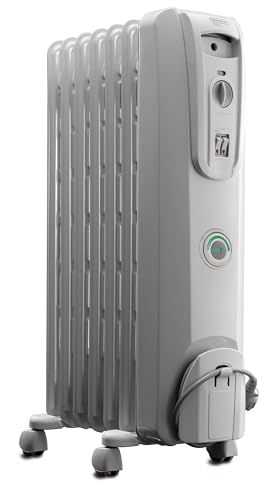
De’Longhi Oil Filled Radiator EW7707CM
- Power1500W
- SafetyLow surface temperature design
- ControlSimple manual controls
- PortabilityComfort hold handle and smart snap wheels
- ComfortTemp feature for automatic temperature control
- Thermal slot design maximizes heat flow with low surface temperature
- No fan means less dust and allergens stirred up
- Fewer power settings than some competitors
- No remote control for convenience
Oil Radiator vs Ceramic Heater: Heat Output and Room Size
Oil-filled radiators heat rooms up to 300 square feet with steady warmth that continues after the unit cycles off; ceramic heaters heat spaces up to 150 square feet quickly but stop warming the moment they switch off. The difference comes down to heat retention: oil inside a radiator stays hot for twenty to thirty minutes after power cuts, radiating stored heat into the room, while a ceramic element cools in under a minute.
An oil-filled radiator works by heating diathermic oil sealed inside metal fins. The oil never burns or needs refilling. As it heats, it transfers energy to the metal surface, which then warms the surrounding air through convection and radiates heat across the room. This process takes fifteen to twenty minutes to reach full output, but once the oil is hot, the thermostat cycles the heating element on and off to maintain temperature with less energy.
A ceramic heater uses a ceramic heating element that reaches operating temperature in two to three minutes. Most models blow air across the hot ceramic plates with a fan, delivering focused warmth fast. That makes them effective for ceramic heater vs fan heater comparisons and personal heating zones, but they provide no residual heat once you turn them off.
Both heater types max out at 1,500 watts on a standard US outlet, which produces about 5,100 BTU per hour. The wattage determines the heat rate, not the coverage: a 1,500-watt ceramic heater and a 1,500-watt oil radiator produce the same amount of heat energy. What changes is how that heat spreads and how long it lasts.
| Heater Type | Heat Output (Watts) | Room Size (sq ft) | Heat Retention After Off |
|---|---|---|---|
| Oil-Filled Radiator | 1,200 – 1,500 | 150 – 300 | 20 – 30 minutes |
| Ceramic Heater | 1,000 – 1,500 | Up to 150 | Under 1 minute |
Oil radiators work best in medium to large rooms where you want even, sustained warmth: bedrooms, living rooms, home offices you occupy for hours. Ceramic heaters suit small rooms, bathrooms, or desks where you need heat now and plan to move or leave within an hour. If you heat a space all day, the oil radiator’s retained heat reduces the time the element runs. If you heat for twenty minutes at a time, the ceramic heater’s speed makes more sense.
Running Costs of Oil Radiator vs Ceramic Heater
Both oil radiators and ceramic heaters typically draw about 1,500 watts on high settings, so their maximum running costs are similar when used for the same number of hours. However, the key difference is in how they use energy over time due to heat retention.
Because oil radiators hold heat longer, they cycle off more often once the room reaches the set temperature, reducing energy consumption. Ceramic heaters cool down quickly and cycle on more frequently to maintain warmth, which can increase electricity use if running for extended periods.
| Appliance | Watts | Per hour | Per day (8 h) | Per month (30 days) |
|---|---|---|---|---|
| 1,500 W space heater | 1,500 W | 26¢ | $2.04 | $61.20 |
| Heated blanket | 100 W | 1.7¢ | 14¢ | $4.08 |
Neither type is inherently more efficient at converting electricity to heat; the difference lies in how long the heat stays in the room. Oil radiators are more cost-effective for whole-room heating over long periods. Ceramic heaters are efficient for short, targeted heat but may cost more if used continuously.
If you want a heater for long sessions or overnight use, oil radiators usually save money by reducing run time. For quick warm-ups or occasional use, ceramic heaters offer lower initial heating time but could increase cost if left on for hours.
Safety Features: Oil Radiator vs Ceramic Heater
Oil-filled radiators are generally safer than ceramic heaters because their heating elements are enclosed in hot oil, reducing burn risk. Ceramic heaters have exposed heating elements, which get very hot and pose a burn hazard if touched. For households with children or pets, oil radiators offer a safer option.
Both types usually include tip-over and overheat protection. Tip-over switches shut the heater off if it falls, preventing fire risk. Overheat sensors cut power if internal temperatures exceed safe limits. Check that your heater has these features and a certification from UL, ETL, or CSA, which ensures it meets safety standards.
| Safety Feature | Oil Radiator | Ceramic Heater |
|---|---|---|
| Tip-over protection | Common | Common |
| Overheat protection | Common | Common |
| Exposed heating elements | No | Yes |
| Safety certifications | Usually UL/ETL/CSA | Usually UL/ETL/CSA |
Ceramic heater vs oil heater safety depends on use. Oil heaters stay warm longer after turning off but have lower surface temperatures. Ceramic heaters heat quickly but their hot coils increase the risk of burns and fire if near flammable materials. Always maintain at least 3 feet clearance around any heater.
Noise Levels: Comparing Oil Radiators and Ceramic Heaters
Oil-filled radiators operate silently since they rely on convection and the heated oil inside. They have no fans or moving parts. This makes them ideal for bedrooms or quiet spaces where noise can disturb sleep or work.
Ceramic heaters often include fans to blow warm air, which produces noticeable noise. The fan noise varies by model but can be distracting in quiet rooms. Some ceramic heaters have multiple fan speeds or a quiet mode to reduce sound.
Ceramic core radiator vs oil filled radiator noise is a key difference. The oil heater’s silent warmth contrasts with the ceramic heater’s fan sound. Radiators suit night use; ceramic heaters suit short bursts of heat where noise is less critical.
Some ceramic heaters use brushless DC fans or improved fan blade designs to lower noise. Check product specs and reviews for noise ratings if quiet operation matters.
Portability and Convenience of Oil Radiator vs Ceramic Heater
Ceramic heaters are lighter and smaller than oil radiators, making them easier to move and store. Most ceramic models weigh under 10 pounds, while oil-filled radiators often weigh 15 to 25 pounds due to the metal body and oil inside.
Oil radiators have a bulky design and take longer to warm up, which limits their quick repositioning. Ceramic heaters heat up almost instantly, so you can move them from room to room for spot heating without waiting.
Both types usually have handles and caster wheels, but ceramic heaters often include features like remote controls, adjustable thermostats, and timers for convenience. Oil radiators focus on steady warmth and may have simpler controls.
| Feature | Oil Radiator | Ceramic Heater |
|---|---|---|
| Weight | 15–25 lbs | Under 10 lbs |
| Warm-up Time | 10–15 minutes | Less than 5 minutes |
| Mobility | Caster wheels, heavier | Lightweight, handle, sometimes wheels |
| Controls | Basic knobs | Thermostat, timer, remote |
| Size | Bulkier | Compact |
Lifespan and Maintenance: Oil Radiators vs Ceramic Heaters
Oil-filled radiators last longer. Expect 10 to 15 years from an oil radiator with normal use, versus 5 to 10 years from a ceramic heater. The difference comes down to stress: ceramic elements heat and cool rapidly with each cycle, which degrades the ceramic plates and fan motor over time. Oil radiators warm gradually and hold heat longer, so the heating element switches on less often.
Oil radiators need almost no maintenance. The oil inside is sealed at the factory and never requires topping up or replacement. Wipe dust from the fins every few months so air can move freely around the metal.
Ceramic heaters require regular cleaning to stay efficient. Dust clogs the intake grills and coats the ceramic plates, blocking airflow and forcing the heater to work harder. The fan motor is the part most likely to fail after years of use; ceramic plates themselves rarely need replacement.
Warranty coverage typically runs one to three years for both types, depending on the brand. Check the manufacturer’s documentation for parts availability and whether they service units beyond the warranty period.
For how ceramic heaters compare to other fast-heating models, see ceramic heater vs fan heater. For other oil radiator comparisons including oil radiator vs infrared heater and oil-filled vs mica heaters, those pages cover heat retention and running costs in detail.
Frequently Asked Questions
How do oil-filled radiators compare to ceramic heaters in terms of heat retention?
Are ceramic core radiators better than oil?
What heats better, radiator heater or ceramic?
Which is better, oil-filled radiator or ceramic heater?
How do the running costs of oil and ceramic heaters differ?
What safety features should I look for in heaters?
We go through choosing between radiators step by step in a separate article.
It helps to understand choosing the right heat type before spending anything.