
Panel heaters are an efficient heating solution for homes, providing warmth without the bulk of traditional radiators. They come in various designs, making them suitable for different spaces and heating needs.
Panel Heater Comparison
| Product | Best for | Power (W) | Heating Area (sq ft) | Design | Safety Features | Price |
|---|---|---|---|---|---|---|
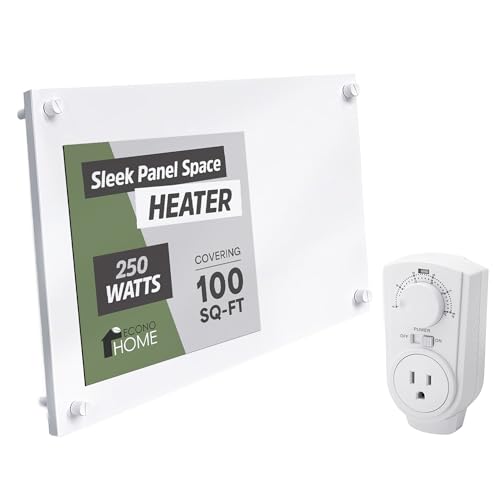
| EconoHome Convection Wall Heater 250W | Best Overall | 250 | up to 120 | Wall mounted | cETL approved, UL-2021, RoHS, triple insulated | Check price |
| Envi Plug-in Panel Heater 500W | Best for Continuous Use | 500 | — | Wall mounted, plug-in | Wall-sense safety sensor, cool surface | Check price |
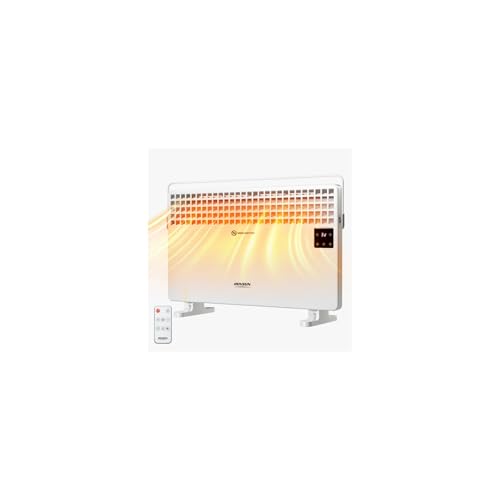
| ROVSUN 1500W Flat Panel Heater with Remote | Best for Large Rooms | 1500 | up to 400 | Freestanding | Tip-over and overheat auto shut-off | Check price |
| DeLonghi Mica Panel Heater 1500W | Best for Quiet Full-Room Heat | 1500 | medium to large | Freestanding or wall mount | Thermal shutoff, tip-over switch | Check price |
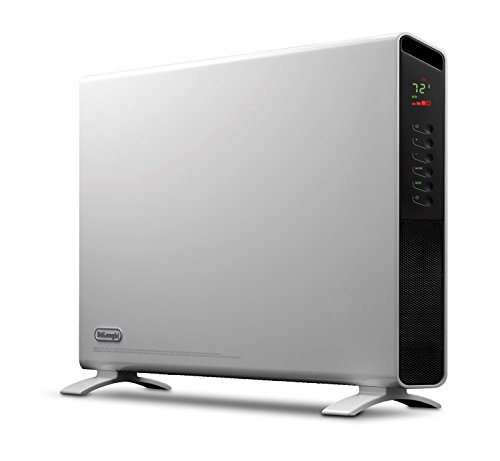
| DeLonghi Convection Panel Heater 1500W | Best for Energy Saving | 1500 | medium to large | Freestanding or wall mount | Thermal shutoff, tip-over switch | Check price |


Top Picks for Panel Heaters
EconoHome Convection Wall Heater 250W
- Power250 watts
- Heating Areaup to 120 sq ft
- Voltage120 volts
- Dimensions24 x 18 x 0.40 inches
- SafetycETL approved, UL-2021 & RoHS compliant
- Quiet fanless operation
- IP44 splash-proof for bathroom use
- Triple insulated for electrical safety
- Easy wall mounting with included hardware
- Exterior casing gets warm, not safe for unsupervised children
- Limited to small room heating
- No remote or digital controls
Envi Plug-in Panel Heater 500W
- Power500 watts
- Heating Area—
- Amps4.2 amps
- DesignWall mounted, plug-in
- SafetySafety sensor, cool surface
- Cool surface temperature for safety
- Wall-sense sensor cuts power if removed
- Silent fanless “Stack Convection” design
- No drill installation, maintenance-free
- Lower heat output limits use to small or supplemental areas
- No digital thermostat or remote control
- Only wall-mounted, no freestanding option
ROVSUN 1500W Flat Panel Heater with Remote
- Power1500 watts
- Heating Areaup to 400 sq ft
- Temperature Range59-99 °F
- SafetyTip-over and overheat auto shut-off
- ControlLCD touch screen, remote
- High 1500W power for large spaces
- Remote control and digital display
- Multiple heat settings and temperature range
- Auto shut-off for safety
- Heavier and less compact than lower watt models
- No wall mounting hardware included
- Can be noisier than fanless models
DeLonghi Mica Panel Heater 1500W
- Power1500 watts
- Heating Areamedium to large rooms
- DesignFreestanding or wall mount
- SafetyThermal shutoff, tip-over switch
- 100% energy conversion to heat
- Thermal shutoff and tip-over safety
- Freestanding or wall mount options
- Adjustable thermostat and two heat settings
- No remote control or digital display
- Heavier than some panel heaters
- Requires space for freestanding placement
DeLonghi Convection Panel Heater 1500W
- Power1500 watts
- Heating Areamedium to large rooms
- DesignFreestanding or wall mount
- SafetyThermal shutoff, tip-over switch
- Energy-saving ECO PLUS function
- Dual lateral fan for faster heat distribution
- Thermal shutoff and tip-over safety
- Versatile wall or floor mounting
- Fan noise may bother sensitive users
- No remote control included
- Heavier than slim panel heaters
How to Choose the Right Panel Heater
Panel heaters deliver heat by warming the air close to their surface, typically through convection. They differ from convection heaters mainly in design and installation, often fitting flush to a wall for space-saving use. Compared to oil heaters, panel heaters warm the room faster but do not retain heat after turning off.
Power and wattage ratings determine how much heat a panel heater can produce. Most models run between 500 and 1,500 watts. A 1,500-watt heater is the maximum recommended for standard US outlets and will heat about 150 square feet efficiently.
Heating area coverage depends on the heater’s wattage and room insulation. A rough rule is 10 watts per square foot for a well-insulated space. For example, a 1,200-watt panel heater suits a room around 120 square feet.
Safety features are critical. Look for tip-over protection, overheat shut-off, and a UL, ETL, or CSA safety listing. These features prevent fires and electrical hazards, especially if children or pets are present.
Installation type affects flexibility and placement. Wall-mounted panel heaters save floor space and provide consistent heat but require installation. Portable models plug directly into outlets and move easily but take up floor or table space.
Noise levels vary by model and heating method. Panel heaters generally operate quietly since they lack fans. This makes them suitable for bedrooms and offices where low noise is essential.
Understanding Heating Output and Running Costs
Heating output is measured in British Thermal Units (BTUs). To convert watts to BTUs per hour, multiply watts by 3.41. For example, a 1,500-watt panel heater produces about 5,115 BTUs per hour.
Electric panel heaters convert nearly all their electricity into heat, making their energy efficiency close to 100 percent. This means a 1,500-watt heater uses 1.5 kilowatt-hours (kWh) of electricity for every hour it runs at full power.
Calculating running costs requires the heater’s wattage, hours of use, and electricity price per kWh. For instance, running a 1,500-watt heater 8 hours daily at $0.17 per kWh costs: 1,500 ÷ 1,000 × 8 × 0.17 = $2.04 per day.
Panel heaters generally have lower running costs than fan heaters because they don’t waste energy moving air. Compared with oil-filled heaters, panel heaters heat rooms faster but don’t store heat, so they may run longer in poorly insulated spaces.
To reduce costs, choose a panel heater with a thermostat and timer so it runs only when needed. Using it in smaller, well-insulated rooms maximizes efficiency.
For more on how panel heaters compare to similar models, see panel heater vs convection heater and panel heater vs oil heater.
Safety and Certification for Panel Heaters
Panel heaters are safe when used according to the manufacturer’s instructions and equipped with essential safety features. Look for models with UL, ETL, or CSA certification to ensure they meet strict safety standards for electrical appliances.
These certifications mean the heater has passed tests for electrical shock, fire hazards, and mechanical safety. They also verify that the heater’s construction and materials meet industry requirements.
Common safety features include tip-over protection, which automatically shuts off the heater if it falls. Thermal cut-off prevents overheating by switching the heater off if internal temperatures exceed safe limits.
Safe installation means mounting or placing the heater where it won’t be knocked over or blocked. Maintain at least 3 feet of clearance from furniture, curtains, and flammable materials. Never plug a panel heater into an extension cord or power strip; use a dedicated wall outlet.
Avoid running panel heaters unattended for long periods unless the model is specifically designed and certified for continuous use. Follow all manufacturer warnings about placement and operation to reduce fire risk.
Panel Heaters vs. Other Heating Options
Panel heaters warm a room by convection, slowly circulating air warmed by a flat heating element. Compared to ceramic heaters that use fans to blow hot air, panel heaters operate quietly but heat more gradually.
Oil-filled heaters store heat in metal fins filled with oil, releasing warmth over time even after shutting off. Panel heaters cool down faster but respond quicker to thermostat changes, saving energy in short heating sessions.
Panel heaters usually consume around 1,200 to 1,500 watts, similar to ceramic and oil heaters. Running costs depend on wattage and usage hours, but panel heaters tend to be more energy-efficient than fan heaters because they avoid electricity use for motors.
Choose a panel heater for steady, silent background heating in bedrooms or offices. Ceramic heaters suit quick spot heating or bathrooms because fans distribute heat fast. Oil heaters work best for all-night use where slow, even warmth is preferred.
Panel heaters are slimmer and easier to mount on walls, saving floor space. They lack the rapid heat burst of fan heaters but avoid blowing dust and allergens. Oil heaters are heavier and bulkier but provide residual heat after power off.
Frequently Asked Questions
What is the difference between a panel heater and a convection heater?
Are panel heaters energy efficient for long-term use?
How much does it cost to run a panel heater?
Can panel heaters be used in bathrooms?
What size panel heater do I need for my room?
Do panel heaters require professional installation?
If that sounds like your room, read up on dorm room heating solutions next.
The other half of this decision is auto shut-off heater options.
