
Tile looks clean and wears well, but it feels cold underfoot from fall through spring. The material absorbs and holds cold, and it draws body heat away faster than wood or vinyl. Walking across a tile kitchen floor in the morning is uncomfortable, and the cold radiates upward, making the whole room feel drafty even when the thermostat reads normal.
Forced-air heating does not solve the problem. Warm air rises and pools near the ceiling while the floor stays cold. The solution lies in stopping heat loss where it starts and warming the tile surface directly with radiant heat, rugs, or underfloor systems.
How to Heat a Cold Kitchen with Tile Floors Efficiently
Seal drafts around doors and baseboards first, then add radiant heat that warms the floor surface—either a portable oil-filled radiator or infrared panel for quick results, or electric underfloor heating if you’re renovating. Forced-air heaters push warm air toward the ceiling while tile stays cold beneath your feet, so the fix has to heat the floor itself.
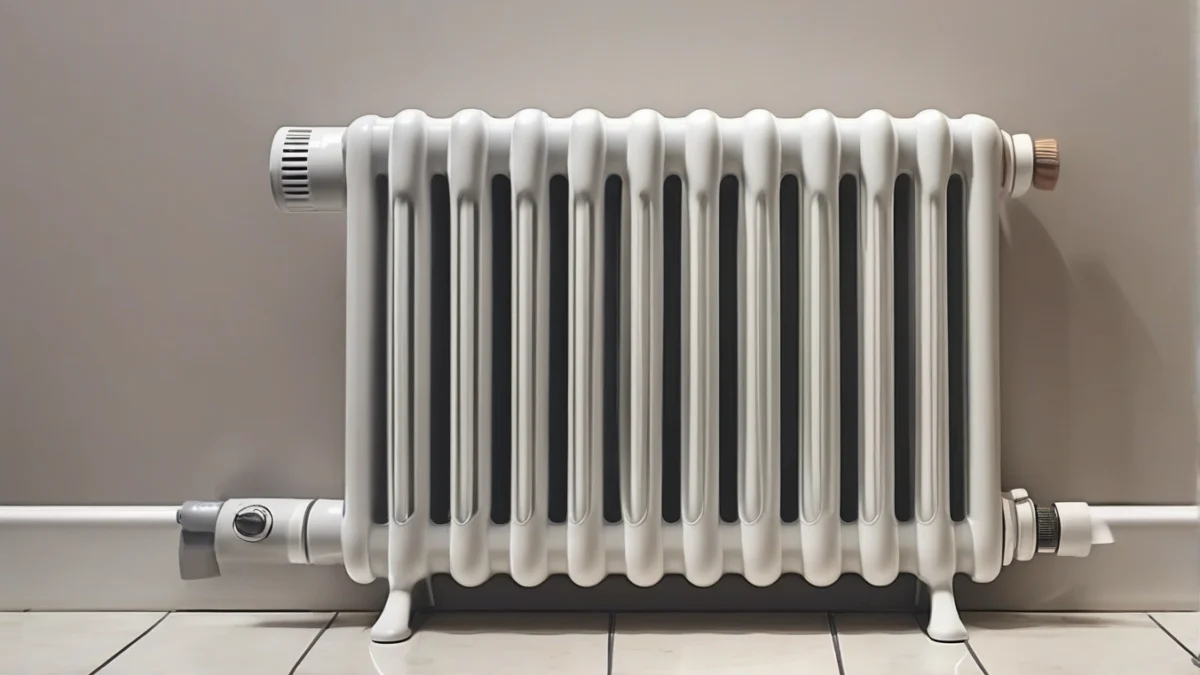
Cold air sinks and pools across tile before you notice a draft at shoulder height. A door sweep and foam weatherstripping along baseboards stop that flow and keep the floor from chilling further. Area rugs with thermal rubber backing work in standing zones—at the sink, stove, and island—because they insulate your feet from the tile and trap a layer of warmth.
- Seal gaps under doors and along baseboardsInstall a door sweep on exterior doors and use foam weatherstripping tape where baseboards meet the floor. Check under cabinets and around toe kicks for air leaks. Cold air flows across the floor before you feel it elsewhere.
- Place thermal-backed rugs in work zonesLay rugs with rubber or felt backing where you stand longest: sink, stove, prep counter. They block conduction from the tile and feel warmer underfoot immediately. Avoid thin cotton rugs; they compress and lose insulating value.
- Add an oil-filled radiator or infrared panelSet an oil-filled radiator along a wall to warm nearby surfaces, including the floor, through radiant heat. Infrared panels mount on walls and heat the floor directly rather than the air. Both work better than fan heaters, which blow warm air up and away from the tile.
- Install electric underfloor heating mats during a renovationLay 120 V electric heating cable mats directly beneath new tile or over existing tile before a refinish. They distribute heat evenly across the floor surface and turn the tile itself into a radiator. This is the permanent fix but requires lifting and resetting the floor.
- Check subfloor insulation if the cold persistsUninsulated subfloors over crawl spaces or slab foundations stay cold and chill the tile from below. Add rigid foam insulation in the crawl space or beneath a raised floor before adding heat above. A heated basement helps but does not eliminate the cold if the slab itself is uninsulated.
Forced-air heaters fail because warm air rises and circulates above head height while the tile pulls heat from your feet faster than the air can replace it. Best heaters for a cold tile kitchen floor are oil-filled radiators, infrared panels, and micathermic models that emit radiant heat and warm surfaces rather than only the air.
Why Tile Floors Stay Cold and Pull Heat from the Room
Tile has high thermal conductivity, meaning it moves heat away from your feet quickly and into the subfloor or the air below. Stand barefoot on tile and you lose body heat faster than on wood or carpet, which is why tile feels cold even when the room is warm. The tile itself is not colder; it simply drains warmth faster than your skin can replace it.
High thermal mass compounds the problem. Tile absorbs and holds cold from whatever sits beneath it—an uninsulated slab, a crawl space open to winter air, or a subfloor with no barrier between joists and soil. Once tile has absorbed that cold overnight or during the day while you’re out, it takes hours of heating to raise its temperature. A space heater warms the air in minutes but barely touches the tile.
Uninsulated subfloors, crawl spaces, and slab foundations stay cold because they sit on or near the ground, which holds winter temperatures long into spring. Heat moves from warm to cold, so the tile continuously loses warmth downward. A heated basement raises the temperature of the space below but does not eliminate floor cold if the slab itself has no insulation or radiant heat embedded in it. The concrete still pulls heat from the tile above.
Air gaps under cabinets, around baseboards, and where walls meet the floor let cold drafts flow across the tile surface. That moving air chills the tile further and makes the whole room feel colder than the thermostat reads. Sealing those gaps stops the draft but does not warm the tile—only reduces how fast it loses the little heat it has.
The combination means tile floors stay cold in winter unless you heat the floor itself. Warming the air above does little because the tile keeps draining that heat downward and outward. The best heaters for cold tile floors are radiant models that aim heat at the surface, or underfloor systems that turn the tile into the heat source.
Stop Heat Loss Through the Floor First
Before adding any heater, seal the gaps that let warm air escape and cold air flood in. A tile floor near an exterior wall stays cold because drafts pull heat through the subfloor and out through the foundation. Fix those leaks first and every heater you run afterward will work better and cost less.
- Seal exterior door gapsInstall a door sweep or draft excluder along the bottom of every exterior door. A quarter-inch gap under a kitchen door lets in as much cold air as a fist-sized hole in the wall. Adhesive-backed rubber sweeps cost a few dollars and stick directly to the door; sliding draft excluders work for doors that swing over thick rugs.
- Caulk baseboards and toe kicksRun a bead of clear acrylic caulk where the baseboard meets the floor, especially along exterior walls. Do the same around cabinet toe kicks. These gaps connect to wall cavities and the subfloor, and they pull cold air up from the crawl space or basement. Caulk flexes with seasonal movement and peels off cleanly if you need to remove it later.
- Seal subfloor air leaksIf you have crawl space or basement access, look for gaps where plumbing pipes or electrical cables pass through the subfloor into the kitchen. Seal them with low-expansion spray foam rated for gaps and cracks. Check around the perimeter where the subfloor meets the foundation sill plate; that junction is a common path for outdoor air to rise through the floor.
- Insulate the subfloor from belowAdd rigid foam board or unfaced fiberglass batts between the floor joists if the space below is unheated. Press batts snugly against the subfloor and hold them in place with wire supports or friction-fit strapping. Rigid foam cuts to size with a utility knife and can be secured with construction adhesive or mechanical fasteners. Either method cuts heat loss through the floor by half or more.
Close off the kitchen from unheated spaces with a solid door or a heavy thermal curtain. A kitchen open to a mudroom, garage, or unheated utility room will stay cold no matter how much you heat it. A door with weatherstripping stops the draft; a floor-length insulated curtain does the same job for doorways you cannot close off permanently.
These steps cost less than running a space heater for a month, and they make every other heating strategy more effective. Once the leaks are sealed, the heat you add stays in the room instead of escaping through the floor and walls.
Radiant Heat vs Forced Air for Cold Tile Floors
Forced-air heaters blow warm air into the room, and that air rises to the ceiling while the tile stays cold. A ceramic tower heater or a fan heater will make the upper half of the kitchen comfortable, but your feet stay cold because hot air is lighter than cold air and climbs away from the floor. You end up with a warm face and cold ankles.
Radiant heaters emit infrared energy that travels through the air without heating it and warms whatever surface it strikes. The tile absorbs that energy and becomes a secondary heat source. An oil-filled radiator placed near the floor creates a warm zone that gradually spreads across the tile; the heat radiates outward at a low, steady rate, and the unit stays silent because there is no fan. Run it on a low setting overnight and the floor around it will be noticeably warmer by morning.
Infrared panels mount on walls or ceilings and direct their energy downward onto the floor and any objects in the room. They warm the tile, the cabinets, and your body directly, so the air temperature can stay a few degrees cooler while you feel just as warm. A 600-watt panel mounted on the wall heats a 100-square-foot zone; a ceiling-mounted panel spreads heat more evenly across the whole room. Both types heat up in minutes and need no floor space.
Underfloor heating systems turn the entire floor into a low-temperature radiant surface that warms the room from the ground up. Electric mats or hydronic loops sit beneath the tile and raise the surface temperature to around 80°F, warm enough to feel comfortable underfoot but not hot enough to damage finishes or waste energy. The floor becomes the heater, and the air stays cooler and more comfortable than it would with a forced-air system pushing heat around.
- Warms the floor surface and objects directly
- Keeps heat low where you feel it instead of at the ceiling
- Silent operation with oil-filled radiators and infrared panels
- Lower perceived temperature saves energy
- Heats the air, which rises and leaves the floor cold
- Fans create noise and stir up dust
- Higher thermostat setting needed to feel warm
- Wastes energy heating the upper half of the room
If you need to warm a cold tile floor quickly, choose radiant heat over forced air. Ceramic vs oil heater comparisons show the difference in how heat distributes across a room, and the same principle applies to tile: radiant heater vs fan heater performance on cold floors comes down to where the heat goes first.
Quick Fixes That Work Without Installation
Thick area rugs with non-slip pads stop the tile from pulling heat from your feet in the spots where you stand most: in front of the sink, the stove, and the island. A rug with a pile at least half an inch deep traps a layer of air between your feet and the tile, breaking the conduction path. Rubber-backed mats work for high-traffic zones but trap moisture; felt or rubber-grid pads under wool or synthetic rugs let the floor breathe.

A portable oil-filled radiator on a timer pre-warms the room before you walk in. Set it to turn on thirty minutes before breakfast and the tile will feel noticeably warmer by the time you pour coffee. Oil radiators keep heating for fifteen to twenty minutes after they click off, so the floor continues to absorb warmth even when the thermostat cycles. Place the unit against an exterior wall where cold air pools.
An infrared space heater aimed at the floor delivers targeted radiant warmth that heats the tile surface rather than just the air above it. Stand it in the corner farthest from the door and angle it toward your standing zones. Infrared heating works in drafty rooms because the heat travels in a straight line and warms objects, not air that escapes through gaps.
Insulated slippers or indoor shoes with thick soles reduce the heat your feet lose to the tile. A sole at least half an inch thick, made of rubber, cork, or foam, slows conduction. Wool or fleece lining traps warmth. Your feet stay comfortable even when the floor itself stays cool.
Draft excluders under doors and along baseboards stop cold air from flooding in at floor level, where it chills the tile first. A fabric or foam excluder along the bottom of the door that leads outside or into an unheated hallway cuts airflow by half or more. Check baseboards for gaps where the wall meets the floor and fill them with clear silicone caulk.
Permanent Solutions: Underfloor Heating and Insulation
Electric underfloor heating mats install in the thin-set adhesive layer before you lay tile, so they sit millimeters beneath the surface and warm the floor directly. The mats are flexible grids with resistance wire woven through them, typically producing 12 to 15 watts per square foot. You roll them out over the subfloor, press them into the adhesive, then lay tile on top. The system heats the tile to a steady, even temperature that stops it from feeling cold the moment you step on it.
Insulating underlay beneath the heating mat or tile prevents heat from escaping into the subfloor below. A quarter-inch foam or cork board with a thermal resistance rating of at least R-1 redirects the warmth upward into the tile instead of downward into the joists. Without insulation, half the heat the mat produces can disappear into the subfloor, lengthening warm-up time and raising running costs. The underlay also eliminates cold spots below kitchen units where the mat cannot reach.
- Lay insulating board on the clean subfloorCut foam or cork underlay to fit and tape the seams with foil tape to seal gaps.
- Roll out the heating matFollow the manufacturer’s spacing guide and avoid overlapping the wire. Leave clearance around cabinets and appliances.
- Test resistance with a multimeterCheck that the mat’s resistance matches the spec sheet before you cover it. A short or break means the mat is damaged.
- Spread thin-set and lay tilePress the mat into the adhesive, then lay tile on top. Avoid screwing or nailing through the mat.
- Connect to a programmable thermostatWire the mat to a floor-sensing thermostat that holds the tile at a set temperature. Set it to maintain 75 to 80°F rather than cycling high and low.
Hydronic systems run warm water through flexible PEX tubes embedded in the floor. A boiler or water heater warms the water to 100 to 120°F and a pump circulates it through loops spaced six to twelve inches apart. Hydronic systems cost more to install than electric mats because they require a boiler, manifold, pump, and tubing, but they run more efficiently when heating large areas or multiple rooms. They suit whole-house heating in new builds or major renovations.
Heated kickboards or skirting board heaters retrofit into existing kitchens without tearing up the floor. These low-profile convection heaters mount at the base of cabinets and blow warm air across the floor surface. They do not warm the tile as evenly as underfloor systems, but they install in a few hours and cost a fraction of the price. A programmable thermostat keeps the system efficient by maintaining low, steady warmth instead of blasting high heat when you walk in.
What It Costs to Run and Install
Draft sealing and area rugs cost under $100 total and add nothing to your energy bill. Weatherstripping, door sweeps and foam tape for baseboards run $20 to $40, and a thick rug with a non-slip pad costs $50 to $150 depending on size.
An oil-filled radiator costs $50 to $150 upfront. Running one at 1,500 W for eight hours a day adds $61 to your monthly bill at $0.17 per kWh. A smaller 900 W model cuts that to $37 per month.
Electric underfloor heating costs $10 to $20 per square foot installed, including the mat, thin-set, tile and labor. A 50-square-foot zone in front of the sink and stove runs $500 to $1,000. Running cost is low because the system cycles on and off to maintain temperature rather than heating constantly.
| Appliance | Watts | Per hour | Per day (8 h) | Per month (30 days) |
|---|---|---|---|---|
| 1,500 W oil-filled radiator | 1,500 W | 26¢ | $2.04 | $61.20 |
| Underfloor heating, 50 sq ft at 10 W per sq ft | 500 W | 8.5¢ | 68¢ | $20.40 |
| Solution | Upfront Cost | Monthly Running Cost |
|---|---|---|
| Draft sealing and rugs | Varies by model and features | No upfront cost for DIY installation |
| Oil-filled radiator, 1,500 W | Ranges widely depending on size and brand | Estimated running cost for 8 hours per day |
| Underfloor heating, 50 sq ft | Depends on system size and installation complexity | Estimated running cost for 8 hours per day |
Underfloor heating maintains low, even warmth across the entire surface and often costs less per month than a portable heater left on all morning. The system heats the tile itself, which holds warmth and radiates it back into the room after the elements cycle off. A programmable thermostat drops costs further by warming the floor only during the hours you use the kitchen.
For renters and anyone who cannot install underfloor heating, an oil-filled radiator paired with rugs and sealed drafts offers the best balance of upfront cost and comfort. The long-term winner for efficiency is underfloor heating in the zones where you stand most, which pays back its installation cost over several winters if you heat your kitchen efficiently without high energy bills.
Frequently Asked Questions
Can I put something on top of ceramic tile to keep my kitchen floor warm?
Why are my kitchen floors cold near exterior walls?
Will tile floors stay cold even with a heated basement below?
What is the cheapest way to heat a kitchen with tile floors?
Do radiant heaters warm tile floors better than fan heaters?
How do I prevent heat loss through my kitchen floor?
It helps to understand improving warmth in homes before spending anything.
We go through why is my basement flat so cold? heating issues explained step by step in a separate article.
