
As winter approaches, many homeowners are looking for safe and efficient ways to heat their homes. Vented gas heaters provide a solution that combines effective heating with safety, ensuring that indoor air quality remains high while delivering warmth.
In this roundup, we evaluate the leading vented gas heaters on the market, highlighting their specifications, performance, and suitability for various spaces. Whether you need a heater for a small room or a large workshop, we have options to fit your needs.
Vented Gas Heater Comparison
| Product | Best for | BTU Output | Heating Area (sq ft) | Safety Features | Dimensions | Price |
|---|---|---|---|---|---|---|
| Comfort Glow 25,000 BTU Direct Vent Natural Gas Wall Heater | Best Overall | 25,000 | 750 sq. ft. | Sealed burn system, electronic ignition, safety pilot with pressure regulator | 26.5 H, 32.25 W, 8.75 D | Check price |
| Comfort Glow 17,000 BTU Direct Vent Natural Gas Wall Heater | Best for Medium Rooms | 17,000 | 500 sq. ft. | Sealed burn system, electronic ignition, safety pilot with pressure regulator | 20 H, 27.3 W, 6.5 D | Check price |
| Comfort Glow 8,000 BTU Direct Vent Natural Gas Wall Heater | Best for Small Spaces | 8,000 | 250 sq. ft. | Sealed burn system, piezo ignition, safety pilot with pressure regulator | 29.5 H, 16.75 W, 9.8 D | Check price |
| ProCom 30,000 BTU Natural Gas Ventless Infrared Plaque Heater | Best Ventless Heater | 30,000 | 1,400 sq. ft. | Oxygen depletion sensor, ANSI certified | — | Check price |
| Comfort Glow 11,000 BTU Direct Vent Liquid Propane Gas Wall Heater | Best Propane Model | 11,000 | 350 sq. ft. | Sealed burn system, electronic ignition, safety pilot with pressure regulator | 20 H, 17 W, 7 D | Check price |


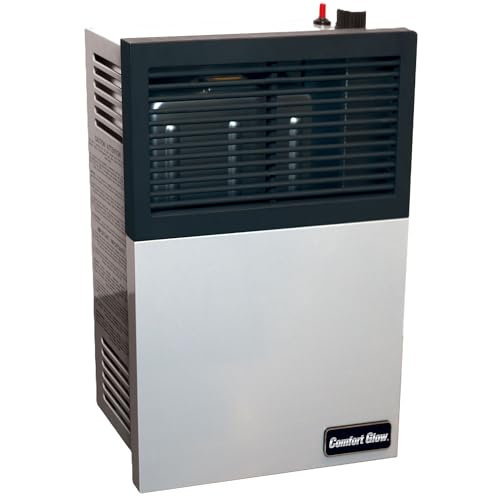
Top Vented Gas Heaters for Reliable Indoor Heating
Comfort Glow 25,000 BTU Direct Vent Natural Gas Wall Heater
- BTU Output25,000
- Heating Area750 sq. ft.
- Safety FeaturesSealed burn system, electronic ignition, safety pilot with p
- Dimensions26.5 H, 32.25 W, 8.75 D
- Heats up to 750 sq. ft.
- Sealed burn system with safety pilot
- No electricity needed, vents through wall
- Approved for bedrooms and modular homes
- Large size may not fit small spaces
- Installation requires a wall vent
Comfort Glow 17,000 BTU Direct Vent Natural Gas Wall Heater
- BTU Output17,000
- Heating Area500 sq. ft.
- Safety FeaturesSealed burn system, electronic ignition, safety pilot with p
- Dimensions20 H, 27.3 W, 6.5 D
- Heats up to 500 sq. ft.
- Sealed burn system with safety pilot
- No electricity needed, direct vented
- Approved for bedrooms and modular homes
- Lower heat output than larger models
- Still requires wall vent installation
Comfort Glow 8,000 BTU Direct Vent Natural Gas Wall Heater
- BTU Output8,000
- Heating Area250 sq. ft.
- Safety FeaturesSealed burn system, piezo ignition, safety pilot with pressu
- Dimensions29.5 H, 16.75 W, 9.8 D
- Heats up to 250 sq. ft.
- Sealed burn system with safety pilot
- No electricity needed, direct vented
- Quiet stainless steel burner
- Manual heat control only
- Lower heat output limits room size
ProCom 30,000 BTU Natural Gas Ventless Infrared Plaque Heater
- BTU Output30,000
- Heating Area1,400 sq. ft.
- Safety FeaturesOxygen depletion sensor, ANSI certified
- Dimensions—
- Heats up to 1,400 sq. ft.
- Infrared heat with thermostat control
- Oxygen depletion sensor for safety
- No electricity required
- Ventless design can affect indoor air quality
- Not approved for bedrooms
Comfort Glow 11,000 BTU Direct Vent Liquid Propane Gas Wall Heater
- BTU Output11,000
- Heating Area350 sq. ft.
- Safety FeaturesSealed burn system, electronic ignition, safety pilot with p
- Dimensions20 H, 17 W, 7 D
- Heats up to 350 sq. ft.
- Sealed burn system with safety pilot
- No electricity needed, direct vented
- Approved for bedrooms and modular homes
- Lower heat output than natural gas models
- Requires propane fuel supply
How to Choose the Right Vented Gas Heater
Choose a vented gas heater by matching its BTU output to the size of your space. A heater rated for 25,000 BTU can warm about 750 square feet effectively. Vented gas heaters exhaust combustion gases outside, making them safer for indoor use than ventless models, which release combustion byproducts into the room.
Vented gas wall heaters have pros like cleaner indoor air and consistent heat without moisture buildup. Their cons include more complex installation and the need for proper venting through walls or ceilings. Ventless heaters are easier to install but require good ventilation and are not recommended for bedrooms or small enclosed spaces.
Look for safety features such as automatic shut-off if the pilot light goes out, overheat protection, and a flame sensor. These reduce risks of gas leaks or fires. Confirm that the heater has UL, ETL, or CSA certification for safety compliance.
Installation must follow local codes and manufacturer instructions, often requiring a professional. The venting system should be airtight and direct combustion gases outdoors. Improper venting risks carbon monoxide buildup, so a CO alarm is essential in the room.
| Feature | Vented Gas Heater | Ventless Gas Heater |
|---|---|---|
| Air Quality | Exhausts combustion gases outside | Releases combustion gases indoors |
| Installation | Requires venting, professional recommended | Easier, no venting needed |
| Safety | Lower risk of indoor pollution | Requires ventilation and CO alarm |
| Heat Moisture | No added moisture indoors | Adds moisture to indoor air |
| Typical Use | Whole rooms, longer use | Supplemental heat, well-ventilated areas |
Understanding Heat Output and Sizing
Calculate BTUs needed by multiplying the room’s square footage by 20 to 30 BTU per square foot. For example, a 500-square-foot room needs about 10,000 to 15,000 BTU. Use higher BTU per square foot for poorly insulated spaces and lower for well-insulated ones.
A vented natural gas wall heater typically converts fuel to heat with about 78% to 85% efficiency. This means most of the gas energy heats your room, with minimal waste. Ventless heaters can be near 99% efficient but risk indoor air quality.
Insulation quality significantly affects heater performance. Well-insulated rooms retain heat longer, requiring fewer BTUs. Poor insulation demands a larger heater or causes higher fuel use to maintain temperature.
Vented heaters remove combustion gases outside, so they do not add moisture or pollutants indoors. This makes them safer for long-term use compared to unvented heaters, which can degrade indoor air quality despite higher efficiency ratings.
| Appliance | Watts | Per hour | Per day (8 h) | Per month (30 days) |
|---|---|---|---|---|
| 11,000 BTU heater | 3,220 W | $1.93 | $15.46 | $463.68 |
| 17,000 BTU heater | 4,960 W | $2.98 | $23.81 | $714.24 |
| 25,000 BTU heater | 7,300 W | $4.38 | $35.04 | $1,051.20 |
Safety and Certification Standards
Non-vented gas heaters are not safe for most homes. They release combustion gases directly into the living space, increasing the risk of carbon monoxide buildup. Wall gas non-vented heaters are generally unsuitable for indoor use unless specifically designed and certified for that purpose with strict ventilation controls.
Vented gas heaters use a sealed combustion system to direct exhaust outside. This design minimizes indoor air pollution and carbon monoxide risks. Look for models with certification from recognized safety organizations such as UL, ETL, or CSA, which confirm compliance with safety standards.
Proper installation is critical. A licensed technician must install the heater according to the manufacturer’s instructions and local building codes. Incorrect venting or poor sealing can cause dangerous gas leaks or carbon monoxide to enter the home.
- Check Venting RequirementsConfirm the heater’s venting type and ensure the vent pipe is properly routed outdoors with no leaks or obstructions.
- Verify Safety FeaturesLook for tip-over protection, overheat shut-off, and sealed combustion chambers to prevent gas leaks.
- Hire a Licensed InstallerUse a qualified professional to install the heater, perform gas line connections, and test for leaks and proper venting.
What Competitors Leave Out: Indoor Air Quality
Vented propane heaters are safe for indoor use when installed and maintained properly. Their sealed combustion system draws air from outside and exhausts all fumes outdoors, preventing indoor pollution. This system protects indoor air quality and reduces moisture buildup.
Unvented or ventless gas heaters emit combustion products directly into the room. This can raise carbon monoxide levels and increase humidity, which may cause condensation, mold, and respiratory irritation. Vented models avoid these problems by isolating combustion from indoor air.
To mitigate moisture and fume buildup with any gas heater, ensure good ventilation in the room. Use exhaust fans or open windows periodically. Regularly inspect and maintain heater vents and seals to prevent leaks that could degrade indoor air quality.
- Choose Sealed Combustion UnitsSelect direct vent or power vent models that do not mix combustion air with indoor air.
- Maintain Venting SystemsClean and inspect vent pipes annually for blockages or damage that could allow fumes indoors.
- Ventilate the RoomUse mechanical ventilation or open windows to reduce moisture and prevent stale air accumulation.
Running Costs of Vented Gas Heaters
The cost to run a vented gas heater depends on its BTU output, the fuel price, and how long you use it. To convert BTUs to dollars, divide the BTU rating by 100,000 to get therms, then multiply by the local cost per therm of natural gas or propane. For example, a 25,000 BTU heater uses 0.25 therms per hour.
If natural gas costs $1.20 per therm, running a 25,000 BTU heater for 8 hours costs about $2.40 (0.25 therms × 8 hours × $1.20). Propane is usually more expensive, around $2.50 per therm, so the same heater would cost $5.00 to run for 8 hours on propane.
Efficiency affects running costs. Most vented gas heaters operate at 80% to 95% efficiency. A heater with 90% efficiency delivers more heat per therm and reduces fuel use compared to one at 80%. Check the heater’s AFUE rating or manufacturer specifications to compare efficiency.
Other factors that influence costs include thermostat settings, insulation quality, and outdoor temperature. Running the heater at lower settings or cycling it with a thermostat saves fuel. Well-insulated rooms retain heat longer, reducing runtime.
| Heater Model | BTU Output | Fuel Type | Efficiency | Estimated Cost per 8 Hours |
|---|---|---|---|---|
| Comfort Glow 25,000 BTU | 25,000 | Natural Gas | 90% | 2.40 |
| Comfort Glow 17,000 BTU | 17,000 | Natural Gas | 85% | 1.38 |
| Comfort Glow 11,000 BTU | 11,000 | Liquid Propane | 90% | 2.20 |
Compare fuel prices and heater efficiency before buying. Natural gas is generally cheaper than propane in most areas, but propane heaters are useful where natural gas is unavailable. Higher efficiency heaters cost less to run but may have a higher upfront price.
For detailed advice on choosing the right model and understanding vented gas heater safety, see our guide on vented gas room heaters that heat safely.
Frequently Asked Questions
Are vented gas heaters safe for indoor use?
What is the difference between vented and unvented gas heaters?
How do I calculate the BTU output needed for my room?
What safety features should I look for in a gas heater?
Can vented gas heaters operate during power outages?
How do vented gas heaters improve indoor air quality?
For the detail, see our notes on understanding gas heater options.
