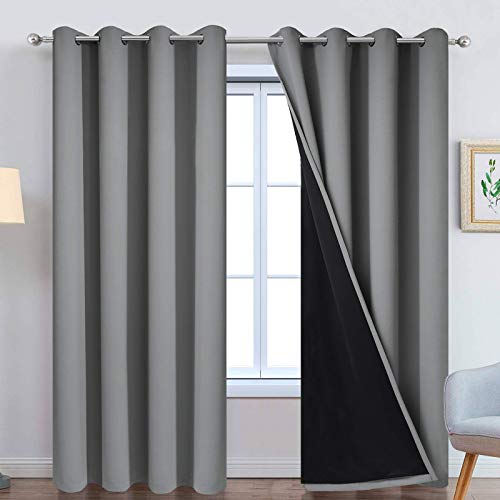
Thermal curtains are an essential investment for keeping your home warm during colder months. They prevent heat loss through windows, saving energy and enhancing comfort.
Choosing the right thermal curtains involves understanding their fabric, insulation properties, and effectiveness against heat loss. This guide highlights top options to help you make an informed decision.
Thermal Curtains Comparison by Size, Material, Blackout and Noise Reduction
| Product | Best for | Size | Material | Blackout Level | Noise Reduction | Price |
|---|---|---|---|---|---|---|
| KOUFALL Extra Wide Linen Blackout Thermal Curtains | Best Overall | 70″W x 84″L per panel | Linen textured fabric | 100% | 50% noise canceling | Check price |
| PrinceDeco Linen Textured Blackout Thermal Curtains | Best Vintage Look | 52″W x 84″L per panel | Linen textured fabric with blackout coating | 100% | — | Check price |
| NICETOWN Super Heavy-Duty Blackout Thermal Curtains | Best Heavy-Duty | 62″W x 95″L per panel | Heavyweight lined fabric | 100% | Yes | Check price |
| NICETOWN Grey Blackout Curtains for Bedroom | Best for Medium Windows | 42″W x 63″L per panel | 230GSM double-layer fabric | 100% | Basic | Check price |
| NICETOWN Blackout Curtain Liners with Rings | Best Add-On Liner | 50″W x 80″L per panel | High-quality blackout liner fabric | 100% | Yes | Check price |
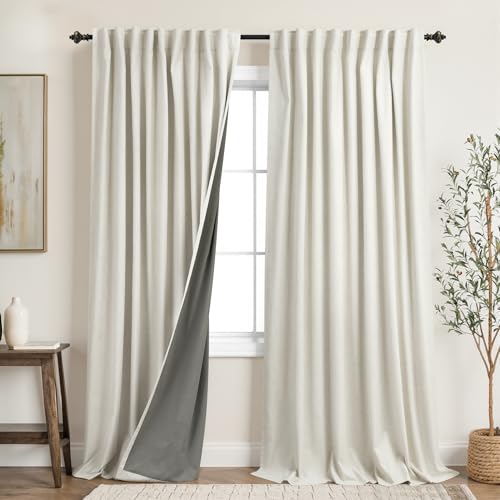


Top Picks for Thermal Curtains that Improve Heat Retention
KOUFALL Extra Wide Linen Blackout Thermal Curtains
- Size70″W x 84″L per panel
- MaterialLinen textured fabric
- Blackout Level100%
- Noise Reduction50% noise canceling
- 100% blackout blocks sunlight and UV
- Noise reducing fabric cancels about 50% outdoor noise
- Extra-wide panels cover large windows or doors
- Machine washable for easy maintenance
- Not professional soundproof curtains, only partial noise reduction
PrinceDeco Linen Textured Blackout Thermal Curtains
- Size52″W x 84″L per panel
- MaterialLinen textured fabric with blackout coating
- Blackout Level100%
- Noise Reduction—
- 100% blackout and UV blocking
- Primitive linen texture with burlap effect
- Natural insulating capabilities
- Wrinkle free and thread trimmed
- Panels are narrower than some competitors at 52″ wide each
NICETOWN Super Heavy-Duty Blackout Thermal Curtains
- Size62″W x 95″L per panel
- MaterialHeavyweight lined fabric
- Blackout Level100%
- Noise ReductionYes
- 100% blackout with sewn-in liner
- Heavyweight fabric for insulation and noise reduction
- Adjustable length with rings and hooks
- Machine washable for durability
- Hooks and rings sold separately, adding setup steps
NICETOWN Grey Blackout Curtains for Bedroom
- Size42″W x 63″L per panel
- Material230GSM double-layer fabric
- Blackout Level100%
- Noise ReductionBasic
- 100% physical blackout with double-layer fabric
- Thermal insulation and noise reduction
- Smooth sliding silver grommets
- Luxurious drape with premium fabric
- Shorter length at 63″ may not fit taller windows
NICETOWN Blackout Curtain Liners with Rings
- Size50″W x 80″L per panel
- MaterialHigh-quality blackout liner fabric
- Blackout Level100%
- Noise ReductionYes
- Complete blackout and UV blocking
- Detachable rings for easy hanging
- Safe materials with no chemical coating
- Machine washable for easy care
- Panels are narrower and shorter than some curtains
- Requires existing curtains to use effectively
What Are Thermal Curtains and How Do They Prevent Heat Loss?
Thermal curtains are specially designed window coverings that reduce heat loss through glass. They have insulating layers that keep warmth inside during cold weather and block heat from entering in summer. This insulation helps maintain a consistent room temperature and lowers heating costs.
Heat escapes through windows by conduction and radiation. Thermal curtains slow this process by adding a barrier of fabric and insulating material, trapping a layer of air next to the glass. This air layer acts as an additional insulator, reducing heat transfer from the warm room to the cold window surface.
Compared to heavy blankets, thermal curtains are more effective and practical for windows. Blankets block drafts but are not tailored to fit window frames or provide a sealed edge, allowing heat to escape around them. Curtains designed for heat retention fit the window shape, often extend beyond the glass edges, and use specialized fabrics for better insulation.
| Insulation Option | Effectiveness for Heat Retention | Practicality for Windows |
|---|---|---|
| Thermal Curtains | High, with insulating layers and air trapping | Designed to fit windows and block drafts |
| Heavy Blankets | Moderate, blocks drafts but gaps remain | Bulky, not tailored to window shape |
| Regular Curtains | Low to moderate, single-layer fabric | Less effective without insulation or blackout lining |
Key Features to Consider When Choosing Thermal Curtains
The fabric type is the main factor in thermal insulation for curtains. Apart from velvet, polyester blends with foam or acrylic backing provide strong heat retention. These materials block heat transfer better than cotton or linen alone. Look for curtains labeled as “thermal insulated” or “thermal backed.”
Blackout capability is important for heat retention because it adds an extra layer that blocks light and reduces heat loss through radiation. Curtains with 100% blackout fabric prevent heat from escaping and also keep rooms cooler in summer by blocking sunlight. This feature also helps with privacy and light control.
Noise reduction is a helpful bonus of thermal curtains. Thick, dense fabrics absorb sound and reduce external noises. This feature is especially useful for bedrooms or rooms facing busy streets. Noise reduction does not directly affect heat retention but improves overall comfort.
Thermal curtains generally insulate better than honeycomb blinds. Honeycomb blinds trap air in cells, providing moderate insulation, but curtains cover the entire window and frame, sealing gaps more effectively. Curtains also have heavier, layered fabrics that block heat better than the thin material of blinds.
| Feature | Thermal Curtains | Honeycomb Blinds |
|---|---|---|
| Insulation | High, layered fabric and air trapping | Moderate, air pockets in cells |
| Coverage | Full window and frame coverage | Covers window glass only |
| Light Blocking | Often 100% blackout | Varies, usually partial blocking |
| Noise Reduction | Good with thick fabric | Minimal |
Sizing Your Thermal Curtains for Maximum Efficiency
Accurate measurements are essential to get the full benefit of thermal curtains. Measure the width and height of your window frame, then add extra inches to ensure complete coverage. Curtains that just cover the glass leave gaps where heat escapes.
For width, multiply your window’s width by 1.5 to 2. This accounts for pleats and ensures the curtain fully overlaps the sides of the window. For height, measure from the curtain rod or track to just below the window sill or floor, depending on your preference.
Thermal curtains work like pot lids on a stove. They trap heat inside the room by sealing off drafts. To maximize this effect, the curtains must fit snugly around the window frame without pressing against the glass or wall.
Avoid attaching curtains directly to the wall with tape or nails, which can damage paint or drywall and reduce insulation. Instead, use curtain rods that allow the fabric to hang close to the wall and floor, creating a thermal barrier that seals drafts while preserving your walls.
- Measure Window WidthUse a metal tape measure to find the exact width of the window frame.
- Calculate Curtain WidthMultiply the width by 1.5 to 2 for fullness and overlap.
- Measure Curtain LengthMeasure from the curtain rod to the desired length, usually just below the window sill or to the floor.
- Choose Rod PlacementInstall the rod so curtains hang close to the wall and floor without gaps.
Cost of Running Thermal Curtains and Energy Savings
Thermal curtains can reduce heat loss through windows by up to 25%, which lowers heating bills. The savings depend on your home’s insulation, climate, and heating costs.
Compared to thermal blinds, curtains generally offer better insulation because their thick fabric traps air and covers window edges completely. Thermal blinds fit inside the frame and may leave gaps around the edges, reducing their effectiveness.
Thermal curtains cost less to run than electric heaters or portable heat sources. They require no electricity and last for years with proper care. Their upfront cost is a one-time investment toward ongoing energy savings.
| Appliance | Watts | Per hour | Per day (8 h) | Per month (30 days) |
|---|---|---|---|---|
| 1,500 W electric heater running 8 hours daily | 1,500 W | 26¢ | $2.04 | $61.20 |
Thermal curtains work best combined with other insulation methods like weatherstripping or draft-proofing. They are more cost-effective over time than replacing windows or adding storm panels.
For sustained savings, close thermal curtains at night and on cold days. Opening them during sunny hours lets in natural heat, reducing heating needs further.
Thermal curtains are a practical, low-cost solution to improve home energy efficiency. Their insulation value and durability make them a smart choice compared to other window treatments or heating options.
Explore thermal blinds versus thermal curtains to decide which suits your needs best. For additional ways to cut heat loss, see ways to improve heat retention without curtains.
Maintaining Your Thermal Curtains for Longevity
Thermal curtains need proper care to keep their insulating properties effective over time. Unlike honeycomb blinds, which trap air in sealed cells for insulation, thermal curtains rely on dense fabric layers and sometimes foam backing. Maintaining the fabric’s integrity and fit against the window is key to preserving heat retention.
To seal thermal curtains without damaging your walls, use tension rods or curtain tracks that do not require drilling. Avoid adhesive hooks or tapes that can peel paint or drywall. A curtain rod that fits snugly and allows the curtain to close fully against the window frame reduces drafts effectively.
- Check the Care LabelFollow the manufacturer’s instructions on cleaning temperature and method. Most thermal curtains allow gentle machine washing or dry cleaning.
- Regular Dusting or VacuumingUse a soft brush attachment to remove dust and particles weekly. This prevents buildup that can degrade fabric fibers.
- Spot Clean Stains QuicklyUse mild detergent and a damp cloth. Avoid harsh chemicals that might damage thermal coatings or liners.
- Avoid High Heat in Washing and DryingHot water and high dryer settings can shrink fabric or damage thermal layers. Use low heat or air dry.
- Rehang Curtains ProperlyEnsure curtains hang straight and cover the window fully. Gaps let cold air in and reduce insulation.
Frequently Asked Questions
What fabric is best for thermal curtains?
How do thermal curtains compare to honeycomb blinds?
Can thermal curtains be used year-round?
Do thermal curtains reduce noise as well as heat loss?
What size thermal curtains should I buy for my windows?
How do I clean and maintain thermal curtains?
If that sounds like your room, read up on maximizing energy efficiency next.
It helps to understand maximizing energy efficiency before spending anything.