
Oil-filled radiators heat the metal fins with electric heating elements submerged in diathermic oil. The oil never burns or needs refilling; it circulates through convection inside the sealed body, storing heat and radiating it long after the element cycles off. That thermal inertia keeps a room warm with less on-time than a fan heater, and the absence of a fan means zero noise and no dust circulation.
The tradeoff is patience. An oil-filled radiator takes 20 to 30 minutes to reach full surface temperature and warm a cold room, where a ceramic heater delivers a hot blast in seconds. Choose oil-filled for spaces you heat for hours—bedrooms through the night, home offices through the workday—and ceramic or fan heaters for quick spot heating.
Oil-Filled Radiator Comparison
| Product | Best for | Heat settings | Coverage | Timer | Weight | Price |
|---|---|---|---|---|---|---|
| De’Longhi EW7707CM Oil-Filled Radiator | Best overall | Adjustable thermostat with ComfortTemp | Simple controls for power level and temperature | — | — | Check price |
| De’Longhi TRD40615E Dragon Digital Radiator | Best with timer | Adjustable with ECO Plus | — | 24-hour programmable | — | Check price |
| PELONIS Oil-Filled Radiator Heater | Best budget | 600 W, 900 W, 1,500 W | — | — | — | Check price |

Oil-Filled Radiators Tested by Specs and Real Use
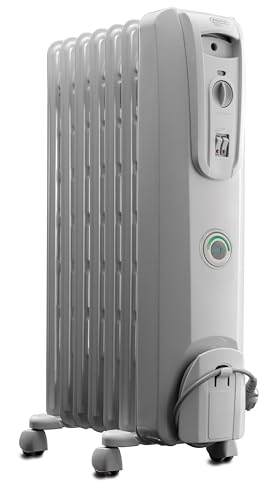
De’Longhi EW7707CM Oil-Filled Radiator
- Power1,500 W
- Heat settingsAdjustable thermostat with ComfortTemp mode
- CoverageSimple controls for power level and temperature
- ControlsDial for power level and temperature
- ComfortTemp saves up to 20% energy after the room warms
- Thermal slots keep surface temperature low
- Snap wheels attach without tools
- Simple dial controls, no programming required
- No timer for scheduled shutoff
- Takes longer to heat a cold room than a ceramic heater
- Heavier than panel heaters at the same wattage
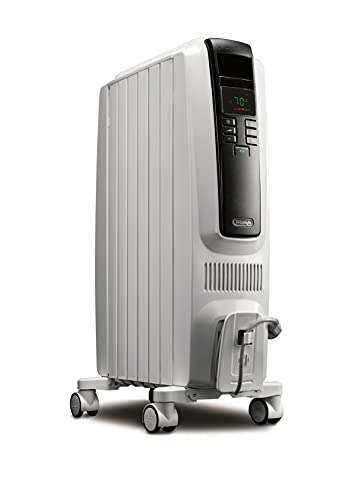
De’Longhi TRD40615E Dragon Digital Radiator
- Power1,500 W
- Timer24-hour programmable
- DisplayDigital LED panel
- Heat modesAdjustable with ECO Plus feature
- DesignBattery-style fins for increased radiant surface
- 24-hour programmable timer with LED display
- Battery fins deliver 75% more radiant surface than round columns
- ECO Plus mode optimizes power and temperature automatically
- Digital controls for precise temperature selection
- Costs more than dial-controlled models
- Heavier and harder to move than compact radiators
- Digital display adds a glow in dark rooms
PELONIS Oil-Filled Radiator Heater
- Power1,500 W
- Heat settings600 W, 900 W, 1,500 W
- SafetyTip-over protection, overheat protection
- Portability4 casters and front handle
- ControlsDual knobs
- Three fixed heat modes: 600 W, 900 W, 1,500 W
- Dual knobs for straightforward operation
- Tip-over and overheat protection
- Four casters for easy room-to-room movement
- No timer or programmable features
- No energy-saving mode like ComfortTemp or ECO Plus
- Manual says tip-over switch only, no mention of UL or ETL listing in the data
How to Choose an Oil-Filled Radiator
Three specifications determine whether an oil-filled radiator suits your room: wattage and coverage, the controls, and the fin design. Every plug-in model maxes out at 1,500 watts because that is the limit of a standard 15-amp US outlet. Coverage claims vary from 120 to 200 square feet, but the real range depends on your insulation, ceiling height, and how cold it is outside. A 1,500 W oil-filled radiator will heat a well-insulated bedroom in Phoenix more effectively than a drafty one in Minnesota.
Heat settings divide into manual three-step dials and digital thermostats. Manual models offer low, medium, and high, which correspond to around 600, 900, and 1,500 watts. You adjust by feel. Digital models let you set a target temperature, and the heater cycles on and off to hold it. Some add a 24-hour timer so the room is warm when you wake up. Manual controls cost less and never fail; digital thermostats save energy by cutting power the moment the room reaches your target.
Fin count and spacing control how quickly the radiator warms the air and how long it radiates heat after shutoff. More fins mean more surface area, so a model with eleven or thirteen fins warms a room faster than one with seven. Wider spacing between fins encourages convection, pulling cool air up from the floor. Tightly packed fins retain heat longer, which keeps the room warm during the off cycle. Expect 20 to 30 minutes to feel real warmth from any oil-filled radiator, compared to seconds from a ceramic or halogen model.
Choose an oil-filled radiator over a ceramic tower heater when silence, dust-free air, and steady warmth matter more than speed. Oil-filled models produce no fan noise and do not blow allergens around the room, which makes them better for bedrooms and offices where you will spend hours. A ceramic tower heater heats faster and works well in a bathroom or garage where you need quick warmth for 20 minutes, then leave. A convection heater with a fan delivers the same instant heat but at the cost of noise and circulating dust. For a comparison of how mica vs oil heaters perform in speed and heat feel, that guide breaks down the differences.
Oil-Filled Radiator vs. Ceramic, Halogen and Panel Heaters
Running cost is identical for any electric heater at the same wattage and runtime. A 1,500 W oil-filled radiator costs exactly the same per hour as a 1,500 W ceramic, halogen, or panel heater because all of them convert electricity to heat at 100 percent efficiency. The advantage of an oil-filled radiator appears after it cycles off: the hot oil continues radiating warmth for 15 to 30 minutes, so the heater runs fewer total hours to maintain the same room temperature. A ceramic heater stops producing heat the instant it shuts off.
| Appliance | Watts | Per hour | Per day (8 h) | Per month (30 days) |
|---|---|---|---|---|
| 1,500 W oil-filled radiator | 1,500 W | 26¢ | $2.04 | $61.20 |
| 1,500 W ceramic heater | 1,500 W | 26¢ | $2.04 | $61.20 |
Heat type separates how each technology feels. An oil-filled radiator combines radiant heat from the metal surface and natural convection as warm air rises, producing even, gentle warmth with no air movement. A halogen heater uses infrared radiation to warm objects and people directly, heating you before it heats the room. A ceramic heater forces air over a heated ceramic element with a fan, which raises room temperature quickly but blows dust and creates noise. A panel heater relies entirely on convection with no fan, mounting flat on a wall to save floor space.
Noise and air quality favor oil-filled and panel heaters. Both are silent because they have no moving parts. Ceramic and fan heaters produce 40 to 55 decibels of fan noise and circulate allergens, pet hair, and dust throughout the room. For anyone with allergies or asthma, or anyone sleeping within ten feet of the heater, oil-filled and panel models are better choices.
Speed is where halogen heaters and ceramic heaters win. Both deliver heat within seconds of switching on. An oil-filled radiator takes 20 to 30 minutes to warm the oil and start raising room temperature, and a panel heater takes nearly as long. Use oil-filled or panel heaters in spaces you occupy for hours at a stretch. Use ceramic or halogen for quick warmth in a bathroom, workshop, or garage.
- Silent operation with no fan noise
- Continues radiating heat for 15 to 30 minutes after shutoff
- Does not blow dust or allergens
- Safe surface temperature on most models
- Takes 20 to 30 minutes to warm the room
- Heavier and harder to move between rooms
- Costs more upfront than most ceramic models
Running Cost: What an Oil-Filled Radiator Costs Per Month
An oil-filled radiator at 1,500 W costs exactly the same to run as a ceramic, panel, or convector heater at the same wattage. The formula is watts ÷ 1,000 × hours × your price per kWh. A 1,500 W heater running eight hours a day for thirty days at $0.17 per kWh costs $61.20, whether it has fins, a fan, or a ceramic element.
| Appliance | Watts | Per hour | Per day (8 h) | Per month (30 days) |
|---|---|---|---|---|
| 1,500 W oil-filled radiator | 1,500 W | 26¢ | $2.04 | $61.20 |
| 600 W low setting | 600 W | 10¢ | 82¢ | $24.48 |
Oil-filled radiators save money by radiating stored heat after the heating element shuts off. The thermal mass inside the fins continues warming the room for ten to twenty minutes, so the thermostat cycles the element on less often than a ceramic heater that stops producing heat the moment it clicks off. Over an eight-hour stretch, an oil-filled model might run for five hours while a ceramic heater runs for six, even though both maintain the same room temperature.
Three-step wattage settings and ECO modes cut cost further by matching output to the room. A 600 W setting uses 60 percent less electricity than 1,500 W. The 600 W setting on the table above runs a full month for less than the cost of five days at 1,500 W. ECO modes cycle between high and low to hold a target temperature, and models with ComfortTemp or similar logic reduce runtime by 15 to 25 percent once the room stabilizes.
Safety and Certification for Oil-Filled Heaters
Tip-over and overheat protection are standard on every oil-filled radiator recommended here. Tip-over switches cut power if the heater falls or tilts past about thirty degrees. Overheat sensors shut the element off if internal temperature climbs above the safe threshold, usually around 185°F, then reset automatically once the unit cools. Both features are non-negotiable; verify them in the product manual or on the box before you buy.
Surface temperature on oil-filled fins stays cooler than the metal grille of a ceramic heater, but the fins still reach 150 to 170°F on the 1,500 W setting. You can brush past them without a burn, but holding a hand flat against a fin for more than a second will hurt. Marketing that calls fins “cool to the touch” means cooler than other electric heaters, not safe to grip. Keep children and pets back, and never drape anything over the unit.
UL, ETL, or CSA listing confirms that the heater met third-party safety testing for electrical and fire hazards. Look for the mark on the cord tag or the back panel. If you see CE only, the heater passed European standards but not the stricter US requirements; it is legal to sell but carries higher risk. No certification mark means no independent verification of the wiring, thermostat cutoffs, or overheat protection.
Maintain three feet of clearance from curtains, bedding, furniture, and anything combustible. Oil-filled radiators produce gentler heat than ceramic heaters, but the fins and the air around them still exceed 160°F. A blanket left against the unit will eventually scorch or ignite, and blocked airflow can trip the overheat sensor or, on an older heater without one, cause internal damage.
US-Made Oil-Filled Radiators: What Is Actually Available
No oil-filled radiator heaters sold on Amazon or in major US retailers are manufactured in the United States as of 2026. De’Longhi models are Italian-designed and made in China. Pelonis is a Chinese brand. Costway, Aikoper, and every other oil-filled radiator you will find at Walmart, Home Depot, or online ship from factories in China or Southeast Asia.
The category moved offshore decades ago because stamped steel fins, diathermic oil, and assembly labor cost a fraction of what US production would require. A few American companies manufacture commercial and industrial electric heaters—large unit heaters for warehouses, radiant panels for workshops—but none produce consumer oil-filled radiators. The supply chain for the mineral oil, the tooling for thin-wall stamping, and the volume needed to justify domestic production all sit overseas.
What protects you is certification and warranty support, not the country stamped on the carton. Every heater recommended in this guide carries a UL or ETL mark, which means an accredited lab tested it to North American safety standards for tip-over shutoff, overheat protection, and electrical construction. De’Longhi and Pelonis both operate US-based customer service and honor warranties without requiring international returns.
If supporting domestic manufacturing matters to you, look instead atCategories where US production still exists: some steel oil-filled heaters with fans, a handful of radiant panel heaters, and certain propane or kerosene models built for construction sites. For the gentler, silent warmth that defines an oil-filled radiator, every option on the market today comes from abroad.
Frequently Asked Questions
Does an oil-filled radiator use more electricity than a fan heater?
Which is better, a halogen heater or an oil-filled radiator?
How much does it cost to run a 1,500-watt oil-filled radiator for 8 hours?
Are oil-filled radiators safe to leave on overnight?
Why does an oil-filled radiator take so long to heat a room?
Do oil-filled radiators dry out the air like ceramic heaters?
Before you buy anything, it is worth looking at what is convection heating and how does it work.
It helps to understand insulation challenges in garages before spending anything.
