
A drafty house leaks heat through gaps around windows, doors, floors and chimneys, so any portable heater has to fight a constant stream of cold air. That is why some rooms never feel warm, even though the thermostat says they should.
Oil-filled radiators are a common add-on in older homes because they are quiet and steady, but they are not magic. The right way to use one in a drafty space is to match its output to the room, place it well, and slow the drafts enough that its stored heat can keep up.
Oil Radiators In Drafty Homes
Oil-filled radiators can work in drafty homes, but only as background heat in single rooms you can close off and roughly match to the heater size. Infrared and fan-forced heaters can feel warmer on your skin in a very cold, drafty spot, yet they still will not fully heat a leaky room; they mainly warm the area they shine or blow on.
Here, “drafty” means you can feel cold air moving from window gaps, under doors, through floorboards or down a chimney, not just walls that lose heat slowly. In a small closed room of about 100–150 sq ft where you have sealed the worst leaks, a standard 1,500 W oil-filled radiator can usually keep the space comfortable; in a very leaky or open room of the same size, it may run almost nonstop and still feel weak.
The strength of an oil-filled radiator is its stored, steady heat. The hot oil and heavy metal fins keep giving off warmth between thermostat cycles, which helps smooth out small drafts from a loose sash lock or a hallway crack, but they cannot overpower a strong cold airflow from an open stairwell or a door that opens every few minutes.
- Closed bedrooms in older houses where you can shut the door at night
- Home offices around 100–150 sq ft with some weatherstripping on windows and doors
- Living rooms you can separate from hallways and use for several hours at a time
- Open-plan spaces that spill into halls, stairs and kitchens
- Uninsulated sunrooms or three-season rooms with large glass areas
- Entryways or mudrooms where exterior doors open often
- Rooms so large that a single 1,500 W heater is undersized for the square footage and leakage
In extremely drafty corners, you may feel warmer sitting right in front of an infrared or strong fan heater, because the direct heat beam or airflow helps offset the cold air running past you. The rest of the room will still be cold though, and drafts will strip away that heat quickly; does infrared heating work in drafty rooms if you want a deeper comparison of how that feels.
A modern 1,500 W oil-filled radiator with multiple power levels and built-in safety suits a larger single room in a drafty house. The PELONIS model here offers 600 W, 900 W and 1,500 W modes, seven fins for even heat, quiet operation, and ETL-listed tip-over and overheat protection, so you can match output to the room while staying within a standard wall outlet circuit.

How Oil-Filled Radiators Heat Drafty Rooms
An oil-filled radiator is a sealed electric heater that warms a tank of special heat-transfer oil and then lets that stored heat flow into the room. Inside the metal body, an electric element sits in the oil; the oil never burns or gets used up, it just circulates by natural convection as it heats and cools.
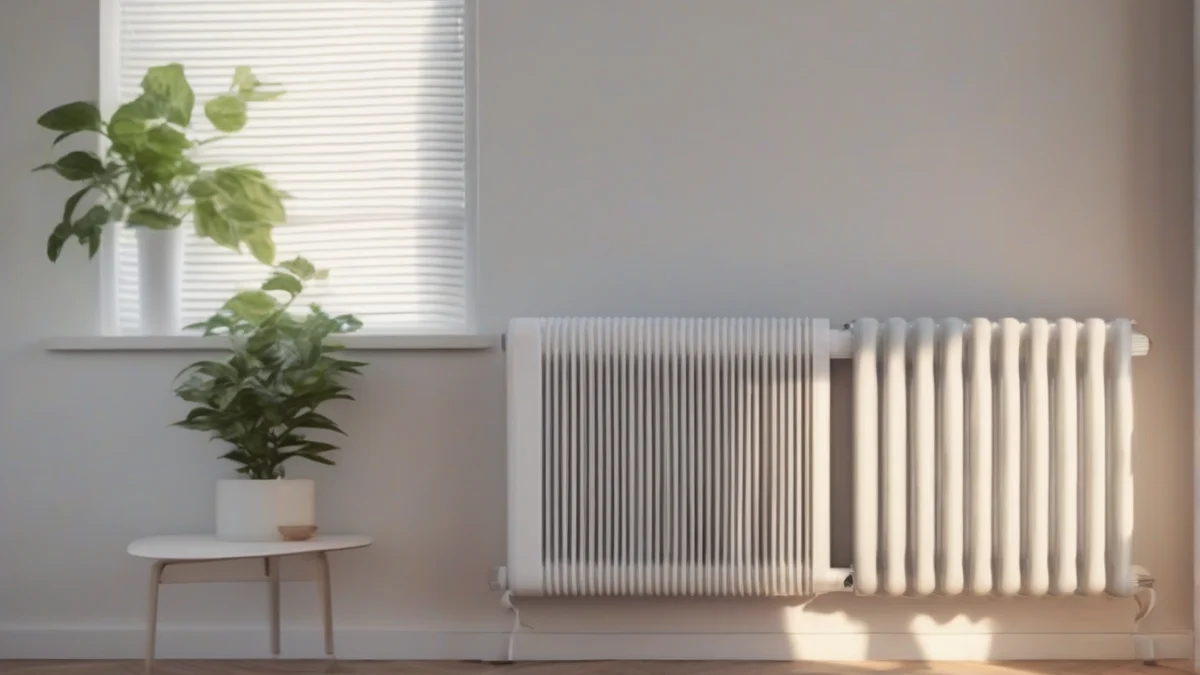
Heating happens in two stages. First, the element heats the oil, and the hot oil spreads that energy through the metal fins. Then the fins warm the room in two ways at once: they radiate infrared heat to nearby people and surfaces, and they warm the air that touches them, which rises and sets up a gentle convective loop.
Because the oil and metal hold a lot of energy, an oil-filled radiator has strong thermal inertia. After the thermostat clicks off, the fins stay hot and keep releasing heat for a while, so room temperature drifts slowly instead of jumping up and down. That stored heat is why do oil radiators provide constant heat feels close to yes in a slightly drafty room where small leaks would otherwise cause quick chills.
A fan heater works almost the opposite way: it pushes hot air into the room very quickly, but its light metal element cools almost as soon as you switch it off. If a draft cuts across the room, that thin layer of hot air disappears fast, and you notice every cold gust because there is very little stored heat in the heater or the air.
Drafts mainly steal convective heat by constantly replacing warmed air with cold outdoor air, so any air-based warmth has to be reheated again and again. The radiant part from the hot fins still works better near the heater, warming the side of your body and nearby furniture, and many people experience that as a “deeper” comfort; are oil heaters slower to warm up, but once hot they feel more stable, and do oil radiators provide deeper heat penetration explains that effect in more detail.
Oil Radiators, Ceramic Heaters And Infrared Heat In Drafty Rooms
Oil-filled radiators are better than ceramic fan heaters for steady whole-room heat in a drafty space you use for hours; ceramic fans or infrared heaters are better for quick, focused warmth in a leaky corner you sit in for a short time. Compared with ceramic core radiators, thermal oil radiators store more heat and suit all-evening use, while ceramic cores favor on–off, stop–start heating. Infrared heaters can work in cold drafty homes as spot heaters aimed at you, but they will not fully cancel a cold, windy room without some draft-proofing.
A ceramic fan heater uses an electric element bonded to a ceramic plate, with a fan pushing air across it. That gives fast hot air and a strong sense of warmth in front of the outlet, but drafts strip that heat away quickly and you cool as soon as it cycles off. In a very drafty room, a ceramic fan is best parked close and pointed right at you for short bursts.
Oil-filled radiators warm a tank of oil and then release that stored heat slowly through their fins. They are the slowest to feel warm but have the largest thermal mass, so they coast along with gentle, even heat and quiet, fanless operation that works well for all-evening use in a closed room. If you are choosing between thermal oil or ceramic radiators for a room you keep in use all night, oil usually feels more stable and less “on–off.”
Ceramic core or ceramic panel radiators sit between these two. They use a heavier ceramic block or panel to store some heat, without liquid oil, so they warm up quicker than oil but still release heat after the power shuts off. That makes them a good fit for rooms you heat in chunks, such as a home office you use for one or two hours, then leave.
| Heater type | Warm-up feel in a draft | Heat storage | Best use in drafty rooms |
|---|---|---|---|
| Ceramic fan | Very fast, blows hot air that cools quickly | Low | Short, leaky use where you sit right in the airstream |
| Ceramic core / panel | Medium, warms in minutes and holds some heat | Medium | Rooms used on and off for 1–3 hours |
| Oil-filled radiator | Slow, needs time but then stays warm | High | Closed rooms used for many hours as background heat |
| Infrared (glowing/panel) | Fast on skin and surfaces it “sees” | Low–medium (panel types store a bit) | Spot heating aimed at seating areas in cold rooms |
At the same wattage, for example 1,500 W, all these plug-in electric heaters use electricity at the same rate while they are running. Any “efficiency” difference in real life comes from comfort, how quickly they warm what you care about, and how often their thermostat cycles off instead of running flat out.
In a very drafty living room, a ceramic fan or infrared heater will usually feel warmer on your skin, faster, if it is pointed at you. An oil-filled radiator in that same room may run constantly just to hold the chill back, but it shines once you have reduced the worst drafts and can shut doors so its stored heat has a chance to build up best heaters for long cold hallways.
Infrared heaters use glowing elements or heated panels that mainly radiate heat directly to people and surfaces rather than just warming the air. Moving air still makes you feel cooler, but a well-aimed infrared unit can keep your front warm even if the room air is a bit cold and drafty does infrared heater work in winter.
Draft-Proofing And Reflective Panels Behind Radiators
Lagging or insulation behind a radiator in a home usually means a reflective foil or thin insulated board on the wall, not anything wrapped around the heater itself. That kind of insulation for behind radiators in home can cut heat lost into a cold external wall and nudge more warmth back into the room, but it does nothing to stop cold air leaking in through gaps.
So does lagging at back of radiator work? Yes, it can help, especially on uninsulated solid external walls, by reducing heat soak into the masonry and reflecting some radiant heat. The gain is modest on already insulated walls, and it will not fix a whistling window or a draughty door that keeps flushing the room with outdoor air radiator heat loss protection.
Radiator reflectors work best when you mount a purpose-made foil or foil-faced board flat to the wall behind the heater. For a fixed wall radiator, cut the panel slightly smaller than the radiator and stick it to the wall so air can still move around the back and top. For a portable oil-filled radiator parked near a cold exterior wall, you can stand a reflector panel or board against the wall behind it, leaving a clear gap so air flows freely around both the heater and the panel.
Simple draft-proofing often gives a bigger comfort jump than any reflector. Self-adhesive foam strips around window and door frames cut obvious gaps quickly. Door sweeps or brush strips at the bottom of doors stop icy air pouring along the floor. Draft stoppers or rolled towels at internal thresholds help a heater maintain a warm zone in the room you are using convection heater vs oil heater.
Heavy curtains or thermal liners over leaky windows reduce cold downdrafts so the convective loop from an oil radiator does not get washed away constantly. Temporary clear window film kits in winter add another still air layer, which both cuts drafts and reduces the “cold wall” effect from glass. Those changes mean your heater cycles off more often instead of running flat out all night do oil heatersreduce room humidity.
- Find the main leaksOn a cold or windy day, run your hand around window frames, door edges, floorboard gaps and outlets on external walls; feel for moving cold air and note the worst spots.
- Seal around doors and windowsFit self-adhesive foam or rubber weatherstripping to frames, add door sweeps, and use draft stoppers on internal doors to the hallway or stairwell.
- Add radiator reflectors on external wallsWhere a radiator or oil-filled unit sits against an outside wall, attach a reflective foil or thin insulated board flat to the wall behind it, leaving air gaps so heat can still circulate.
- Then size and place the heaterOnce obvious drafts are reduced, choose a heater with enough wattage for the room size and place it away from curtains and furniture, aimed or positioned so its warm air or radiant output reaches your seating area oil heater use in converted outbuildings.
Sizing And Running Costs For Oil Radiators In Drafty Rooms
Sizing an oil-filled radiator for a drafty room starts with watts per square foot. As a rule of thumb, a reasonably insulated room can use about 10 W of heater power per square foot. In an older, clearly drafty room with single-glazed windows or obvious air leaks, budget closer to 15 W per square foot if you expect the heater to keep up on cold nights.

On that basis, a standard 1,500 W radiator is a good match for roughly 150 sq ft in a decent, closable room. The same 1,500 W in a quite drafty room, or one with big single-glazed windows, is closer to a good match for about 100 sq ft. High ceilings, open staircases and several exterior walls all push heat loss up, so the real requirement can be higher than these simple numbers.
| Room size | Draft level | Approx. heater wattage |
|---|---|---|
| 80 sq ft small bedroom | Moderate drafts | 800–1,200 W |
| 100 sq ft small living room | Heavy drafts / big old windows | 1,500 W |
| 150 sq ft bedroom or office | Decent insulation, door closed | 1,500 W |
| 200 sq ft living room | Drafty but can be closed off | 2,000–3,000 W (usually more than one circuit) |
Running-cost math is straightforward: watts ÷ 1,000 × hours of use × electricity price per kWh. For example, a 1,500 W heater used 8 hours a day at an electricity rate of $0.17 per kWh will cost 1,500 ÷ 1,000 × 8 × $0.17 per day. Multiply that by how many days you use it in a month for a simple bill estimate.
| Appliance | Watts | Per hour | Per day (8 h) | Per month (30 days) |
|---|---|---|---|---|
| 1,500 W oil-filled radiator | 1,500 W | 26¢ | $2.04 | $61.20 |
| 1,500 W ceramic fan heater | 1,500 W | 26¢ | $2.04 | $61.20 |
| 600 W oil radiator setting | 600 W | 10¢ | 82¢ | $24.48 |
A 1,500 W oil-filled radiator and a 1,500 W ceramic fan heater cost the same per hour when both run flat out, because they draw the same power. A 600 W setting costs only about 40% as much per hour as 1,500 W, because cost scales directly with watts in that formula. The difference between heater types is how they deliver and hold heat, not what the meter charges for each watt.
In a reasonably sealed room, the thermostat on an oil radiator lets the element cycle on and off, so the average power draw can be well below the nameplate rating. In a very leaky space the element may stay near 100% duty cycle just to tread water, which is when bills climb and comfort still feels marginal. If long heater use makes the air feel dry and you wonder do oil heaters actually reduce room humidity, do oil heatersreduce room humidity looks at the moisture side of running radiators for hours.
Safety And Practical Limits Of Oil Radiators In Drafty Homes
Safe use of oil-filled radiators in a drafty home starts with the unit itself and how you place it. Choose a model with a UL, ETL or CSA listing, plus tip-over and overheat protection. Keep at least 3 feet of clearance around the heater from curtains, bedding, furniture, cords and anything else that can scorch or burn, and park it on a flat, stable floor.
Overnight use needs extra care. Many oil radiators are marketed for bedrooms, but you should only run one while sleeping if the manual says continuous use is allowed, the cord and plug are in good condition, and clearances are maintained on all sides. Keep it where bedding cannot fall onto it, and where children or pets are unlikely to knock it or trap it behind something.
Older, drafty houses often have tired wiring, so watch for signs that the heater or circuit is under stress. A warm or discolored outlet plate, a plug that feels hot to the touch, buzzing sounds, a burning smell, flickering lights on the same circuit, or breakers that trip whenever the heater runs are all warning signs. Any damage to the cord, plug, or an oil leak from the heater body means it is time to replace the unit, not patch it.
- Stop using a problem heaterIf the radiator repeatedly trips a breaker, cuts out, or shows any of the warning signs above, turn it off, unplug it and let it cool. Do not keep resetting the breaker or moving the heater to different outlets to “see if it works”.
- Check the circuit, not just the heaterHave an electrician inspect outlets and the circuit if they run warm, trip often, or are very old. The fix may be upgrading wiring or adding a dedicated circuit, not buying a heavier-duty heater.
- Use the right tool for cold areasPortable oil radiators are not a safe fix for uninsulated attics, crawlspaces, garages or frozen plumbing. Those problems call for air sealing, insulation and purpose-designed freeze protection or a proper heating system, not a space heater running unattended in a hidden corner.
Drafty hallways and large, open circulation spaces are especially hard for any portable radiator to heat because the warm air slips away; a wall-mounted panel or baseboard along the length is usually a better fit than a single wheeled unit. For that kind of space, look at options in best heaters for long cold hallways instead of trying to push one oil-filled radiator beyond what it can safely cover.
In a very drafty house, think of an oil radiator as a safe, steady way to make one small room livable while you work on upgrades. Whole-house comfort in that situation usually only comes after sealing air leaks, adding insulation and restoring or installing a proper fixed heating system.
Frequently Asked Questions
Do infrared heaters work well in cold, drafty homes?
Does lagging or foil behind a radiator actually work?
Which is better for a drafty room: a ceramic fan heater or an oil-filled radiator?
Are oil-filled radiators or ceramic core radiators more efficient?
What insulation should I put behind radiators in my home?
Are thermal oil radiators more efficient than ceramic radiators?
Readers in this position usually ask about ensuring even room temperatures as well.
We cover efficient heating for modern homes in its own guide.
