Cold bedrooms can make winter nights unbearable. Finding a heater that balances warmth, cost, and noise is crucial for a good night’s sleep.
Heater Comparison at a Glance
| Product | Best for | Heat Output | Noise Level | Safety Features | Size | Price |
|---|---|---|---|---|---|---|
| DREO Portable Electric Space Heater 1500W | Best Overall | 1500W | 34dB | Tilt detection, overheat, flame retardant | — | Check price |
| KEGIAN Tower Ceramic Space Heater 1500W | Best for Large Rooms | 1500W | 30dB | ETL & UL certified, overheat, tip-over, child lock | — | Check price |
| R.W.FLAME Mini Portable Ceramic Heater | Best Budget | — | — | Thermostat, remote, timer | — | Check price |
| ASNUG Mini PTC Ceramic Space Heater | Quietest | — | — | Tip-over, overheat protection, flame retardant | 6.1 x 5.75 x 2.87 in | Check price |
| R.W.FLAME 1500W Ceramic Heater for Office | Best for Office Use | 1500W | — | ETL certified, overheat, tip-over | — | Check price |



Top Picks for Heating Cold UK Bedrooms
DREO Portable Electric Space Heater 1500W
- Heat Output1500W
- Noise Level34dB
- Safety FeaturesTilt detection, overheat protection, V0 flame retardant
- Timer12 hours
- Modes5 including Power heat, ECO, Fan only
- Powerful 1500W heat with wide coverage
- Very quiet operation at 34dB
- Precise thermostat with 1°F increments
- Multiple safety features including tilt detection and flame retardant materials
- Remote control and timer may be more than needed for very small rooms
- Gold color may not suit all decor
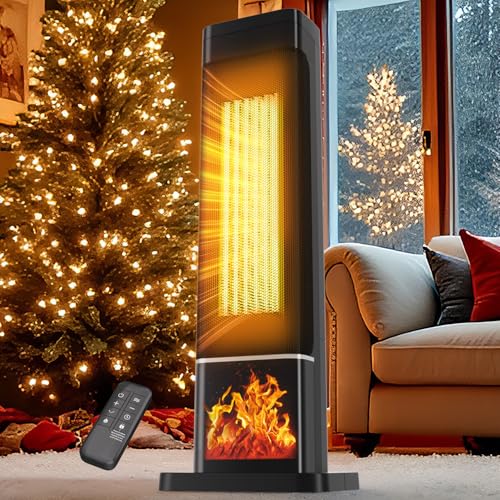
KEGIAN Tower Ceramic Space Heater 1500W
- Heat Output1500W
- Noise Level30dB
- Safety FeaturesETL & UL certified, overheat and tip-over protection, child
- Timer24 hours
- Oscillation120°
- Fast heating within 1 second
- Oscillates 120° for wide heat spread
- Smart ECO thermostat for energy savings
- Quiet at 30dB with remote and 24-hour timer
- 3D flame effect for atmosphere
- Tall tower design may not fit small rooms or desks
- Flame effect may be distracting to some
R.W.FLAME Mini Portable Ceramic Heater
- Heat Output—
- Noise Level—
- Safety FeaturesThermostat, remote, timer
- Timer24 hours
- ModesECO mode
- Compact and portable
- Thermostat and remote control
- 24-hour timer and ECO mode
- Quiet operation
- Lower heat output due to small size
- Less coverage than larger heaters
ASNUG Mini PTC Ceramic Space Heater
- Heat Output—
- Noise Level—
- Safety FeaturesTip-over and overheat protection, flame-retardant materials
- Size6.1 x 5.75 x 2.87 inches
- Very quiet operation
- Rapid heat in 2 seconds
- Tip-over and overheat protection
- Compact and portable, durable design
- Simple one-touch control with LED light
- Limited heat output due to small size
- No thermostat or remote control
R.W.FLAME 1500W Ceramic Heater for Office
- Heat Output1500W
- Noise Level—
- Safety FeaturesETL certified, overheat and tip-over protection
- ThermostatYes
- Powerful 1500W ceramic heat
- Quiet operation
- ETL certified for safety
- Overheat and tip-over protection
- Thermostat control
- Fewer advanced features like timer or remote
- No oscillation
How to Choose the Best Heater for Your Bedroom
Start with the size of your bedroom. A heater rated for 1,000 to 1,500 watts typically covers 100 to 150 square feet well. For a one-bedroom apartment, a 1,500-watt heater usually delivers enough warmth without overloading a standard UK outlet circuit.
Look for heaters with safety certifications like UL, ETL, or the British Standard BS EN 60335-2-30. These ensure the model meets safety requirements for overnight use. Choose heaters with tip-over and overheat protection to reduce fire risk.
Consider the heater’s thermostat and timer functions. A smart thermostat maintains a steady temperature and saves energy by cycling the heater on and off as needed. A timer lets you program the heater to switch off automatically, which is useful if you want to heat the room before sleeping and then turn it off.
| Feature | Why It Matters |
|---|---|
| Wattage (1000-1500 W) | Heats typical bedrooms up to 150 sq ft efficiently |
| Safety Certifications | Certified models reduce fire and electrical hazards |
| Thermostat and Timer | Maintain steady warmth and save on energy costs |
| Tip-over and Overheat Protection | Prevent accidents when unattended |
Understanding Heater Types and Their Benefits
Oil-filled heaters use heated oil to radiate warmth steadily. They keep heating after switching off, ideal for overnight use. Fan heaters blow warm air fast but cool quickly once off, good for quick bursts.
Convector heaters warm air that rises naturally, suitable for whole-room heating. Radiant heaters, like infrared, warm objects and people directly, best for spot heating near the unit.
| Heater Type | Advantages | Disadvantages | Best Use |
|---|---|---|---|
| Oil-filled | Steady heat, quiet, retains warmth | Slow to heat, heavier | Bedrooms for all-night use |
| Fan heater | Quick heat, lightweight | Noisy, cools fast | Short-term heating, bathrooms |
| Convector | Even room heat, silent | Needs time to warm room | Whole bedroom heating |
| Infrared | Direct heat, energy efficient | Limited range, no air warming | Spot heating near bed |
- Choose oil-filled for overnight warmthThey maintain heat after power-off, avoiding cold spikes at night.
- Use fan heaters for quick heat burstsIdeal if you enter a cold room briefly and want immediate warmth.
- Pick convector heaters for steady room heatThey warm the air to heat the entire bedroom evenly.
- Use infrared heaters for targeted warmthPlace near you to warm directly without heating the whole room.
Calculating Running Costs for Electric Heaters
Running cost depends on wattage, usage time, and electricity price. Calculate by multiplying heater watts ÷ 1,000 × hours used × cost per kWh. For example, a 1,500 W heater running 8 hours daily at $0.17/kWh costs 1.5 × 8 × 0.17 = $2.04 per day.
Oil-filled and convection heaters use electricity steadily but are efficient for long use. Fan heaters consume similar power but heat less steadily, potentially costing more if used longer.
| Appliance | Watts | Per hour | Per day (8 h) | Per month (30 days) |
|---|---|---|---|---|
| 1,500 W space heater | 1,500 W | 26¢ | $2.04 | $61.20 |
| Heated blanket | 100 W | 1.7¢ | 14¢ | $4.08 |
For small student bedrooms, electric heaters with adjustable thermostats and timers are healthiest to avoid overheating and save energy. Oil-filled heaters suit rooms without radiators for overnight warmth without dry air.
Heaters without radiators benefit from convection or oil-filled models that warm air gradually and maintain temperature. Fan heaters can be noisy and less comfortable for long use.
Check heater wattage and use timers or thermostats to avoid excessive running costs. A 1,500 W heater is the maximum plug-in size for UK bedrooms to avoid tripping breakers.
For detailed choices by room type, see our guides on best bedroom heaters for rooms without radiators and best heaters for a cold student bedroom.
Safety Considerations for Bedroom Heaters
The safest standalone heaters for overnight use in a UK bedroom are oil-filled radiators and certified ceramic heaters with tip-over and overheat protection. These models maintain warmth without exposed heating elements, reducing fire risk. The DREO Space Heater is a prime example, offering a smart thermostat and safety cutoffs that make it suitable for overnight use in cold bedrooms.
- Check Safety CertificationsLook for heaters with UL, ETL, or CSA listings. These certifications mean the heater meets strict safety standards.
- Use Built-in Safety FeaturesChoose heaters with tip-over switches and automatic overheat shut-off. These features turn the heater off if it falls or gets too hot.
- Place Heater ProperlyKeep the heater at least three feet away from curtains, bedding, and furniture. Avoid placing it under shelves or near water sources.
- Maintain Your HeaterClean dust from vents and fans regularly. Dust buildup can cause overheating or reduce efficiency.
- Follow Manufacturer GuidelinesNever leave a heater running unattended unless the manual explicitly says it is safe to do so overnight. Turn off the heater when leaving the room or going to sleep if unsure.
Frequently Asked Questions
What is the best heater for a one bedroom?
How do I choose the right heater for my bedroom?
Are oil-filled radiators safe to use overnight?
What heater type is most energy-efficient?
How can I reduce heating costs in my bedroom?
What safety features should I look for in a heater?
There is more on choosing between ceramic and fan heaters in a guide of its own.
There is more on fast warming options for living rooms in a guide of its own.