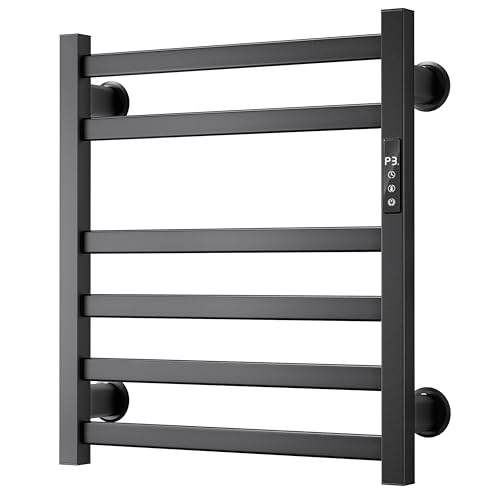
Heated towel racks add a touch of luxury to any bathroom, transforming the mundane task of drying towels into a spa-like experience. With various styles and features available, selecting the right one can elevate your daily routine.
Comparison of Top Heated Towel Racks
| Product | Best for | Heating Area | Temperature Range | Timer Options | Material | Price |
|---|---|---|---|---|---|---|
| Chomolhari 6-Bar Stainless Steel Heated Towel Rack | Best Overall | Larger heating area | 115°F to 155°F | 1 to 9 hours, continuous mode | 201 Stainless Steel | Check price |
| BLARALA 10-Bar Stainless Steel Heated Towel Rack | Best for Fast Heating | Large 10-bar design | 100°F to 160°F | 1 to 8 hours | Stainless Steel | Check price |
| ART&METALOS Luxury Aluminum Heated Towel Rack | Best for Luxury Feel | — | 99°F to 150°F | 1 to 24 hours, continuous with auto shut-off | 6063 Aluminum | Check price |
| Alltiett 5-Bar Stainless Steel Heated Towel Rack | Best for Stylish Simplicity | — | 9 levels (exact °F not specified) | Up to 24 hours | Stainless Steel | Check price |
| Colliford 8-Bar Stainless Steel Heated Towel Rack | Best for Energy Saving | — | 122°F to 131°F | — | 304 Stainless Steel | Check price |


Best Heated Towel Racks for Luxurious Comfort
Chomolhari 6-Bar Stainless Steel Heated Towel Rack
- Heating AreaLarger heating area
- Temperature Range115°F to 155°F
- Timer Options1 to 9 hours, continuous mode
- Material201 Stainless Steel
- Waterproof RatingIPV4
- Rust-resistant stainless steel and waterproof for bathroom use
- Customizable timer and temperature controls with LED display
- Fast drying prevents towel odors and mildew
- Limited to 6 bars, smaller drying area than some models
- Black finish may show fingerprints
BLARALA 10-Bar Stainless Steel Heated Towel Rack
- Heating AreaLarge 10-bar design
- Temperature Range100°F to 160°F
- Timer Options1 to 8 hours
- MaterialStainless Steel
- Waterproof RatingIPX4
- Heats towels quickly within minutes
- Adjustable temperature and timer for convenience
- UL certified with overheat protection and waterproofing
- Maximum timer limited to 8 hours
- Brushed silver finish may show water spots
ART&METALOS Luxury Aluminum Heated Towel Rack
- Heating Area—
- Temperature Range99°F to 150°F
- Timer Options1 to 24 hours, continuous with auto shut-off
- Material6063 Aluminum
- Waterproof RatingIPX4
- Rapid heating to 150°F in minutes
- Wide timer range up to 24 hours with auto shut-off
- Durable aluminum with IPX4 waterproofing and anti-scald design
- Aluminum may be less rust-resistant than stainless steel
- Detachable control panel adds installation complexity
Alltiett 5-Bar Stainless Steel Heated Towel Rack
- Heating Area—
- Temperature Range9 levels (exact °F not specified)
- Timer OptionsUp to 24 hours
- MaterialStainless Steel
- Voltage110-120 V
- Quick preheat and wide timer range
- LED display with easy temperature and time adjustments
- Two wiring options for installation flexibility
- Smaller 5-bar size limits drying space
- Gold finish may not suit all décors
Colliford 8-Bar Stainless Steel Heated Towel Rack
- Heating Area—
- Temperature Range122°F to 131°F
- Timer Options—
- Material304 Stainless Steel
- Cord Length60 inches
- Rust and corrosion-resistant 304 stainless steel
- Energy-saving with low power consumption
- Overheat protection for safety
- Heating temperature lower than some competitors
- Takes up to 20 minutes to reach optimal heat
How to Choose the Right Heated Towel Rack
Start by thinking about how many towels you want to warm at once. A rack with more bars or larger surface area handles several towels or bigger bath sheets.
Look for models with adjustable temperature settings. You can set a lower heat for delicate towels or a higher setting to dry thick or damp towels faster.
Decide between wall-mounted and freestanding racks. Wall-mounted racks save floor space and keep towels within easy reach, but need a nearby power outlet and secure installation. Freestanding racks offer flexibility in placement but occupy floor space.
Check for safety features like automatic shut-off timers and waterproof or splash-resistant ratings. These protect against overheating and water damage in humid bathrooms.
| Feature | Why It Matters |
|---|---|
| Heating Area | Enough bars or surface to hold your towels without crowding |
| Temperature Settings | Adjust heat for faster drying or energy savings |
| Installation Type | Wall-mounted saves space; freestanding offers mobility |
| Safety Features | Auto shut-off and waterproofing prevent hazards |
Sizing and Heat Output of Heated Towel Racks
Choose a rack size that fits your bathroom space and matches your towel dimensions. A rack too small won’t dry towels properly; too large may crowd the room.
Heated towel racks typically produce between 50 and 150 watts. Higher wattage means faster drying and warmer towels but uses more electricity.
Consider how much heat you need. For daily towel warming, 60 to 100 watts suffices. For quick drying after showers, choose racks with 100 watts or more.
| Appliance | Watts | Per hour | Per day (3 h) | Per month (30 days) |
|---|---|---|---|---|
| 60 W towel rack | 60 W | 0.8¢ | 2.3¢ | 70¢ |
| 100 W towel rack | 100 W | 1.3¢ | 3.9¢ | $1.17 |
Safety and Certification Standards for Towel Warmers
Heated towel racks are safe when they meet recognized safety standards and are installed properly. Look for units with UL or ETL certification. These third-party marks mean the product has passed electrical safety tests and meets industry standards.
Bathrooms are moist environments, so waterproofing is essential. Choose a towel warmer with at least an IPX4 rating. This rating ensures protection against water splashes from any direction, reducing the risk of electrical hazards.
Overheating protection is a critical safety feature. It prevents the rack from getting too hot and causing burns or fires. Most quality models include built-in thermal cutoffs or thermostats that automatically shut the heating element off if temperatures rise beyond safe limits.
Installation must follow the manufacturer’s guidelines precisely. Many heated towel racks require hardwiring to a dedicated circuit or installation by a licensed electrician. Improper wiring or mounting can cause electrical faults or instability.
| Safety Feature | What It Does |
|---|---|
| UL or ETL Certification | Confirms electrical safety and quality testing |
| IPX4 Waterproof Rating | Protects against water splashes in bathrooms |
| Overheating Protection | Shuts off heat if temperature gets too high |
| Proper Installation | Ensures secure mounting and correct electrical connection |
Common Mistakes When Buying Heated Towel Racks
A frequent mistake is ignoring the installation type. Some racks plug into a standard outlet, but many require hardwiring. Confirm your bathroom’s wiring and whether you need professional installation before buying.
Energy consumption varies by model and size. A typical towel warmer runs around 60 to 150 watts. Calculate running costs by multiplying watts by hours used and your electricity rate. This helps avoid surprises on your utility bill.
Maintenance is often overlooked. Choose a model that is easy to clean and has durable finishes to prevent rust. Regularly inspect the power cord and connections for wear or damage to extend the rack’s lifespan.
These points help you avoid common pitfalls and get the most from your heated towel rack. For more on choosing the right model, see our detailed buying guide.
Heated Gloves That Help Raynaud’s Symptoms includes advice on electric heating safety that applies to towel racks as well.
Frequently Asked Questions
What is the best heated towel rack for small bathrooms?
How long does it take for a heated towel rack to warm towels?
Can heated towel racks be used for drying clothes?
How much electricity do heated towel racks use?
Are heated towel racks safe to leave on overnight?
What features should I look for in a heated towel rack?
If that sounds like your room, read up on keeping dorms warm without heaters next.
It helps to understand choosing a stylish fireplace before spending anything. For the detail, see our notes on efficient heating for showers.