
Cold weather can make your car’s cabin uncomfortable, and waiting for the engine to warm up is not always an option. Auxiliary car heaters provide an efficient solution to heat the cabin quickly and defrost windows, ensuring a safe and comfortable driving experience.
Auxiliary Car Heater Comparison
| Product | Best for | BTU Output | Power Source | Size | Installation Type | Price |
|---|---|---|---|---|---|---|
| XuSha 8000 BTU Diesel Auxiliary Car Heater | Best Overall | 8000 BTU | Diesel, vehicle water system | Small, low profile | Requires water hose fitting | Check price |
| QEPJO 12V Portable Car Heater & Defroster | Best Plug-In | — | 12V DC, cigarette lighter | Compact, portable | Plug-in, no wiring | Check price |
| Iwhabot 12V Car Immersion Water Heater 2-Pack | Best for Water Heating | — | 12V DC, cigarette lighter | 5 inches | Plug-in immersion | Check price |
| AutoE 12V Instant Immersion Electric Water Heater | Best Portable Water Heater | — | 12V DC, cigarette lighter | Compact | Plug-in immersion | Check price |
| AHUAWA 10,000 BTU Indoor Kerosene Heater | Best Fuel Heater | 10,000 BTU | Kerosene fuel | Compact for indoor use | Portable, freestanding | Check price |


Top Auxiliary Car Heaters for Winter Comfort
XuSha 8000 BTU Diesel Auxiliary Car Heater
- BTU Output8000 BTU
- Power SourceDiesel, vehicle water system
- Installation TypeRequires fitting to water hose
- SizeSmall, low profile
- High 8000 BTU heat output
- Low noise and energy-saving
- Simple installation using vehicle water system
- Does not affect vehicle power
- Requires a 5/8″ water hose not included
- Installation needs some mechanical skill
QEPJO 12V Portable Car Heater & Defroster
- BTU Output—
- Power Source12V DC, cigarette lighter
- Installation TypePlug-in, no wiring
- SizeCompact, portable
- Plugs into 12V cigarette lighter socket
- 360° adjustable airflow outlet
- Dual heating and cooling functions
- Fast PTC heating element
- Lower heat output than water-based heaters
- Plastic body may feel less durable
Iwhabot 12V Car Immersion Water Heater 2-Pack
- BTU Output—
- Power Source12V DC, cigarette lighter
- Installation TypePlug-in immersion
- Size5 inches
- Quick water heating for drinks
- Compact and portable 5-inch size
- Includes two immersion heaters
- Durable thick power cord
- Not suitable for heating vehicle cabin
- Only for 12V systems, not 24V
AutoE 12V Instant Immersion Electric Water Heater
- BTU Output—
- Power Source12V DC, cigarette lighter
- Installation TypePlug-in immersion
- SizeCompact
- Portable and compact
- Instant water heating
- Easy to use with 12V socket
- No cabin heating function
- Not suitable for 24V vehicles
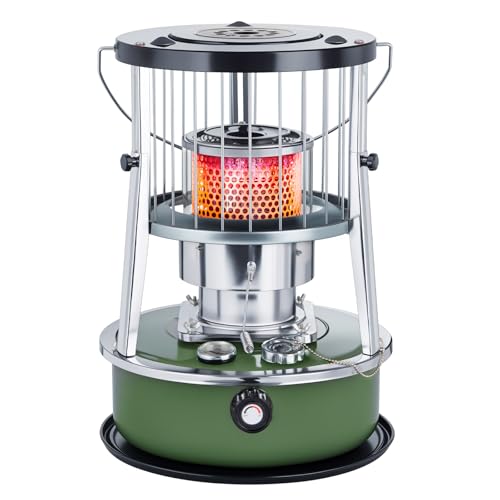
AHUAWA 10,000 BTU Indoor Kerosene Heater
- BTU Output10,000 BTU
- Power SourceKerosene fuel
- Installation TypePortable, freestanding
- SizeCompact for indoor use
- High heat output of 10,000 BTU
- Runs without electricity for up to 20 hours
- Safety features include anti-tip base
- Can boil water or cook on flat top
- Requires kerosene fuel and ventilation
- Not designed for vehicle cabin use
How to Choose an Auxiliary Car Heater
An auxiliary heater for a car boosts cabin warmth when the main system can’t keep up. Start by checking the BTU output, which measures heat power. Higher BTU means faster and stronger heating but usually higher power draw.
Most auxiliary heaters run on 12-volt power from your vehicle’s electrical system. Confirm your car supports the heater’s voltage and current needs to avoid draining the battery or blowing fuses.
Size matters for installation. Compact models fit tight spaces and plug into a cigarette lighter, while larger units may require mounting and wiring. Installation complexity varies from plug-and-play to semi-permanent setups.
Noise level is a key comfort factor. Some auxiliary heaters use fans that produce noticeable sound. If you want quiet operation, look for models with low-decibel ratings or fanless designs.
Some auxiliary heating car models double as coolers or defrosters. Versatility can be useful for year-round use, but it may add size or cost. Decide if you want a dedicated heater or a multi-function unit.
| Model Type | BTU Output | Size (inches) | Installation Ease |
|---|---|---|---|
| Plug-in Fan Heater | Up to 8,000 BTU | 6 x 4 x 3 | Simple plug-in |
| Mounted Water Heater | 5,000 to 10,000 BTU | 10 x 8 x 5 | Requires wiring |
| Immersion Heater | N/A (water heat) | Small cylinder | Easy plug-in |
Sizing and Heat Output Considerations
Choosing the right auxiliary heater for car use depends on matching its BTU output to your vehicle’s cabin size. Small cars need less heat, while trucks and SUVs require more BTUs to warm the larger volume.
A heater rated around 5,000 to 8,000 BTU suits compact and mid-size vehicles. Larger cabins above 150 cubic feet may need 8,000 to 10,000 BTU units for effective heating.
BTU output tells how much heat the heater puts out per hour. For example, 8,000 BTU equals roughly 2,340 watts. Knowing this helps estimate power consumption and running costs.
Heating time depends on the temperature difference between outside and inside the car. A higher BTU heater will raise cabin temperature faster, reducing the wait time in cold weather.
| Appliance | Watts | Per hour | Per day (1 h) | Per month (30 days) |
|---|---|---|---|---|
| 8,000 BTU car heater | 2,340 W | 40¢ | 40¢ | $11.93 |
Safety and Certification for Auxiliary Heaters
An auxiliary car heater boosts cabin warmth but must meet strict safety standards to avoid hazards. Look for UL or ETL certification, which proves the heater passed independent tests for electrical safety and fire resistance. These certifications reduce risks in the confined space of a vehicle.
Essential safety features include overheat protection and auto shut-off. Overheat protection stops the heater if it gets too hot, preventing fires. Auto shut-off turns the unit off if it tips over or runs too long, which is critical when using a heater inside a car.
Proper installation is key to safe operation. The heater’s power cord should plug directly into the vehicle’s 12-volt outlet or a dedicated fuse box circuit. Avoid loose or dangling cords that could get caught in pedals or steering. The cord should not be flush against or pinched by metal parts to prevent wear or shorts.
- Check certification labelsConfirm your heater has UL or ETL marks on the label or packaging.
- Use the right power sourcePlug the heater into the 12-volt car outlet or a circuit designed for the load.
- Position safelyPlace the heater on a stable, flat surface with at least 3 feet clearance from flammable materials.
- Inspect cords regularlyLook for frays or damage and never use a damaged heater cord.
- Follow manufacturer instructionsInstall and operate the heater exactly as the manual directs to avoid electrical issues.
Common Misconceptions About Auxiliary Car Heaters
Auxiliary heating in a car can work independently of the engine. Many electric auxiliary heaters plug into the vehicle’s 12-volt system and do not require the engine to run. This lets you warm the cabin during short stops or before driving.
Not all auxiliary car heaters need extensive installation. Portable plug-in models like the XuSha 8000 BTU heater work right out of the box with a simple connection to the cigarette lighter socket. This avoids complicated wiring or permanent mounting.
Auxiliary heaters have limits. They add warmth quickly but cannot replace a full vehicle heating system. Their effective heating area is smaller—usually under 150 square feet—and they use limited power, typically 150 to 300 watts. Expect them to supplement, not substitute, your main heater.
| Heater Type | Installation | Power Source | Heating Capacity | Best Use |
|---|---|---|---|---|
| Portable Electric | Plug and play | 12-volt outlet | Up to 8,000 BTU | Quick cabin warm-up |
| Immersion Water Heater | Simple plug-in | 12-volt outlet | Low, localized heat | Defrosting windshield |
| Kerosene Heater | Requires ventilation | Fuel tank | Up to 10,000 BTU | Extended heating off-grid |
Frequently Asked Questions
What is the best auxiliary heater for my car?
How do I install an auxiliary car heater?
Are auxiliary heaters safe to use in my vehicle?
How much does it cost to run an auxiliary car heater?
Can I use an auxiliary heater while my car is off?
What are the benefits of a 12V car heater?
There is more on choosing solar-compatible heaters in a guide of its own.
Before you buy anything, it is worth looking at best heated wheel options. It helps to understand top radiant garage heaters before spending anything.
