
Most space heaters blow air over a hot element to spread warmth quickly, but that fan motor and moving air create a steady hum that disrupts sleep, focus, and quiet spaces. The noise comes from the motor itself, the spinning blades, and turbulence as air passes through the grille.
A silent heater eliminates the fan entirely. It transfers heat through radiation—electromagnetic waves that warm objects and people directly—or through natural convection, where warm air rises on its own without mechanical help. Three types do this reliably: oil-filled radiators, infrared heaters, and electric panel heaters.
How Silent Heaters Work Without a Fan
Silent heaters eliminate fan noise by transferring heat through radiant infrared waves or natural convection, both of which move warmth without a motor. You’ll hear an occasional thermostat click or faint metal expansion ping as the unit heats, but no steady hum or airflow whoosh.
Radiant heat works like sunlight: an electric element emits infrared waves that travel across the room and warm objects, walls, and skin directly, skipping the air in between. The air heats secondarily as those warmed surfaces release energy. No moving parts means no noise beyond the initial click when the thermostat calls for heat.
Natural convection relies on physics instead of a blower. Cool air enters at the base of the heater, warms against the heating element or oil-filled columns inside, then rises as its density drops. The cycle continues as long as the element stays hot. The process is silent except for the occasional tick of expanding metal when the heater first reaches temperature.
Fan-forced ceramic and coil heaters push air across a hot element with a blower motor, spreading warmth quickly but producing 40 to 60 dB of steady noise—roughly the level of a refrigerator running three feet away. That motor hum is constant whenever the heater runs. Silent models trade that speed for patience: radiant and convection heaters take longer to raise room temperature but stay quiet the entire time.

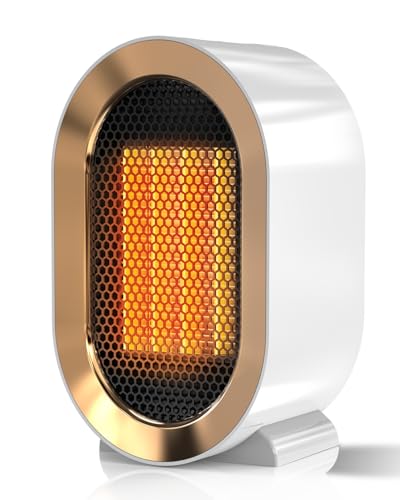

Oil-Filled Radiators: Whole-Room Warmth That Stays Quiet
An oil-filled radiator heats a sealed reservoir of diathermic oil with an electric element, and the hot oil circulates through hollow metal columns without a pump or fan. The columns radiate warmth directly into the room and warm the air around them, which rises naturally and pulls cooler air down to replace it. No motor means no hum.

You’ll wait 15 to 30 minutes for an oil-filled radiator to reach full output, slower than a ceramic fan heater that throws warm air immediately. But the thermal mass keeps radiating heat for 20 to 40 minutes after the thermostat clicks off, so the unit cycles less often and the room stays at a steadier temperature. A convector heater—metal fins that warm passing air without oil—heats and cools faster but doesn’t hold warmth the way oil does. A fan heater moves air quickly but runs constantly to maintain temperature.
During operation an oil-filled radiator is virtually silent. A mechanical thermostat clicks audibly when it cycles on and off; a digital thermostat is completely silent. You may hear an occasional faint ping or creak from metal expansion as the columns heat and cool. That sound is normal, harmless, and far quieter than any fan.
Oil-filled radiators suit bedrooms, home offices, and living rooms where you want consistent background warmth without distraction. They work well for all-day heating because the retained heat reduces how often the element runs. Most models draw 800 to 1,500 W depending on the heat setting; at 1,500 W and $0.17 per kWh, eight hours costs about $2.04.
Infrared radiant heaters warm objects and people directly, like sunlight, rather than heating the air. Oil-filled radiators warm the air and surfaces through a mix of radiation and natural convection, spreading heat more evenly across the room. Both are silent, but infrared feels warmer immediately in the direct beam while oil-filled radiators take longer to raise the whole room’s temperature.
Most oil-filled radiators sold in the US are manufactured overseas; brands like De’Longhi (Italy) and Pelonis (China) dominate the category. No major US manufacturer currently produces electric oil-filled radiators domestically.
- No fan noise during operation, only occasional thermostat clicks
- Thermal mass keeps radiating heat 20 to 40 minutes after shutoff
- Even warmth across the room from natural convection
- Safe to leave running longer than forced-air heaters
- Slow warm-up: 15 to 30 minutes to reach full output
- Heavy—20 to 30 pounds—and awkward to move between rooms
- Surface gets hot enough to burn skin on contact
- Takes up more floor space than a compact ceramic heater
If you need a recommendation, see our picks for the best quiet space heater or read more about silent heaters for even room warmth.
Infrared Heaters: Instant, Targeted Heat With No Moving Parts
Infrared heaters emit electromagnetic waves in the infrared spectrum that warm objects, skin, and clothing directly without heating the air first. The heat travels through space the way sunlight does, landing on whatever sits in its path. Unlike a fan heater, which blows hot air to raise the room temperature, or an oil heater, which warms air through convection as it rises past the fins, an infrared unit works by line of sight. You feel the warmth within seconds because the energy reaches you at the speed of light, not the speed of moving air.
Two element types dominate the market. Quartz or halogen tubes produce a visible orange glow and deliver heat the moment you switch them on, concentrating output in a narrow beam. Carbon fiber elements emit less visible light and distribute heat more evenly across a wider angle, with a gentler warmth that covers more of the room without the spotlight effect. Both are silent when fanless.
| Element Type | Glow | Heat Pattern | Warm-Up |
|---|---|---|---|
| Quartz / Halogen | Bright orange | Narrow, intense beam | Instant |
| Carbon Fiber | Faint red or none | Wide, even spread | Instant |
Fanless infrared models are completely silent. Some manufacturers add a small fan to circulate warm air and raise the room temperature faster—avoid those if silence is the goal. Check the product specs for fan presence before buying, especially in tower or cabinet designs where a blower is sometimes tucked inside.
Heat is directional: you feel warmth only in the heater’s line of sight, so placement matters. Air temperature stays lower, which can feel cooler the moment you step away from the beam or turn your back. That makes infrared ideal for spot heating a chair, desk, workbench, or garage bay where you sit in one place and want instant warmth without waiting for the whole room to catch up. It’s also effective in drafty spaces because radiant heat isn’t diluted by air movement.
The tradeoff is uneven coverage. If you want whole-room warmth or plan to move around, oil-filled or panel heaters will feel more comfortable. If you want focused heat right now and absolute silence, infrared wins.
Electric Panel Heaters: Slim, Permanent, and Whisper-Quiet
An electric panel heater mounts flush to the wall and heats a solid core—aluminum, ceramic, or clay—that radiates warmth evenly across a large, flat surface. The core warms up in 10 to 20 minutes, then spreads heat gently across the room rather than concentrating it in one spot. Unlike a fan heater, which forces air past a hot element and hums constantly, a panel heater operates silently with no moving parts. Unlike a ceramic space heater that relies on a blower, a wall panel uses natural convection: cool air enters at the bottom, warms against the panel, and rises, cycling slowly through the room without noise.
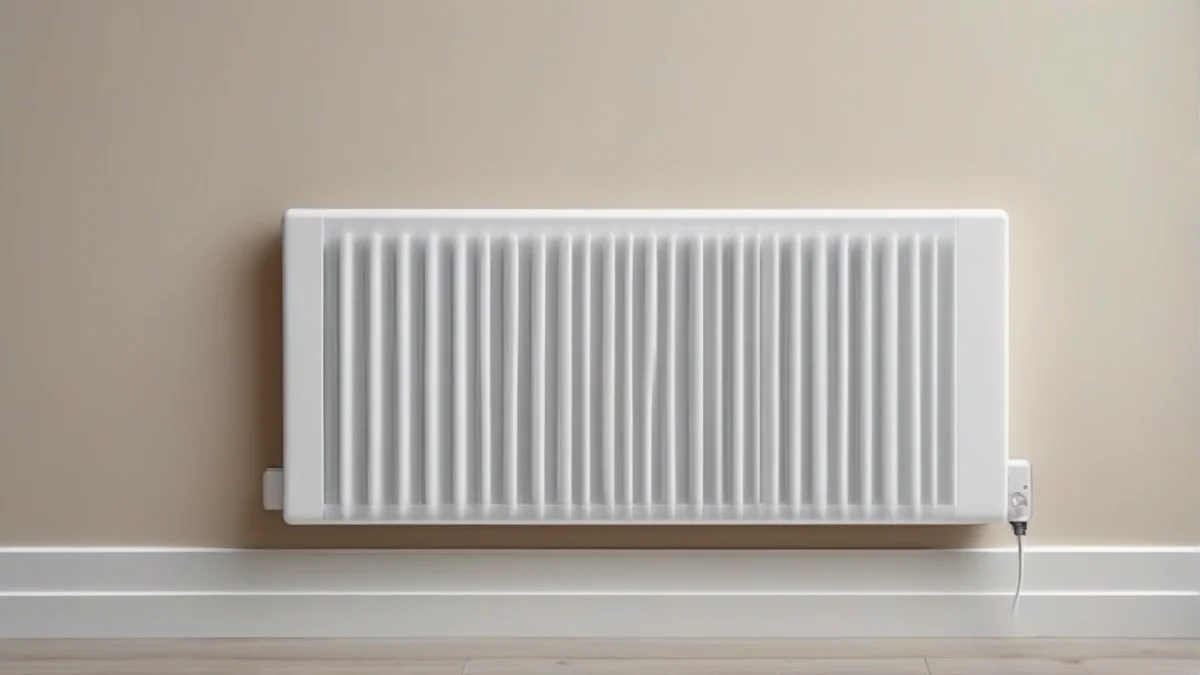
Digital thermostats control most panel heaters and never click the way mechanical dials do. You’ll hear no hum, no tick, no metal ping as the unit cycles. The large surface area keeps the panel itself from getting dangerously hot, so the heater radiates steadily rather than pulsing on and off. A convection heater—whether baseboard or upright—works the same way, heating air without a fan, but a panel heater sits higher on the wall and distributes warmth more evenly across the vertical span of the room. If you want permanent, unobtrusive heating in a hallway, living room, or open-plan space, a panel heater fits where a portable oil-filled radiator would sit in the way.
- Completely silent with no fan, no thermostat click, and no moving parts
- Slim profile and wall mounting free up floor space and keep the unit out of reach
- Even, gentle heat distribution across a wide surface area suits open rooms and hallways
- Warm-up time of 10 to 20 minutes—slower than infrared or ceramic fan heaters
- Installation requires mounting hardware and electrical work; hardwired models need an electrician
- Higher upfront cost than portable heaters, and you can’t move the unit between rooms
Panel heaters work well in spaces where you want steady background warmth without the visual clutter or trip hazard of a portable unit. They suit bedrooms, living rooms, and home offices where quiet operation matters, and they pair well with electric baseboard heaters in larger homes that need whole-room zoning. If you need heat immediately or want to move the heater between rooms, an oil-filled radiator or infrared unit fits the task better.
Choosing Between Oil-Filled, Infrared, and Panel Heaters
Oil-filled radiators heat the whole room evenly through natural convection, but they take 15 to 30 minutes to reach full warmth. The metal columns hold heat for another 20 to 40 minutes after the thermostat shuts off, which makes them efficient for bedrooms or offices where you spend hours. You’ll feel the warmth spread gradually across the space rather than in one direction.
Infrared heaters deliver instant warmth the moment you switch them on, but only to the objects and people directly in front of them. They don’t heat the air, so step out of the beam and you’ll feel the difference within seconds. Choose infrared for a garage, workshop, or a single chair where you sit for long stretches and need heat now, not in twenty minutes.
Panel heaters mount permanently to the wall and heat a solid core that radiates warmth gently across a large, flat surface. They take 10 to 20 minutes to warm up and offer the cleanest look—no floor space lost, no wheels, no visible element. Best for living rooms, hallways, or any space where you want heat without clutter.
| Heater Type | Heat Style | Warm-Up Time | Sound Level | Best For |
|---|---|---|---|---|
| Oil-filled radiator | Convection, whole room | 15–30 minutes | Thermostat click only | Bedrooms, offices |
| Infrared | Radiant, directional | Instant | Silent | Garages, single chairs |
| Panel heater | Radiant, even spread | 10–20 minutes | Silent | Living rooms, hallways |
All three use 800 to 1,500 W at full power. Running cost is identical if you operate them for the same hours at the same wattage—the mechanism changes the warmth pattern, not the electricity bill.
| Appliance | Watts | Per hour | Per day (8 h) | Per month (30 days) |
|---|---|---|---|---|
| Oil-filled radiator, 1,500 W | 1,500 W | 26¢ | $2.04 | $61.20 |
| Infrared heater, 1,500 W | 1,500 W | 26¢ | $2.04 | $61.20 |
Confirm that any portable model has tip-over shutoff and overheat protection, and check for a UL or ETL listing. Keep 3 feet of clearance from furniture, curtains, and bedding regardless of type.
What About Quiet Ceramic Heaters With Fans?
Ceramic heaters use a PTC (positive temperature coefficient) ceramic element that heats quickly and self-regulates temperature to prevent overheating. Most rely on a fan to blow air over the element, which means you’ll hear both the motor and the airflow.
Modern brushless DC motors and aerodynamic fan blade designs reduce noise to 30 to 40 dB—quiet enough for an office or bedroom if you tolerate a soft hum. These are not silent. You will hear the fan motor and a steady whisper of moving air, though it’s far quieter than older coil heaters with loud AC motors that rattle and whir.
Ceramic heaters warm a room faster than oil-filled radiators—usually within 5 minutes—because forced air spreads heat quickly instead of waiting for convection currents to circulate. If you walk into a cold room and need warmth before you sit down, a ceramic heater with a fan will deliver it. If you want to read, sleep, or work in complete silence, it won’t.
Choose a ceramic heater with a fan if speed matters more than absolute silence. Choose oil-filled, infrared, or which space heater types are the quietest if silence is the priority and you can wait 15 minutes for warmth to build.
Practical Setup Tips to Keep Any Heater Quiet
A silent heater stays silent only when it sits on a stable surface, gets clean power, and has enough clearance to circulate air without strain. Poor placement introduces rattles, vibration, and frequent thermostat cycling that adds clicks you’d otherwise never hear.
- Place on a level, stable surfaceSet the heater on a hard, flat floor or desk, not on carpet, bedding, or an uneven surface. Oil-filled radiators need level placement for the oil to circulate evenly through all columns; a tilted radiator heats unevenly and may rattle. Any heater on an unstable surface vibrates against the floor and amplifies mechanical noise.
- Run the first heat cycle in a ventilated roomNew heaters emit a faint burning smell for the first hour or two as manufacturing oils and protective coatings burn off the heating element. This is normal and temporary. Open a window, run the heater on high for one or two hours, and the smell will disappear. After the first cycle, the heater will be odor-free.
- Keep 3 feet of clearance on all sidesPosition the heater at least 3 feet from curtains, furniture, bedding, walls, and anything flammable. Convection heaters—oil-filled radiators and panel heaters—need open space for air to rise and fall naturally. Blocked airflow forces the heater to work harder, cycle more often, and click the thermostat repeatedly. Clearance also prevents fire risk.
- Plug directly into a wall outletNever use an extension cord or power strip with a space heater. A 1,500 W heater draws 12.5 A, which heats an undersized cord or power strip connector to the point of melting or fire. Plug the heater directly into a grounded wall outlet on a circuit with no other high-draw appliances.
- Choose a digital thermostat if clicks bother youMechanical thermostats click audibly when they open and close the circuit. The click is reliable and harmless, but if you’re using the heater in a bedroom or office where every sound registers, look for a model with a digital or electronic thermostat. Digital controls switch silently.
Close doors and seal drafts around windows to let the heater maintain temperature without cycling constantly. Every thermostat click means the heater dropped below setpoint and had to restart. A well-insulated room holds heat longer, cycles less, and stays quieter. If you want a heater that runs through the night without interruption, the quietest heater for nighttime use will be a fanless model in a draft-sealed room.
Frequently Asked Questions
Are oil-filled radiators completely silent?
Do infrared heaters make any noise?
Can I use a silent heater in a bedroom overnight?
What is the quietest type of portable heater?
Why does my oil-filled radiator make clicking sounds?
Do panel heaters use more electricity than oil-filled radiators?
We cover halogen vs ceramic heater: which is more efficient in its own guide.
The other half of this decision is best options for chilly days.
